
Effects of Alcohol on the Body, From One Night to Long-Term Use
The short answer
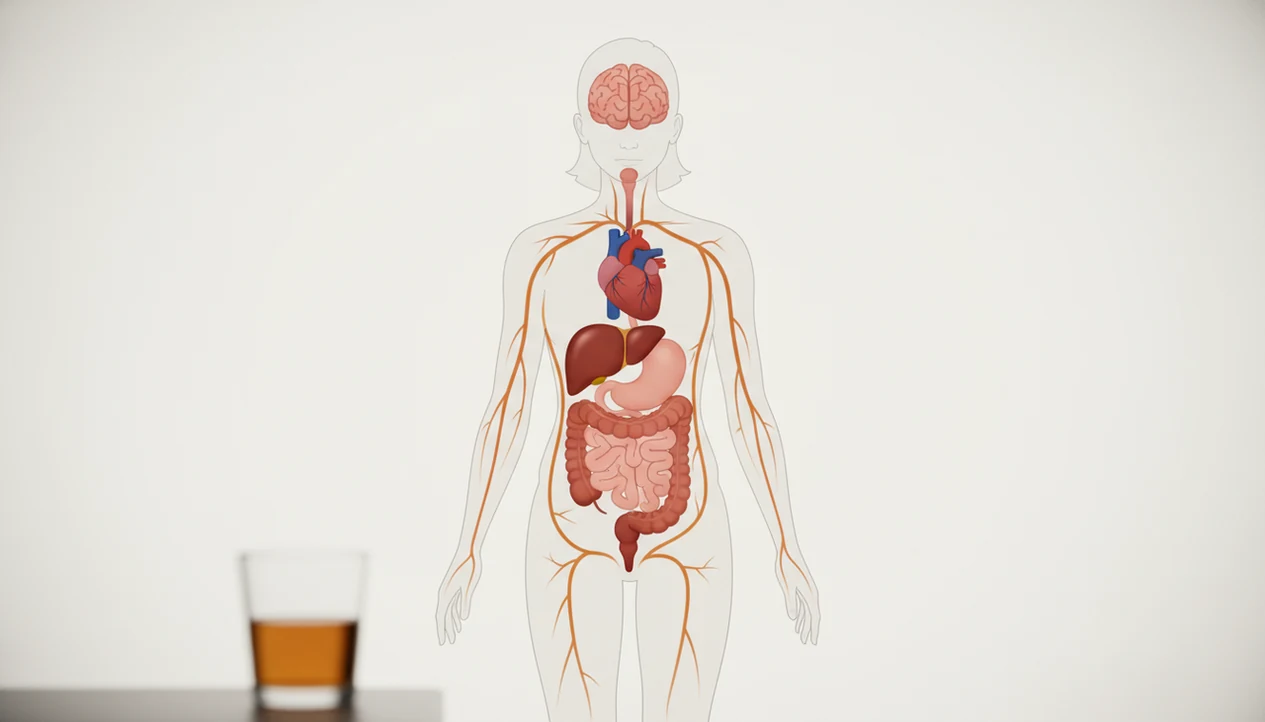
Alcohol affects nearly every major body system, including the brain, heart, liver, stomach, blood vessels and sleep cycle. Immediate effects include slower reactions, poor coordination and impaired judgment. Repeated use raises the risk of liver disease, high blood pressure, stroke and several cancers. If your body may be dependent, get medical advice before stopping suddenly.
What alcohol does to your body in the short and long term depends on the amount, drinking speed, food, medications, health and frequency of use. Effects can begin within minutes, even before someone looks intoxicated. The next morning may bring poor sleep, nausea, anxiety and brain fog.
Longer-term alcohol health effects can be harder to spot. Rising blood pressure, digestive problems, memory changes and liver injury may develop without an obvious warning. The good news is that drinking less reduces exposure and can bring practical benefits. The first step, though, is checking withdrawal risk.
What does alcohol do to your body right away?
Alcohol quickly reaches the brain and reduces inhibition while slowing reaction time, coordination and judgment. As blood alcohol concentration rises, speech, balance, memory formation and breathing control can become impaired.
Binge drinking is currently defined by the CDC as 4 or more drinks on an occasion for women or 5 or more for men. These are not safe thresholds. Lower amounts can still impair driving, interact with medication or cause injury. Effects can start within minutes and vary with dose, drinking speed, food, medications and individual factors.
| Period | Possible effects |
|---|---|
| First minutes to hour | Warmth, lowered inhibition, slower reactions and less accurate judgment |
| Following hours | Worsening coordination, speech and memory, stomach irritation, increased urination and possible heart-rate changes |
| Later that night | Broken sleep, reduced alertness, nausea, headache or continued impairment |
| Next day | Fatigue, thirst, stomach upset, shakiness, anxiety, low mood and poor focus |
Alcohol may remain active longer than it feels noticeable. Coffee, a shower and sleep do not instantly reverse impairment. See how long alcohol can affect the body after drinking for a closer look at lingering effects.
Which body systems are affected by alcohol?
Alcohol affects the brain, liver, heart, circulation, digestive tract and sleep system at the same time. The CDC overview of alcohol-related harm links drinking with liver disease, heart disease, high blood pressure, stroke, digestive problems, mental health conditions, poor sleep and cancer.
| Body system | Short-term effects | Risks with repeated or heavier use |
|---|---|---|
| Brain | Slower reactions, reduced judgment, poor balance and disrupted memory formation | Changes in mood, attention, memory and reward pathways |
| Liver | The liver processes alcohol and its byproducts | Fat buildup, inflammation, fibrosis, cirrhosis, liver failure and liver cancer |
| Heart and blood vessels | Heart-rate or blood-pressure changes and possible palpitations | Persistent high blood pressure, stroke, rhythm problems and weakened heart muscle |
| Stomach and intestines | Nausea, reflux, diarrhea or stomach-lining irritation | Recurring inflammation, digestive symptoms and nutrient problems |
| Kidneys and fluid balance | More urination, fluid loss and possible electrolyte changes | Added strain when drinking contributes to dehydration or high blood pressure |
| Sleep | Faster sleep onset for some people, followed by lighter, broken sleep | Persistent insomnia, early waking and daytime fatigue |
Explore the specific effects on mood, memory and the brain, blood pressure and the heart, or the stomach and gut.
What are the less obvious effects on sleep, mood and behavior?
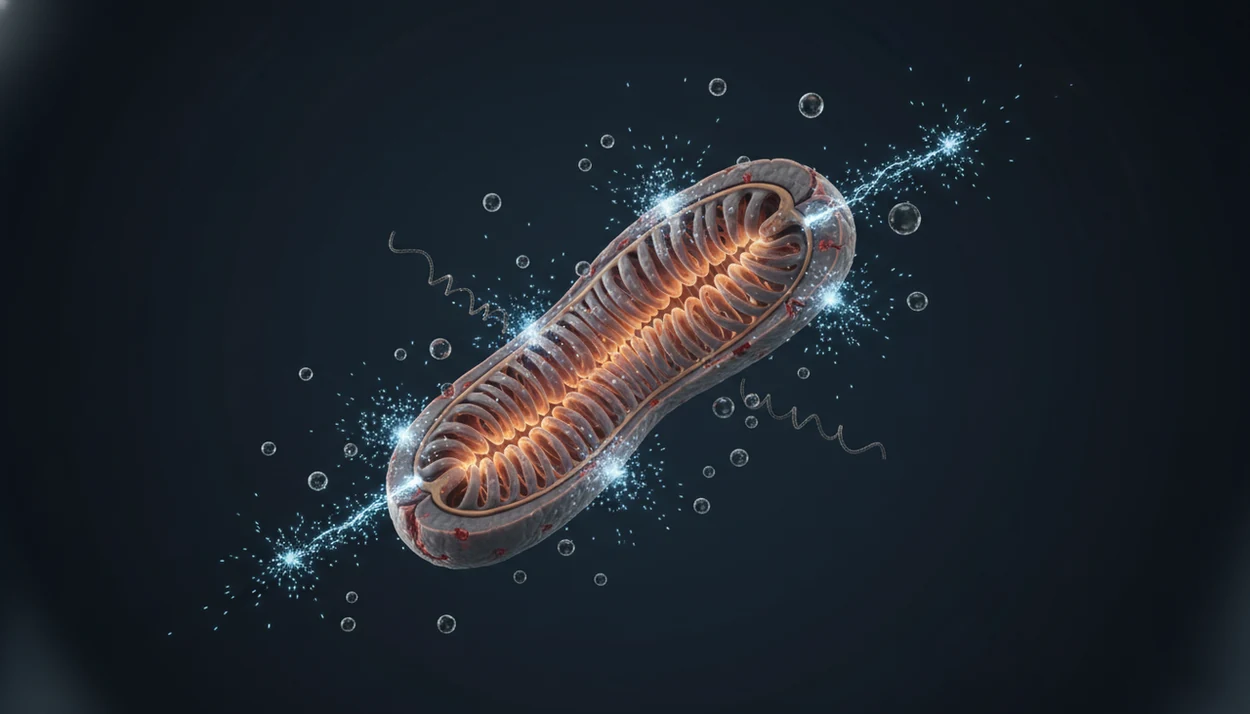
Alcohol can contribute to early waking, next-day anxiety, irritability, poor concentration and stronger urges to drink again. These effects may be blamed on stress or a busy week because they do not always feel like direct alcohol symptoms.
Alcohol may help someone fall asleep initially, but sleep later in the night can become lighter and more fragmented. The result can be a 7 a.m. alarm that feels unusually harsh despite spending enough hours in bed. The CDC includes poor sleep among alcohol-related health concerns and offers a private check of drinking patterns and health effects.
- Compare sleep quality after drinking and alcohol-free evenings.
- Notice anxiety, low mood or irritability the following morning.
- Record memory gaps, impulsive messages, arguments or missed plans.
- Pay attention to palpitations, sweating or shakiness between drinks.
For more detail, read about alcohol, sleep disruption and fatigue.
What are the long-term effects of alcohol on the body?
Long-term drinking can damage organs and increase cancer risk, especially as total alcohol exposure rises. There is no completely risk-free drinking level, and drinking less lowers risk.
The liver can progress from fat buildup to inflammation, fibrosis and cirrhosis. Early fatty liver may improve after reducing or stopping alcohol, but established cirrhosis involves scarring that may not fully reverse. Yellow skin, abdominal swelling, vomiting blood, black stools or confusion require prompt medical attention. Read more about alcohol and liver failure.
Alcohol is also associated with breast, mouth and throat, esophageal, liver and colorectal cancers. The relationship is dose-responsive, meaning lower consumption brings lower risk. The CDC explains the connection between alcohol and cancer.
Feeling functional does not rule out high blood pressure, liver injury or increasing dependence. These problems can develop before symptoms become obvious.
How quickly can the body recover after drinking less?
The alcohol body recovery timeline can begin within hours, but no single schedule applies to everyone. Intake, nutrition, sleep, existing organ damage and withdrawal risk all affect the pace.
| Time | What may change | What to watch |
|---|---|---|
| First 24 to 72 hours | Hydration, appetite and blood sugar may begin settling, while sleep may remain uneven | Withdrawal can emerge during this period and may be dangerous |
| About 1 to 4 weeks | Some people notice clearer mornings, better sleep, steadier digestion and fewer hangovers | Cravings, Friday work drinks and other learned triggers can remain strong |
| Following months | Blood pressure, liver inflammation markers, sleep and weight patterns may improve | Established disease still needs medical monitoring |
Cutting down can also improve coordination, judgment and decision-making while reducing longer-term exposure. The CDC summarizes benefits of drinking less. Recovery does not prove that previous symptoms were harmless, so bring persistent pain, digestive trouble, fatigue or memory changes to a clinician.
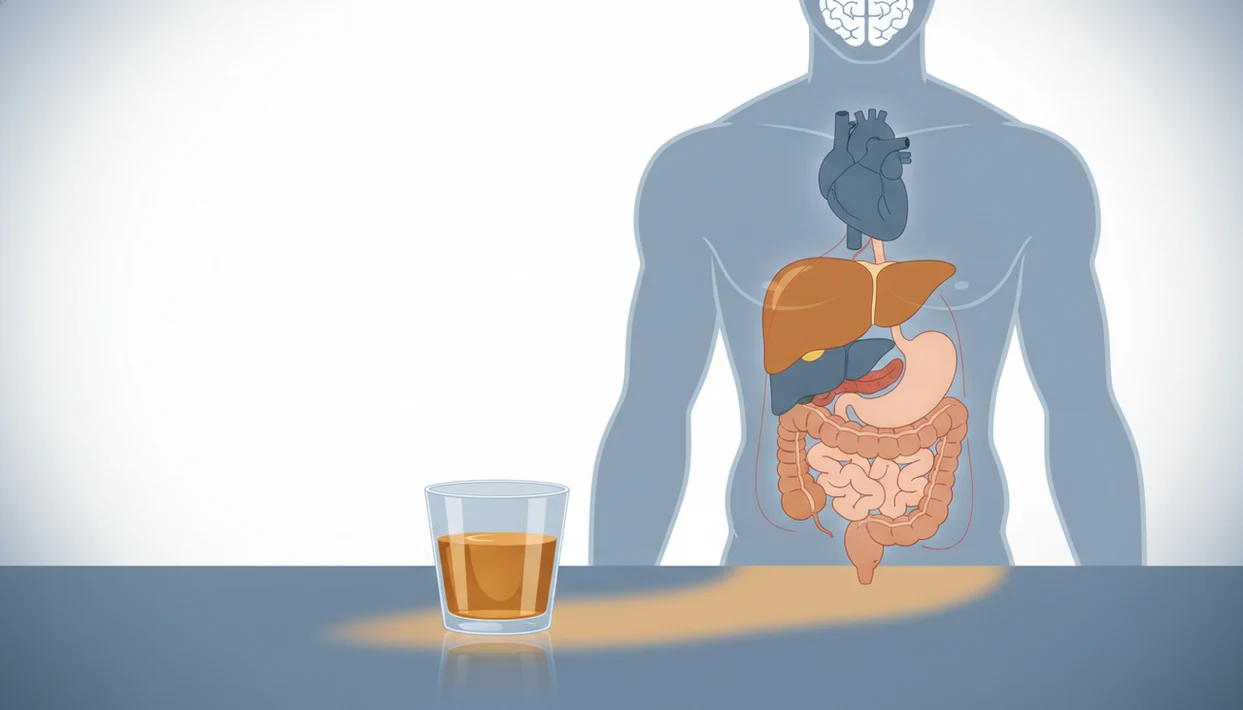
Get medical advice before stopping suddenly if you drink heavily, have morning shakes or feel unwell between drinks. Call emergency services for seizures, hallucinations, severe confusion, chest pain, trouble breathing, vomiting blood or black stools.
When can stopping alcohol be dangerous?
Stopping suddenly can be dangerous if your body is dependent on alcohol. Withdrawal may begin 6 to 12 hours after the last drink and commonly lasts 3 to 7 days.
Warning signs of dependence include morning anxiety, sweating, shaking, nausea, vomiting, a racing heart or symptoms that appear after several hours without alcohol. Risk is not limited to people who drink every day. Amount, frequency, past withdrawals, medical conditions and individual vulnerability also matter.
- Ask a clinician for guidance before making a major reduction if you have morning or between-drink symptoms.
- Do not rely on a do-it-yourself taper. The appropriate plan depends on your health, medications, drinking pattern and available supervision.
- Call emergency services for a seizure, hallucinations, severe shaking, confusion or extreme agitation.
- Treat chest pain, fainting, severe breathing trouble, vomiting blood or black stools as urgent.
Seizures often occur 12 to 48 hours after alcohol cessation, while delirium tremens typically begins 2 to 3 days afterward. It is a medical emergency. Review the full guide to alcohol withdrawal symptoms, and use clinical guidance on alcohol dependence and withdrawal if symptoms are developing.
How can you reduce alcohol-related harm?
Start by measuring your current intake, checking withdrawal risk and choosing one specific change. Do not treat U.S. drinking limits as health targets or a reason to increase drinking.
Current U.S. guidance defines moderation as no more than 2 drinks in a day for men and 1 for women on days alcohol is consumed. Some adults should not drink, including people who are pregnant, take interacting medications, have certain medical conditions or cannot control their drinking. See the CDC explanation of moderation and who should avoid alcohol.
- Write down each drink, its size and the time for 7 to 14 days. Use a standard drink calculator instead of estimating by glass count.
- Record sleep, mood, stomach symptoms, cravings and palpitations the next day.
- Identify repeat situations, such as arriving home from work, cooking dinner or meeting friends on Friday.
- Choose a concrete step, such as fewer drinking days, a lower limit or delaying the first drink. Get medical advice first if withdrawal is possible.
- Remove automatic refills, pace drinks and plan a nonalcoholic option before social events.
- Review the log after two weeks and discuss persistent symptoms or difficulty cutting down with a clinician.
The CDC recommends measuring intake and setting explicit limits rather than relying only on willpower. For a structured approach, use our practical alcohol reduction plan. Sustained changes matter more than a single reset month.
All alcohol and your body guides
- How Alcohol Affects Women, From BAC to Organ Damage
Learn why women often reach a higher BAC from the same drink, how heart and liver risks differ, and which withdrawal...
- How Alcohol Affects Gallstones, Bile and Upper Abdominal Pain
Learn how alcohol affects bile and gallstone risk, why pain after drinking needs attention, and which symptoms call for...
- Does Alcohol Age You? What Cellular Studies Show
Alcohol may speed some measures of biological aging, especially with heavy use. See what studies show about DNA...
- How Alcohol Affects Urgency, Leaks and Bladder Control
Learn why alcohol can increase urination, urgency, nighttime trips and leaks, plus a 7 to 14 day tracking plan and signs...
- Alcohol, Bladder Cancer, and Skin Cancer Risk
Alcohol is carcinogenic, but bladder and skin cancer evidence is less certain. See study findings, safer reduction steps...
- How Alcohol Affects Blood Pressure and Heart Health
Alcohol can raise blood pressure and strain the heart. See how much readings may improve after cutting back, plus safe...
- How Alcohol Affects Blood Vessels and Circulation
Learn how alcohol affects blood pressure, circulation, AFib, and stroke risk, plus urgent warning signs and safer steps...
- How Alcohol Affects Bone Density and Fracture Risk
Learn how alcohol can weaken bone remodeling, raise fracture risk, and affect calcium and vitamin D, plus when to ask...
- How Alcohol Changes Mood, Memory, and Judgment
Learn how alcohol changes judgment, mood, sleep, and memory, why blackouts happen, how recovery starts, and when to seek...
- Why Alcohol Causes Brain Fog and Poor Focus
Alcohol brain fog can last beyond a hangover. Learn why focus suffers, typical recovery times, warning signs, and when...
- How Alcohol Affects Brain Inflammation, Fog, and Cravings
Learn how alcohol may affect brain inflammation, brain fog, sleep, and cravings, plus typical recovery times and signs...
- Does Alcohol Shrink Your Brain, and Can It Recover?
Heavy drinking can reduce brain volume and impair memory. See what MRI studies show, how recovery unfolds, and when...
- How Alcohol Affects Blood Vessels in the Brain
Learn how alcohol can injure brain blood vessels, raise stroke risk, affect small vessels, and when symptoms or...
- How Alcohol Raises Cancer Risk and Fuels Inflammation
Alcohol raises cancer risk through DNA damage, inflammation and hormone changes. See which cancers are linked and how...
- How Alcohol Can Cause and Worsen Chronic Pancreatitis
Learn how alcohol can cause repeated pancreatic injury, which symptoms need urgent care, and why stopping may require...
- How Alcohol Changes Dopamine, Reward, and Cravings
Learn how alcohol changes dopamine, why pleasure can fade while cravings grow, what recovery may feel like, and when...
- How Long Alcohol Can Affect Your Body After Drinking
Alcohol may clear in 12 to 24 hours, while sleep, mood, digestion, and focus stay disrupted for 1 to 3 days. See...
- How Alcohol Affects Electrolytes During a Hangover
Learn how alcohol affects fluids and electrolytes, when drinks may help a hangover, and which symptoms could signal...
- Why Alcohol Makes You Tired, Even After a Full Night
Learn why alcohol can cause tiredness after a full night, how REM sleep, dehydration, breathing, and blood sugar affect...
- How Alcohol Affects Gastritis, Ulcers, and Bleeding
Learn how alcohol irritates the stomach, worsens gastritis and ulcers, and raises bleeding risk, plus symptoms that need...
- How Alcohol Affects Gut Health, Immunity, and Vitamins
Alcohol can disrupt the gut barrier, microbiome, immunity, and vitamin absorption. See warning signs, recovery steps, and...
- How Alcohol Affects Mouth, Throat, and Voice-Box Cancer Risk
Alcohol raises mouth, throat, and voice-box cancer risk. See how dose, tobacco, HPV, symptoms, and safer cutting down...
- Can Alcohol Cause a Heart Attack?
Alcohol can raise heart attack risk through blood pressure, arrhythmias, and heart muscle damage. See warning signs and...
- How Alcohol Causes Inflammation and Weakens Immunity
Alcohol can inflame the gut and liver while weakening immune defenses. See short-term effects, infection risks, warning...
- Alcoholic Cardiomyopathy: When Drinking Weakens the Heart
Alcoholic cardiomyopathy can enlarge and weaken the heart. Learn the warning signs, tests, recovery outlook, and how to...
- Can Alcohol Cause Joint Inflammation or Make Pain Worse?
Alcohol can worsen joint inflammation, especially gout, and may slow tendon recovery. Learn the red flags and try a...
- How Alcohol Affects Your Kidneys and When to Get Care
Learn how alcohol can dehydrate you, raise blood pressure, strain kidney function, and trigger warning signs that need...
- How Drinking Affects Kidney Stone and Kidney Injury Risk
Alcohol does not directly cause kidney stones, but dehydration and binge drinking can raise risk. Learn the warning signs...
- Does Alcohol Kill Brain Cells, or Disrupt How They Work?
Alcohol usually disrupts brain signaling first, but heavy, repeated drinking can damage brain tissue. See the risks...
- Can Alcohol Cause Liver Failure, and What Are the Warning Signs?
Yes, heavy drinking can cause liver failure. Learn the stages, urgent warning signs, reversibility, and how to stop...
- Signs of Liver Damage From Alcohol, From Silent to Urgent
Signs of liver damage from alcohol may be silent or vague. Learn which symptoms need testing, which are urgent, and how...
- How Alcohol Affects the Lungs, From Airway Defense to ARDS
Heavy drinking can weaken lung immunity, slow mucus clearance, and raise pneumonia and ARDS risk. Learn the warning signs...
- Why Alcohol Makes You Hungry and Triggers Food Cravings
Alcohol can heighten food reward, weaken fullness cues, and lower restraint. Learn why cravings hit and how to plan food...
- Why Alcohol Causes Memory Loss and Missing Time
Alcohol memory loss can leave missing hours even while you seem awake. Learn the warning signs, emergency risks, and...
- How Alcohol Can Affect Multiple Sclerosis Symptoms
Alcohol does not cause MS, but it may worsen balance, fatigue, sleep, bladder urgency, and medication effects. Learn...
- Alcohol Nerve Damage Symptoms: Tingling, Pain, and Weakness
Alcohol nerve damage symptoms often start in the feet. Learn the patterns, vitamin links, recovery limits, tests, and...
- Why Alcohol Causes Night Sweats, Chills, and Overheating
Learn why alcohol can cause night sweats, how hangover sweating differs from withdrawal, and which symptoms need urgent...
- Alcoholic Optic Neuropathy: Spotting Optic Nerve Damage
Learn the signs of alcoholic optic neuropathy, how it differs from temporary blurry vision, and when vision or withdrawal...
- How Alcohol Changes Prefrontal Control and Decisions
Alcohol weakens prefrontal control over judgment, memory, and impulses. Learn why limits slip, what heavy use can change...
- Why Alcohol Makes Your Face Puffy, Red, or Tired
Alcohol can cause a puffy face through fluid shifts, widened blood vessels, inflammation, and poor sleep. Learn practical...
- Why Anxiety Hits After Drinking and What to Do Next
Anxiety after drinking often comes from nervous-system rebound, poor sleep, and hangover effects. Learn what helps and...
- How Alcohol Affects Serotonin, Anxiety, and Mood
Learn how alcohol changes serotonin, sleep, anxiety, and mood, plus how to track delayed effects and cut back safely if...
- How Alcohol Affects Your Skin, From Puffiness to Healing
See how alcohol affects skin hydration, redness, puffiness, collagen, healing, and infection risk, plus signs that need...
- How Alcohol Changes REM, Deep Sleep, and 3 AM Wake-Ups
Learn how alcohol changes REM, deep sleep, and 3 AM wake-ups, plus a 14-day tracking plan and signs that call for medical...
- Why Alcohol Feels Like Social Confidence, Then Feeds Anxiety
See why alcohol briefly eases social anxiety, how the cycle can backfire, and practical plans for sober parties, dates...
- Why Alcohol Can Trigger Mood Swings, Stress, and Anxiety
Alcohol can worsen anxiety, irritability, and sleep after the buzz fades. Learn why mood swings happen, how to track...
- How Alcohol Connects AFib With Ischemic and Bleeding Strokes
See how alcohol can trigger AFib, raise blood pressure and affect stroke risk, plus warning signs and guidance for people...
- Does Alcohol Damage Tooth Enamel, and Can You Limit It?
Alcohol can damage enamel through acid, dry mouth, sugar, and long sipping. See which drinks raise risk and seven ways to...
- What Vitamins and Minerals Does Alcohol Deplete?
Alcohol can lower thiamine, folate, B6, B12 and key minerals. See urgent warning signs, useful lab tests and why a...
- How Alcohol Affects Weight Loss, Fat Burning, and Appetite
Learn how alcohol affects fat burning, appetite, sleep, fasting, and calorie intake, plus practical steps to cut back...
- How Alcohol Affects Weight, Fat Burning, and Belly Fat
Learn how alcohol and weight gain connect through calories, reduced fat burning, appetite, and belly fat, plus practical...
- Can Your Liver Heal After Drinking Alcohol?
Your liver may recover after alcohol stops, especially from fatty liver. Compare healing times, warning signs, tests, and...
- How the Brain Recovers After Quitting Alcohol
Brain recovery can start within weeks after quitting alcohol. See changes in sleep, cravings, memory, brain volume, and...
- How Drinking Less Can Support Your Fitness Goals
See how alcohol affects muscle recovery, sleep, hydration, running, and strength, then use a 2 to 4 week tracking plan to...
- How Drinking Less Can Support Blood Pressure and Heart Health
Learn how alcohol affects blood pressure, heart rhythm, stroke risk, and heart muscle, plus how to track drinks and cut...
- The Best Foods to Eat While Recovering From Alcohol
Best foods for alcohol recovery, meal timing, hydration, and thiamine guidance to steady energy and support healing while...
- How Long a Hangover Can Last, From 8 to 72 Hours
Most hangovers ease within 24 hours, but some last 48 to 72. See the recovery timeline, what helps, and when symptoms may...
- How Your Skin May Change After You Stop Drinking
See when puffiness, redness, dryness, breakouts, and fine lines may improve after quitting alcohol, plus warning signs...
- Why Alcohol Causes Flushing, Sneezing, Spins, and Chills
Learn why alcohol can cause flushing, sneezing, hiccups, spins, chills, and brain fog, plus which reactions need urgent...
- Why Alcohol Can Leave You Anxious the Next Day
Learn why hangxiety causes next-day dread, racing thoughts and jitters, how long it may last, and when symptoms could...
Effects of alcohol on the body FAQ
What organ does alcohol damage first?
There is no single first organ for everyone. The brain is affected quickly, while the stomach, heart, blood vessels and liver respond during the same drinking episode. Fat buildup in the liver can develop without obvious symptoms. The pattern depends on the amount consumed, frequency, health, medications and genetic factors.
Can alcohol affect your body for several days?
Yes. Alcohol itself may clear before all effects resolve. Broken sleep, stomach irritation, fatigue, anxiety, poor concentration and dehydration-related symptoms can continue into the next day or longer. Persistent confusion, severe shaking, repeated vomiting, chest symptoms or worsening abdominal pain should not be treated as an ordinary hangover.
Does alcohol weaken the heart muscle?
Long-term heavy alcohol use can weaken and enlarge the heart muscle, a condition called alcohol-induced cardiomyopathy. Alcohol can also raise blood pressure and contribute to rhythm disturbances. Repeated palpitations, shortness of breath, swelling, dizziness, fainting or chest pain need medical assessment.
Can alcohol cause brain inflammation symptoms?
Alcohol can affect inflammatory processes, but symptoms such as brain fog, poor memory, anxiety or headache do not confirm brain inflammation. They have many possible causes, including disrupted sleep, dehydration, withdrawal and medication interactions. Sudden confusion, one-sided weakness, trouble speaking, a seizure or an unusually severe headache requires urgent care.
Can liver damage from alcohol be reversed?
Alcohol-related fatty liver and some early inflammation may improve when alcohol exposure falls. Fibrosis may improve in some cases, but cirrhosis is established scarring and may not fully reverse. A clinician can assess liver health with history, examination, blood tests and, when needed, imaging.
Is weekend binge drinking harmful if I do not drink during the week?
Yes. Concentrating several drinks into one occasion can cause acute impairment, injuries, blackouts, stomach irritation, heart rhythm changes and alcohol poisoning. Repeated binges also add to long-term alcohol exposure. Several alcohol-free weekdays do not cancel the immediate or cumulative risks of heavy weekend drinking.
How long does the body take to recover after quitting alcohol?
Some changes may begin within days, while sleep, digestion, blood pressure, liver markers and cravings may take weeks or months to improve. Established organ damage can persist. People at risk of dependence should not stop suddenly without medical advice because withdrawal can begin within hours and become dangerous.
Is one drink a day safe for everyone?
No amount is completely risk-free, and one drink is not appropriate for everyone. People who are pregnant, use interacting medications, have certain medical conditions or cannot control their drinking should not drink. Cancer risk generally falls as alcohol intake falls, so moderation limits are upper limits rather than health goals.