

What Vitamins and Minerals Does Alcohol Deplete?
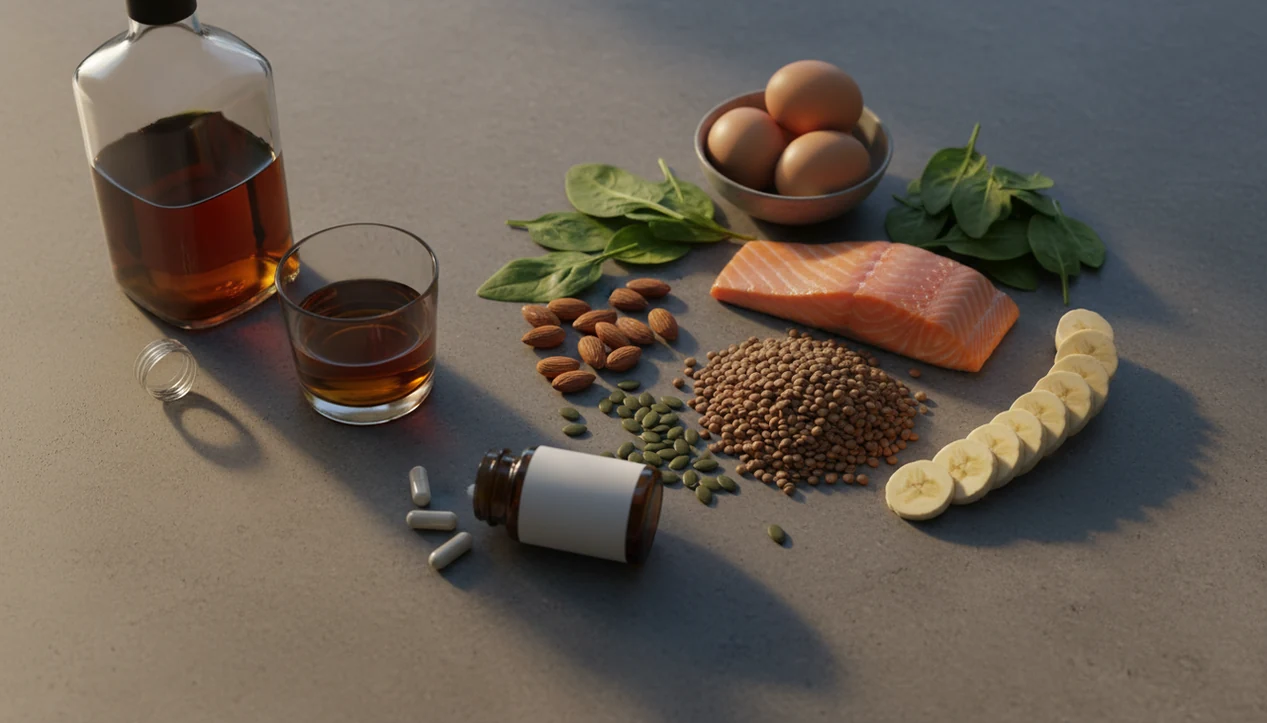
Alcohol does not simply wash vitamins out of the body. It can replace meals, irritate the digestive tract, impair nutrient absorption and storage, and increase the loss of certain minerals. The result depends heavily on how much and how often someone drinks, what they eat, and whether vomiting, weight loss or liver disease is present.
Occasional drinking does not automatically cause a deficiency. The concern is much greater with frequent or heavy drinking, especially when meals become irregular. Fatigue, shakiness, poor sleep and brain fog can offer clues, but they can also come from dehydration, withdrawal or other medical problems.
The quick version
Alcohol can contribute to deficiencies of thiamine, folate, vitamins B6 and B12, plus magnesium, zinc, potassium, calcium and phosphate. Vitamins A, C, D and E may also be affected. Thiamine deficiency is the most urgent concern in heavy drinking because it can cause lasting brain and nerve damage. Risk rises with poor nutrition, vomiting, liver disease and alcohol dependence.
The nutrients most affected by alcohol
- Thiamine B1 is the priority nutrient in heavy drinking. Research on alcohol use disorder repeatedly flags thiamine deficiency because severe deficiency can injure the brain and nervous system.
- Folate B9, B6, and B12 can also be affected. These B vitamins support red blood cells, nerves, energy metabolism, and cognitive function.
- Magnesium, zinc, and potassium may fall with alcohol exposure. Clinical reviews describe impaired absorption, poorer utilization, and increased urinary loss of these minerals in alcoholism.
- Risk rises when alcohol crowds out food. Vomiting, gut irritation, liver stress, and low diet quality make the pattern more likely.
- Symptoms are not specific. Fatigue, shakiness, poor sleep, and fogginess can overlap with dehydration, blood sugar swings, and withdrawal. According to NIAAA alcohol statistics, past-month drinking is common among U.S. adults, so questions about alcohol and nutrition are common rather than niche NIAAA alcohol data.
The weeknight pour after laptop shutdown can become dinner’s replacement. That matters.
How drinking disrupts absorption, storage and intake
Alcohol vitamin mineral depletion works through overlapping mechanisms: lower nutrient intake, impaired gut absorption, altered liver storage, disrupted metabolism, and higher urinary mineral loss.
First, alcohol can replace meals or reduce diet quality. A person may eat less protein, fewer leafy greens, or fewer mineral-rich foods on drinking nights. Second, alcohol can irritate the gut lining and disrupt digestion, which can reduce absorption of B vitamins and minerals. Third, the liver helps store and process nutrients, but alcohol-related liver stress can interfere with that work. Finally, alcohol can increase urinary losses of magnesium, zinc, and potassium.
Several mechanisms can run at once. Because poor intake, impaired absorption and mineral loss can happen together, replacing a single nutrient may leave other problems untreated. For readers comparing alcohol’s effects beyond nutrition, the same body-wide framing applies to alcohol weakens immunity.
Start by recording drinking, meals and symptoms so a clinician can see the pattern instead of choosing a supplement by guesswork.

B vitamin deficiencies and changes in energy or thinking
Does alcohol B vitamin deficiency cause fatigue, brain fog, or nerve symptoms? It can contribute, especially when drinking is heavy or diet quality is poor, but symptoms alone cannot diagnose a deficiency.
Thiamine B1 is the highest-priority B vitamin in heavy alcohol use. Severe thiamine deficiency can cause serious neurologic injury in alcohol use disorder, including confusion and problems with coordination. The NIH Office of Dietary Supplements notes that people with alcohol dependence are at increased risk of thiamine deficiency because alcohol can reduce intake, absorption, and storage the NIH statistics. Folate, B6, and B12 also matter because they support energy metabolism, red blood cells, nerve signaling, and brain function.
A review on nutritional deficiencies in alcoholism notes links with cognitive impairment, including slower mental performance and impaired perceptual-motor skills psychiatryinvestigation. Brain fog after drinking can also come from poor sleep, dehydration, blood sugar changes or early withdrawal. A mild hangover after two extra drinks is different from withdrawal or neurologic warning signs.
Seek medical attention for confusion, severe weakness, unsteady walking, persistent vomiting, or seizures.
Get urgent medical help for confusion, seizures, hallucinations, severe agitation, repeated vomiting, fainting, abnormal eye movements or trouble walking normally. If you drink heavily every day or have had withdrawal symptoms before, do not stop suddenly without medical advice because alcohol withdrawal can be dangerous.
How alcohol causes B vitamin deficiency, especially thiamine
Alcohol can reduce food intake and interfere with the absorption, storage and use of B vitamins. Thiamine, or vitamin B1, is the immediate clinical concern. It supports brain energy metabolism and nerve function. Long-term or heavy drinking can prevent the body from absorbing enough of it, according to NHS guidance on alcohol and thiamine.
| Vitamin | Main roles | Possible signs when low |
|---|---|---|
| Thiamine, B1 | Brain energy and nerve function | Confusion, unsteady walking, abnormal eye movements |
| Vitamin B6 | Nerve signaling and neurotransmitter production | Irritability, fatigue and concentration problems |
| Folate, B9 | Red blood cell production | Fatigue, poor stamina and anemia |
| Vitamin B12 | Nerves, cognition and red blood cells | Numbness, tingling, memory changes and balance problems |
Severe thiamine deficiency can cause Wernicke encephalopathy, which may progress to permanent memory damage known as Korsakoff syndrome. Confusion, difficulty walking normally or unusual eye movements require emergency assessment. Tablets or a standard multivitamin are not adequate treatment for suspected Wernicke encephalopathy. Clinical thiamine guidance recommends prompt medical treatment, with injectable thiamine used when severe deficiency or neurologic symptoms are suspected.
Magnesium, sleep problems and stress-like symptoms
Does alcohol magnesium depletion make cravings worse? It may add stress-like discomfort that makes cravings harder to handle, but magnesium is not a proven universal cure for alcohol cravings.
Alcohol use is commonly linked with magnesium depletion. Low magnesium patterns may include muscle cramps, weakness, poor sleep, irritability, stress sensitivity, and palpitations. Those symptoms can feel urgent. They can also overlap with alcohol withdrawal, dehydration, anxiety, low food intake, or habit-driven cravings.
Clinical reviews of alcoholism describe deficiencies of magnesium, zinc, potassium, and several B vitamins as common, partly because alcohol can impair absorption and increase urinary losses the NIH. Still, craving is not only a mineral signal. It can come from learned cues, dopamine-driven habit loops, social settings, and the body’s response to cutting back.
The party cooler packed with cans is a cue before it is a lab result.

Is a craving actually hunger, withdrawal or habit?
Fatigue, shakiness, anxiety, low mood, and brain fog can feel like cravings or make cravings harder to resist. Nutrient deficiencies alcohol cravings discussions should separate body discomfort from true alcohol craving mechanisms.
A shaky afternoon may reflect poor sleep, dehydration, blood sugar swings, early withdrawal, or low nutrient intake. It may also reflect a habit loop, such as the brain expecting a drink at the same time each day. Eating regularly, hydrating, and reducing alcohol exposure can support craving management because they remove some avoidable stress from the system.
For habit change, a craving log is more useful than a vague mood note. A strong entry records time, trigger, intensity, and response. Good addiction-recovery and mindful alcohol-reduction tools support structured self-monitoring and reset planning; they do not diagnose deficiency, provide detox care, or replace emergency treatment.
For people cutting back, regular meals and trigger tracking are often easier than relying on willpower alone because they reduce both body stress and cue-driven autopilot.
Can vitamin and nutrient deficiencies contribute to alcohol cravings?
Deficiencies can create fatigue, tension, shakiness or low mood that makes an urge to drink feel more pressing. They are rarely the only cause. Alcohol cravings can also come from withdrawal, learned routines, stress, social cues and the expectation of relief. One study cited in alcohol-dependence research found that 95% of participants had at least one micronutrient deficiency, but that result does not mean supplements will stop cravings.
Lower the physical pressure before a high-risk time
- Eat protein such as eggs, yogurt, tofu, chicken, tuna or lentils.
- Add a fiber-rich carbohydrate such as oats, beans, fruit, potatoes or whole-grain bread.
- Include nuts, seeds, avocado, olive oil or peanut butter for a more filling meal or snack.
- Drink water, tea, broth or an electrolyte drink if dehydration may be contributing.
A snack 30 to 60 minutes before the usual drinking window may help separate hunger from a learned alcohol cue. Magnesium deficiency can add cramps, weakness, poor sleep or irritability, but magnesium is not a proven treatment for alcohol cravings. Omega-3 supplements are also not established craving treatments. Persistent urges, morning drinking or symptoms that begin when alcohol wears off require a withdrawal assessment, not just a nutrition plan.
Symptoms that deserve testing rather than guessing
Alcohol-related vitamin deficiency symptoms are usually nonspecific, so they are better treated as a reason to check risk than as proof of one deficiency.
- Energy and appetite changes: fatigue, low appetite, and weakness can come from poor intake, anemia, sleep loss, withdrawal, or liver stress.
- Brain and mood changes: poor concentration, irritability, and brain fog may involve B vitamins, but also dehydration and blood sugar shifts.
- Mouth and nerve symptoms: mouth soreness, tingling, numbness, or burning sensations can justify asking about B12, folate, and other causes.
- Muscle and sleep symptoms: cramps, poor sleep, and palpitations may raise questions about magnesium, potassium, and overall hydration.
- Lab discussion points: clinicians may consider CBC, folate, B12, magnesium, electrolytes, liver markers, and thiamine risk assessment.
Urgent care is appropriate for confusion, severe vomiting, seizures, chest pain, fainting, yellowing skin, or severe withdrawal symptoms. No symptom list can safely replace examination and labs.
Rebuild nutrition without relying on one supplement
Food, targeted supplementation, and alcohol reduction work best as a combined risk-reduction plan. Replacing nutrients without addressing heavy drinking may leave the main cause in place.
Regular meals are the base. Include protein, whole grains, legumes, leafy greens, nuts, seeds, dairy or fortified alternatives, and mineral-rich foods. A bus-ride review of a taper goal is not medical care, but it can help someone notice whether skipped meals and drinking days travel together.
Supplementation should be targeted when risk is high or labs confirm a deficiency. Heavy alcohol use, persistent vomiting, withdrawal risk or possible thiamine deficiency calls for medical assessment rather than self-treatment. A multivitamin does not cancel out heavy drinking because absorption and metabolism may still be impaired.
People with heavy daily use or past withdrawal symptoms should ask a clinician before abruptly stopping alcohol. NIAAA describes alcohol withdrawal as potentially serious, with symptoms that can include tremors, agitation, hallucinations, and seizures in some cases NIAAA alcohol data. Broader behavior-change steps are covered in our alcohol reduction guides, including planning around triggers and safer cutback goals.
Plan thiamine and withdrawal care before the last drink
For someone at risk of alcohol dependence, the timing of care matters more than buying a random B vitamin. Withdrawal can start within hours of the last drink. Daily heavy drinking, morning drinking, previous withdrawal seizures or delirium, and serious medical illness are reasons to arrange clinical advice before cutting down or stopping.
In high-risk withdrawal treatment, clinicians give thiamine promptly and generally before or alongside carbohydrate because glucose increases the body's need for thiamine. Urgent glucose is not delayed when medically necessary. Confusion, abnormal eye movements or unsteady walking may require injectable thiamine in a medical setting, as described in NHS Specialist Pharmacy Service guidance.
Do not try to choose a high-dose thiamine or magnesium regimen on your own. The dose, route and length of treatment depend on drinking history, nutrition, symptoms, kidney function and withdrawal risk.
Track the pattern before your medical appointment
Use this information as a pattern-checking tool, not a way to diagnose yourself from symptoms. The safest path is to reduce obvious strain first, then ask for medical help when symptoms, heavy drinking, or withdrawal risk make guessing unsafe.
- Record your pattern. Write down when you drink, how much, what you ate, whether you vomited, how you slept, and when fatigue, shakiness, cramps, fogginess, or cravings appeared.
- Compare your symptoms. Check whether the pattern looks like dehydration or skipped meals, but also take withdrawal and urgent-care warnings seriously, especially confusion, seizures, severe vomiting, chest pain, fainting, or hallucinations.
- Stabilize the basics. Prioritize regular meals, fluids, and lower alcohol exposure before trying to solve the problem with random supplements.
- Ask about labs. If symptoms persist, drinking is heavy, or nutrition has been poor, talk with a clinician about tests such as blood counts, B12, folate, electrolytes, magnesium, liver markers, and thiamine risk.
- Track cravings separately. Use a craving or drink log to see whether discomfort follows body stress, a time-of-day cue, a place, a person, or autopilot after work.
Get medical care for these warning signs
Seek medical help quickly when alcohol-related symptoms could involve withdrawal, dehydration, thiamine deficiency, or another urgent problem. Do not try to sort severe symptoms into “vitamin” versus “hangover” at home.
- Get urgent care for confusion, seizures, fainting, chest pain, severe vomiting, hallucinations, or rapidly worsening weakness. These signs need clinical assessment, not a supplement plan.
- Ask before stopping abruptly if you drink heavily every day, have needed morning alcohol, or have had shakes, sweats, panic, vomiting, hallucinations, or seizures when cutting down before. Withdrawal can become dangerous even when the goal is healthy.
- Raise thiamine risk promptly if walking feels unsteady, coordination changes, memory becomes unreliable, or others notice confusion. In heavy drinking, those neurologic changes deserve same-day medical advice.
- Use clinical history and labs to confirm what is happening. Symptom lists can point to questions, but blood counts, electrolytes, magnesium, B12, folate, liver markers, exam findings, and thiamine risk assessment are safer than guessing from fatigue or cravings alone.
Alcohol and nutrient deficiency questions
Which vitamin does alcohol deplete most dangerously?
Thiamine, or vitamin B1, is the most urgent concern in heavy or dependent drinking. Severe deficiency can cause Wernicke encephalopathy, with confusion, abnormal eye movements and difficulty walking. This is a medical emergency. Folate, B6 and B12 can also become low, but they do not replace the need to assess thiamine risk.
Does alcohol deplete magnesium and potassium?
Frequent or heavy drinking can contribute to low magnesium and potassium through poor food intake, vomiting, diarrhea and increased urinary loss. Symptoms can include weakness, cramps, tremor or palpitations, but these are not specific. Blood testing is safer than taking large doses, especially for anyone with kidney disease or heart symptoms.
Can occasional drinking cause a vitamin deficiency?
Occasional drinking does not automatically cause a deficiency. Risk rises as drinking becomes heavier or more frequent, particularly when alcohol replaces meals. Vomiting, weight loss, digestive problems, liver disease and an already limited diet increase the concern. Symptoms and overall drinking history matter more than a single night of drinking.
Should heavy drinkers take a B-complex vitamin?
A standard B-complex may not provide the right dose or form of thiamine for someone at high risk. Severe deficiency and suspected Wernicke encephalopathy can require injectable treatment. A clinician should select the supplement and dose based on drinking history, nutrition, symptoms and withdrawal plans. A multivitamin does not make continued heavy drinking safe.
Can low vitamins or magnesium cause alcohol cravings?
Deficiencies may cause fatigue, irritability, poor sleep or shakiness that makes cravings harder to tolerate. They are not usually the sole cause. Cravings can also reflect withdrawal, stress, social cues or a repeated drinking routine. Regular meals and fluids may reduce physical discomfort, but supplements are not proven stand-alone treatments for alcohol cravings.
What blood tests can check for alcohol-related deficiencies?
Depending on symptoms and drinking history, a clinician may consider a complete blood count, electrolytes, magnesium, phosphate, glucose, liver tests, folate and vitamin B12. Thiamine risk is often judged from history and symptoms because testing may not settle an urgent decision. Numbness, anemia, vomiting or poor nutrition can change which tests are needed.
How long does nutritional recovery take after reducing alcohol?
Some problems related to dehydration or missed meals may improve over days, while recovery from established deficiencies can take weeks or months. The timeline depends on the nutrient, severity, continued drinking, digestive health and treatment. Persistent fatigue, numbness, balance changes or memory problems should be medically assessed rather than watched indefinitely.
Can folic acid hide a vitamin B12 deficiency?
Folic acid can improve the anemia caused by folate deficiency while neurologic injury from an untreated B12 deficiency continues. That is why unexplained anemia, numbness, burning feet, balance trouble or memory changes should be tested rather than treated with folic acid alone. Alcohol-related poor nutrition can affect several nutrients at the same time.