
How Drinking Less Can Support Blood Pressure and Heart Health
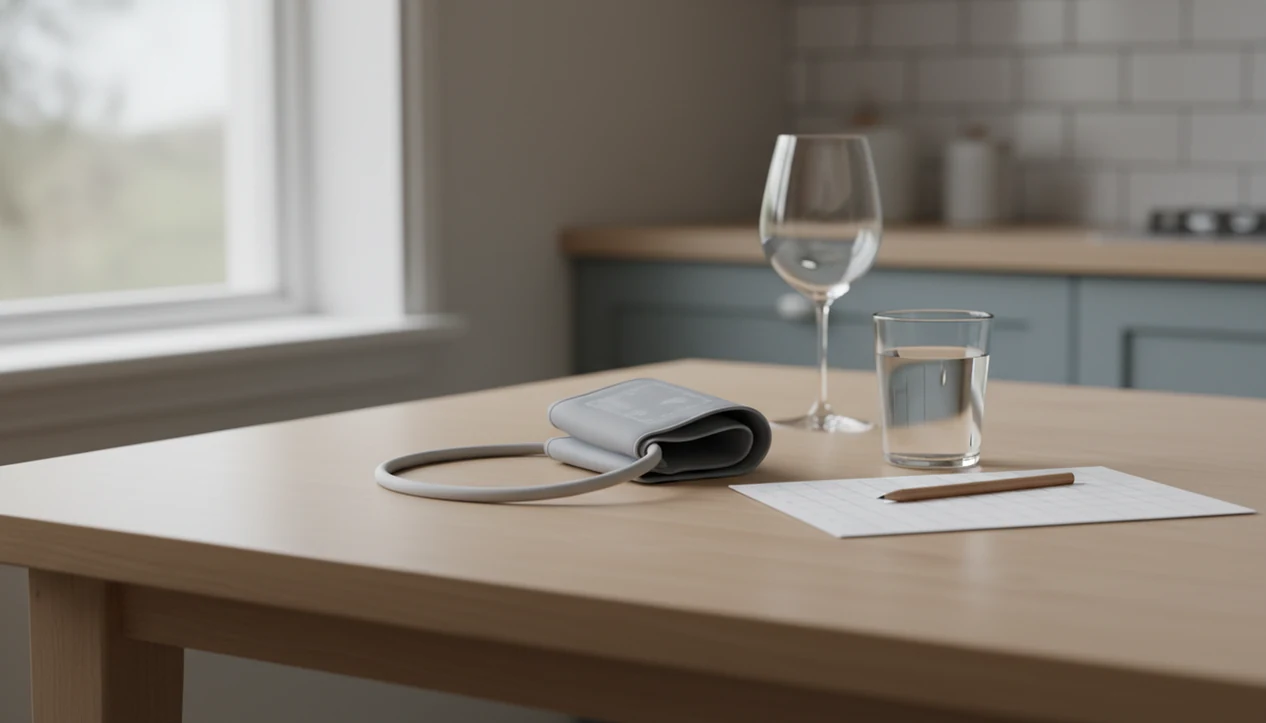
Alcohol does not affect the heart in just one way. The amount, frequency, drinking speed, medications, and existing health conditions all matter. A few drinks spread across a week create a different pattern from four or five drinks in two hours.
A clear record can make that pattern visible. Note each standard drink, high-intake days, blood pressure readings, palpitations, sleep, and medication timing. Bring the record to a clinician if you have hypertension, atrial fibrillation, heart failure, unexplained swelling, or other cardiovascular concerns.
The quick version
Drinking less can lower blood pressure, particularly for people averaging more than two drinks a day. It may also reduce strain related to irregular heart rhythms, stroke, sleep disruption, and excess calories. Track standard drinks and blood pressure for several weeks. If you drink heavily every day, get medical advice before cutting back because withdrawal can be dangerous.
How alcohol changes blood pressure and heart strain
Alcohol can raise blood pressure and add strain to the cardiovascular system, especially when drinking is heavy, frequent, or clustered into short windows. Blood pressure is one of the most practical markers to watch because it can be measured at home, trended over time, and discussed clearly with a clinician.
The American Heart Association says heavy and binge drinking can raise risk across major cardiovascular problems, including high blood pressure, stroke, irregular heart rhythm, heart failure, and sudden cardiac death heart alcohol data. Johns Hopkins Medicine also notes links between alcohol and cardiomyopathy, weight gain, heart failure, and stroke Johns Hopkins Medicine alcohol data.
If a Friday evening drink regularly leads to smoking, record both behaviors so you can plan for that specific cue.
Risk is clearest at higher intake, but it does not only begin at extreme levels. Start with the days that carry the most risk, such as nights with four or five drinks, then compare your weekly totals with repeated blood pressure readings.
Five facts that matter when cutting back
- Drinking less can help lower blood pressure for some people and may reduce alcohol-related cardiovascular strain, especially when intake is above recommended limits.
- There is no proven safe amount of alcohol that improves heart health for the general population, and major heart groups do not advise drinking for heart benefits.
- Binge drinking is commonly defined as 5 or more drinks in about 2 hours for men and 4 or more drinks for women NIAAA alcohol data.
- AHA moderate drinking limits are up to 2 drinks per day for men and 1 drink per day for women, but these limits are not personalized safety guarantees and even moderate intake may raise blood pressure in some people heart alcohol data.
- A 2022 JAMA Network Open analysis of more than 371,000 adults linked alcohol intake at all levels with higher cardiovascular disease risk, with risk increasing more steeply above about 7 drinks per week and especially above 21 jamanetwork.
For people with hypertension, cutting the largest drinking spikes is often easier than chasing a perfect week because blood pressure responds to repeated patterns.
How alcohol affects heart disease and cardiovascular risk
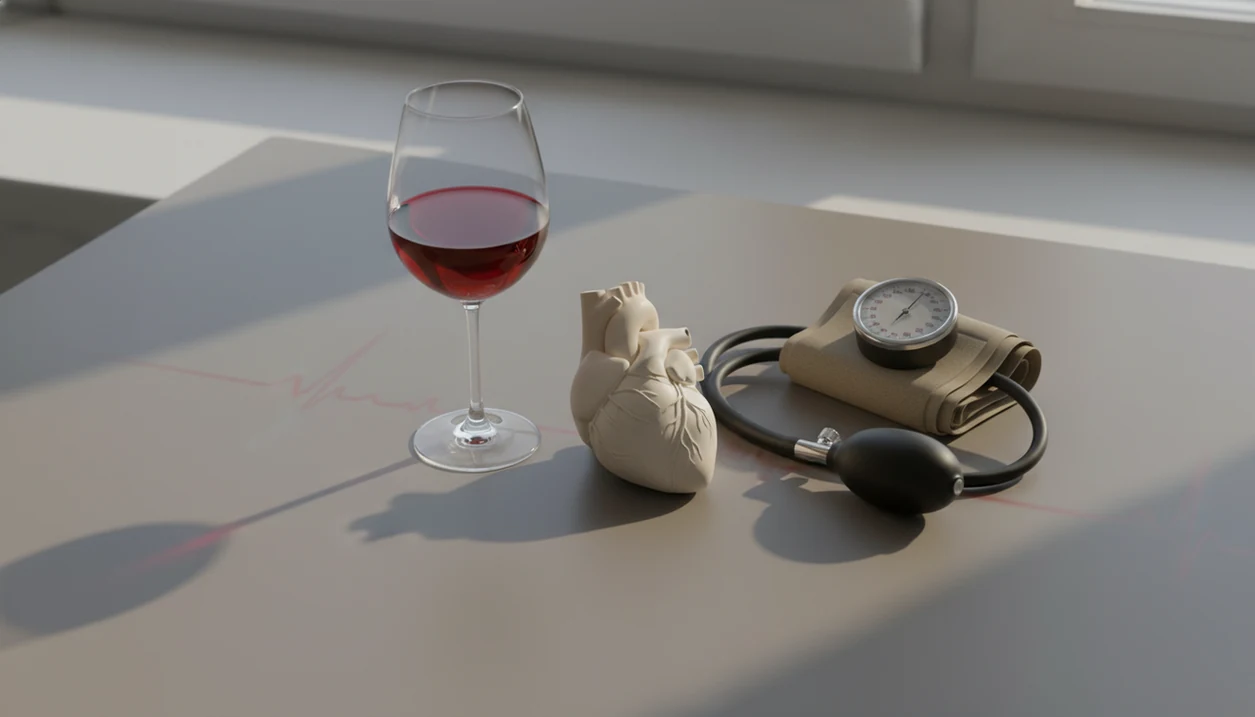
Alcohol can affect cardiovascular risk through blood pressure, heart rhythm, blood vessels, clotting, sleep, and weight. CDC information on excessive alcohol use lists high blood pressure, heart disease, and stroke among the possible health effects. Risk becomes clearer as intake rises, and several drinks consumed quickly can create a different short-term strain from the same amount spread across several days.
Blood pressure, atrial fibrillation, and stroke
Alcohol can raise blood pressure and worsen existing hypertension. It can also trigger palpitations or atrial fibrillation in susceptible people, particularly after binge drinking. Some people feel a fluttering or racing pulse after a heavy night. Others have no obvious warning and only find the pattern through a clinical exam, blood pressure log, or rhythm alert.
High blood pressure and atrial fibrillation can both contribute to stroke risk, so alcohol can affect stroke through more than one route. A single reading cannot show the full pattern. Record morning or evening readings under similar conditions, along with the number of standard drinks, drinking window, sleep, symptoms, and medication use. Seek urgent care for chest pain, fainting, severe shortness of breath, or stroke signs such as face drooping, one-sided weakness, confusion, or trouble speaking.
Why less alcohol may help blood pressure and rhythm
Alcohol reduction works by lowering several pressures on the cardiovascular system at once: blood pressure load, sympathetic activation, excess calories, sleep disruption, and rhythm-trigger risk. Reducing alcohol may ease overnight effects on heart rate, sleep, blood pressure, and blood vessel function.
Alcohol can affect habit loops too. A beer after work may cue salty food, late sleep, missed medication, or smoking on the porch. When the drink changes, the chain after it can change. Alcohol reduction works best as one part of the plan, alongside taking prescribed medication, sleeping regularly, moving more, managing stress, and stopping smoking or vaping.
A lime wedge sinking in club soda is not a medical treatment. The club soda serves as a familiar hand-to-mouth cue without adding alcohol.
Alcohol tracking should be treated as a behavior-change feedback loop, not a moral scorecard. The useful question is simple: “What pattern keeps showing up before my blood pressure runs high?”
Get urgent help for chest pain, fainting, severe shortness of breath, stroke signs, seizures, hallucinations, or severe confusion. If you drink heavily every day or have had alcohol withdrawal before, do not stop suddenly without medical advice because withdrawal can begin within 6 to 24 hours and may be life-threatening.
Build a drink and blood pressure log your doctor can use
- Set a weekly baseline: Record your usual number of standard drinks for 7 days before changing anything.
- Log every drink: Track the date, drink count, standard drink size, drinking window, and where the drink happened.
- Mark binge patterns: Note days with 4 or more drinks for women or 5 or more for men in about 2 hours.
- Compare with blood pressure readings: Add morning or evening readings, symptoms, sleep, medications, and notes from the same day.
- Share trends with your doctor: Bring weekly totals, high-risk days, triggers, and any symptoms such as palpitations, dizziness, or chest discomfort.
If anxiety or low mood drives evening drinking, a separate drink less for anxiety and mood plan may make the tracking more useful.
How much can blood pressure change after cutting back?
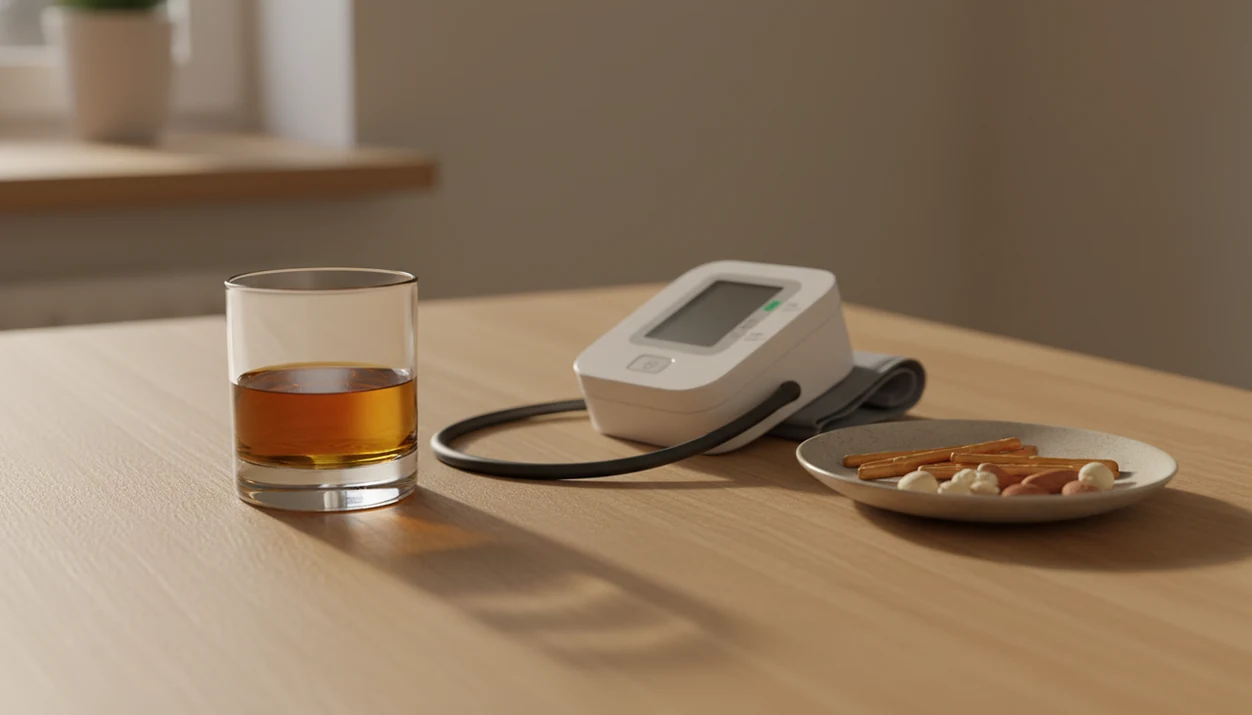
A 2017 systematic review and meta-analysis combined 36 trials with 2,865 participants. Across the studies, reducing alcohol lowered systolic blood pressure by about 3.13 mmHg and diastolic pressure by about 2.00 mmHg. The largest reductions occurred among people drinking more than about two drinks per day.
That average is not a promise for one person. People consuming two or fewer drinks daily did not have a statistically significant reduction when they cut down to near abstinence in this analysis. They may still have other reasons to drink less, including sleep, medication safety, cancer risk, or avoiding binge episodes.
Compare averages from repeated readings, not the best or worst number from one day.
Moderate vs binge vs heavy drinking
Alcohol risk language can be confusing because “moderate,” “heavy,” and “binge” describe different patterns. A person can stay moderate on most days and still have a high-risk Saturday.
| Drinking pattern | Common threshold | Heart-health concern |
|---|---|---|
| Moderate drinking | AHA: up to 2 drinks per day for men and 1 per day for women | Not a guarantee of safety; some people still see higher blood pressure |
| Binge drinking | AHA: 5 or more drinks in about 2 hours for men, 4 or more for women | Raises risk for blood pressure spikes, rhythm problems, and injury |
| Heavy drinking | Repeated intake above moderate levels | Linked with hypertension, stroke, cardiomyopathy, and heart failure |
| Lower-risk weekly planning | Australian guideline: no more than 10 standard drinks per week and no more than 4 on any one day | Lower risk does not mean no risk, especially with medical conditions |
Guidelines are population tools, not personalized safety guarantees. Hypertension, atrial fibrillation, pregnancy, liver disease, alcohol dependence, and interacting medications all change the conversation.
Do not judge alcohol by one blood pressure reading
Alcohol can produce a misleading short-term pattern. A 2020 Cochrane review found that higher doses may lower blood pressure for up to about 12 hours, followed by an increase after roughly 13 hours. A low reading soon after drinking does not show that alcohol is protecting your heart.
- Take readings at similar times each day.
- Sit quietly and rest before measuring.
- Record recent alcohol, caffeine, exercise, symptoms, and medication timing.
- Look at readings collected over several days or weeks.
- Share persistent high readings with a clinician.
CDC blood pressure guidance supports regular monitoring and management of multiple risk factors. Cutting alcohol may help, but it does not replace prescribed treatment or evaluation for blood pressure that remains high.
When cutting back requires medical support
Seek medical help before reducing alcohol if stopping suddenly could be unsafe, or if heart symptoms, pregnancy, medications, or a known medical condition are part of the picture. Cutting back can be helpful, but it is not emergency care or detox guidance.
- Get urgent care for chest pain, fainting, stroke symptoms, severe shortness of breath, or sudden weakness, confusion, face drooping, or trouble speaking.
- Talk with a clinician before making a sudden reduction if you drink heavily every day, have had withdrawal symptoms or seizures, or develop shaking, sweating, hallucinations, vomiting, confusion, or a rapid pulse when alcohol wears off.
- Mention conditions such as atrial fibrillation, heart failure, hypertension, liver disease, pregnancy, or a history of alcohol dependence, because personal risk may change the plan.
- Review medications with a doctor or pharmacist, especially blood pressure medicines, blood thinners, sleep medicines, anxiety medicines, antidepressants, pain medicines, or drugs that warn against alcohol.
- Bring your log of drinks, blood pressure readings, symptoms, sleep, and missed doses. Use it to guide the conversation, not to replace medical advice.
Red wine is not a heart treatment
Which alcohol is good for heart patients? No alcoholic drink is recommended as a heart-health strategy, including red wine.
Searches about “best red wine for heart health” and “alcohol and cholesterol” often come from older headlines about moderate drinkers having lower heart risk. Those studies may be confounded. Moderate drinkers often differed from abstainers in income, diet, exercise, medical history, and access to care.
Major heart organizations do not recommend starting or continuing alcohol for heart benefits. For heart protection, focus on steps with clearer evidence: take prescribed medication, stop smoking, move regularly, improve sleep, manage cholesterol and blood pressure, and follow an eating pattern built around vegetables, fruits, whole grains, legumes, fish, and unsaturated fats.
If weight is part of the blood pressure picture, reducing drinks may also help with calories. The practical overlap is covered in drink less for weight loss, especially for people whose highest-calorie drinks happen late at night.
How alcohol affects heart health and heart disease risk
Alcohol can contribute to heart disease through persistent high blood pressure, irregular rhythm, excess calories, higher triglycerides, and direct damage to heart muscle. Older observational research sometimes found lower coronary risk among light or moderate drinkers, but those comparisons could not prove that alcohol caused the difference. Drinkers and nondrinkers may differ in smoking, diet, income, existing illness, exercise, and access to medical care.
Alcoholic cardiomyopathy
Long-term heavy drinking can weaken and enlarge the heart muscle, a condition called alcoholic cardiomyopathy. A weakened heart may struggle to pump enough blood. Possible signs include breathlessness, unusual fatigue, swelling in the legs or abdomen, palpitations, reduced exercise tolerance, or trouble breathing while lying flat.
Reducing or stopping alcohol may allow partial improvement in some people, especially before advanced structural damage develops. Recovery is not guaranteed, and some damage can be irreversible. Anyone with possible heart failure or cardiomyopathy needs medical assessment rather than self-diagnosis. Chest pain, fainting, severe breathlessness, new swelling, or a sudden loss of exercise capacity needs prompt care. People who drink heavily every day should also get medical advice before stopping, since withdrawal can raise pulse and blood pressure and may become life-threatening.
Turn your alcohol log into a realistic weekly plan
A private alcohol log can support mindful reduction by capturing drinks, cravings, streaks, and milestones over time. It does not diagnose heart disease, treat high blood pressure, or replace a clinician.
For heart-health conversations, the useful data is simple: weekly drink totals, high-risk days, triggers, and progress over several weeks. That is more actionable than trying to remember whether last month was “normal.”
A quiet restart after a weekend lapse matters too.
For some adults, combining alcohol reduction with smoking cessation can make cardiovascular change feel less scattered. A broader drink less for health app plan can help organize those habits in one place.
Alcohol, blood pressure, and heart questions
Does drinking less lower blood pressure?
It can, especially if you average more than about two drinks per day. A review of 36 trials found average reductions of about 3.13 mmHg systolic and 2.00 mmHg diastolic after alcohol reduction. Your response may differ, and persistent high blood pressure still needs medical evaluation and treatment.
Does alcohol raise blood pressure right away?
The short-term effect can change over time. Higher doses may lower blood pressure for up to about 12 hours and then raise it after roughly 13 hours. This is why one reading after drinking can be misleading. Repeated readings taken under similar conditions provide a more useful picture.
Is red wine good for your heart?
Red wine is not recommended as a heart treatment. Older observational studies sometimes associated light drinking with lower heart risk, but those studies could not prove alcohol caused the difference. Wine does not cancel the risks from high blood pressure, smoking, high cholesterol, binge drinking, or heart disease.
How many drinks are considered moderate drinking?
CDC guidance says adults who choose to drink should limit intake to no more than two standard drinks in a day for men or one for women, on drinking days. These are upper limits, not heart-health targets or guarantees of safety. Some medical conditions and medications call for no alcohol.
Can alcoholic cardiomyopathy improve after quitting?
Heart function may partially improve in some people after alcohol reduction or abstinence, particularly before advanced structural damage develops. Some damage can be permanent, so improvement is not guaranteed. Breathlessness, leg or abdominal swelling, palpitations, or declining exercise capacity should be assessed by a clinician.
Can I stop drinking suddenly if I have high blood pressure?
Do not stop suddenly without medical advice if you drink heavily every day, need alcohol to feel normal, or have had withdrawal symptoms. Withdrawal can raise blood pressure and pulse and may cause seizures, hallucinations, or severe confusion. A clinician can assess risk and arrange medication or supervised withdrawal when needed.