

Does Alcohol Age You? What Cellular Studies Show
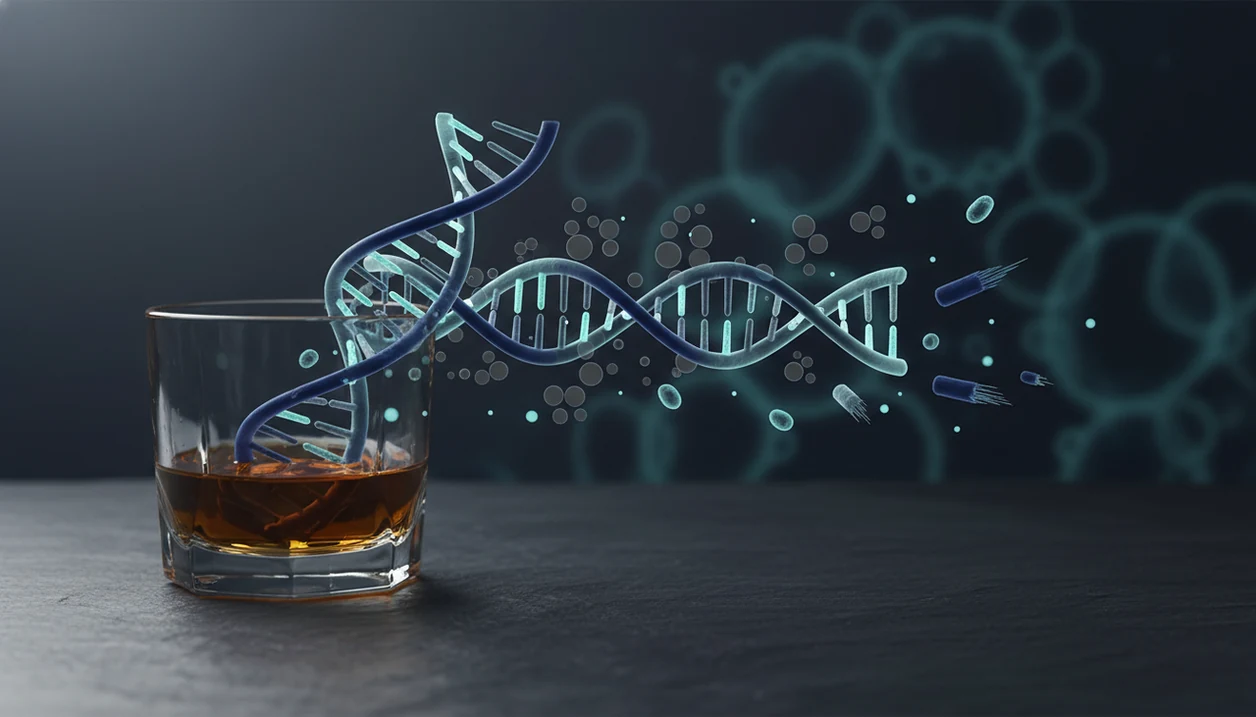
You cannot look in the mirror and tell what alcohol has done to your telomeres or DNA methylation. Researchers study these changes in blood cells and large populations, then compare drinking patterns with markers associated with aging. The clearest concerns appear with heavier, repeated exposure.
These findings are useful for understanding risk, not assigning yourself a biological-age score. Drinking pattern, smoking, sleep, nutrition, medical conditions and genetics all affect the same markers. If cutting back is your goal, the practical focus is lowering alcohol exposure safely rather than trying to erase a particular number of cellular years.
Short answer
Alcohol can contribute to faster biological aging signals, particularly with heavy or long-term use. Research links drinking with altered DNA methylation, shorter telomeres, inflammation and impaired cellular repair. These markers cannot calculate exactly how many years alcohol has added to one person’s age, and findings about low-level drinking remain mixed.
What alcohol-related biological aging means
Alcohol biological aging epigenetics describes how drinking may make cells behave older than a person’s calendar age. Chronological age is counted by birthdays; biological age is estimated from cell-level signals such as DNA methylation, telomere length, inflammation, and DNA repair capacity.
The relevant exposure is ethanol, not just whiskey, wine, beer, or cocktails. The body still has to metabolize alcohol into acetaldehyde, manage oxidative stress, and restore normal cellular chemistry afterward.
Risk tends to rise with cumulative intake and heavy drinking patterns. A weeknight pour after laptop shutdown may feel ordinary, but repeated exposure is what researchers examine when they study cellular aging. For people reading more broadly about alcohol’s effects on the body, the alcohol reduction guides can help place cellular findings beside brain, craving, and health-risk topics.
Five findings from epigenetic and telomere research
- Alcohol can increase epigenetic age acceleration. DNA methylation clock studies have found that higher cumulative alcohol use is associated with cells appearing biologically older than chronological age.
- Heavy alcohol use is associated with shorter telomeres. Telomeres are chromosome-end caps, and shorter leukocyte telomere length is commonly treated as a cellular aging marker.
- Alcohol metabolism can reduce methylation capacity. Chronic alcohol exposure can lower S-adenosylmethionine, or SAM, which cells use to maintain normal DNA methylation patterns.
- Moderate drinking is not guaranteed to be neutral. Some studies report measurable epigenetic age acceleration below severe alcohol-use thresholds, though results vary by cohort and method.
- Some changes may improve after reduction. Epigenetic markers can be dynamic, but recovery is not automatic, complete, or the same for every person.

How ethanol places stress on aging cells
Alcohol biological aging works through ethanol metabolism, oxidative stress, altered methylation chemistry, and disrupted repair signaling inside cells. The short version is that alcohol changes the conditions under which cells maintain DNA, regulate genes, and respond to damage.
After drinking, ethanol is converted into acetaldehyde, a reactive compound associated with DNA damage and oxidative stress. Alcohol metabolism also shifts the NAD+/NADH balance. That matters because NAD+ is tied to energy metabolism, stress responses, and repair pathways that cells use to stay functional.
Another pathway involves SAM, a methyl donor used in DNA methylation. When alcohol metabolism strains methylation chemistry, gene-control patterns can shift. Those changes may affect inflammation, cell survival, and DNA repair.
The cell does not announce this with a clear symptom. No dashboard light. Researchers infer the pattern from methylation marks, telomere measures, inflammatory signals, and disease-risk associations.
DNA methylation and the clocks used to estimate biological age
Alcohol DNA methylation changes matter because methylation is one way cells regulate gene activity without changing the DNA sequence. Epigenetic clocks use these chemical patterns to estimate biological aging, and several alcohol studies report faster aging signals with higher intake.
DNA methylation as a gene-control signal
DNA methylation works like a chemical tag on DNA. It can help quiet or activate gene programs, depending on where the tag appears. Chronic alcohol consumption has been linked with lower SAM levels and global DNA hypomethylation in experimental and clinical research.
Epigenetic clocks as aging estimates
Horvath-style clocks, GrimAge, intrinsic epigenetic age acceleration, and extrinsic epigenetic age acceleration estimate aging from DNA methylation patterns. A 2022 longitudinal young adult cohort found that higher cumulative alcohol consumption was associated with greater epigenetic age acceleration over time. A 2023 Framingham analysis linked alcohol-related methylation sites with triglycerides and cardiometabolic risk. For source context, see epigenetic-clock research using DNA methylation patterns in Horvath 2013 (biomedcentral) and alcohol-linked methylation findings from large cohort analyses such as Framingham-related EWAS work (the NIH).
For alcohol and epigenetic aging, the most useful reading is not one clock alone, but repeated signals across methylation, metabolic, and disease-risk measures.
Talk with a clinician before cutting down suddenly if you drink heavily every day or have had shaking, sweating, nausea, anxiety, seizures or hallucinations after reducing alcohol. Call emergency services for a seizure, confusion, severe agitation, hallucinations, fainting, chest pain or rapidly worsening symptoms.
Does alcohol shorten telomeres?
Does alcohol shorten telomeres? Higher alcohol intake is associated with shorter telomeres in large population studies, especially at heavier drinking levels.
Telomeres are protective caps at the ends of chromosomes. They often shorten as cells divide and age, although telomere length is not a complete measure of health. In a UK Biobank genetic analysis of nearly 250,000 people, drinking more than 29 UK units per week was associated with telomere shortening equivalent to about 1 to 2 years of additional biological aging. Alcohol use disorder was linked to about 3 to 6 years of extra aging by telomere length. The UK Biobank Mendelian-randomization analysis is available in Molecular Psychiatry (nature).
A 2020 meta-analysis of 27 studies also found that higher alcohol consumption was significantly associated with shorter leukocyte telomere length. A single drink cannot be translated into a visible cellular age change or a specific number of years. It does suggest that repeated exposure can leave a measurable cellular trace.
The late-night last drink marked on a phone is a behavior log entry, but population studies look at years of those entries added together.
Inflammation, damaged DNA and disrupted repair
Alcohol may contribute to biological aging by increasing inflammatory signaling, oxidative stress, DNA damage, and abnormal gene expression. These pathways overlap, which is why researchers do not treat alcohol’s aging effects as one single mechanism.
Chronic inflammation is associated with accelerated biological aging because immune signals can keep tissues in a stressed state. Alcohol metabolism can increase oxidative stress, while acetaldehyde exposure can damage DNA and proteins. If repair systems are also impaired, damaged cells may persist longer or function poorly.
Epigenetic changes add another layer. DNA methylation and histone modifications can shift gene expression toward inflammatory, metabolic, or survival programs that are not ideal for long-term tissue health.
This response is not identical in every person. Smoking, sleep loss, infection, diet quality, stress, and medication history can change the baseline. Alcohol may add load to an already strained system.
Low-level drinking vs heavy drinking: where evidence differs
Does alcohol age your cells? The available evidence suggests alcohol can contribute to cellular aging signals, and risk appears dose-related rather than limited only to severe alcohol use.
Some epigenetic studies find measurable age acceleration even below heavy-drinking thresholds. Responses at low intake vary, so the same drinking level may not produce the same marker changes in every person. It does mean “not heavy” is not the same as “biologically neutral.”
Mendelian randomization and genetic studies have also challenged the older idea that moderate drinking is broadly protective. These designs reduce some confounding from lifestyle and health status, although they still have limits.
Beverage type is usually less important than ethanol exposure. Wine, beer, and liquor differ in serving size and drinking context, but the cell must still process ethanol and its metabolites. For readers comparing alcohol effects across body systems, alcohol’s possible relationship with alcohol autoimmune neurological symptoms is a separate but related risk-reduction topic.
Why the studies cannot give you a personal age number
Alcohol and aging research does not produce one simple result. An analysis of 3,823 Framingham Heart Study participants linked higher long-term alcohol intake with faster GrimAge and PhenoAge clock readings in adults ages 45 to 64 and 65 to 92. The association was not statistically significant among adults ages 24 to 44. These clocks estimate patterns across methylation sites. They do not prove that a particular person has aged by a set number of years. See the Framingham DNA methylation analysis.
Results also depend on the population and method. A three-cohort study found higher epigenetic age with heavy drinking but lower estimated age with nonheavy drinking. That conflicting result is not evidence that alcohol prevents aging. A systematic review of 14 telomere studies found stronger evidence of shorter telomeres in alcohol-related disorders than from alcohol consumption alone. The most defensible conclusion is that heavy or dependent use shows the clearest aging signal, while effects at lower levels remain less certain.
Do not start drinking for an anti-aging benefit. A favorable result in one observational group does not establish that alcohol protects cells.
Turn the research into a realistic reduction target
Use alcohol biological aging evidence as a risk-reduction guide, not as a personal aging verdict. The practical move is to translate cell-level findings into a clearer drinking baseline and one realistic next change.
- Estimate your weekly ethanol exposure. Count standard drinks or units across the whole week rather than sorting drinks by wine, beer, or liquor. The cell-level question is how much ethanol your body repeatedly processes.
- Compare your pattern with risk thresholds. Look at both heavy-drinking totals and binge-style episodes, because a quiet weekly average can hide one high-intake night.
- Set one measurable target. You might reduce total weekly drinks, schedule alcohol-free days, measure each pour or plan around one recurring trigger.
- Track the confounders beside alcohol. Record sleep, smoking or vaping, stress, diet quality, and illness, since these can also shift inflammation, methylation, and recovery signals.
- Ask for medical guidance if withdrawal is possible. If you drink heavily every day, have tremors, seizures, confusion, or prior withdrawal symptoms, do not make abrupt changes without a clinician.
Can biological aging markers improve after cutting back?
Some alcohol-related biological stress markers may improve after reducing or stopping alcohol, but epigenetic reversibility is partial, variable, and still being studied. The safer wording is “may improve,” not “will reverse.”
Recovery depends on cumulative exposure, genetics, age, smoking, sleep, diet, stress, and existing health conditions. A person who cuts back after years of heavy drinking may see different changes than someone who reduces a newer weekend pattern. Blood-cell methylation may also recover differently than liver, brain, or immune tissue markers.
For behavior change, cutting back is still a practical lever because it reduces ethanol exposure.
A quiet restart after a weekend lapse is still data. The useful question is what changed before the next drink.
Lower your repeated alcohol exposure
Reducing alcohol’s biological aging load starts with lowering repeated ethanol exposure. These steps are behavioral, not a promise to reverse aging or prevent disease.
1. Drink tracking. Record the drink, time, setting, trigger, and next-day effect before changing anything. Honest baseline data beats memory, especially after social drinking.
2. Alcohol-free days. Schedule dry days and treat them as exposure reduction, not a character test. For some people, clear calendar rules are easier than negotiating each evening.
3. Smaller servings. Use measured pours, lower-strength options, or earlier stop times. A weeknight limit written before the first drink is easier to follow than one made after the second.
4. Trigger planning. Notice automatic cues, including the after-dinner chair facing the open window, payday drinks, or gaming sessions. Replace the first cue-response loop, not just the drink.
5. Supporting habits. Sleep, nutrition, movement, and reducing smoking or vaping may lower overall biological stress.
For practical app comparisons, the best drink less app guide covers limit-setting and self-monitoring features in more detail.
Check withdrawal risk before making a sudden change
For someone who drinks heavily most days, withdrawal safety is more urgent than estimating biological age. NIAAA warns that suddenly stopping chronic heavy drinking can cause life-threatening withdrawal. Arrange medical guidance first if you drink in the morning, need alcohol to prevent shaking, have previously had withdrawal symptoms or combine alcohol with sedatives or opioids.
Withdrawal can begin about 6 to 24 hours after the last drink or a large reduction. Symptoms often peak around 24 to 72 hours. Seizures are a particular concern during roughly the first 24 to 48 hours, while delirium tremens may occur around 48 to 72 hours. Timing varies with drinking history, previous withdrawals, other substances and medical conditions. Read the clinical alcohol withdrawal timeline.
- Call emergency services for a seizure, confusion, hallucinations, severe agitation, fainting or chest pain.
- Get urgent care for rapidly worsening tremor, sweating, fever or severe vomiting.
- Plan withdrawal with a clinician if you are pregnant, seriously ill or have had a withdrawal seizure or delirium tremens.
Alcohol, appearance and cellular aging
Does alcohol age you?
Alcohol can contribute to biological aging signals through DNA methylation changes, oxidative stress, inflammation and disrupted repair. Evidence is strongest for heavy or dependent drinking. No blood test or epigenetic clock can tell one person exactly how many years alcohol has added to their age.
Does alcohol make you look older?
Appearance is not a reliable measure of alcohol-related biological aging. Someone may have changes in sleep, blood pressure, liver health or cellular markers without looking older. Looking younger also does not rule out harm. The studies discussed here mainly examine cells and population-level health patterns, not facial appearance.
Does alcohol shorten telomeres?
People with alcohol-related disorders often have shorter telomeres than comparison groups. Research on occasional or nondependent drinking is less conclusive. Telomeres also vary with age, smoking, stress, illness and genetics, so their length cannot isolate alcohol’s effect or predict one person’s future health.
Does wine age cells differently from beer or liquor?
The body must process ethanol regardless of the beverage. Wine, beer and liquor differ in strength, serving size and drinking context, but none avoids alcohol metabolism. Total ethanol exposure and the pattern of drinking are generally more relevant than the type of beverage.
Is moderate drinking safe from biological aging effects?
Moderate drinking is a risk limit, not a guarantee that alcohol has no effect. Studies at lower intake levels have produced mixed findings, and individual responses vary. Alcohol can raise certain health risks even within moderate limits, so people who do not drink should not start for a claimed anti-aging benefit.
Can quitting alcohol reverse biological aging?
Some stress and epigenetic markers may improve after alcohol exposure falls, but complete reversal is not guaranteed. Recovery can differ by tissue, age, drinking history, smoking, sleep and existing disease. Cutting back still reduces ongoing exposure. Heavy daily drinkers should seek medical advice before stopping suddenly.
How does alcohol affect DNA?
Alcohol is converted into acetaldehyde, a reactive compound associated with DNA damage. Alcohol metabolism can also increase oxidative stress, alter DNA methylation chemistry and interfere with repair signaling. These processes may change gene activity without changing the underlying DNA sequence itself.
Can an epigenetic clock tell my true biological age?
Epigenetic clocks estimate age-related patterns from DNA methylation. They are useful research tools, but results vary by clock, tissue and population. A clock reading is not a diagnosis, a countdown or a precise measure of damage from alcohol. It should not replace routine medical assessment.