

How Alcohol Can Affect Multiple Sclerosis Symptoms
The practical answer
Alcohol has not been shown to cause multiple sclerosis, but it can temporarily worsen balance, fatigue, coordination, sleep, bladder urgency, mood, and thinking. It may also increase medication side effects and fall risk. Tracking drinks beside symptoms can show personal patterns, but new or persistent neurologic changes need medical review rather than self-diagnosis.
A drink that once felt routine may affect you differently after an MS diagnosis. You might notice heavier legs after dinner, more urgent bathroom trips overnight, or fatigue and brain fog the next morning. Those effects can overlap with MS symptoms, dehydration, poor sleep, heat exposure, and medication side effects.
Research has not established alcohol as a direct cause of MS or a reliable trigger for relapses. The useful question is how drinking affects your function, safety, treatment, and symptom patterns.
How drinking can complicate an ordinary MS day
Alcohol is not proven to cause multiple sclerosis, but it can make some MS symptoms feel worse for hours or into the next day. The biggest short-term concerns are balance, coordination, fatigue, bladder urgency, sleep quality, and falls.
Light-to-moderate drinking has shown mixed findings in MS research. Mixed findings from light-to-moderate drinking studies are not evidence that alcohol protects against MS, and individual safety still depends on symptoms, medications, and fall risk. Heavy drinking is different. It carries clearer risks for brain health, liver strain, sleep disruption, medication side effects, and injury.
The practical takeaway is simple: for people with MS, reducing alcohol is a reasonable low-risk health choice because it may clarify symptoms and lower avoidable safety risks. A Friday 6 p.m. drink can also make a cigarette feel automatic, which matters when nicotine and alcohol triggers overlap.
Five findings worth separating
- Alcohol has not been shown to directly cause MS. Large epidemiologic analyses generally find no significant association between overall alcohol intake and developing multiple sclerosis.
- Alcohol can worsen neurologic symptoms temporarily. Balance, coordination, fatigue, bladder urgency, memory, speech, and reaction time may all feel worse after drinking.
- Progression research is mixed. Most studies are observational, so they can show patterns but cannot prove that alcohol protects against or worsens MS.
- Heavy drinking is clearly risky for the brain. Chronic heavy alcohol use is associated with brain atrophy and white matter damage, including injury patterns that can overlap with MS-related central nervous system problems.
- Medication review matters. People using treatments for pain, sleep, mood, spasticity, bladder symptoms, fatigue, or disease modification should ask a neurologist or pharmacist how alcohol changes risk.
For people already worried about nerve symptoms, the related issue of alcohol nerve damage is worth separating from MS itself.
What alcohol adds to a nervous system affected by MS
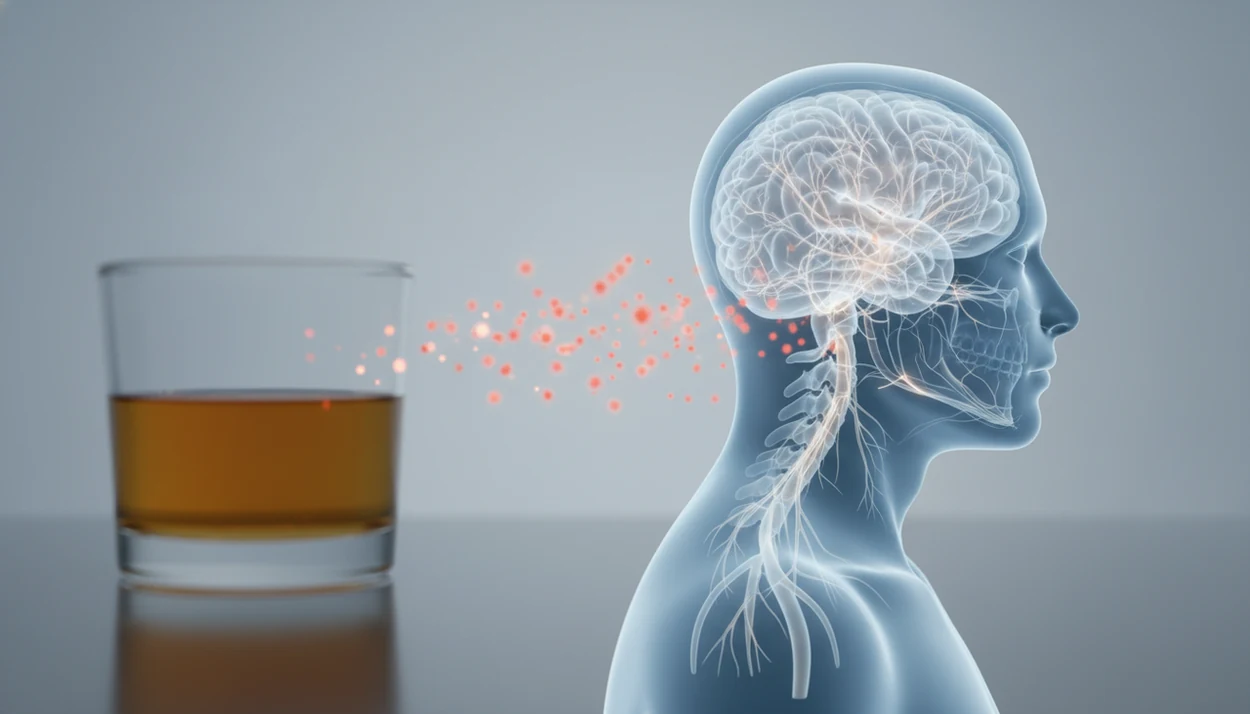
Multiple sclerosis is immune-mediated damage to myelin in the central nervous system; alcohol is a central nervous system depressant that can temporarily strain functions MS may already affect. Myelin is the insulating layer around nerves. When it is damaged, signals can slow, misfire, or fail.
Damage to myelin can disrupt signals involved in walking, vision, sensation, thinking, bladder control, and balance. Alcohol adds another layer by slowing reaction time, weakening coordination, disrupting sleep architecture, and increasing urine production. Alcohol can further reduce the reserve available for coordination, reaction time, sleep, and clear thinking.
Alcohol’s immune effects are not simple. It can alter cytokine signaling and infection defenses, but that does not make drinking a reliable anti-inflammatory strategy for autoimmune nerve inflammation. Chronic heavy use is also linked with white matter damage, which is one reason neurologic symptoms after drinking deserve attention.
Contact your MS care team promptly if a new change in vision, walking, strength, sensation, speech, thinking, or bladder control lasts more than 24 hours. Get emergency care for a seizure, severe confusion, hallucinations, trouble breathing, rapidly worsening weakness, or sudden neurologic loss.
Symptoms that may intensify for hours or overnight
Does alcohol make MS symptoms worse? For some people, yes, especially symptoms that already involve balance, fatigue, coordination, cognition, bladder control, or sleep.
When alcohol affects MS symptoms, the change is often temporary and may last through the night or into the next day. Someone may feel steadier at dinner, then notice poor footing on stairs later. Tremor, slurred speech, slower reaction time, or clumsier hand movement can also show up sooner than expected. Next-day exhaustion is another common complaint, especially after poor sleep.
Brain fog can be harder to judge. Alcohol may affect memory, mood, and attention, then MS fatigue can make the same symptoms linger. Bladder urgency may worsen because alcohol increases urine output. Dehydration and heat sensitivity can add another layer, particularly at outdoor events or warm rooms.
When several causes are possible, a written record of drinks, sleep, heat, medications, and symptoms is more reliable than next-day recall.
Can alcohol worsen autoimmune neurological symptoms?
Alcohol is not proven to trigger every MS relapse or autoimmune flare. It can still make fatigue, poor balance, bladder urgency, depression, sleep disruption, heat sensitivity, and concentration problems more noticeable. Symptoms beginning after a drink and settling by the next day may point toward an alcohol effect, but timing alone cannot rule out disease activity, infection, medication effects, or withdrawal.
Alcohol neuropathy vs MS
| Feature | Alcohol-related peripheral neuropathy | Multiple sclerosis |
|---|---|---|
| Common pattern | Burning, tingling, numbness, pain, or imbalance, often beginning in the feet | Vision changes, weakness, altered sensation, bladder problems, imbalance, or cognitive changes |
| Possible evaluation | Drinking and nutrition history, examination, blood tests, and nerve studies | Neurologic examination, MRI, and sometimes spinal fluid or other testing |
| Course | May develop with prolonged heavy alcohol exposure and nutritional problems | May follow relapsing or progressive patterns |
Both conditions can occur together. Minimizing alcohol intake when speaking with a clinician can delay recognition of alcohol-related injury, while assuming every symptom is caused by drinking can delay MS care.
Get urgent care for rapidly rising weakness, trouble breathing, seizures, severe confusion, sudden neurologic loss, new vision loss, or new loss of bladder or bowel control.
Does drinking change the chance of developing MS?
Large analyses generally find no significant association between overall alcohol consumption and the risk of developing MS. A 2020 review reported this broad pattern, although study results varied by design and population the NIH.
That finding should not be read as a reason to drink for prevention. Observational studies can be distorted by smoking patterns, socioeconomic factors, diet, health status, and the fact that some people stop drinking because they already feel unwell. They cannot prove protection.
MS risk is broader than alcohol. Genetics, sex, geography, vitamin D exposure, infections such as Epstein-Barr virus, and smoking all appear in the larger risk picture. In the United States, about 914,000 adults were estimated to be living with MS in 2017, almost twice earlier estimates the NIH.
For prevention, alcohol is not a treatment lever. Avoiding smoking and getting medical guidance are more defensible steps.
MS progression: association is not protection
A 2024 longitudinal cohort of 9,269 people with relapsing-remitting MS found that low and moderate alcohol intake were associated with slightly lower disability progression and physical worsening compared with no alcohol intake neurology. That is an association, not proof that alcohol helped.
Healthier-user bias is a real concern. People who drink lightly may differ from non-drinkers in income, disability level, activity, social support, medication adherence, or baseline health. Drinking was also self-reported, and people often underestimate intake.
The safer interpretation is cautious: low-to-moderate alcohol may not show the same risk signal as heavy drinking in some cohorts, but starting alcohol to slow MS is not evidence-based. Heavy alcohol use remains linked to brain atrophy and white matter damage. The National Institute on Alcohol Abuse and Alcoholism also notes that alcohol-related brain changes can affect coordination, memory, mood, and decision-making NIAAA alcohol data.
For nerve and spinal concerns beyond MS, our guide to alcohol nerve and spinal damage explains the overlap in plain language.
Check medications before the first drink
Can you drink alcohol while taking MS medication? The safest answer is to ask the prescribing neurologist or pharmacist, because alcohol can increase drowsiness, dizziness, sedation, liver strain, and fall risk.
The concern is not only disease-modifying therapy. Symptom medications for pain, sleep, mood, spasticity, bladder urgency, and fatigue may interact with alcohol in ways that affect balance or alertness. The NIAAA warns that alcohol can interact harmfully with many medicines, including drugs for sleep, pain, mood, allergies, and chronic conditions NIAAA alcohol data. That risk can show up fast, like standing from a restaurant booth and realizing your legs are not responding on time.
Disease-modifying therapies raise separate questions about liver monitoring, infection risk, infusion reactions, and timing. Related searches often ask about alcohol and Ocrevus. That question needs medication-specific advice from the clinician who knows your treatment plan, lab history, and relapse pattern.
Ask a neurologist or pharmacist about alcohol before drinking if you have balance problems, a history of falls, or take medicines that cause sleepiness or dizziness.
When a symptom change needs a call
Contact your neurologist or pharmacist when alcohol makes symptoms harder to interpret, when medication safety is unclear, or when new neurologic changes do not settle. It is better to ask early than to guess whether a change is a hangover, a side effect, an infection, or MS activity.
- Call your MS care team promptly if new neurologic symptoms last longer than 24 hours, especially changes in walking, vision, strength, sensation, bladder control, speech, or thinking.
- Ask before drinking if you use sedatives, opioid or nerve pain medicines, muscle relaxers or spasticity drugs, sleep aids, or any medication that already causes dizziness or drowsiness.
- Review alcohol honestly if you have falls, blackouts, liver problems, worsening fatigue, missed doses, or next-day symptoms that keep repeating.
- Discuss Ocrevus or any other disease-modifying therapy with the prescriber, because timing, lab results, infection risk, and infusion history can change the answer.
- Seek urgent care now for severe weakness, confusion, chest pain, serious injury, trouble breathing, or a sudden major change from your usual baseline.
Reduce alcohol without adding new risks
For people with MS, alcohol reduction works best when drinks are tracked beside symptoms, not in a separate mental folder. Log alcohol, fatigue, balance, sleep, bladder urgency, mood, heat exposure, and medication timing for at least two to four weeks.
Then test an alcohol-free period. A calendar dry day marked green can show whether sleep improves, whether bladder urgency changes, or whether morning brain fog lifts. Avoid binge drinking, pace water, eat before drinking, and plan transportation before the first drink if balance is unpredictable.
It does not diagnose MS, interpret neurologic symptoms, or replace advice from a neurologist or pharmacist.
For broader habit support, our alcohol reduction guides cover cravings, limits, and dry-day planning.
Build a useful alcohol and symptom log
Tracking alcohol and MS symptoms means comparing what you drink with what your body does before, during, and after. Use the record to give your care team a clearer timeline, not to decide by yourself that a symptom is or is not an MS relapse.
- Start with a two-to-four-week baseline before changing your usual drinking pattern, so you have something realistic to compare against.
- Record each drink, the time you had it, medication timing, sleep quality, fatigue, balance changes, bladder urgency, mood, and next-day brain fog.
- Mark heat exposure, high stress, possible infections, travel, hard workouts, poor sleep, or unusual activity in a separate note so they do not get mistaken for alcohol effects.
- Try a planned alcohol-free stretch after the baseline period, such as one or two weeks, and compare symptom timing rather than judging one difficult day.
- Bring unclear, new, or worsening patterns to your neurologist, pharmacist, or MS care team, especially if walking, vision, bladder control, confusion, or falls are changing.
A simple log can turn a vague “I felt worse” into useful detail.
Cutting down safely when dependence is possible
If you drink heavily or daily, do not suddenly stop without medical advice. NIAAA guidance on alcohol withdrawal warns that abrupt cessation after prolonged heavy drinking can cause seizures, delirium tremens, and other dangerous complications. A clinician may recommend medication-supported withdrawal.
Withdrawal can begin 6 to 12 hours after the last drink and commonly lasts 3 to 7 days, although some symptoms may continue longer. Anxiety, sweating, shaking, nausea, insomnia, a racing heartbeat, hallucinations, confusion, and seizures can overlap with or amplify neurologic symptoms. NHS alcohol-use disorder guidance describes the typical timing and symptoms.
- Get medical advice before stopping if cutting down causes morning anxiety, sweating, tremor, nausea, retching, or vomiting.
- Call emergency services for hallucinations, severe shaking, confusion, or a seizure.
- If a clinician says gradual reduction is appropriate, record measured drinks, avoid stockpiling alcohol, and tell a trusted person when to get help.
- After withdrawal, ask about continuing treatment, counseling, mutual support, and medications for alcohol use disorder.
The NHS alcohol support guidance also advises urgent help for severe withdrawal symptoms. Detox addresses immediate physical risk, but longer-term follow-up usually takes months rather than days.
Drinking with MS: common questions
Can alcohol cause multiple sclerosis?
Current evidence does not show that alcohol directly causes MS. MS risk involves a combination of genetic and environmental factors, including smoking, infections such as Epstein-Barr virus, vitamin D exposure, sex, and geography. Not causing MS does not make alcohol harmless after diagnosis, particularly when symptoms, medications, or falls are concerns.
Can alcohol worsen MS symptoms?
Yes, temporarily for some people. Alcohol can worsen balance, coordination, fatigue, reaction time, bladder urgency, sleep, speech, mood, and concentration. Effects may begin during drinking or appear the next morning. Repeatedly recording the amount, timing, and symptoms can help distinguish a pattern from an isolated difficult day.
Can alcohol trigger an MS relapse?
Research has not established alcohol as a direct trigger for MS relapses. Intoxication, dehydration, poor sleep, heat, infection, medication effects, and withdrawal can make old symptoms feel worse without representing new inflammatory activity. New neurologic symptoms lasting more than 24 hours should be reported to your MS care team.
Is wine safer than beer or liquor for someone with MS?
No type of alcohol is proven best for MS. The amount of pure alcohol matters more than the label. A U.S. standard drink is about 12 ounces of 5% beer, 5 ounces of 12% wine, or 1.5 ounces of 40% spirits, but home and restaurant pours are often larger.
Can you drink alcohol while taking Ocrevus?
There is no single safe answer for everyone taking Ocrevus. Ask the prescribing neurologist or pharmacist about liver tests, infusion timing, other medicines, infection concerns, and your usual intake. Alcohol may also compound dizziness, fatigue, poor coordination, or sedation caused by symptom medications taken alongside disease-modifying treatment.
Does moderate drinking protect against MS progression?
No protective effect has been proven. Some observational studies found lower disability progression among low or moderate drinkers, but those studies cannot show that alcohol caused the difference. Other findings have conflicted, and participants may differ in health, activity, income, disability, or treatment adherence. Starting to drink for MS protection is not evidence-based.
How can I tell alcohol neuropathy from MS symptoms?
Alcohol-related neuropathy often causes burning, tingling, numbness, pain, or imbalance that begins in the feet. MS can cause sensory changes too, along with vision loss, weakness, bladder changes, cognitive symptoms, or relapsing patterns. The conditions can coexist. A neurologic examination, blood tests, nerve studies, MRI, or other testing may be needed.
Can quitting alcohol improve MS symptoms?
Reducing or stopping may improve sleep, morning fatigue, balance, concentration, mood, medication adherence, and bladder symptoms, but it does not cure MS. Compare symptoms across several alcohol-free and drinking days only when stopping is medically safe. Heavy daily drinkers and people with withdrawal symptoms need medical advice before cutting down or stopping.