
How to Plan a Safe and Useful Sober Challenge
The short answer
A sober challenge is a planned period without alcohol, often 30 or 31 days. Before starting, record your usual drinking, check for withdrawal risk, choose exact dates, plan for triggers, and decide what happens afterward. Heavy daily drinkers and anyone with past withdrawal symptoms should get medical advice before stopping because alcohol withdrawal can be life-threatening.
Dry January, Sober October, and a personal 30 days with no alcohol can give you space to examine sleep, mood, spending, cravings, and routines. The useful part is not the name of the challenge. It is the specific plan behind it.
This guide covers preparation, withdrawal safety, the first month, social situations, slips, and the decision at the end. A challenge can reveal patterns, but it is not a medical detox or proof that alcohol dependence is absent.
Choose a sober challenge that fits your actual week
The best sober challenge has a clear rule, fixed dates, and a plan for difficult situations. Pick a format you can measure on an ordinary Tuesday or Friday, not just when motivation is high.
| Format | Rule | Best use | Watch for |
|---|---|---|---|
| 30-day challenge | No alcohol for 30 consecutive days | Testing routines and triggers | Starting without checking withdrawal risk |
| Dry January | No alcohol from January 1 through January 31 | A calendar-based New Year reset | Having no plan for February |
| Sober October | No alcohol throughout October | A defined seasonal break | Treating November as a reward month |
| Dry weekdays | No alcohol Monday through Friday | Changing regular weeknight drinking | Compensating with heavy weekend drinking |
| Drink-less goal | A written limit and scheduled alcohol-free days | People not choosing full abstinence | Changing the limit after drinking starts |
To make a realistic and trackable New Year's resolution to stop drinking or drink less, write the amount, days, start date, end date, and review date. New Year drinking resolutions can mean quitting alcohol in the new year, drinking less in the new year, or setting Dry January goals. A self-chosen Monday start can also provide structure, but it is simply a start date, not a special treatment method.
Check alcohol withdrawal risk before you stop
Do not begin an unsupervised alcohol-free challenge if you may be physically dependent. Withdrawal can begin within a few hours after abruptly stopping prolonged heavy drinking and can become life-threatening.
- Get medical advice before stopping if you drink heavily every day, wake up needing alcohol, or have previously had withdrawal.
- Warning symptoms include shaking, sweating, nausea, insomnia, anxiety, a racing pulse, or rising blood pressure.
- Previous withdrawal seizures or delirium substantially raise concern and require clinical planning.
- Call 911 or seek emergency care for a seizure, hallucinations, severe confusion, extreme agitation, or symptoms that are rapidly worsening.
The NIAAA guide to alcohol and health explains that medical treatment can make withdrawal safer and less distressing. Read more about alcohol withdrawal symptoms or use our broader guide to stopping alcohol safely.
No amount of alcohol is considered safe during pregnancy. A pregnant person who may be dependent should seek urgent medical help to make a safe stopping plan rather than trying to manage withdrawal alone. The CDC overview of alcohol use provides additional health guidance.
Set up the challenge before day one
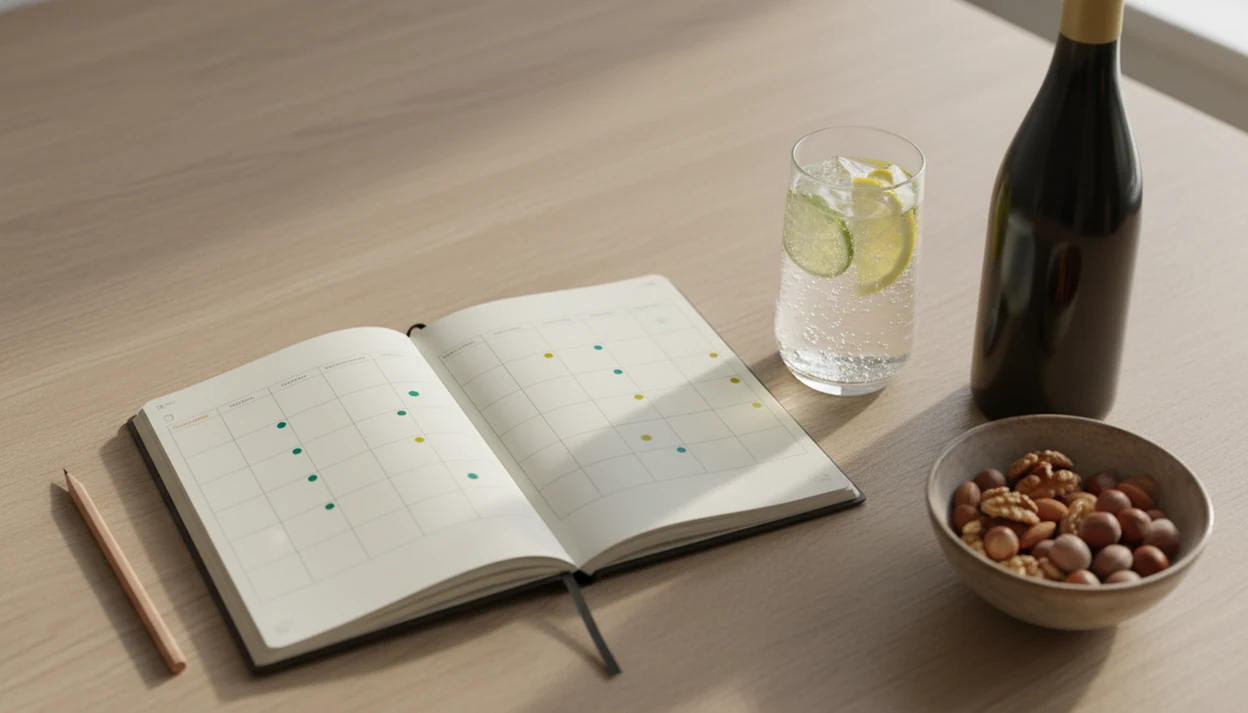
Prepare the dates, baseline, environment, and support before the first alcohol-free evening. This turns a broad intention into decisions you can follow when the 6 p.m. craving arrives.
- Record one ordinary week of drinking, including home pours and drinks you might usually forget.
- Choose exact start and finish dates. Write what counts as completing the challenge.
- List your three highest-risk situations, such as Friday work drinks, dinner out, or drinking alone after the house gets quiet.
- Remove alcohol from easy reach if that is safe and practical. Avoid the usual store aisle or delivery shortcut.
- Choose replacements for the first drink, such as flavored water, an alcohol-free option, food, a shower, exercise, or an early bedtime.
- Tell one trusted person what you are doing and what kind of help you want.
Count servings rather than relying on memory. Home pours can contain more than one serving, so a standard drink calculator can make the baseline more accurate. The CDC also recommends defining a goal, identifying triggers, and making a concrete plan in its guide to getting started with drinking less.
Use a simple plan for each stage of the month
A 30-day challenge works better when each week has a job. Focus first on safety and immediate routines, then use later weeks to understand patterns and prepare for day 31.
| Time | Main task | Practical action |
|---|---|---|
| Before day 1 | Check safety and establish a baseline | Record drinking, sleep, mood, spending, and known triggers. |
| Days 1 to 7 | Protect the usual drinking hours | Plan dinner, the commute home, and your first sober weekend in advance. |
| Days 8 to 14 | Study cravings | Record the time, setting, intensity, thought, and response. |
| Days 15 to 21 | Practice social situations | Prepare a short decline, bring another drink, and set an exit time. |
| Days 22 to 30 | Choose the next plan | Compare your baseline with the month and write the rule for afterward. |
Sleep, mood, energy, and cravings may fluctuate rather than improve in a straight line. Our alcohol-free benefits timeline explains what may change, while the first sober weekend guide tackles one of the most exposed parts of the month.
Handle cravings and familiar drinking cues
Cravings usually become more manageable when you respond to the cue instead of arguing with yourself. Change what happens at the time, place, and activity that normally lead to a drink.
- After work: eat something, change clothes, walk, shower, or call someone before sitting in the usual drinking spot.
- At a restaurant: decide your first alcohol-free order before opening the menu.
- During stress: delay the decision for 10 minutes and do one physical task, such as washing dishes or walking around the block.
- At home: move alcohol out of sight, change rooms, and start an activity that occupies your hands.
- At an event: drive yourself if safe, tell the host you are not drinking, and leave when pressure or cravings rise.
A replacement needs to provide some of what the drink provided, such as transition, taste, reward, or social connection. See practical ideas for replacing the after-work drinking ritual and learning to socialize without alcohol.
Write your response before the cue arrives: "At 5:30 p.m., I will eat, open sparkling water, and walk for 15 minutes before deciding anything else."
Get medical advice before stopping if you drink heavily every day or have had withdrawal symptoms. Call 911 or seek emergency care for seizures, hallucinations, severe confusion, extreme agitation, or rapidly worsening symptoms.
Track progress without turning the streak into a verdict
Track enough information to see patterns, not just a growing number of sober days. A useful log includes alcohol-free status, cravings, sleep, mood, spending, and the situation around any drink.
A paper calendar, notes app, spreadsheet, or 30-day sober tracker can work. If you want to find an app to guide and track a 30-day alcohol-free challenge, compare privacy, daily logging, trigger notes, and export options in our guide to sobriety apps. A no-alcohol streak tracker is useful only if you keep recording after a difficult day.
One drink does not erase the information collected. Stop the episode if you can do so safely, record what happened, and return to the next planned alcohol-free period. Use our slip restart plan to identify the cue and change the next response.
Know what a sober month can and cannot show
A sober month can show when you drink, what triggers cravings, and how difficult it feels to follow a boundary. It cannot diagnose or rule out alcohol use disorder, guarantee lasting change, or function as safe detox care.
A 2025 scoping review of Dry January research reviewed 16 publications. It found that attempts to cut down were more common in January in the periods studied, but those attempts were not associated with lower drinks per week. An earlier population-level study of England's campaign did not find a large reduction in average weekly consumption associated with increased participation.
That does not mean an individual challenge is pointless. It means participation alone should not be treated as a proven long-term result. Drinking less lowers several alcohol-related risks, and the CDC explains why drinking less matters. Even low or moderate consumption is not risk-free, according to the CDC discussion of moderate alcohol use.
Decide what happens after the challenge
Make the day-after plan before the challenge ends. Compare the month with your baseline, then choose continued abstinence, another defined break, or a specific drink-less plan.
- Review total drinking, cravings, sleep, mood, spending, and situations you avoided.
- Identify the two changes that helped most and keep them.
- If you plan to drink again, set the days and limit before the first occasion. Do not treat the end as permission to binge.
- Schedule a review after one or two weeks and check if you followed the rule.
- Seek professional help if you repeatedly exceed your limit, cannot stop once you begin, experience withdrawal, or keep returning to unsafe drinking.
A completed month does not prove that returning to alcohol will be easy or safe. A difficult month is not a moral failure either. It may show that you need more support than a self-directed challenge provides. Our guide on how to stay sober covers longer-term routines, support, and high-risk situations.
All sober challenges guides
- How Drinking Less Alcohol Can Help Your Body and Mind
See how drinking less alcohol can improve sleep, energy, focus, mood, and long-term health, plus a safe 7-day plan and...
- Why You Dream About Drinking After Quitting Alcohol
Dreams about drinking after quitting are common and are not a relapse. Learn why they feel real, how to reset, and which...
- Choose and Use a Dry January App That Keeps You on Track
Compare Dry January app features, see what Try Dry tracks, and build a practical plan for dry days, cravings, savings...
- A Practical Plan for Your First Weekend Without Alcohol
Get through your first sober weekend with a Friday-to-Sunday plan for cravings, social pressure, sleep, activities, and...
- Benefits of Quitting Alcohol, From Day 1 to One Year
See what can change in the first 72 hours, 4 weeks, 3 months, and 1 year after quitting alcohol, plus withdrawal signs...
- How to Relax Without Alcohol When Drinking Is Your Off Switch
Learn how to relax without alcohol with a 10-minute reset, a replacement evening ritual, trigger tracking, and clear...
- What to Do After Drinking Alcohol Again
Drank alcohol after quitting? Check withdrawal risk, handle the first 24 hours, map the trigger, and build a practical...
- Sleep After Quitting Alcohol: The First Night to One Month
Sleep after quitting alcohol may improve within days, but early insomnia can happen. See the timeline, safety signs, and...
- How to Be Sober Curious Without Taking On a Label
Sober curious means questioning alcohol without taking on a label. Use a 7-day log, set a clear experiment, and learn...
- How to Choose and Use a Sober October App
Choose a Sober October app that tracks dry days, triggers, drink sizes, and plans. Get a 31-day setup plus vital...
- How to Socialize Without Alcohol Without Feeling Left Out
Learn how to socialize without alcohol using drink plans, refusal scripts, safer settings, craving steps, and a clear...
- How to Stay Sober During Holiday Parties and Family Gatherings
Make a sober holiday plan with refusal scripts, drink limits, craving steps, exit routes, and guidance on when alcohol...
- What Does Sober Mean?
Sober can mean not intoxicated now or choosing not to drink. Learn how sobriety differs from cutting down, plus...
- Sober Living Homes: A Practical Guide to Choosing One
Learn what a sober living house is, what to ask before moving in, how to compare costs and rules, and when alcohol...
- Free Sobriety Calculator and Sober Day Counter
Calculate complete sober days, remaining hours, your current sober day, and next milestone from a last-drink date, time...
- How to Stay Sober: A Practical Daily Plan
Learn how to stay sober with a practical daily plan for cravings, social events, sleep and slips, plus clear alcohol...
Sober challenge FAQ
What is a sober challenge?
A sober challenge is a fixed period without alcohol, often 30 days or a calendar month. It is used to examine drinking routines, cravings, spending, sleep, and social habits. It is not medical detox, and people at risk of alcohol withdrawal should consult a healthcare professional before starting.
Is 30 days without alcohol enough to make a difference?
Thirty days can provide useful information about triggers, control, routines, and how you feel without alcohol. Results differ by person, and a successful month does not prove dependence is absent. Longer-term benefit depends heavily on what you do after the challenge ends.
Is Dry January safe for everyone?
No. Abruptly stopping after prolonged heavy drinking can cause dangerous withdrawal. People with heavy daily use, morning drinking, previous withdrawal, seizures, or symptoms such as shaking and sweating should get medical advice before stopping. Severe confusion, hallucinations, or seizures require emergency care.
Does Dry January lead to lasting reductions in drinking?
The evidence is limited. A 2025 review found that attempts to cut down were more common in January during the periods studied, but those attempts were not associated with fewer drinks per week. A lasting change requires a concrete plan for the weeks after January.
What should I do if I drink during a sober challenge?
Stop the drinking episode if you can do so safely, record the trigger and circumstances, and return to the plan at the next opportunity. Do not turn one drink into permission to abandon the month. Repeated loss of control is a reason to seek professional support.
Can I do a weekday alcohol-free challenge instead?
Yes, if withdrawal is not a concern. Define Monday through Friday as alcohol-free and decide the weekend rule before Friday. Watch for rebound drinking, where a person compensates for dry weekdays by drinking heavily on the weekend. Total consumption and risky occasions still matter.
What should I drink during a sober challenge?
Choose drinks that fit the setting and do not make alcohol cravings harder for you. Options include water, sparkling water, tea, coffee, soda, or alcohol-free products. Some people find alcohol-like substitutes helpful, while others find the taste or packaging triggering.
References
- NIAAA: Rethinking Drinking, Alcohol and Your Health
- CDC: About Alcohol Use
- CDC: Getting Started With Drinking Less
- CDC: Drinking Less Matters
- CDC: About Moderate Alcohol Use
- Scoping Review: Dry January Evidence and Future Directions
- Case et al.: Dry January Participation and Alcohol Consumption in England