

Does Alcohol Shrink Your Brain, and Can It Recover?

Short answer
Long-term heavy drinking can reduce measured brain volume, including tissue involved in memory and communication. MRI research also links higher intake with hippocampal atrophy. Some brain volume and thinking skills may improve after drinking stops, but recovery varies. People who drink heavily every day should get medical advice before stopping because withdrawal can be life-threatening.
Brain shrinkage sounds final, but a scan does not tell the whole story. Alcohol-related changes range from temporary problems with attention and sleep to lasting damage involving memory, balance, planning, and mood. The clearest risks occur with sustained heavy drinking, repeated binges, poor nutrition, blackouts, and alcohol use disorder.
The immediate concern may be safer withdrawal rather than a future scan. If you need alcohol to feel normal, get morning shakes, or have had withdrawal symptoms before, talk with a clinician before cutting down sharply. New confusion, seizures, severe balance problems, or a rapid mental decline need urgent assessment.
Brain shrinkage, memory trouble, and dementia
Alcohol can be associated with measurable brain shrinkage, especially when intake is heavy, repeated, or spread across many years. The phrase alcohol brain shrinkage dementia usually describes dementia-like symptoms linked to alcohol-related brain damage, not one single diagnosis.
The symptoms can be unsettlingly practical. A person may forget conversations, lose track of bills, misjudge risk, stumble more often, or become irritable in ways that family notices first. It can look like dementia because memory, planning, balance, and emotional regulation are all affected.
There is one important difference. Alcohol-related brain damage may stabilize or partly improve for some people after drinking stops, especially with thiamine, nutrition, sleep, and medical support. Many progressive dementias do not behave that way.
Five research findings on alcohol and memory
- Long-term heavy drinking can cause alcohol-related brain damage. Symptoms may include alcohol and memory loss, poor judgment, slower thinking, mood changes, and balance problems that resemble dementia.
- MRI studies associate alcohol intake with lower brain volume. Imaging research links higher drinking with more atrophy, including smaller hippocampal volume. The hippocampus helps form new memories, which is why missed conversations and repeated questions matter.
- Alcohol-use disorders are linked with much higher dementia risk. A large French cohort found alcohol-use disorders were associated with more than a threefold higher risk of all-cause dementia and early-onset dementia in adults aged 20 and older the NIH.
- Thiamine deficiency can drive severe memory disorders. Wernicke-Korsakoff syndrome can cause confusion, eye movement problems, poor coordination, lasting memory gaps, and confabulation.
- There is no proven completely safe level for brain health. Risk generally rises with amount and time, but some newer studies raise concern even at light-to-moderate levels, especially with aging brains.
Does alcohol shrink the brain on MRI scans?
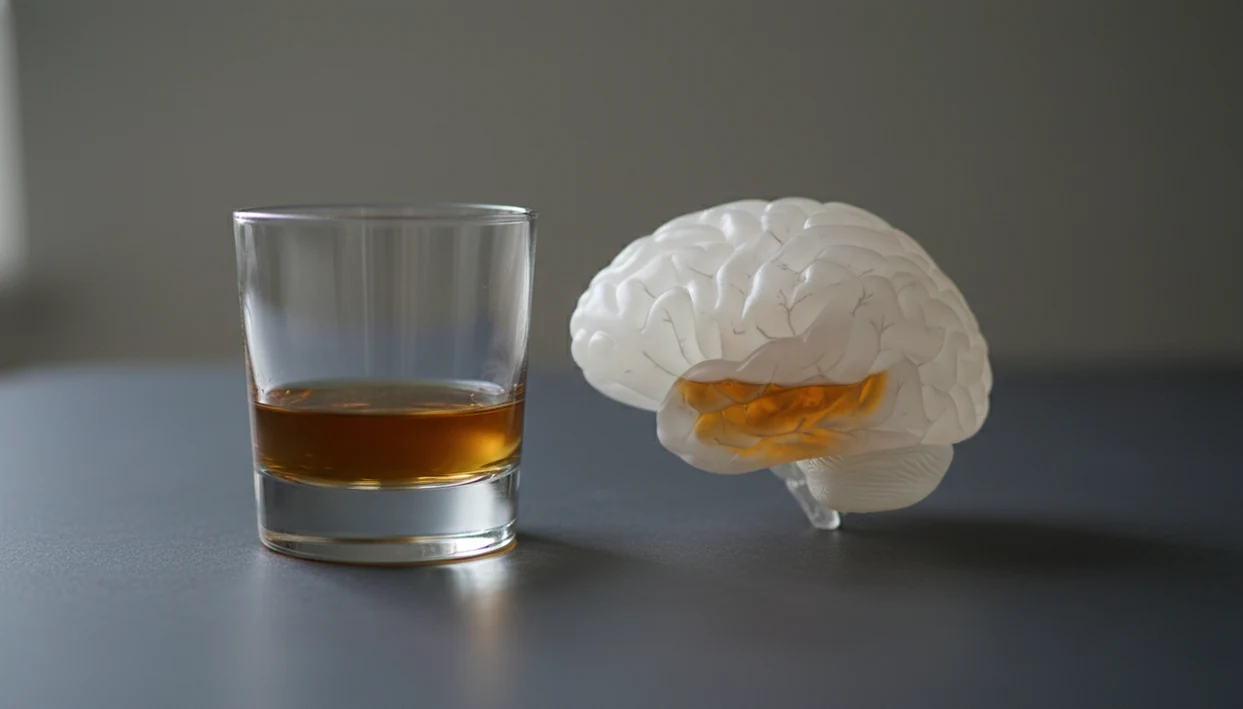
Does alcohol shrink the brain? Observational MRI studies show that higher alcohol intake is associated with lower total brain volume, greater atrophy, and smaller hippocampal volume, though these studies cannot prove alcohol alone caused every scan change.
Lower brain volume means there is less measured brain tissue than expected for age and body size. Atrophy means tissue loss or shrinkage over time. Hippocampal volume loss matters because that region helps convert daily experiences into stored memory.
Harvard Health summarized Framingham and other longitudinal imaging findings showing higher alcohol consumption was linked with lower total brain volume and more brain atrophy, with signals seen even among light and moderate drinkers harvard alcohol data. A BMJ cohort study also reported greater hippocampal atrophy and faster lexical-fluency decline among people drinking more than 14 units per week, compared with abstainers bmj.
One drink does not mean a person has dementia, but years of heavy intake can raise the risk of lasting cognitive problems. It means the old “moderate drinking is harmless for the brain” story is less secure than it once sounded.
How repeated drinking can disrupt thinking
Alcohol-related cognitive decline works through repeated injury to memory circuits, white matter, sleep quality, mood regulation, and executive function. In plain English, alcohol can make the brain worse at storing new information, switching tasks, controlling impulses, and recovering overnight.
Alcohol affects neurons directly, but it also disrupts the support systems around them. White matter helps brain regions communicate. Inflammation can interfere with repair. Poor sleep after drinking weakens attention the next day, which is one reason people describe “fog” before they describe memory loss. Our deeper guide to alcohol brain fog focus explains that day-after pattern in more detail.
The hippocampus is central because it helps build new memories. Thiamine deficiency is another major mechanism, and it is easy to miss. Severe thiamine deficiency can lead to Wernicke-Korsakoff syndrome, a medical condition with confusion, coordination problems, abnormal eye movements, and profound memory gaps the NIH.
Sudden confusion, seizures, severe memory loss, withdrawal symptoms, new balance problems, or rapid decline require prompt medical assessment. Don’t wait that one out.
Call emergency services for seizures, hallucinations, severe confusion, loss of consciousness, stroke symptoms, or uncontrolled vomiting. If you drink heavily every day, get morning shakes, or have had withdrawal before, seek medical advice before stopping because withdrawal can be life-threatening.
How alcohol contributes to cognitive decline, memory loss, and dementia risk
Alcohol can affect thinking through several routes at once. Repeated exposure can place brain cells and their support systems under stress, disrupt white matter communication, interfere with sleep, and worsen nutrition. Alcohol-related immune activity and inflammation may also interfere with tissue repair. These effects can show up as slower thinking, poor impulse control, trouble learning new information, or difficulty switching between tasks.
- Memory: The hippocampus helps turn new experiences into stored memories. A 2017 observational MRI study found a dose-related association between alcohol intake and hippocampal atrophy. Intake of 14 to 21 UK units per week was associated with nearly three times the odds of hippocampal atrophy compared with abstinence.
- Brain structure: A systematic review of alcohol and dementia linked high consumption with reduced brain volume and MRI evidence of brain damage. It found insufficient evidence that low or moderate intake protects against dementia.
- Blood vessels: Alcohol can contribute to high blood pressure, vessel injury, irregular sleep, and stroke risk. Damage to the brain’s blood supply can compound direct alcohol-related injury.
Repeated blackouts, worsening balance, and memory problems that interfere with bills, meals, medications, driving, or work deserve medical evaluation.
Alcohol-related brain damage vs Alzheimer’s disease
Alcohol may increase overall dementia risk, but alcohol-related brain damage is not identical to Alzheimer’s disease. Mixed causes are also possible, especially in older adults with vascular disease, depression, head injury, sleep disorders, medications, or nutritional deficiencies.
| Condition | Common pattern | Symptoms that may appear | What matters clinically |
|---|---|---|---|
| Alzheimer’s disease | Usually progressive neurodegeneration | Short-term memory loss, getting lost, word-finding trouble, trouble with daily tasks | Needs medical evaluation and long-term care planning |
| Alcohol-related dementia or ARBD | Linked to long-term heavy alcohol exposure and related brain injury | Poor planning, irritability, apathy, balance problems, memory gaps | May stabilize or partly improve if alcohol stops and care is given |
| Wernicke-Korsakoff syndrome | Often tied to thiamine deficiency in heavy drinking | Severe memory gaps, confusion, confabulation, poor coordination | Requires urgent medical attention and thiamine treatment |
Confabulation happens when the brain unknowingly fills a memory gap with incorrect details.
For many families, the first clue is not a dramatic collapse. Early warning signs may be practical: a missed appointment, a scorched pan, or a story repeated several times.
How alcohol affects dementia and neurodegenerative disease risk
Alcohol-related brain damage is not the same condition as Alzheimer’s disease or Parkinson’s disease. Heavy drinking can still add to dementia risk through direct tissue injury, thiamine deficiency, vascular damage, disrupted sleep, falls, and head injuries. More than one cause may be present, particularly in an older adult with cardiovascular disease, depression, medication effects, or prior head trauma.
| Claim | A more accurate reading |
|---|---|
| Moderate drinking protects memory. | Some observational studies report lower dementia rates among moderate drinkers, but they cannot establish protection. Confounding and former drinkers in abstainer groups can distort comparisons. |
| Red wine prevents Alzheimer’s disease. | Research on individual compounds does not justify drinking alcohol as prevention. Alcohol also carries risks involving cancer, blood pressure, sleep, falls, and liver disease. |
| Brain damage only appears in old age. | A large French cohort connected alcohol use disorder with early-onset dementia. Harm to attention, balance, sleep, and planning can build before severe memory symptoms appear. |
| Every memory problem after drinking is dementia. | Poor sleep, depression, medications, intoxication, withdrawal, vitamin deficiency, and liver disease can also impair thinking. A clinical evaluation helps separate these causes. |
A review of cohort evidence cited more than double the odds of later severe memory impairment among people with a history of alcohol use disorder. That is an association, not a prediction for one person.
Risk by amount, frequency, and binge pattern
Risk generally rises with heavier intake, longer duration, and binge patterns, but not every drinker develops dementia. Drinking pattern matters because the brain is exposed to repeated intoxication, withdrawal stress, sleep disruption, inflammation, and injury risk.
- Light drinking: Some studies still find small brain-volume associations, so “low risk” does not mean “no brain effect.”
- Moderate regular drinking: The concern is cumulative exposure, especially when “moderate” quietly becomes most nights of the week. The progress chart checked before sleep can make that pattern harder to ignore.
- Binge drinking: High peaks can cause blackouts, falls, poor decisions, and next-day cognitive slowing. A crumpled pack in the car console can also show how alcohol and nicotine cues stack together.
- Dependent or heavy daily drinking: The French cohort finding linked alcohol-use disorders with more than threefold higher dementia risk. Withdrawal can also be dangerous without medical care.
- Older adult drinking: Aging brains may be more vulnerable because of medications, poorer sleep, fall risk, liver changes, and other health conditions.
Sustained reduction or abstinence can lower alcohol-related cognitive risk, with medical care when dependence or withdrawal is possible.
How alcohol affects dementia, memory loss, and stroke risk
Heavy regular drinking and repeated binge episodes carry the clearest concern. Alcohol can impair learning directly, worsen vitamin B1 deficiency, disturb sleep, and increase the chance of falls or head injuries. It can also strain the blood vessels that supply the brain. That combination helps explain why memory loss, poor judgment, balance trouble, and stroke risk may overlap.
| Pattern | Research signal | Practical meaning |
|---|---|---|
| Sustained heavy drinking | A Korean cohort of 3,933,382 adults associated sustained heavy drinking with increased dementia risk. | Daily high intake is a strong reason to discuss reduction and withdrawal safety with a clinician. |
| Repeated binges | High alcohol peaks can cause blackouts, falls, poor decisions, and severe next-day cognitive slowing. | Dry weekdays do not erase the effects of a heavy episode. |
| Low or moderate intake | Observational findings are mixed and can be distorted by health, income, lifestyle, and former drinkers being grouped with lifelong abstainers. | Do not start drinking or continue drinking for supposed brain protection. |
Possible stroke symptoms require emergency care. Call emergency services for sudden face drooping, arm weakness, speech trouble, loss of coordination, severe confusion, or an abrupt severe headache.
Measure the alcohol, not just the glass
A home pour or strong cocktail may contain more alcohol than it appears to. According to the National Academies summary of U.S. drink definitions, one standard drink contains about 14 grams, or 0.6 fluid ounces, of pure alcohol.
| Drink | One standard drink |
|---|---|
| Beer | 12 ounces at 5% alcohol |
| Wine | 5 ounces at 12% alcohol |
| Spirits | 1.5 ounces at 40% alcohol |
Check the container size and alcohol percentage. A large high-alcohol beer, generous wine pour, or mixed drink can count as two or more standard drinks.
How much brain recovery is possible after quitting?
Stopping drinking can help stabilize or partly reverse some alcohol-related brain changes, but recovery is uneven. Dementia UK reports that, among people with alcohol-related brain damage who stop drinking and receive support, about 25% fully recover, 50% partially recover, and 25% continue to deteriorate dementiauk alcohol data.
Recovery usually depends on more than willpower. Thiamine treatment, better nutrition, sleep repair, medical care, cognitive rehabilitation, safer routines, and social support all matter. Improvement may take months. Severe memory problems may remain permanent, especially after long periods of heavy drinking or untreated thiamine deficiency.
Self-tracking cannot treat dementia, alcohol withdrawal, or Wernicke-Korsakoff syndrome.
The first month can bring the fastest structural change
Recovery does not follow one fixed timetable. A 2024 review of alcohol and brain structure reported that brain-volume recovery among people with alcohol use disorder is often fastest during the first month of abstinence. A separate longitudinal MRI study found gray- and white-matter volume increases over 7.5 months, with the fastest recovery during the first 30 days.
- Attention, working memory, problem-solving, movement, and visuospatial skills may continue improving for months and sometimes up to a year.
- Recovery varies by age, brain region, drinking history, nutrition, smoking, medical conditions, and continued alcohol exposure.
- Some deficits remain, especially after prolonged heavy drinking, repeated head injuries, or untreated thiamine deficiency.
Early improvement is encouraging, but it does not prove that all injury has healed. Persistent memory, balance, or planning problems still need medical assessment.
Protect your memory while cutting down
These steps are harm-reduction and behavior-change supports, not medical treatment. If you drink heavily every day, do not stop suddenly without medical advice, because alcohol withdrawal can cause seizures, delirium, and other dangerous symptoms.
- Track drinks for two weeks, including size, time, and setting.
- Set alcohol-free days before trying to overhaul every routine at once.
- Replace high-risk routines such as the automatic pour after work or the bartender reaching for the usual bottle.
- Protect sleep by moving alcohol earlier, reducing quantity, or choosing dry evenings.
- Tell a clinician how much you drink and ask about thiamine, memory changes, medications, liver health, and withdrawal risk.
- Review progress weekly, then adjust limits without shame after a slip.
For app selection, the best drink less app guide covers features that matter for private tracking and limit-setting.
Writing down the time, setting, amount, and trigger for each drink can reveal the routines that are easiest to change first.
Get medical help for these symptoms
Seek medical help promptly if alcohol-related memory loss is sudden, worsening, paired with withdrawal symptoms, or making daily life unsafe. Apps and self-tracking can show patterns, but they cannot diagnose brain injury, manage detox, or rule out urgent causes of confusion.
- Call emergency services if a person has a seizure, delirium, sudden severe confusion, loss of consciousness, chest pain, or another immediate safety threat.
- Get urgent help if someone cannot care for themselves, is wandering, is unsafe around cooking, driving, or medications, or may harm themselves or others.
- Book a medical evaluation for repeated blackouts, worsening memory, new balance problems, personality changes, or trouble managing bills, work, appointments, or meals.
- Ask the clinician about thiamine deficiency, liver health, medication effects, withdrawal risk, and cognitive testing. These checks help separate alcohol effects from other treatable problems.
- Be honest about intake by sharing typical drinks, binges, morning drinking, withdrawal symptoms, and any past seizures, even if the numbers feel uncomfortable.
A private tracker can help you bring clearer notes to an appointment. A drink log cannot replace diagnosis, thiamine treatment, supervised withdrawal care, or emergency support.
Alcohol, brain volume, and recovery questions
Does alcohol permanently shrink your brain?
Not every alcohol-related change is permanent. MRI studies show that some gray- and white-matter volume can increase after abstinence, with rapid change sometimes occurring during the first month. Recovery varies, and lasting problems are possible after prolonged heavy drinking, untreated thiamine deficiency, repeated head injuries, or severe alcohol-related brain damage.
How much alcohol can affect brain volume?
There is no single threshold that predicts brain shrinkage for everyone. In one observational MRI study, drinking 14 to 21 UK units per week was associated with nearly three times the odds of hippocampal atrophy compared with abstinence. The study found an association and could not prove alcohol alone caused the change.
Can alcohol cause memory loss without dementia?
Yes. Intoxication, blackouts, poor sleep, withdrawal, depression, medication interactions, liver disease, and thiamine deficiency can all affect memory without being dementia. Repeated questions, missed obligations, worsening judgment, or trouble handling meals, medications, money, or driving should be assessed rather than dismissed as ordinary forgetfulness.
How quickly can the brain recover after quitting alcohol?
Some MRI studies find the fastest brain-volume recovery during the first 30 days, with additional changes over several months. Attention, working memory, problem-solving, and movement may improve for up to a year. Timelines differ greatly, and persistent symptoms do not mean a person has failed. They may signal damage or another treatable condition.
Does moderate drinking protect against dementia?
A protective effect has not been established. Some observational studies report lower dementia rates among light or moderate drinkers, but lifestyle differences, prior health problems, and former drinkers being counted as abstainers can distort the results. People who do not drink should not start for brain health.
What is the difference between alcohol-related dementia and Alzheimer’s disease?
Alcohol-related brain damage often affects planning, balance, mood, judgment, and memory after prolonged heavy drinking or thiamine deficiency. Alzheimer’s disease is a progressive neurodegenerative condition that commonly begins with worsening short-term memory. The symptoms can overlap, and both conditions can occur together, so diagnosis requires a medical evaluation.
Can I stop drinking immediately if I am worried about brain damage?
Not without medical advice if you drink heavily every day, need alcohol to feel normal, get morning shakes, or have had withdrawal symptoms, seizures, hallucinations, or delirium before. Withdrawal can begin within 6 to 24 hours and become life-threatening. A clinician can assess the need for supervised withdrawal and medication.
Which memory symptoms need urgent medical care?
Get urgent help for sudden confusion, seizures, hallucinations, severe balance loss, loss of consciousness, or possible stroke symptoms. Arrange a prompt medical visit for repeated blackouts, worsening memory, personality changes, new coordination problems, or difficulty managing bills, appointments, cooking, medications, driving, work, or personal care.
Sources and further reading
- BMJ: Moderate alcohol consumption and adverse brain outcomes
- Systematic review: Alcohol consumption and dementia risk
- JAMA Network Open: Alcohol consumption changes and dementia risk
- Review: Alcohol use disorder and dementia
- National Academies: U.S. standard drink definitions
- Addiction Biology: Alcohol use and brain structure review
- Alcoholism Clinical and Experimental Research: Brain-volume recovery during abstinence