
How Alcohol Changes Dopamine, Reward, and Cravings
A drink may once have marked the end of work, made conversation easier, or produced a dependable buzz. Later, the same amount may do less, while the urge to pour another becomes stronger. That change involves dopamine, but it also involves stress, sleep, learning, inhibition, GABA, glutamate, and opioid signaling.
Understanding the pattern can help separate brain adaptation from self-blame. It can also point to a more useful target than trying to “reset dopamine”: identify the cue, interrupt the drinking routine, and give the brain repeated chances to learn a different response.
The short version
Alcohol can briefly increase dopamine signaling, making drinking feel rewarding and worth repeating. With repeated heavy use, the brain may respond less to alcohol and everyday pleasures while reacting more strongly to cues and stress. Cutting back or quitting can allow gradual recovery, but sleep, mood, motivation, and cravings may remain uneven for weeks or longer.
Five facts about alcohol, dopamine, and reward
- Alcohol can briefly increase dopamine signaling in reward pathways, especially early in drinking or during the first drinks of a night.
- The mesolimbic pathway, including the ventral tegmental area and nucleus accumbens, is central to alcohol reward, according to an Alcohol Research review the NIH.
- Repeated heavy drinking can blunt reward responsiveness, which helps explain tolerance and why the same amount may stop giving the same payoff.
- Drinking to feel normal is negative reinforcement. The drink removes discomfort for a while, instead of simply adding pleasure.
- Recovery after quitting is possible, but the reward system after quitting alcohol can take weeks or longer to settle.
That “I need something” feeling before a social event is not a character flaw. It is often a cue meeting a trained routine.
The reward pathway alcohol trains
Alcohol changes reward pathways by altering dopamine signaling in the mesolimbic system, especially between the ventral tegmental area and the nucleus accumbens. This pathway marks an experience as significant, records what led to it, and increases the chance that you will seek it again.
How alcohol dopamine reward pathways work: alcohol can act directly or indirectly on dopamine neurons linked to reinforcement. Dopamine is not only “pleasure.” It also helps with salience, motivation, learning, and the memory that says, “Do that again next Friday.”
The chemistry is wider than dopamine. Alcohol also affects endogenous opioids, GABA, glutamate, and stress systems. Because several systems are involved, alcohol may feel calming, rewarding, disinhibiting, or necessary, with the effect changing by person and drinking pattern. The full brain-and-body picture sits inside broader alcohol reduction guides, not one chemical switch.
How alcohol affects dopamine, reward learning, cravings, and recovery
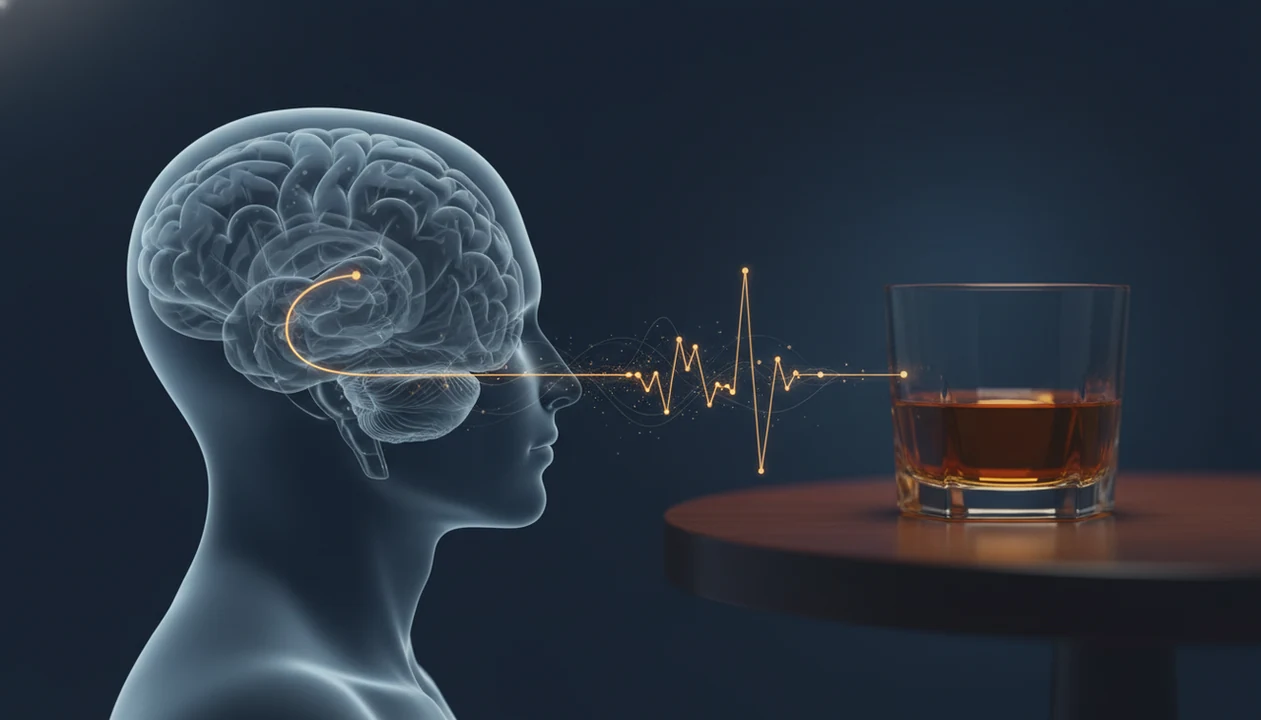
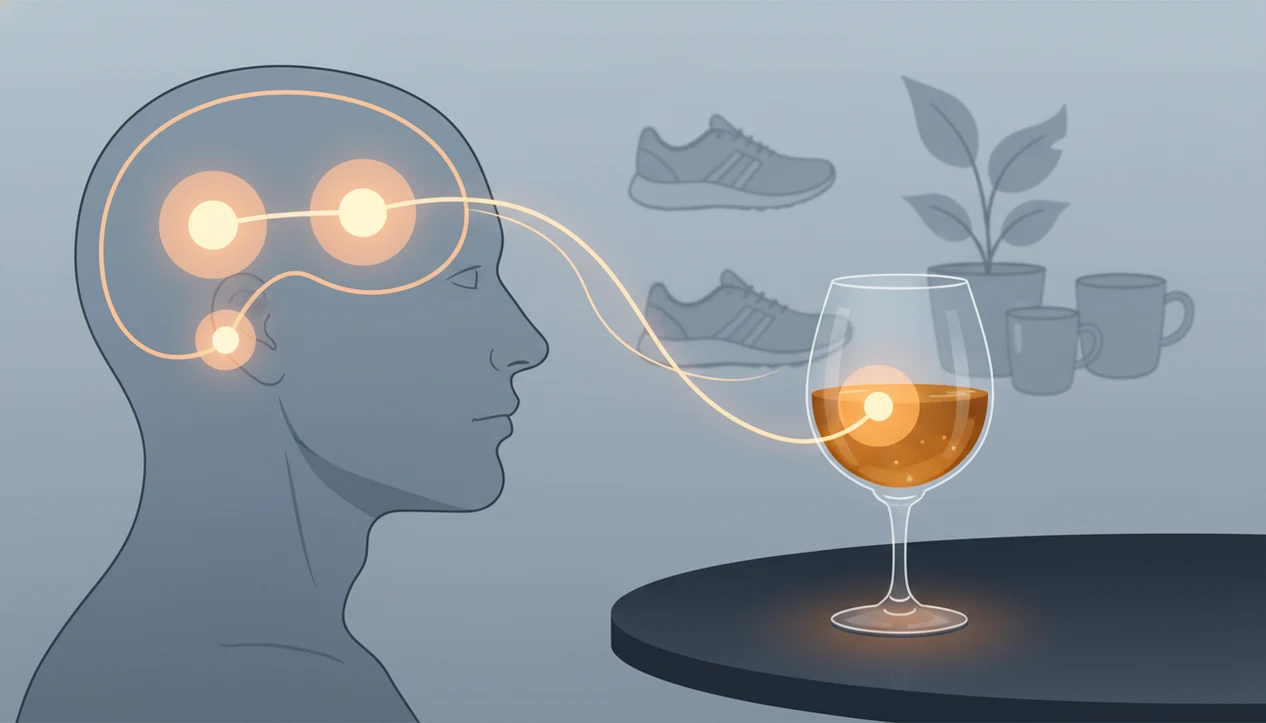
Alcohol changes how the mesolimbic pathway predicts, values, and remembers reward. Dopamine contributes to motivation and learned importance, while GABA, glutamate, opioid signaling, and stress circuits shape sedation, pleasure, relief, and rebound discomfort. The result is not a single chemical high. It is a learned brain-and-behavior pattern.
A setting can become part of that pattern. The usual glass, the end of dinner, a bar sign, or the route past a store may start anticipation before alcohol enters the body. The urge can remain strong even after the actual buzz has become dull. NIAAA's review of addiction and recovery describes changes across reward, stress, learning, and decision-making circuits.
Swap the expected reward, not just the beverage
Name what alcohol was supposed to provide: relief, connection, confidence, celebration, numbness, or a signal that work is finished. Then choose an action that addresses that same need and do it for 10 to 20 minutes before reassessing the urge.
How alcohol affects brain chemicals linked to mood and pleasure
Alcohol does not add one “feel-good chemical.” It changes several interacting systems. Dopamine helps assign motivation and learned importance. Endogenous opioids contribute to pleasure and relief. GABA has an inhibitory role, while glutamate supports excitation. Alcohol also affects stress systems, which can contribute to anxiety, irritability, and unease after its immediate effects wear off.
Serotonin is often mentioned in discussions of alcohol and mood, but a pleasant or social feeling after drinking cannot be reduced to one serotonin increase. Mood after alcohol also reflects dose, expectations, sleep disruption, personal biology, surroundings, and the rebound that follows sedation.
This broader view explains why chasing a single chemical fix is unlikely to solve persistent drinking. Food, sleep, movement, supportive contact, cue management, and treatment can address different parts of the pattern. There is no established short “dopamine detox” that treats alcohol use disorder or instantly restores motivation.
Why the buzz fades while wanting can grow
Why does alcohol stop feeling good? Alcohol can stop feeling good when the brain adapts to repeated reward-circuit stimulation, so the same amount produces less reward than it used to.
Tolerance means the brain has adjusted. The drink that once felt like a clean shift in mood may later feel muted, short-lived, or oddly necessary. Some people then drink more to chase the old effect. Others notice natural rewards feel flatter too, like a favorite playlist, a joke at dinner, or a quiet morning walk.
Not everyone who drinks has the same brain changes. Amount, frequency, genetics, sleep, stress, and mental health all matter. For people comparing tolerance and cravings, alcohol dopamine tolerance explains the adaptation loop in more detail.
For repeated heavy drinking, needing more alcohol for the same effect is often a sign of reward-system adaptation, not a lack of discipline.
Why repeated drinking increases alcohol tolerance and changes the brain's reward response
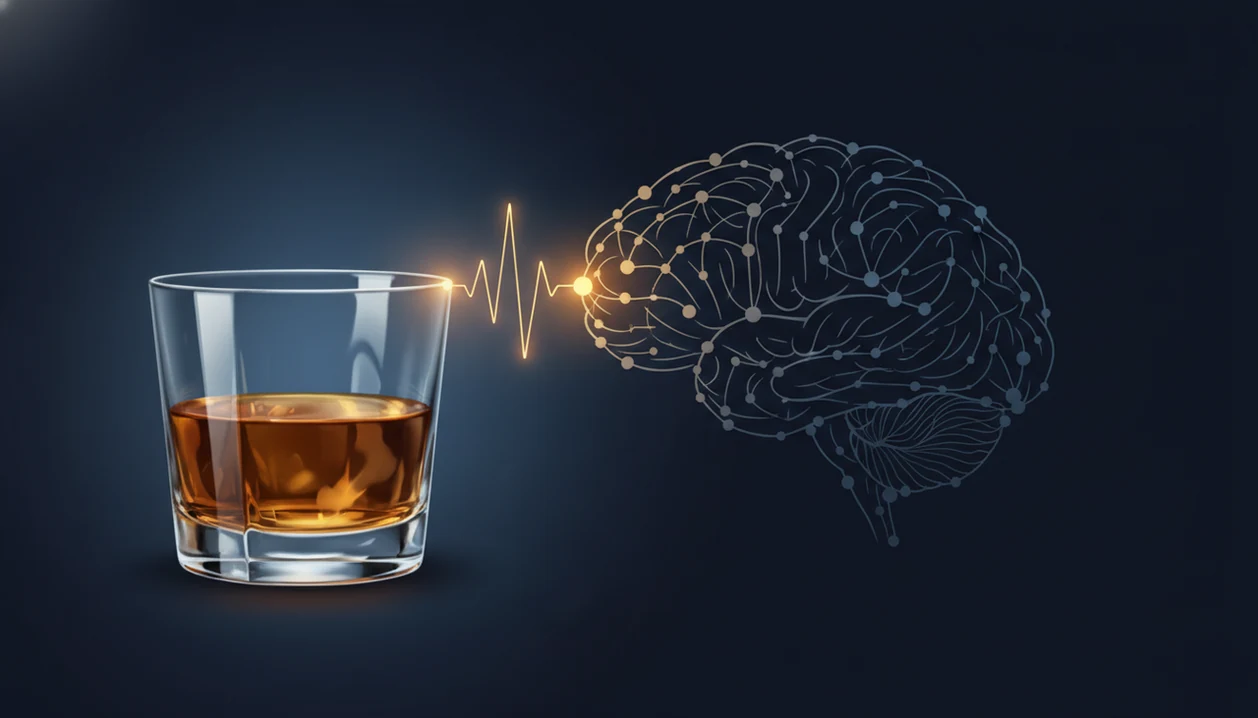
Alcohol tolerance develops through brain compensation, learned routines, and sometimes changes in alcohol metabolism. Reward tolerance can make the usual drinks feel less satisfying. Functional tolerance can make someone look more controlled while alcohol still affects judgment, reaction time, and coordination. Behavioral tolerance means a person has learned to perform familiar tasks while drinking, but that apparent control may disappear in an unfamiliar setting.
This helps explain why one drink may stop feeling like enough. The brain expects the old shift in mood, receives only part of it, and pushes for another drink. Alcohol also weakens inhibition after drinking begins, so a plan for two drinks can become harder to follow after the first round. Feeling less intoxicated does not mean blood alcohol concentration is lower or that driving is safe.
Treat rising tolerance as a warning, not a skill. Record the amount you planned, the amount you drank, and the point when the plan changed.
Alcohol dopamine tolerance is more than downregulation
| Type | What changes | What you may notice |
|---|---|---|
| Reward tolerance | Reward signaling and cue learning adapt | The same drinks feel less satisfying |
| Functional tolerance | The brain compensates for depressant effects | A person looks controlled but remains impaired |
| Behavioral tolerance | Familiar tasks are practiced while drinking | Performance worsens in new situations |
| Metabolic tolerance | Alcohol processing changes | Effects may feel delayed or less intense |
Alcohol dopamine tolerance is therefore not proof that dopamine receptors have simply switched off. Context, metabolism, compensation, stress, and learned expectations all contribute. Anticipation can also stay powerful after pleasure fades. Friday evening, a particular chair, or the sound of a bottle opening may predict relief so reliably that wanting begins before drinking.
The safest reading of high tolerance is not “I handle alcohol well.” It is that more alcohol may be required to notice the desired effect, while impairment and health risks remain. A lower felt effect does not make driving, medication interactions, or additional drinks safer.
How alcohol changes the brain reward system as pleasure fades
Early drinking may combine pleasure, social ease, lowered inhibition, and a quick change in mood. With repeated heavy use, that reward can weaken while learned wanting remains. The brain may still react to the usual hour, bottle, room, or emotional state, even when drinking now brings only brief relief followed by poor sleep or next-day anxiety.
This gap between wanting and liking is one reason cravings can persist after alcohol stops feeling good. The drink is no longer delivering the remembered result, but the cue still predicts it. Stress adds another layer: alcohol may temporarily reduce discomfort, reinforcing the belief that it is necessary to feel normal.
Recovery means building new outcomes repeatedly. An evening cue followed by dinner, a walk, a call, or sleep preparation gives the brain new information. The first replacement may feel weaker than alcohol because it is not yet well learned. Consistency matters more than finding a substitute that produces an identical rush.
Pleasure drinking vs drinking for relief
Drinking to feel normal usually means alcohol has shifted from reward to relief: the drink temporarily removes discomfort rather than adding genuine pleasure. Positive reinforcement is drinking for a buzz, pleasure, ease, or social relaxation. Negative reinforcement is drinking to reduce anxiety, irritability, insomnia, low mood, shaky focus, or withdrawal discomfort.
That shift matters. Stress circuitry can join the habit loop, so alcohol feels like relief even while it worsens the baseline. The first drink may quiet the edge for an hour, but the next day’s tension can become another cue. The party cooler packed with cans starts to look less like fun and more like insurance.
Feeling calm after alcohol does not prove alcohol is fixing anxiety. It may be sedation, withdrawal relief, or a temporary drop in distress. Get medical advice before stopping if you drink heavily every day or have previously had withdrawal seizures, confusion, hallucinations, or other severe symptoms. For emergency-oriented symptom lists, MedlinePlus notes that alcohol withdrawal can include seizures, hallucinations, fever, and severe confusion: medlineplus.
Talk with a clinician before stopping suddenly if you drink heavily every day, have had withdrawal before, or use other sedating substances. Call emergency services for seizures, hallucinations, confusion, severe agitation, fever, or rapidly worsening symptoms.
Why alcohol causes cravings through neuroadaptation
Neuroadaptation means the brain changes its responses after repeated alcohol exposure. Cravings can then come from several places: a conditioned cue, an expected reward, stress, rebound discomfort, or withdrawal. A 9 p.m. urge after seeing the usual glass is different from shaking, sweating, nausea, or a racing heart after stopping heavy daily drinking.
Separate cue cravings from possible withdrawal
- Cue cravings often follow a place, person, time, emotion, or routine.
- Relief cravings appear when alcohol is expected to quiet anxiety, insomnia, irritability, or physical discomfort.
- Withdrawal may include tremor, sweating, nausea, insomnia, a fast pulse, agitation, seizures, hallucinations, or confusion.
Cue cravings can often be met with delay, a scene change, food, movement, or contact with another person. Suspected withdrawal needs a different response. People who drink heavily for a prolonged period should get medical advice before stopping suddenly. Do not try to handle confusion, hallucinations, seizures, or rapidly worsening symptoms alone.
How GABA affects alcohol cravings, anxiety, dependence, and withdrawal
GABA acts like part of the brain's braking system, while glutamate contributes to excitation. Alcohol temporarily increases inhibitory effects and suppresses some excitation. This can feel calming or sedating. With repeated heavy drinking, the brain compensates. When alcohol is removed, the balance can swing toward overactivity, contributing to anxiety, tremor, sweating, insomnia, agitation, or seizures.
That rebound can create a powerful relief loop. Another drink temporarily quiets the symptoms, teaching the brain that alcohol solves the discomfort. It may actually be relieving effects that repeated drinking helped produce. This is different from a simple cue craving and can require medical withdrawal treatment.
There is no reliable personal countdown for “GABA recovery,” and symptoms alone cannot reveal receptor status. Drinking history, earlier withdrawal episodes, other substances, medications, and medical conditions affect risk. Do not use the idea of balancing GABA as a reason to self-treat potentially dangerous withdrawal.
A next-day alcohol crash or a concerning pattern?
An alcohol dopamine crash is a plain-language way to describe feeling anxious, flat, irritable, or unmotivated after alcohol wears off. It can overlap with poor sleep, stress hormones, withdrawal-like effects, and reward-system adaptation.
| Experience | More likely short-term after-effect | More concerning pattern |
|---|---|---|
| Timing | Low mood the morning after drinking | Low mood repeatedly relieved by drinking again |
| Body signals | Poor sleep, sour stomach, tension | Shaking, sweating, confusion, racing heart |
| Habit loop | “I feel off today” | “A drink is the only thing that fixes this” |
| Risk level | Monitor and reduce triggers | Seek medical help for severe withdrawal or harm risk |
The risky loop is simple: crash, drink to remove the crash, then train the brain to expect alcohol as relief. If stomach symptoms are part of the pattern, alcohol digestive irritation may help you separate craving from physical discomfort.
Alcohol withdrawal signs that need urgent care
Withdrawal can begin within hours after the last drink. Anxiety, tremor, sweating, nausea, insomnia, and a rapid pulse may appear within roughly 6 to 24 hours. Seizures can occur around 6 to 48 hours, while severe confusion and delirium may develop later. These ranges are not a personal forecast, and feeling well early does not guarantee that the danger has passed.
- Call emergency services for a seizure, confusion, hallucinations, severe agitation, fever, or rapidly worsening symptoms.
- Do not stay alone or try to manage suspected severe withdrawal with more alcohol.
- Ask a clinician about a medically supervised plan before stopping if you drink heavily every day or have had serious withdrawal before.
NIAAA's alcohol treatment guide describes withdrawal risks and ways to find appropriate care.
How reward and motivation may feel after quitting
After quitting or cutting back, the reward system may feel uneven before it feels better. Early sobriety can include low motivation, flat mood, broken sleep, irritability, cravings, and the restless legs version of “I need something.”
Withdrawal relief can arrive before deeper reward-system recovery. A person may feel clearer after a few dry days, then still feel bored or emotionally underpowered at night. A flat week does not show that recovery has stopped, since sleep, stress, and reward systems can improve at different rates. It means multiple systems are moving at different speeds.
In a 2024 study, alcohol-induced changes in dopamine reuptake and kappa opioid receptor sensitivity persisted for at least 30 days into abstinence vanderbilt alcohol data. So, recovery is better described as gradual recalibration, not a single dopamine reset.
How dopamine, motivation, pleasure, and cravings change after quitting alcohol
At 48 hours without alcohol, full dopamine recovery should not be expected. Some people experience poor sleep, anxiety, irritability, boredom, low pleasure, cravings, or emotional swings. These experiences are not a precise measure of dopamine, and they can also reflect withdrawal, stress, dehydration, disrupted sleep, or the loss of a familiar evening routine.
Each craving that passes without drinking creates a different learning result. The cue appeared, the brain predicted alcohol, and alcohol did not follow. Repeating that mismatch can gradually weaken the cue's hold. Start by rating the urge from 1 to 10, delaying any decision for 10 to 20 minutes, and watching whether the urge rises, holds, or falls. Use food, movement, a shower, a call, or a planned task during the delay.
Forty-eight hours can also fall within a dangerous withdrawal period for someone who drank heavily for a prolonged time. Medical planning matters more than testing willpower.
Dopamine recovery has no fixed countdown
People often search for alcohol dopamine receptors recovery, but the science is broader than receptor count. It can involve receptor sensitivity, dopamine transport, stress signaling, sleep recovery, learning, and behavior.
Timelines vary. Drinking severity, years of use, sleep debt, stress load, nutrition, mental health, medications, and social environment can all change the pace. Someone with a steady job, safer evenings, and support at home may experience the first month differently from someone white-knuckling every commute past the same liquor store.
Some improvements may show up within days or weeks, especially sleep quality, morning clarity, or fewer rebound cravings. Deeper reward-system changes can take longer. Be careful with guaranteed “dopamine reset” claims. The brain is not a phone battery.
Most people do better with repeatable routines than countdown promises because the next decision point arrives before the science feels settled.
Treatment targets more than dopamine
Craving, unsuccessful efforts to cut down, loss of control, tolerance, withdrawal, and continued drinking despite harm are more useful clinical signs than trying to identify a dopamine high or crash. Evidence-based behavioral care works on triggers, coping skills, stress, emotions, goals, and supportive relationships.
Three medications are approved in the United States for alcohol use disorder. Naltrexone can reduce rewarding effects and urges. Acamprosate can support abstinence and reduce post-cessation symptoms. Disulfiram causes an unpleasant reaction when alcohol is consumed. Medical history, liver or kidney function, opioid use, current drinking, and treatment goals affect which option may be appropriate.
NIAAA's evidence-based treatment overview covers medication and behavioral options. Treatment may be outpatient, intensive outpatient, residential, or inpatient, depending on withdrawal risk and other needs.
Track the cue before it becomes a drink
Use alcohol reward-system tracking to slow the habit loop enough to see what is driving it. A written record turns a vague urge into details you can act on, including its time, trigger, intensity, and duration.
- Record the urge as soon as you notice it, including the time, place, mood, and strongest body signal, such as tight shoulders, hunger, restlessness, or a hollow feeling.
- Name the cue before deciding whether to drink. It might be stress after work, boredom at 9 p.m., a social script, payday, conflict, or the familiar route past a store.
- Use a ten-minute replacement action before reassessing. Drink water, eat something, step outside, shower, text someone, set a timer, or do one small task that changes the scene.
- Review the week for repeat patterns, then adjust limits, dry days, shopping habits, or plans around high-risk times.
- Treat slips as data rather than proof that recovery failed. Write down what happened, what helped, and what would make the next decision easier.
Alcohol, dopamine, and recovery questions
Does alcohol release dopamine?
Alcohol can temporarily increase dopamine signaling in brain reward circuits, particularly early in a drinking episode. Dopamine helps with motivation, learning, salience, and repeating behavior, not pleasure alone. Alcohol also affects GABA, glutamate, opioid signaling, stress systems, sleep, and inhibition, so its effects cannot be explained by dopamine alone.
Why does alcohol stop feeling good?
Repeated drinking can reduce the reward produced by the usual amount. At the same time, cues and stress can keep the urge strong. The result may be more wanting with less pleasure. Sleep loss, tolerance, mood, drinking frequency, and personal biology can all affect this change.
Why do I need more alcohol to feel the same effect?
This is a common sign of tolerance. The brain and body adapt, so the same amount feels less intense or rewarding. Looking or feeling less intoxicated does not mean alcohol is causing less impairment. Rising tolerance can increase consumption and risk, especially if each drink makes it harder to follow the original limit.
How long does dopamine recovery take after quitting alcohol?
There is no fixed dopamine recovery schedule. Sleep or morning clarity may improve within days or weeks, while motivation, pleasure, stress responses, and cue-driven cravings can take longer. Drinking history, withdrawal, mental health, nutrition, medications, sleep, and daily surroundings all influence how recovery feels.
What happens to dopamine after 48 hours without alcohol?
Forty-eight hours is too early to assume dopamine has fully recovered. Low pleasure, irritability, anxiety, poor sleep, boredom, and cravings can occur, but these symptoms are not a direct dopamine test. For a heavy daily drinker, 48 hours may also fall within a dangerous withdrawal period that requires medical care.
What is an alcohol dopamine crash?
It is a nonmedical phrase for feeling flat, anxious, irritable, or unmotivated after alcohol wears off. Poor sleep, dehydration, stress responses, stomach irritation, withdrawal, and reward adaptation may all contribute. Repeatedly drinking again to remove these feelings can strengthen a relief-based drinking loop.
Can resisting a craving retrain the reward system?
It can contribute to new learning. When a familiar cue occurs but alcohol does not follow, the brain receives a different result from the one it predicted. Repeating this process may weaken the cue's pull. A 10 to 20 minute delay with food, movement, a shower, or social contact can make the practice more manageable.
When is alcohol withdrawal dangerous?
Risk is higher after prolonged heavy drinking, especially with previous withdrawal seizures, hallucinations, or confusion. Seizures, hallucinations, severe agitation, fever, confusion, or rapidly worsening symptoms require emergency care. Heavy daily drinkers should get medical advice before stopping suddenly because withdrawal can be life-threatening.