

How Alcohol Affects Bone Density and Fracture Risk
Bottom line
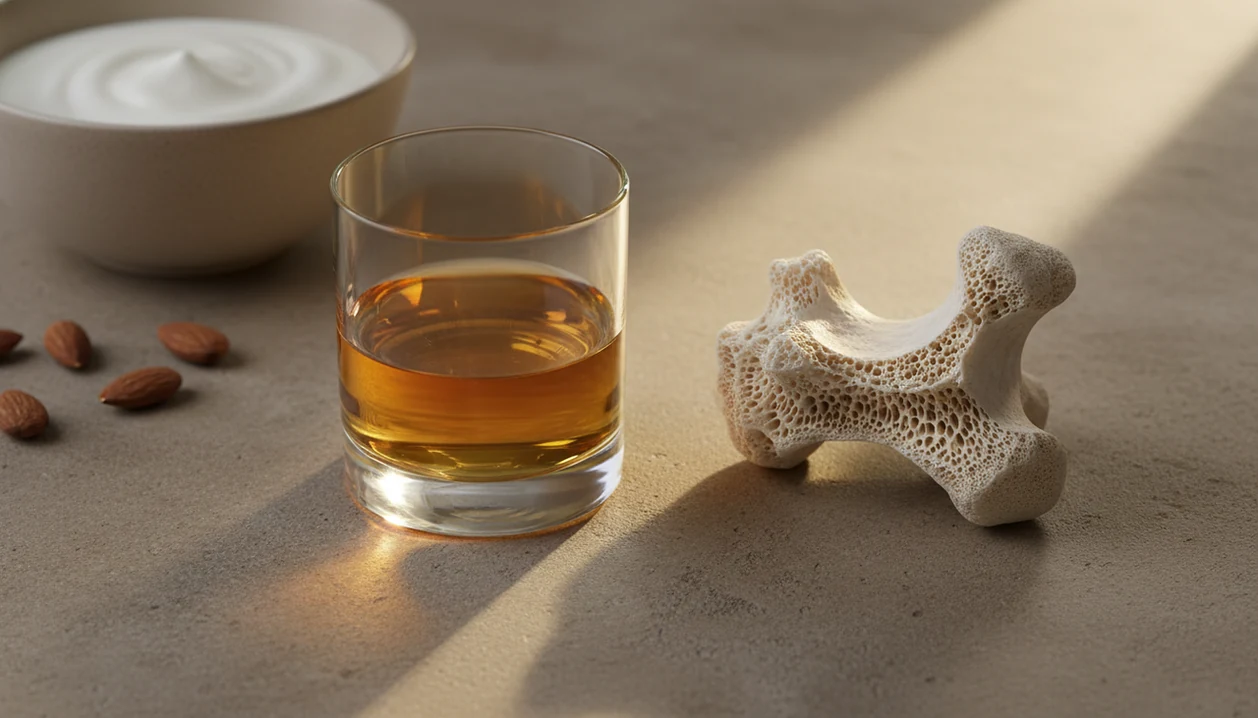
Alcohol can contribute to bone loss by slowing new bone formation, disturbing calcium and vitamin D handling, changing hormones, and increasing falls. Risk is clearest with long-term heavy drinking and rises as intake increases. Cutting back may reduce injury risk quickly, but existing osteoporosis or a low-trauma fracture calls for medical assessment and may require treatment.
Bone loss usually develops without pain or an obvious warning. For someone who drinks regularly, the first sign may be a fracture after a minor fall or a low bone-density result found during an unrelated medical visit.
Alcohol can affect both sides of that problem. Years of heavy use may weaken bone remodeling and nutrition, while a single night of impaired balance can turn thinner bones into a broken wrist or hip. Reducing alcohol is one practical step, but it does not replace osteoporosis screening, adequate food, strength work, or prescribed treatment.
Alcohol and bone loss: five findings that matter
- Chronic heavy drinking is clearly associated with lower bone mineral density, osteoporosis, and fractures, especially when drinking continues for years.
- Alcohol can affect bone cells, alcohol calcium absorption, alcohol vitamin D bones pathways, and sex hormones at the same time.
- Osteoporosis Canada reports increased osteoporosis risk in people who regularly consume 3 or more alcoholic drinks per day osteoporosis alcohol data.
- Heavy drinking is often defined as 15 or more drinks per week for men and 8 or more drinks per week for women, based on NIAAA definitions NIAAA alcohol data.
- Light-to-moderate drinking research is mixed, and possible bone findings should not be used as a reason to drink for bone health.
The quiet part matters. You don't feel bone density dropping during dinner, or while the beer fridge hums during meal prep. The risk builds in the background, like a habit loop you only notice after the cue has already done its work.
How drinking disrupts bone remodeling
Alcohol bone density loss works by disrupting bone remodeling, the ongoing balance between osteoblasts that build bone and osteoclasts that resorb bone.
Bone is not a fixed frame. It is living tissue that gets broken down, repaired, and rebuilt all the time. Chronic alcohol exposure can suppress osteoblast activity, which means new bone is formed more slowly. At the same time, alcohol may tilt the system toward more bone breakdown. Over months and years, that imbalance can lower bone mineral density.
Over months and years, small changes in remodeling can become measurable bone loss.
Alcohol can also worsen nutrition, sleep, inflammation, and liver function. Those indirect pathways matter because bones need steady repair materials, hormones, and recovery time. If someone is also smoking, skipping meals, or sitting more after drinking, the bone signal gets harder to separate. For a wider body-level view, the broader pattern is covered in what alcohol does to your body.
Calcium and vitamin D cannot fully offset heavy drinking
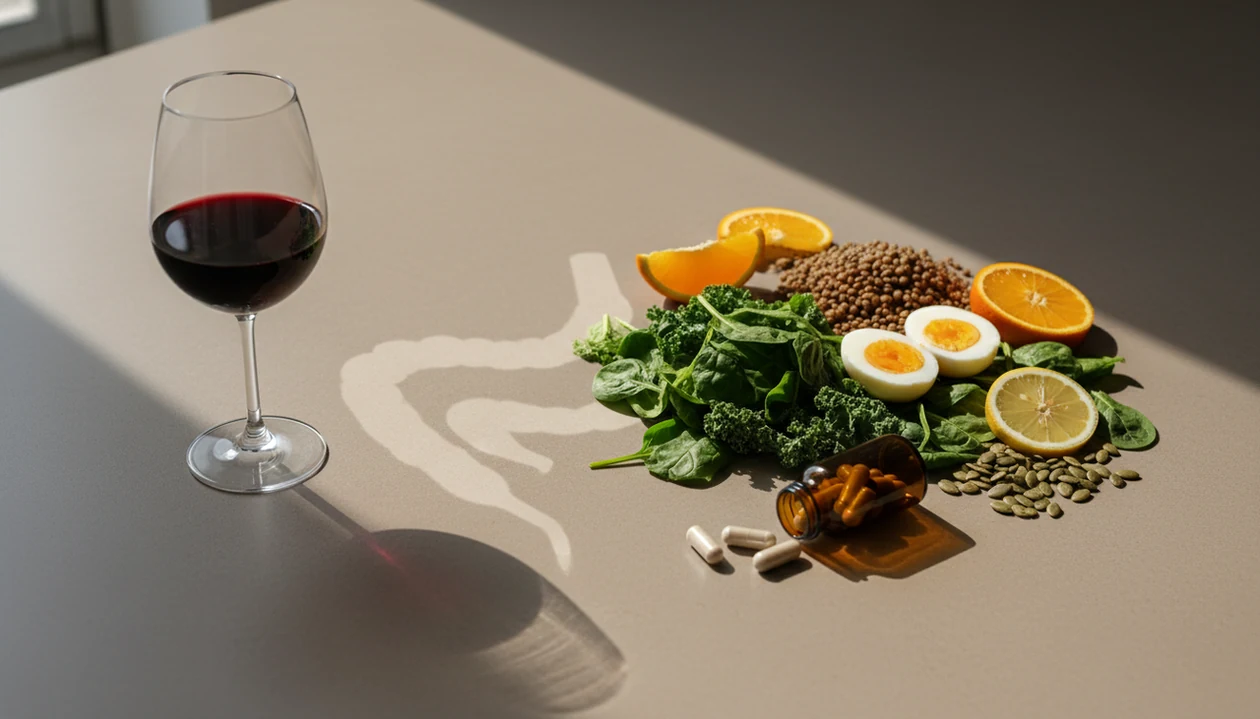
Does alcohol affect calcium and vitamin D for bones? Yes, regular heavy drinking can interfere with alcohol calcium absorption in the gut and can impair alcohol vitamin D bones pathways that help the body use calcium.
Calcium is a core mineral in bone structure. Vitamin D helps the body absorb calcium and move it into the systems that maintain bone, according to the NIH Office of Dietary Supplements the NIH statistics. Heavy alcohol use can reduce calcium absorption, so a calcium-rich meal may not deliver the expected benefit. It can also strain liver-related vitamin D metabolism, which matters because the liver helps convert vitamin D into usable forms.
Calcium and vitamin D supplements may correct deficiencies, but they cannot cancel the effects of heavy drinking on bone.
Calcium tablets, yogurt, leafy greens, or fortified foods may support bone health, but they may not fully offset heavy drinking if absorption and vitamin D function are impaired. A useful assessment puts drinking pattern beside nutrition, vitamin D status, fracture history, and bone density rather than treating any one result in isolation.
Hormones, menopause, and risk in men
Alcohol can raise osteoporosis risk through hormone changes because estrogen and testosterone both help maintain bone density.
Postmenopausal women are especially vulnerable because estrogen is already lower. A 2019 review in women found that chronic, heavy alcohol consumption compromises bone health and increases osteoporosis risk the NIH. The hormone pathway differs by age and sex, but alcohol-related bone damage is not limited to women. Men can also face alcohol-related bone risk through lower testosterone, poorer nutrition, liver effects, inflammation, and increased fall risk.
Assessing possible osteoporosis usually combines a bone-density test with a review of fractures, medications, alcohol use, menopause or hormone changes, and other risk factors.
A sour stomach before a social event can feel like anxiety or hunger. Sometimes it is also a decision point: drink automatically, or pause and choose a replacement action.
How fracture risk changes as drinking rises
Osteoporosis Canada reports increased osteoporosis risk in people who regularly consume 3 or more alcoholic drinks per day, but no single cutoff fits every body. The 2-drink, 3-to-6-drink, and more-than-6-drink weekly risk bands below follow Canada's Guidance on Alcohol and Health ccsa alcohol data.
| Drinking pattern | What the research suggests | Practical reading |
|---|---|---|
| 2 or fewer drinks per week | Newer Canadian guidance frames overall alcohol-related harm as negligible to low for many healthy adults. | Lower risk does not mean zero risk. |
| 3 to 6 drinks per week | Risk is framed as moderate in newer guidance. | Watch patterns, not just totals. |
| More than 6 drinks per week | Risk rises with higher weekly intake. | Bone, liver, sleep, and fall risk can stack. |
| 0.5 to 1 drink per day | A cohort cited by Osteoporosis Canada found 1.38 times osteoporosis risk versus non-drinkers. | Daily habit may matter even when the amount feels small. |
| 1 to 2 drinks per day | The same cohort found 1.34 times osteoporosis risk versus non-drinkers. | Individual risk still depends on context. |
| 3 or more drinks per day | Osteoporosis Canada reports increased osteoporosis risk at this level. | This is a clear concern zone. |
Exact thresholds vary because studies use self-reported drinking and different definitions. Risk is cumulative and shaped by age, sex, diet, smoking, activity, medications, and medical history. The broader drinking-risk context is also covered in our alcohol reduction guides.
Ask a clinician about bone-density testing after a low-trauma fracture, unexplained height loss, repeated falls, prolonged heavy drinking, or a diagnosis of osteopenia or osteoporosis. Call emergency services for a seizure, confusion, hallucinations, severe agitation, fainting, chest pain, repeated vomiting, or other severe symptoms after reducing alcohol.
The fracture numbers behind the risk
A 2023 systematic review and dose-response meta-analysis found that the highest alcohol intake, compared with the lowest, was associated with relative risks of 1.26 for all fractures, 1.24 for osteoporotic fractures, and 1.20 for hip fractures. Each additional 14 grams of alcohol per day, about one U.S. standard drink, was associated with a 6% increase in total-fracture risk. These are population-level associations, not a prediction of one person's exact risk. See the 2023 analysis of alcohol consumption and fracture risk.
A separate 2022 review found a clearer hip-fracture signal at higher daily intake. Compared with no alcohol, the relative risk was 1.33 at three drinks per day and 1.59 at four drinks per day. Earlier research sometimes suggested lower risk among light drinkers, but observational findings do not prove that alcohol protects bone. The authors could not identify a precise beneficial amount. Alcohol should not be started or continued as a bone-health treatment. Read the systematic review of alcohol, bone density, and fracture risk.
The immediate threat: falls and fractures
Fracture risk is not only about bone density; it also depends on how likely a person is to fall.
Alcohol can impair reaction time, balance, coordination, judgment, and sleep quality. That combination matters more when bones are already thin. A minor trip on a hallway rug is different when someone has osteopenia, osteoporosis, older age, a prior fracture, or medications that affect balance.
Weakened bones plus higher fall likelihood is the real-world fracture risk combination.
This is not about panic. It is about friction. Move the charger cord out of the walkway. Turn on the bathroom light. Skip the extra drink when your legs already feel loose. If alcohol also leaves you wiped out the next day, alcohol blood sugar fatigue can help explain one common pattern.
Protect your bones while cutting back
Cutting back is one lever for protecting future bone strength, not a guaranteed reversal of established bone loss.
- Ask about bone density testing if you have risk factors, fractures, menopause, long-term heavy drinking, or osteoporosis concerns.
- Add weight-bearing movement such as walking, stair climbing, or supervised impact work if it is safe for your joints.
- Build resistance training with bands, weights, or body-weight work to support muscle and balance.
- Check the raw materials by prioritizing protein, calcium-rich foods, and vitamin D status.
- Reduce fall friction with better lighting, stable shoes, clear floors, and fewer late-night stairs after drinking.
- Track drinking cues so you can spot the routine before the reward takes over.
The best drink-less tools deliver private tracking, limit planning, craving notes, and streak repair, not a diagnosis or medical detox plan.
For people cutting back, tracking drinks and cravings is often easier than relying on memory because the decision point is recorded while the trigger is still fresh. If you want app-focused options, the best drink less app guide compares common workflows.
Count drinks accurately before changing your pattern
Start by recording every drink for several days without rounding down. One U.S. standard drink is about 12 ounces of regular beer, 5 ounces of wine, or 1.5 ounces of spirits. Strong beer, large wine glasses, generous home pours, and many cocktails contain more than one drink. The CDC guide to checking your drinking can help with serving sizes.
- Measure home pours instead of judging by the glass.
- Write down the time, amount, and situation for each drink.
- Identify the drinks tied to falls, missed meals, poor sleep, or skipped exercise.
- If withdrawal is not a concern, consider alcohol-free days and keeping less alcohol at home.
- If attempts to cut down repeatedly fail, ask a clinician about counseling and medication options.
Do not make a sudden stop on your own if you drink heavily most days, drink in the morning, need alcohol to feel steady, or have had withdrawal, a seizure, or delirium before. Alcohol withdrawal can include shaking, sweating, nausea, anxiety, insomnia, rapid pulse, seizures, and delirium tremens. Arrange medical advice before stopping. The NIAAA clinical guide to alcohol withdrawal and recovery describes the serious complications.
Ask about scans, labs, and withdrawal safety
Talk to a clinician if alcohol, falls, fractures, or known bone loss are starting to overlap. This is especially important after a low-trauma fracture, with diagnosed osteoporosis, during or after menopause, or when repeated falls are becoming part of the pattern.
- Bring up your drinking honestly if you drink heavily most days, need alcohol to feel steady, or notice withdrawal symptoms such as shaking, sweating, nausea, anxiety, or insomnia.
- Avoid solo detox attempts if you may be physically dependent. Stopping suddenly can be dangerous, and a clinician can help plan safer withdrawal support.
- Ask how to interpret tests such as a DEXA scan, vitamin D level, calcium labs, liver tests, or hormone-related findings. Numbers need context, not guesswork.
- Review supplements and medications before relying on calcium, vitamin D, or over-the-counter products. Supplements can support a plan, but they do not replace osteoporosis treatment when treatment is indicated.
- Seek emergency help now for severe withdrawal, confusion, seizures, a head injury, severe pain after a fall, or any injury that could involve a fracture.
Questions about alcohol and bone strength
Does alcohol cause osteoporosis?
Alcohol can contribute to osteoporosis, especially when heavy drinking continues for years, but it is rarely the only cause. Age, menopause, low body weight, smoking, steroid use, nutrition, inactivity, and family history also matter. A clinician can assess the combined risk and decide if bone-density testing is appropriate.
How much alcohol can weaken bones?
There is no single cutoff that predicts bone loss for every person. Research shows a clearer rise in hip-fracture risk around three or more drinks per day, and total-fracture risk rises as average intake increases. Lower intake is not risk-free, especially with prior fractures, poor nutrition, or balance problems.
Does alcohol block calcium absorption?
Regular heavy drinking can reduce calcium absorption in the gut and disrupt processes that help the body use calcium. It can also lead to missed meals and poorer overall nutrition. Calcium-rich food or a supplement may help correct low intake, but it cannot fully counter ongoing heavy alcohol use.
How does alcohol affect vitamin D and bones?
Heavy alcohol use can interfere with vitamin D metabolism, including liver processes needed to convert vitamin D into useful forms. Vitamin D helps the body absorb calcium and maintain bone. A clinician may check vitamin D when bone loss, poor nutrition, liver disease, or long-term heavy drinking is present.
Is wine good for bone density?
Wine should not be used to prevent osteoporosis. Some observational studies found higher bone density or fewer hip fractures among light drinkers, but those studies do not prove that alcohol caused the difference. Higher intake is consistently associated with greater fracture risk, and a protective amount has not been established.
Can bone density improve after quitting alcohol?
Reducing or stopping alcohol removes one factor that can disrupt bone remodeling, nutrition, hormones, and balance. Recovery depends on age, the severity and duration of bone loss, diet, activity, and other medical conditions. Established osteoporosis may not reverse on its own and can still require medication and monitoring.
How soon can cutting back reduce bone-related risk?
The earliest benefit may be a lower chance of falling rather than a measurable change in bone density. Less intoxication can improve coordination and reduce risky nighttime walking, stair use, and injuries. Bone remodeling is slower, so changes on a bone-density scan generally take much longer to evaluate.
Does alcohol affect a bone-density test result?
A bone-density scan measures mineral density and is not usually changed by one recent drink. Long-term drinking can affect the underlying bone density the scan detects. Tell the clinician about your usual intake because it helps them interpret the result alongside fractures, medications, menopause, nutrition, and other risk factors.