
Why Alcohol Makes You Hungry and Triggers Food Cravings
Short answer
Alcohol can make you hungry by increasing the brain's response to food cues, weakening fullness feedback, and lowering restraint around rewarding foods. Its calories may not satisfy hunger like a balanced meal. Drinking can also reinforce habits, such as ordering pizza after a night out, until the food craving becomes part of the drinking routine.
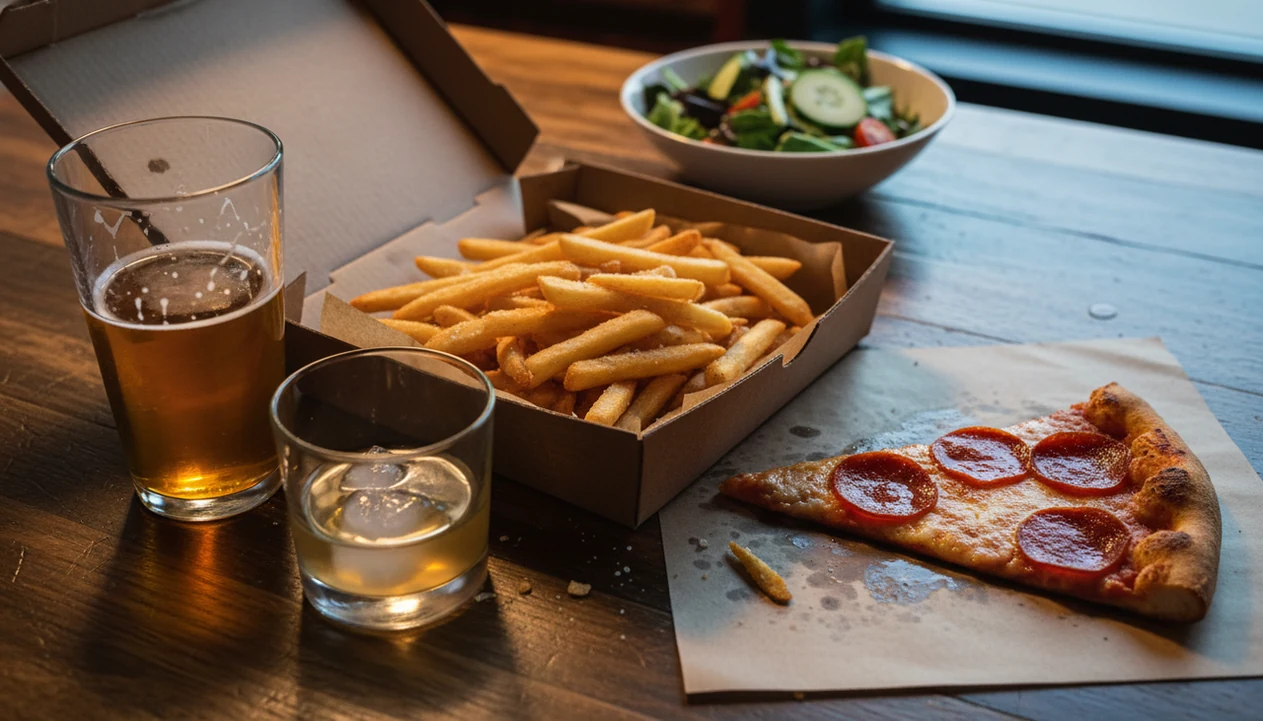
The craving may not appear with the first sip. It often arrives when someone opens a menu, friends order fries, or a delivery app appears at midnight. By then, alcohol has made a planned snack or drink limit harder to follow.
This response is not a simple failure of willpower. Brain reward, appetite signals, meal timing, learned routines, and the drinking environment can all contribute. Planning dinner and a late snack before drinking gives you a more reliable option than making food decisions after several drinks.
Why hunger can rise after the first drink
- Alcohol can activate hunger pathways. It may increase hypothalamic response to food cues and make alcohol hunger signals feel more urgent than they felt before the first drink.
- Meal intake often rises. Studies in healthy adults show alcohol before or during meals can raise energy intake by roughly 20 to 30 percent compared with non-alcohol conditions.
- This response is more than reduced self-control. Food reward, fullness signals, biology, and lowered inhibition can reinforce one another.
- The craving may arrive late. Some people do not feel hungry right away; the urge gets louder when menus appear, delivery apps open, or someone orders fries.
- Planning works better before drinking. For most social drinkers, a pre-decided meal and drink limit is often easier than trying to negotiate with cravings at midnight.
The taxi queue beside glowing vape tips is a real decision point. Food, nicotine, and alcohol cues can arrive together.
Your brain gives food cues more weight
Alcohol can make food cues feel more important by changing activity in the hypothalamus, a brain region involved in hunger, energy balance, and response to food signals. A pizza smell or menu photo can suddenly command more attention than it did before drinking.
AgRP neurons are hunger-signaling cells. They are often described as starvation-alert neurons because they help push the body toward eating when energy feels low. Animal research suggests alcohol can activate these cells, which helps explain why hunger can feel strangely intense after drinking. For example, a Nature Communications animal study reported that alcohol activated AgRP neurons and increased food intake in mice: https://www.nature.com/articles/ncomms14014.
A 2015 neuroimaging study found that alcohol increased hypothalamic activation in response to food odors and was linked with higher food intake afterward. That matches the lived pattern: the bar snack bowl is easy to ignore at 8 p.m., then suddenly looks like a plan at 10:30. Food smell, menus, delivery apps, and seeing other people eat can all hit harder after alcohol.
Leptin, ghrelin, and blurred fullness signals
Does alcohol affect fullness hormones? Yes, alcohol may interfere with satiety signaling, including leptin, but the human evidence is still small and not always consistent.
Leptin is a hormone that helps tell the brain there is enough stored energy and that food intake can slow down. One human study found that alcohol inhibited leptin secretion, which could make “I’m full” signals harder to hear. That is the simple version of alcohol leptin cravings: you ate dinner, but your body still keeps asking for more.
Ghrelin and cortisol may also matter. Ghrelin is linked with hunger, and cortisol is linked with stress response. Human studies are mixed, so it is safer to treat them as possible contributors rather than settled explanations. The practical takeaway is still useful: alcohol can blur the line between true hunger, stress eating, and reward-seeking. If weeknight drinking keeps turning into overeating, the broader pattern may fit why moderation fails with alcohol.
Why do pizza, fries, and takeout sound so good?
Alcohol drunk food cravings usually happen because inhibition drops while food reward rises. The future goal, “I wanted to sleep well,” gets quieter. The immediate reward, “salty fries would fix this feeling,” gets louder.
Highly palatable foods are built for that moment. Salt, fat, sugar, warmth, crunch, and portion size all land harder when dopamine, stress, habit, and hunger cues overlap. Greasy food cravings are not just habit, but routine still matters. If every night out ends with the same takeout counter, the street itself becomes part of the cue.
The bartender reaching for the usual bottle can be the first cue. The pizza order is the second.
None of this needs shame. Next-day regret often sounds like, “I already messed up, so why not keep going?” A better response is streak repair: name the trigger, eat normally at the next meal, and make the next choice easier.
If you drink heavily or daily, get medical advice before stopping suddenly because alcohol withdrawal can be life-threatening. Call emergency services for a seizure, hallucinations, severe confusion, trouble breathing, chest pain, inability to stay awake, or uncontrollable vomiting.
The apéritif effect: smell, taste, and the first bite
Does alcohol make food more appealing? Often, yes. The alcohol taste buds food connection is not only about the tongue; it also involves smell, reward, attention, and the apéritif effect.
The apéritif effect means alcohol before or during a meal can increase how much people eat. In a controlled study of 35 adults, alcohol exposure increased later food intake by about 30 percent compared with a saline condition. Experimental research has also found roughly 20 to 30 percent higher total energy intake after alcohol in some meal settings. A review of alcohol, appetite, and energy balance summarizes this pattern across controlled meal studies: https://pubmed.ncbi.nlm.nih.gov/20096714/.
The tricky part is timing. Alcohol’s appetite-boosting effect may be strongest once eating begins, not always before the first bite. That matters. The first snack can open the gate.
For people cutting back, pre-deciding the first food choice is often more useful than promising to “just be good later.” More habit-based drinking strategies are collected in our alcohol reduction guides.
Alcohol calories vs a filling meal
Alcohol provides 7 kilocalories per gram, which is more energy-dense than carbohydrate or protein at 4 kilocalories per gram. The National Institute on Alcohol Abuse and Alcoholism also explains that alcohol contains 7 calories per gram: https://www.niaaa.nih.gov/publications/brochures-and-fact-sheets/alcohol-and-calories. Yet those calories often do not register like a balanced meal with protein, fiber, and volume.
The body may add those drink calories without reducing the amount of food eaten later. A few drinks can add energy, then the body still asks for food as if nothing happened. Some researchers and educators call alcohol a “metabolic orphan” as a metaphor: it carries energy, but it does not behave like a normal food group in appetite planning.
Blood sugar can add another layer. Alcohol can disrupt normal fuel handling, especially when drinking replaces dinner or stretches late into the night. Low or unstable energy may feel like hunger, shakiness, irritation, or the blunt “I need something” feeling. Not dramatic. Just persuasive.
If drinking also brings blackouts or patchy recall, read about alcohol memory gaps separately; that is a different risk signal.
How alcohol affects blood sugar, hunger, and cravings
Alcohol can complicate the liver's usual work of releasing stored glucose between meals. The risk of an energy dip is more concerning when someone skips food, drinks on an empty stomach, or goes many hours without eating. Shakiness, sweating, irritability, mental fog, and urgency can then feel like a need for food, alcohol, or both. A sugary mixer may raise blood sugar first, so the pattern is not always a simple or immediate drop.
- Notice the sequence: missed meal, drinking, body alarm, then a food or alcohol craving.
- Eat something with protein, fiber-rich carbohydrate, and fat rather than relying only on a sweet snack.
- Wait 10 to 20 minutes, then reassess the shakiness, urgency, and specific desire for alcohol.
- Record the meal timing, drink count, symptoms, and time the craving began.
Blood sugar does not explain every craving. Stress, withdrawal, people, places, and repeated habits can produce the same urgent feeling. Controlled feeding research also shows that alcohol may increase eating even while adding substantial calories, so appetite cannot be reduced to glucose alone. A review of alcohol and food intake studies found that people often did not offset alcohol's calories by eating less.
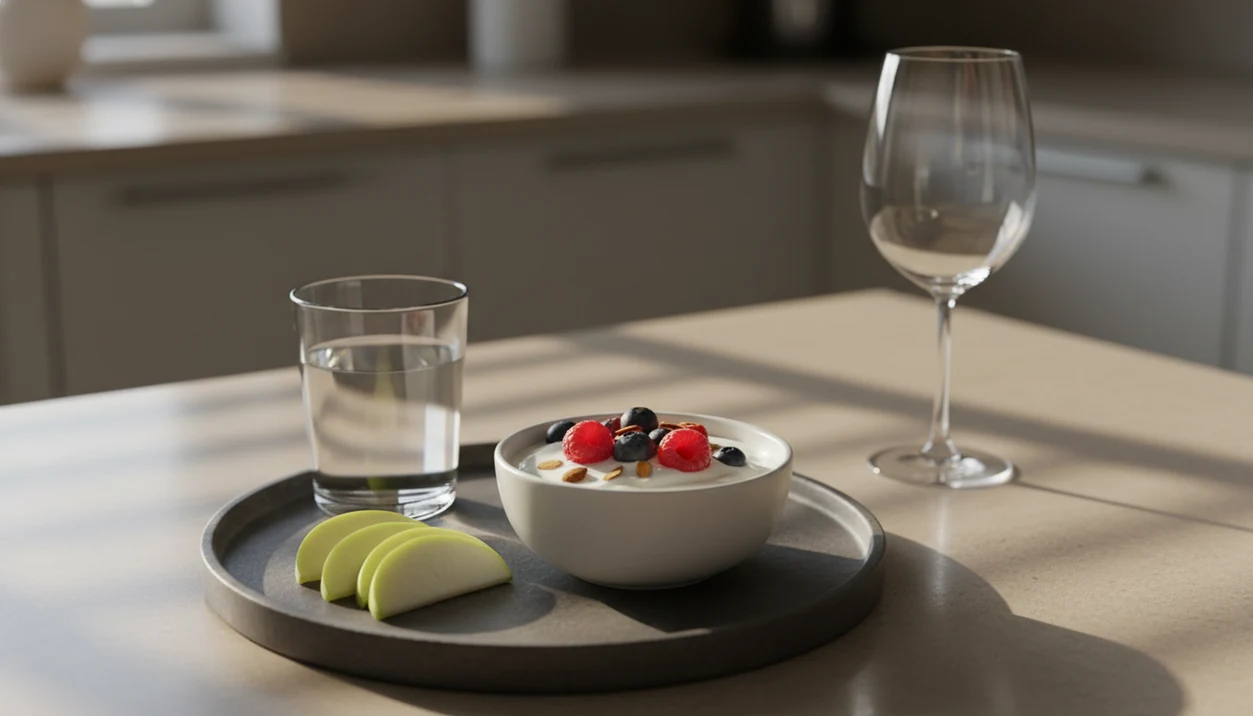
Try a planned snack before the usual risk period, such as yogurt and fruit, a sandwich, or another food containing protein and fiber.
Plan food and drinks before cravings start
A drinking plan reduces alcohol-related hunger by removing decisions before cravings are loud. It is harm reduction, not a guarantee that biology can be hacked away.
- Eat a balanced meal before the first drink, with protein, fiber, and some fat.
- Set a drink limit before leaving home, then make the next drink non-alcoholic when you hit it.
- Pre-decide a snack that is satisfying but not a full late-night second dinner.
- Slow the drinking pace by alternating with water or another alcohol-free drink.
- Afterward, write down what happened: the time, setting, food cue, drink count, craving strength, and one change to try next time.
Make a drink limit measurable
A written limit works only when the pours are counted accurately. In the United States, one standard drink contains 14 grams of pure alcohol. That equals 12 ounces of 5% beer, 5 ounces of 12% wine, or 1.5 ounces of 40% spirits. Strong beer, large wine pours, and many mixed drinks contain more than one standard drink. The CDC standard drink guide provides examples, and NIAAA guidance on drink amounts explains why container size alone can be misleading.
- Write down the beverage size and alcohol percentage.
- Count refills instead of estimating from the final glass.
- Record food cravings beside the time and number of drinks.
- Do not treat a moderate-drinking limit as a safe target for everyone.
Ordinary hunger or an alcohol-amplified craving?
Alcohol-amplified craving is usually faster, narrower, and more reward-driven than ordinary hunger. Identifying the pattern early creates a brief opening to eat, change locations, or close the delivery app.
| Signal | Ordinary late-night hunger | Alcohol-amplified craving |
|---|---|---|
| Onset | Builds gradually | Arrives suddenly after drinks or food cues |
| Food flexibility | A sandwich, yogurt, eggs, or leftovers sound fine | Only pizza, fries, sweets, or takeout sound “right” |
| Fullness | Easier to stop when satisfied | Eating past fullness feels more likely |
| Body cues | Empty stomach, steady hunger | Restless legs, tight chest, “I need something” |
| Environment | Happens even in a quiet kitchen | Stronger around bars, delivery apps, friends eating, smoking, or vaping |
Sleep loss, stress, vaping, smoking, and social cues can stack with alcohol. The USB charger tangled beside the bed might remind someone of a vape; the phone beside it might offer delivery in two taps. For people comparing tracking options, a best drink less app guide can help sort simple limit tools from broader craving trackers.
How hunger, thirst, and low blood sugar can intensify or resemble alcohol cravings
Hunger and thirst can produce uncomfortable signals that resemble a craving. Low or unstable energy may bring shakiness, sweating, irritability, and a narrowed need to fix the feeling. Dehydration can bring dry mouth, headache, dizziness, fatigue, and poor concentration. If alcohol has repeatedly followed those sensations, the brain may connect the discomfort with a familiar drink. Research also supports a relationship between hunger signaling and alcohol reward, although no single hormone accounts for every craving. A review of ghrelin and alcohol reward describes the role of learned cues and reward circuitry.
| Possible trigger | Common clues | First response |
|---|---|---|
| Thirst | Dry mouth, headache, dizziness | Drink water and pause |
| Hunger or low energy | Empty stomach, shakiness, irritability | Eat protein, fiber, and carbohydrate |
| Alcohol cue | A specific drink, store, route, or time | Change location and delay |
| Possible withdrawal | Sweating, tremor, nausea, confusion | Seek medical guidance |
A 20-minute hunger and thirst reset
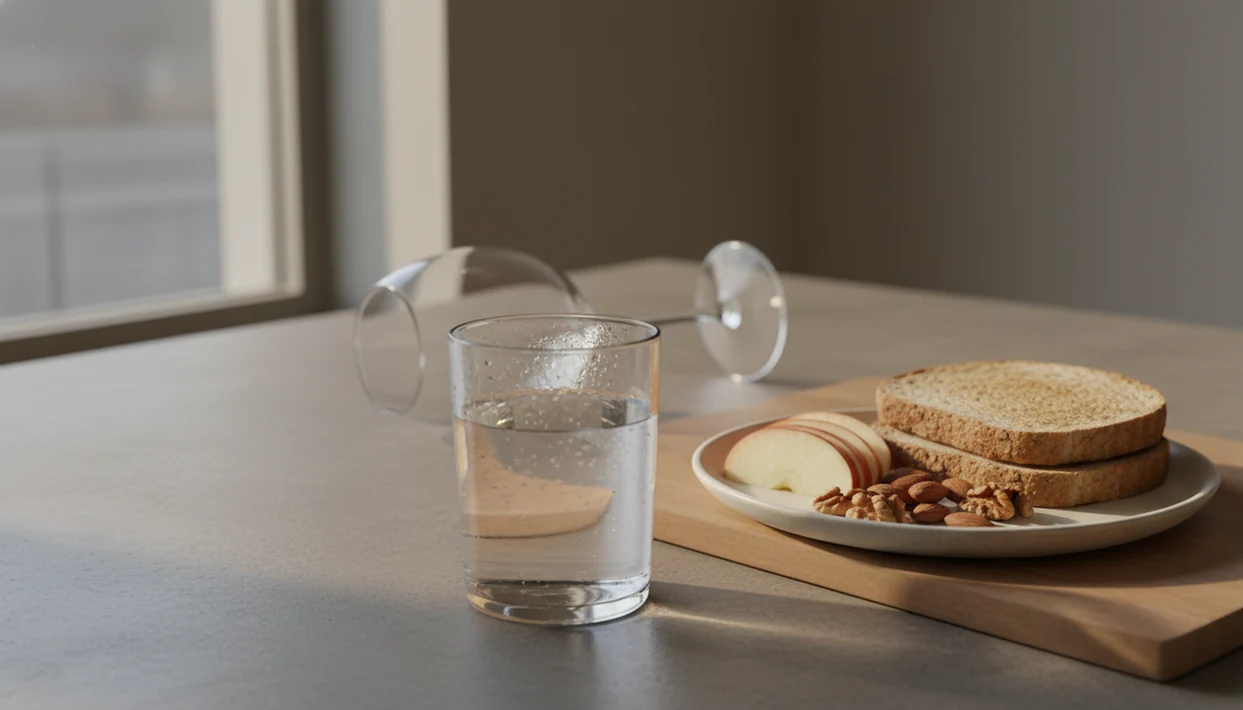
- Drink water.
- Eat the snack or meal you planned.
- Move away from alcohol and ordering cues.
- Set a timer for 20 minutes.
- Recheck the physical symptoms and the alcohol craving separately.
Water and food can remove common craving amplifiers, but they do not treat alcohol withdrawal. If symptoms improve only after drinking, or include shaking, sweating, vomiting, confusion, or hallucinations, get medical advice rather than trying to manage the problem with snacks.
When hunger, drinking, or withdrawal needs professional care
Get professional help if drinking, cravings, or eating patterns feel unsafe, hard to control, or keep causing consequences. Tracking can show patterns, but it is not treatment, detox care, or emergency support.
- Contact a clinician promptly for shaking, sweating, nausea, severe anxiety, confusion, seizures, or a need to drink alcohol to feel normal. If you have been drinking heavily and regularly, do not stop suddenly without medical advice.
- Tell someone qualified if blackouts, injuries, risky situations, missed obligations, relationship problems, or drinking despite clear harm are becoming part of the pattern.
- Reach out for eating support if alcohol is followed by binge eating, purging, fasting to compensate, or a frightening loss of control around food.
- Ask for the right care from a primary care clinician, therapist, addiction counselor, registered dietitian, or eating disorder specialist. If there is immediate danger, severe withdrawal, self-harm risk, or medical distress, use local emergency services now.
- Use tools as backup for notes, streaks, and cues, while letting trained professionals handle diagnosis, medication, detox planning, and ongoing treatment.
Alcohol hunger questions
Why does alcohol make me hungry?
Alcohol can increase attention to food, weaken fullness feedback, and reduce restraint. It also becomes linked with familiar foods and settings over time. Its calories may not satisfy appetite like a meal containing protein, fiber, and volume, so drinking can add energy without preventing later eating.
Does alcohol increase appetite even after dinner?
It can. Alcohol may make food cues and highly rewarding foods more compelling even when the stomach is not empty. The effect may become stronger once eating starts, which helps explain why one snack can turn into prolonged grazing after an otherwise adequate dinner.
Why do I crave junk food when I drink?
Alcohol lowers inhibition while making immediate rewards more influential. Salty, fatty, sweet, warm, and crunchy foods fit that reward pattern. Repetition matters too. If drinking regularly ends with pizza or fries, the bar, route home, phone, or time of night can become a food cue.
Does alcohol raise the hunger hormone ghrelin?
The human evidence does not support a simple claim that alcohol causes hunger by raising ghrelin. Some controlled research found increased food intake even as ghrelin decreased. Brain reward, reduced restraint, appetite regulation, meal timing, and learned associations may all contribute.
Can alcohol cause a blood sugar crash?
Alcohol can interfere with the liver's release of stored glucose, especially when drinking replaces a meal or follows a long gap without food. Sugary drinks may raise blood sugar first, so responses vary. Shaking, sweating, confusion, or severe symptoms need medical assessment rather than self-diagnosis.
Does eating before drinking prevent drunk food cravings?
It may reduce their intensity, but it is not a guarantee. Eat a normal meal with protein, fiber-rich carbohydrate, vegetables, and some fat before the first drink. Decide on a later snack in advance, because plans made before drinking are generally more reliable than choices made after inhibition drops.
How can I stop late-night eating after drinking?
Plan the meal and snack before drinking, remove delivery-app shortcuts, keep satisfying food ready, and set a drink limit using standard drink sizes. Alternate alcoholic drinks with water or another alcohol-free option. If eating feels uncontrollable, involves purging or fasting, or regularly causes distress, seek professional support.
Can hunger or thirst feel like an alcohol craving?
Yes. Hunger can cause shakiness, irritability, and urgency, while dehydration can cause dry mouth, headache, dizziness, and fatigue. Eat, drink water, wait about 20 minutes, and reassess. If symptoms include tremor, sweating, hallucinations, confusion, or relief only after alcohol, seek medical guidance for possible withdrawal.