
How Alcohol Affects Weight, Fat Burning, and Belly Fat
The quick version
Alcohol can contribute to weight gain because it supplies calories and becomes the body's immediate fuel priority. While the liver processes ethanol, fat burning temporarily decreases. Drinking may also increase hunger, add mixer calories, disrupt sleep, and encourage late-night eating. The overall effect depends on serving size, frequency, food intake, and individual metabolism.
A few drinks can affect more than the calorie total on the label. Pour size, mixers, food choices, sleep, and next-day hunger all influence the weekly result. Alcohol also changes which fuel the body processes first, so the same dinner can be handled differently when ethanol is present.
Weight does not respond identically in everyone, and a single night does not determine long-term fat gain. Patterns matter more. If drinking is heavy or daily, address withdrawal safety with a clinician before focusing on calories or trying to stop.
Why alcohol can change the scale
Alcohol affects weight through four overlapping routes: extra calories, reduced fat oxidation, appetite changes, and metabolic disruption. A standard drink contains ethanol calories before mixers, juice, beer carbohydrates, or late-night food enter the picture.
The quick answer is simple: alcohol does not permanently stop metabolism, but it changes fuel priority. While the liver is clearing ethanol, the body is less focused on burning stored fat. That shift can make calories from food easier to store, especially when drinking leads to salty snacks, bigger portions, or a second meal.
Downstream concerns include alcohol insulin resistance, higher triglycerides, liver fat, and alcohol visceral fat. Those changes are not guaranteed for every person, but they are part of why alcohol can stall progress even when the food log looks reasonable. The brunch menu with bottomless mimosas can be a metabolic setup, not just a calorie choice.
How your liver handles alcohol before other fuel
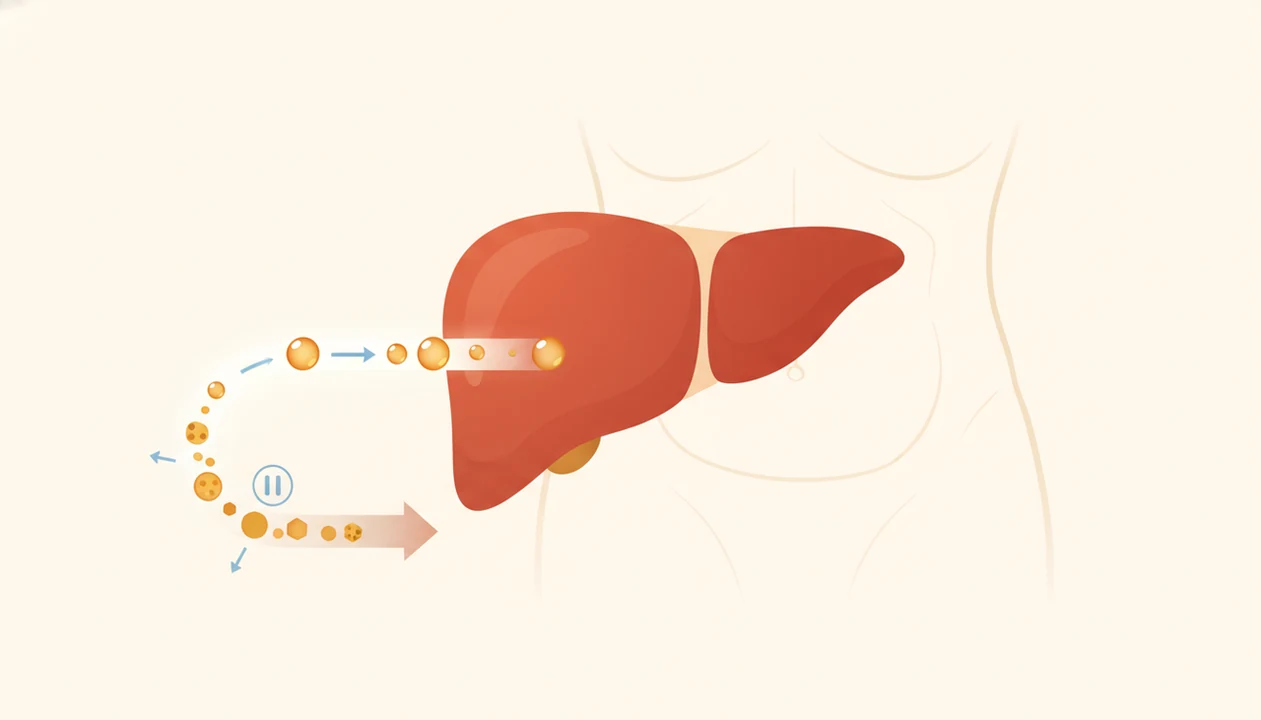
Alcohol metabolism works by making ethanol a short-term processing priority because the body cannot store alcohol the way it stores carbohydrate or fat. The liver breaks ethanol down through alcohol dehydrogenase and related pathways, which temporarily changes normal fuel handling.
Because ethanol cannot be stored like carbohydrate or fat, the liver handles it before returning its attention to other fuel. During that period, fat oxidation and carbohydrate oxidation can be reduced. This is the mechanism behind the alcohol fat burning pause: stored fat is not unavailable forever, but it becomes a lower-priority fuel while ethanol is being cleared.
The effect is easy to miss in daily life. A person may eat the same dinner, drink two beers, and wonder why the weekly trend changed. The meal did not become magical. The timing changed how the body sorted fuel.
For weight management, reducing drinking frequency is often easier to measure than guessing motivation because drink timing, sleep, hunger, and scale trends can be logged together.
The temporary drop in fat burning
Does alcohol slow metabolism? Alcohol does not make metabolism stop, but it changes metabolic priority while ethanol is being processed.
That priority shift matters because calories from food, snacks, and mixers may be more likely to move toward storage when fat burning is reduced. Better Health's alcohol and weight gain guidance describes four common pathways: alcohol can stop fat burning, add calories, increase hunger, and trigger cravings for salty or greasy foods Better Health Channel. That matches the real-world pattern many people recognize after a night out.
A person who marks the last drink on a phone may notice the next day’s hunger feels sharper than expected. That is not a diagnosis. Tracking that next-day hunger can show how a night of drinking changes appetite for you. For a broader weight-focused explanation, the related alcohol and weight loss guide covers how drinking patterns can interfere with fat-loss efforts beyond one evening’s calorie count.
If you drink heavily or daily, do not stop suddenly without medical advice because withdrawal can begin within 6 to 24 hours and can become dangerous. Seek urgent care for confusion, hallucinations, severe shaking, seizures, fever, severe vomiting, or marked agitation.
Count the pour, mixer, and food
- A standard drink contains about 14 grams of pure alcohol, equal to roughly 98 calories from ethanol alone, according to NIAAA’s standard drink guidance NIAAA alcohol data.
- Many typical alcoholic drinks land around 100 to 150 empty calories before food is counted.
- Mixers, syrups, juice, cream liqueurs, and large pours can raise the total quickly.
- Beer adds ethanol calories plus carbohydrates, depending on type and serving size.
- Calorie math is only part of the story because reduced fat burning can change how the body handles the same evening of food.
A quiet detail helps here: people often count the cocktail but forget the refill size. A home pour in a wide glass may not match a standard drink. Estimate intake with standard drinks rather than glass counts, because serving size and alcohol concentration vary widely.
Alcohol can increase food intake too
Alcohol provides about 7 calories per gram, close to the energy density of fat, according to a review of alcohol and body weight research. Those calories often add to a meal rather than replacing it.
A systematic review and meta-analysis of 12 human studies found that alcohol increased food intake by an average of about 82 calories and total energy intake by about 256 calories compared with nonalcoholic controls. These are study averages, not a prediction for one person or one evening. They help explain why counting only the drink can miss a substantial part of the calorie effect.
Insulin response, triglycerides, and liver fat
Alcohol insulin resistance means the body’s cells respond less efficiently to insulin, the hormone that helps move glucose out of the blood. MedlinePlus lists drinking too much alcohol as a factor that can raise triglycerides medlineplus, and NIAAA describes alcohol-associated fatty liver as an early alcohol-related liver effect NIAAA alcohol data. When that response weakens, glucose and fat handling can become less efficient.
Regular or heavier drinking may also raise triglycerides and increase liver fat burden. Triglycerides are circulating fats in the blood, and the liver is central to packaging and processing them. When the liver is also handling ethanol, the system can become crowded. Not dramatic. Just biologically busy.
That matters for weight because liver fat, high triglycerides, and impaired insulin signaling are associated with stalled fat loss and abdominal fat gain. Evidence varies by drinking pattern, sex, age, body size, diet, activity, sleep, medications, and existing health conditions.
Sustained alcohol reduction, regular meals, activity, adequate sleep, and medical monitoring when needed can address several parts of alcohol-related metabolic risk at once. For nutrition-related effects beyond weight, alcohol vitamin depletion explains how drinking can affect micronutrient status.
Does alcohol cause belly fat?
- Visceral fat is fat stored around internal organs, not the pinchable subcutaneous fat under the skin.
- Greater beer consumption over time was significantly associated with greater visceral adipose mass in a 2022 cohort of older adults the NIH.
- In the same study, greater spirits consumption was associated with greater visceral and subcutaneous adipose mass.
- Observational evidence shows association, not proof that alcohol is the only cause.
- Smoking, diet quality, activity, income, sleep, stress, and health status can all influence abdominal fat patterns.
Alcohol visceral fat is important because deep abdominal fat is metabolically active. It is linked with insulin resistance, fatty liver risk, inflammation, and cardiometabolic disease. Someone can have a stable body weight and still carry more deep abdominal fat than expected.
The belt notch is a crude measure, but it is still a signal.
Beer vs wine vs spirits
Beer and spirits have shown stronger positive associations with visceral adiposity in the cited cohort, while wine findings are more complex. Those differences may reflect drink type, amount, drinking pattern, food choices, and population differences.
| Drink type | Weight and metabolism concern | Practical note |
|---|---|---|
| Beer | Associated with greater visceral adipose mass in the 2022 cohort | Adds ethanol calories and carbohydrates |
| Spirits | Associated with greater visceral and subcutaneous adipose mass | Mixers can sharply increase calories |
| Wine | Findings may differ by population and intake pattern | Lower calories do not remove ethanol priority |
| Sugary mixed drinks | High calorie load plus alcohol fat burning pause | Syrups and juice make totals less visible |
Choosing a lower-calorie drink can reduce calorie load, but it does not eliminate alcohol’s metabolic priority. The liver still processes ethanol first. If the goal is metabolic progress, frequency and total intake usually matter more than finding a “safe” drink category.
Run a 2 to 4 week drinking and weight check
Use this information by turning the mechanism into a short tracking experiment. A short tracking period can identify the drinking occasions most closely followed by stronger hunger, poor sleep, waist changes, or a rising weekly weight trend.
- Set a two-to-four-week window where you observe first and avoid stacking multiple new rules, diets, or exercise changes on top of each other.
- Log standard drinks, real pour size, drink timing, snacks, sleep quality, next-day hunger, and any cravings. A generous home pour counts differently than a measured standard drink.
- Choose one reduction rule after the baseline, such as drink-free weekdays, smaller pours, a hard stop time, or alternating alcoholic drinks with nonalcoholic ones.
- Compare weekly waist measurements, weight trend, cravings, sleep, and hunger instead of judging one salty-morning weigh-in.
- Ask a clinician before making a sudden change if you drink heavily or daily, may be dependent, or have previously developed sweating, shaking, agitation, confusion, hallucinations, or seizures after cutting back.
This keeps the focus practical: less guessing, fewer dramatic resets, and clearer feedback from your own body.
How to quit drinking without gaining weight
Weight gain after quitting alcohol is not inevitable. Some people eat more during the first few weeks because their evening routine has changed, sleep and appetite are adjusting, or sweet foods become a substitute for alcohol. Start with stable meals and withdrawal safety rather than an aggressive diet.
- Set meal anchors. Plan breakfast, lunch, dinner, and one snack. Include protein and fiber so you are not facing the old drinking window hungry.
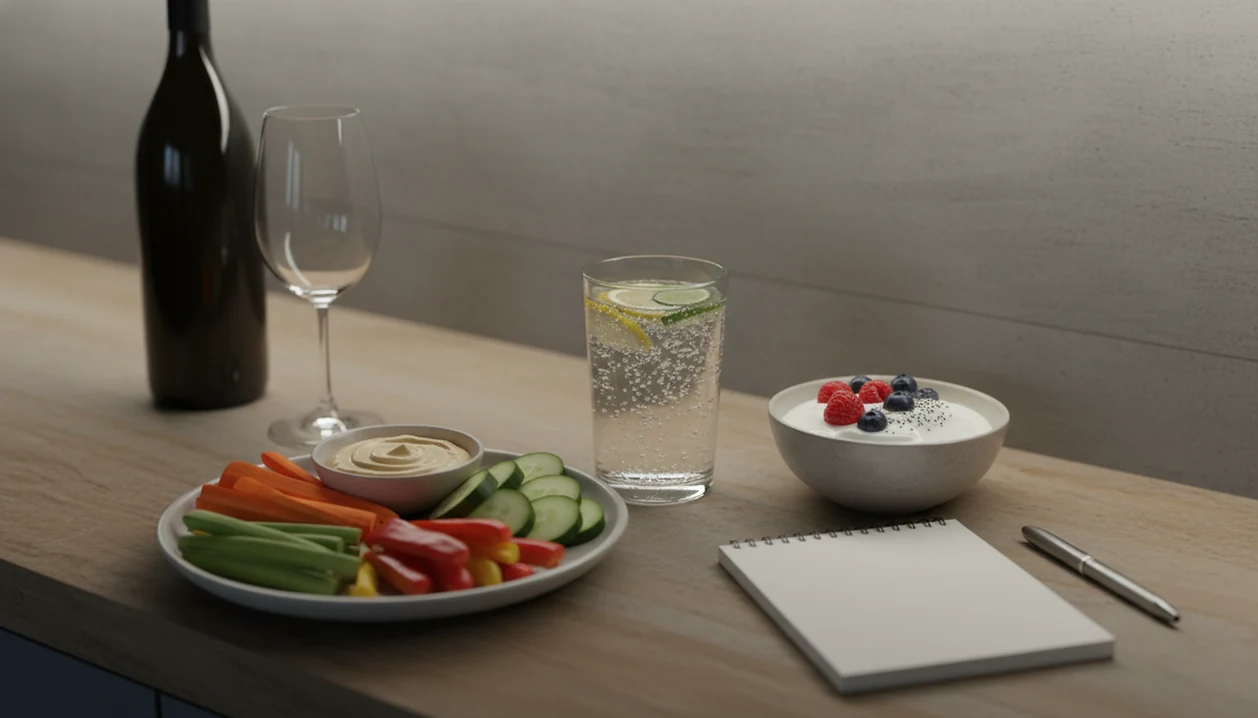
- Choose two alcohol replacements before evening. Options include sparkling water with lime, unsweetened tea, flavored seltzer, or one planned lower-sugar mocktail.
- Change the setting around your usual first drink. Leave the kitchen, take a walk, shower, fold laundry, or call someone during that period.
- Record the craving, hunger level, mood, and time. Pick one coping action, wait 10 minutes, then check if the urge has changed.
- Review progress weekly. Dry days, steadier meals, better sleep, and fewer cravings matter even when the scale changes slowly.
Sugar cravings and louder hunger can occur after quitting alcohol, sometimes for 2 to 4 weeks. Plan rather than forbid sweets. Try Greek yogurt and berries, a measured serving of chocolate, or a real dinner followed by dessert instead of using dessert as dinner. Avoid judging progress by one morning's weight, since hydration, sodium, sleep, and glycogen can cause short-term changes.
Alcohol, metabolism, and weight questions
Does alcohol slow metabolism?
Alcohol does not shut down your metabolism or permanently make it slower. It changes fuel priority while the liver processes ethanol. During that period, fat oxidation decreases and calories from food may be more likely to remain available for storage. The long-term effect depends on drinking frequency, amount, diet, activity, sleep, and individual metabolism.
Does alcohol stop fat burning?
It temporarily suppresses fat burning rather than stopping it forever. The body prioritizes clearing ethanol because it cannot store alcohol in the same way it stores fat or carbohydrate. Fat oxidation resumes after alcohol is processed, but repeated drinking can create frequent periods of reduced fat burning.
Does alcohol cause belly fat?
Alcohol can contribute to abdominal fat through added calories, reduced fat oxidation, appetite changes, and frequent eating around drinking. Observational research has linked beer and spirits with greater visceral fat, but it cannot prove that one beverage caused the difference. Total intake, frequency, food, sleep, activity, and genetics also matter.
How long does alcohol affect metabolism?
The effect lasts while the body is processing alcohol, but there is no single timeline for everyone. It varies with the amount consumed, serving speed, body size, sex, food intake, liver health, and other factors. Feeling sober does not necessarily mean all alcohol has been cleared.
Is beer worse for weight gain than vodka or wine?
No drink type guarantees weight gain or weight loss. Beer may add carbohydrates, while spirits can become high-calorie drinks when combined with syrup, juice, or large mixers. Wine pours are often larger than one standard drink. Total alcohol, actual serving size, frequency, mixers, and accompanying food usually matter more than the label.
Can exercise offset alcohol calories?
Exercise supports health and weight management, but it does not cancel alcohol's effects on fat oxidation, appetite, sleep, liver function, or judgment around food. Trying to compensate with a hard workout can also encourage an unhelpful drink-and-burn cycle. Reducing intake is more reliable than estimating how much exercise erases a drinking occasion.
Will quitting alcohol help me lose weight?
It may, especially if alcohol and related snacks were adding substantial calories. Results are not automatic because appetite, sweets, portion size, activity, sleep, and hydration can also change after quitting. Look at weight and waist trends over several weeks rather than expecting a predictable drop after a few days.
Why am I hungrier or craving sugar after quitting alcohol?
A missing evening routine, changing reward cues, appetite shifts, and improving or disrupted sleep can make food urges feel stronger. Some people notice this for 2 to 4 weeks. Regular meals, protein, fiber, hydration, planned sweets, and prepared alcohol-free drinks can help prevent unplanned grazing.