

How Alcohol Affects Gastritis, Ulcers, and Bleeding
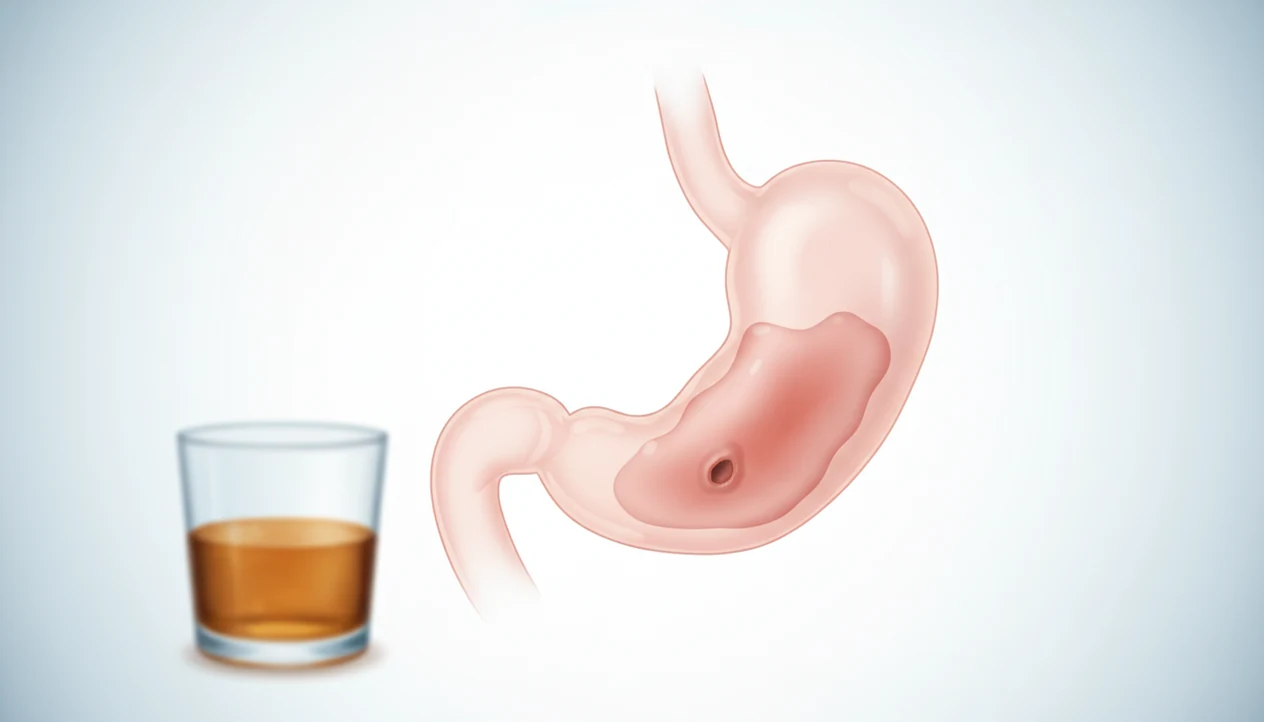
A burning or gnawing stomach after drinking does not point to one diagnosis. Similar discomfort can come from gastritis, reflux, an ulcer, medication irritation, pancreatitis, or another digestive condition. The timing, amount consumed, meals, and medicines such as ibuprofen can all change the risk.
Stopping the irritation may help, but persistent symptoms still need evaluation. People who drink heavily every day should speak with a clinician before stopping, since withdrawal can become dangerous even when the stomach symptoms seem mild.
Bottom line
Alcohol can inflame the stomach lining and worsen burning, nausea, reflux, and ulcer pain. It is not the main cause of most ulcers, which are commonly linked to H. pylori or NSAID painkillers. Black tarry stool, vomiting blood, faintness, or severe worsening pain can signal gastrointestinal bleeding and require urgent medical care.
Gastritis and ulcers are different stomach injuries
Alcohol gastritis and ulcers are related stomach problems, but they are not the same diagnosis. Gastritis means the stomach lining is inflamed or irritated. An ulcer is an open sore in the stomach or upper small intestine.
Alcohol can weaken the stomach’s defenses and make burning, nausea, gnawing pain, or indigestion worse. Alcohol may aggravate an ulcer, but H. pylori infection and NSAID painkillers are more common underlying causes. H. pylori infection and NSAID painkillers, such as ibuprofen, naproxen, and aspirin, are major established causes.
The danger sign is bleeding. Black tarry stool, vomiting blood, coffee-ground vomit, faintness, or sudden severe weakness should be treated as urgent, not as a normal hangover. A mild upset stomach after two extra drinks is one situation. Possible gastrointestinal bleeding is another.
How alcohol weakens the stomach's protective lining
Alcohol can disrupt the stomach’s protective mucus barrier, which normally helps shield the lining from acid and digestive enzymes. When that barrier is weakened, acid contact can feel like burning, gnawing, pressure, nausea, or sour reflux.
NIDDK lists excessive alcohol use and NSAIDs among causes or contributors to gastritis and gastropathy NIDDK.
This is the mechanism behind many “burning stomach after alcohol” searches. Alcohol may also increase reflux-like symptoms by relaxing the lower esophageal sphincter, the muscle that helps keep stomach contents from moving upward. A weakened barrier leaves the stomach lining more exposed to acid, while reflux can carry acid into the esophagus.
Repeated exposure can slow healing because the irritated lining keeps meeting the same trigger. That matters for people who drink most evenings, use NSAIDs for headaches, or skip meals before drinking. Dry mouth after skipping drinks can also push someone toward another pour, but more alcohol may keep the stomach irritated.
For reducing exposure, the most common medically cautious first step is pausing alcohol while symptoms are active, then getting assessed if symptoms persist or recur.
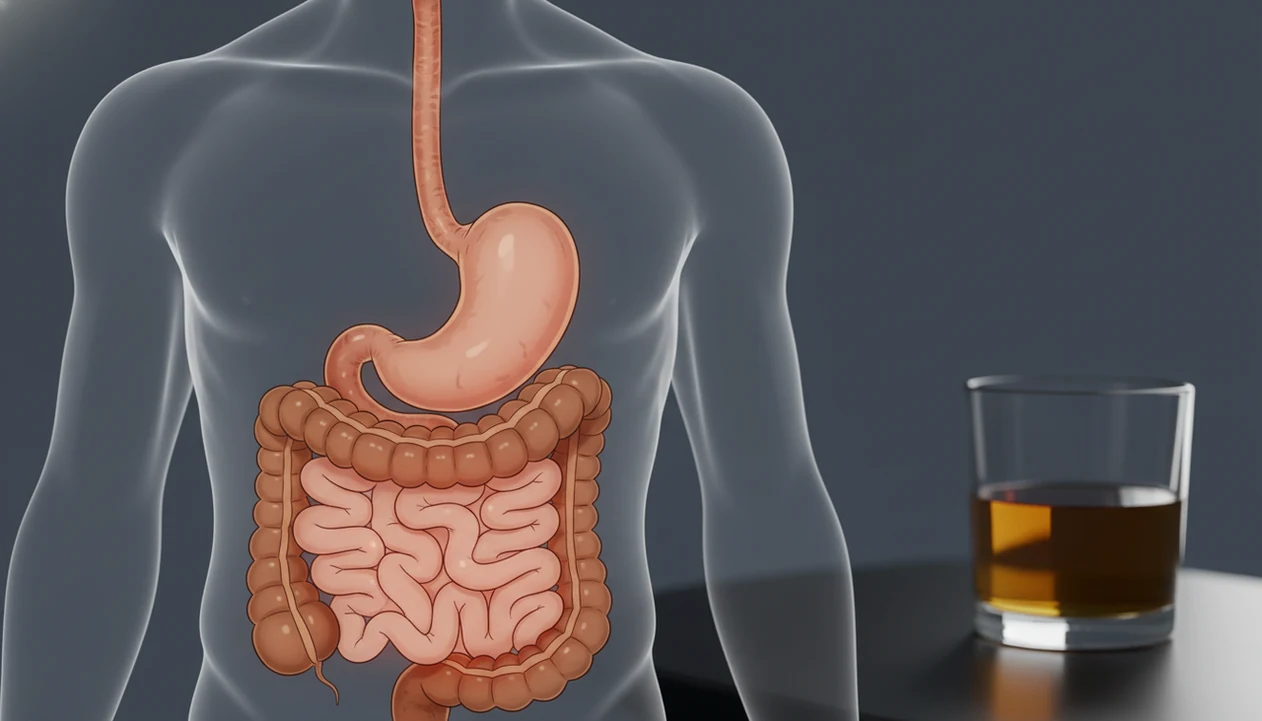
Stomach irritation is only one part of alcohol's gut effects
Alcohol-related inflammation can involve the esophagus, stomach, and intestines. Heavy, repeated use may alter intestinal bacteria, weaken the intestinal barrier, and disrupt immune function. These effects can contribute to inflammation beyond the stomach, according to an NIAAA review of alcohol and gut-derived inflammation.
Recovery is not immediate or identical for everyone. Research reviewed in 2024 found that about four weeks without alcohol improved reduced microbiome diversity in very heavy drinkers, while some markers did not return to normal. This does not provide a timetable for gastritis healing or prove the cause of a person's pain. Symptoms that persist through several alcohol-free weeks still deserve medical evaluation.
Is the burning from gastritis, an ulcer, or reflux?
Stomach pain after drinking alcohol can have several causes, and the symptom pattern is not reliable enough to diagnose yourself. Alcohol may irritate the stomach directly, worsen reflux, or make an existing H. pylori infection or NSAID injury noticeable.
| Possible cause | Common symptom pattern | Why alcohol matters |
|---|---|---|
| Gastritis | Burning, nausea, bloating, upper stomach soreness | Alcohol can inflame the stomach lining. |
| Peptic ulcer | Gnawing or burning pain, sometimes between meals or at night | Alcohol can aggravate pain but may not be the root cause. |
| Reflux | Sour taste, chest or throat burning, burping | Alcohol can worsen upward acid movement. |
| Medication irritation | Pain after NSAIDs, aspirin, or mixed alcohol use | NSAIDs can injure the lining and raise bleeding concern. |
Global H. pylori prevalence is estimated at about 44.3%, according to a 2015 review the NIH. Another systematic review found H. pylori in about 78% of duodenal ulcers and 56% of gastric ulcers. Ulcer-like pain after drinking deserves attention because alcohol may be exposing an infection, medication injury, or existing sore.
Symptom clues after alcohol
Gastritis often feels like upper-abdominal burning or nausea; ulcer pain may be gnawing or worse at night; reflux feels higher, with sour fluid, burping, or throat burning. These clues overlap, so testing matters. The broader gut effects are covered in alcohol gut brain axis.
How alcohol causes stomach irritation, gastritis, ulcers, and acid reflux
Alcohol can irritate the stomach lining and also make it easier for stomach contents to move upward into the esophagus. The resulting burning may be felt in the upper abdomen, chest, or throat. Symptoms alone cannot reliably separate ordinary heartburn from gastritis, an ulcer, H. pylori infection, medication injury, gallbladder disease, or heart-related chest pain.
| Possible cause | Typical pattern | When to arrange care |
|---|---|---|
| Occasional heartburn | Chest burning or sour burps after drinking or a large meal | If it becomes frequent, severe, or keeps requiring medicine |
| Gastritis | Upper stomach soreness, nausea, bloating, or burning | If pain persists, worsens, or includes repeated vomiting |
| Peptic ulcer | Gnawing or burning pain, sometimes at night or between meals | Prompt evaluation, with emergency care for blood or black stool |
| Swallowing injury | Painful swallowing, food sticking, or chest discomfort | Prompt medical evaluation |
Recurring reflux deserves review if it happens weekly, wakes you at night, continues after reducing alcohol and late meals, or requires frequent antacids or acid reducers. Seek prompt care for trouble swallowing, food sticking, unexplained weight loss, persistent vomiting, or symptoms lasting more than two weeks. Call emergency services for severe chest pressure, vomiting blood, black tarry stool, faintness, or severe weakness.
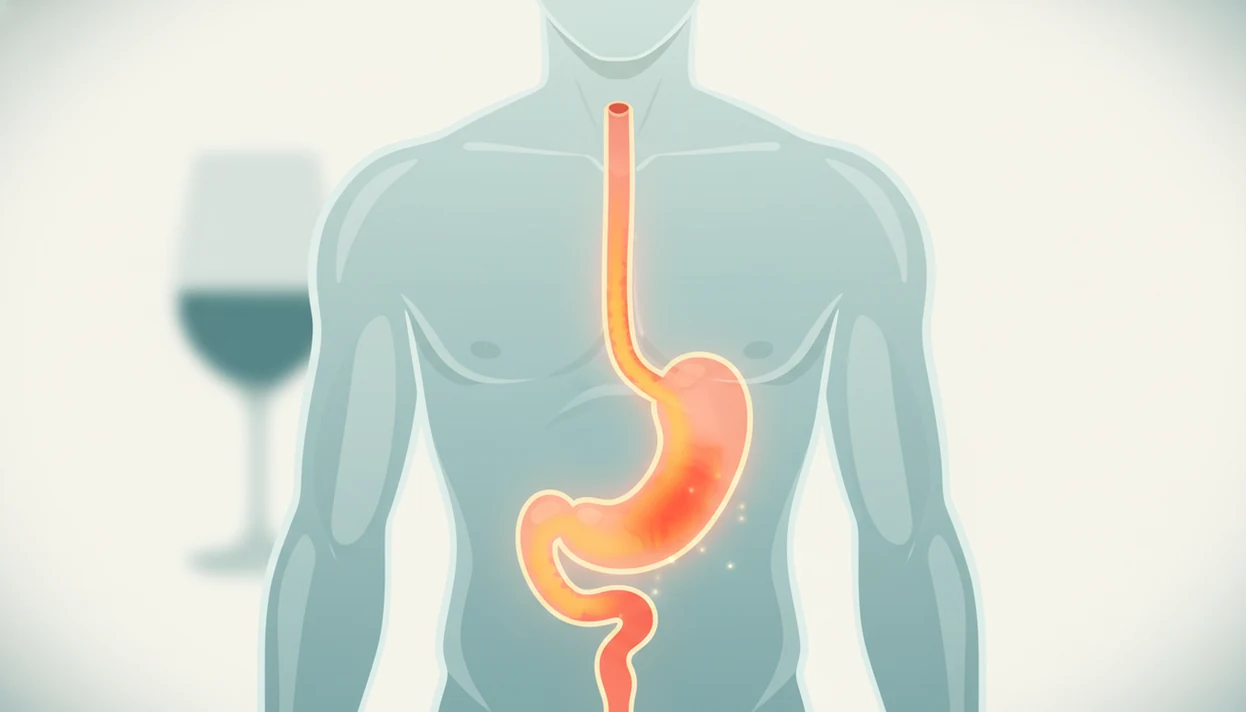
Alcohol and ulcers: aggravating factor vs root cause
Alcohol can aggravate stomach ulcers and make pain more noticeable, but alcohol alone is not the usual explanation for every peptic ulcer. H. pylori infection and NSAID painkillers are stronger established causes.
Alcohol may still matter because it can irritate the lining, worsen acid-related symptoms, and slow healing. It can also reveal a problem that was already present. Someone may blame tequila for gnawing pain, when the deeper issue is H. pylori, frequent naproxen use, or both.
Pain that persists, keeps returning, becomes severe, or occurs with bleeding needs medical evaluation because its location alone cannot identify the cause. If pain spreads to the back, becomes severe, or comes with vomiting, fever, or faintness, other conditions also need consideration, including alcohol gallbladder pancreas pain.
Claims that alcohol directly causes all ulcers are overstated; the safer conclusion is that alcohol can irritate the stomach and worsen ulcer risk factors.
Call emergency services for vomiting blood, coffee-ground vomit, black tarry stool, fainting, confusion, severe weakness, chest pressure, or severe worsening abdominal pain. If you drink heavily every day or have had withdrawal before, get medical advice before stopping because withdrawal can become life-threatening.
Alcohol and stomach ulcers: drinking safety and healing
No alcoholic drink is reliably safe with an active stomach ulcer. Beer, wine, spirits, and mixed drinks all expose injured tissue to alcohol. Switching drink types may change concentration, volume, carbonation, or acidity, but it does not turn alcohol into an ulcer treatment. If drinking repeatedly triggers gnawing pain, nausea, or burning, pause alcohol while the symptoms are assessed.
| Drink | Common assumption | Practical concern |
|---|---|---|
| Beer | Lower strength means gentler | The larger volume and carbonation may worsen bloating or reflux |
| Wine | Wine is easier on the stomach | It still contains alcohol and acids that may trigger pain |
| Spirits | A small serving limits exposure | Concentrated alcohol may feel harsher on inflamed tissue |
| Mixed drinks | Juice or soda dilutes the alcohol | Alcohol, sugar, acidity, and carbonation may all contribute |
Record pain timing, drink amount, meals, NSAID use, vomiting, stool changes, and nighttime symptoms. A clinician may consider H. pylori testing, medication changes, acid-reducing treatment, or endoscopy based on the pattern and severity. Seek emergency care for vomiting blood, black tarry stool, fainting, severe sudden pain, or unusual weakness.
Black stool, vomiting blood, and other danger signs
Can alcohol gastrointestinal bleeding show up as black stool or vomiting blood? Yes, gastrointestinal bleeding can appear as black tarry stool, bright red or dark vomit, coffee-ground vomit, faintness, severe weakness, or worsening severe abdominal pain.
These symptoms require urgent medical care. Do not try to manage suspected bleeding with food, antacids, or a wait-and-see plan.
Untreated gastritis can lead to stomach ulcers and stomach bleeding, according to Mayo Clinic Mayo Clinic. Concern is higher when alcohol is combined with NSAIDs, known ulcers, blood thinners, heavy drinking, repeated vomiting, or a history of gastrointestinal bleeding.
Rain on a windshield during a smoke break feels ordinary. Black stool the next morning is not ordinary. That distinction matters.
Alcohol and gastrointestinal bleeding: signs that cannot wait
Alcohol can damage the digestive tract's protective lining and worsen bleeding from gastritis, ulcers, repeated vomiting, or another condition. Black, sticky, tar-like stool may indicate bleeding higher in the digestive tract. Vomit containing bright red blood or dark material resembling coffee grounds is also an emergency warning sign. Dizziness, fainting, a rapid heartbeat, confusion, severe weakness, or intense abdominal pain can accompany significant blood loss.
- Call emergency services for vomiting blood, coffee-ground vomit, fainting, confusion, or severe weakness.
- Get urgent medical care for black tarry stool, even if there is no pain.
- Do not wait for the bleeding to improve after sleep, food, water, or an antacid.
- Tell the medical team about alcohol use, NSAIDs, aspirin, blood thinners, known ulcers, and previous bleeding.
Bright red rectal blood can have several causes, including hemorrhoids, fissures, inflammation, or lower intestinal bleeding. Alcohol does not prove the cause, and visible blood still needs medical assessment. Beer, wine, and spirits all contain ethanol, so red wine should not be treated as protection against digestive injury or bleeding.
Respond safely to stomach pain after drinking
Treat stomach pain after drinking as a signal to slow down and check for danger signs first. Home steps are only reasonable when symptoms are mild, improving, and not linked to bleeding or severe illness.
- Check for black tarry stool, vomiting blood, coffee-ground vomit, faintness, severe weakness, or rapidly worsening abdominal pain before trying food, antacids, or tracking. If any appear, seek urgent medical care.
- Pause alcohol while pain, burning, nausea, vomiting, or reflux is active or getting worse. More alcohol can keep the irritated lining exposed to the same trigger.
- Avoid NSAIDs such as ibuprofen, naproxen, or aspirin unless a clinician has specifically said they are safe for you with these symptoms.
- Log the useful details: drink type and amount, meal timing, medications, pain location, pain score, vomiting, stool changes, and when symptoms started.
- Book medical evaluation if symptoms persist, recur after drinking, feel severe, wake you at night, or come with vomiting, weight loss, fever, or stool changes.
Plan for withdrawal safety before the last drink
Stomach healing and alcohol withdrawal follow different timelines. Withdrawal can start 6 to 12 hours after the last drink, is often worst during the first 48 hours, and commonly improves over 3 to 7 days. Seizures, hallucinations, severe agitation, confusion, fever, or uncontrolled vomiting require emergency treatment.
- Contact a clinician before stopping if you drink heavily every day.
- Get medical advice if you need alcohol to prevent shaking, sweating, anxiety, or nausea.
- Tell the clinician about previous withdrawal, seizures, hallucinations, sedative use, and serious medical conditions.
- Do not create an improvised alcohol taper without professional guidance.
Clinicians can assess withdrawal risk and decide if monitored treatment, medicine, fluids, or thiamine is appropriate. The NHS alcohol treatment guidance describes supported withdrawal options, while the Cleveland Clinic withdrawal overview details symptoms and emergency complications.
Reduce irritation and record the pattern
If burning stomach after alcohol is active, pause alcohol and avoid NSAIDs unless a clinician has told you otherwise. Food, hydration, and avoiding personal trigger drinks may reduce irritation for some people, but those steps do not rule out an ulcer, infection, or bleeding risk.
Use a simple log for one week: drink type, number of drinks, timing, meal timing, medications, symptom onset, pain score, vomiting, stool changes, and what helped. Sparkling water in a rocks glass can also help separate the ritual from the alcohol for people testing lower-risk evenings.
A tracking hub can offer private pattern notes and reset prompts; it cannot diagnose gastritis, ulcers, gastrointestinal bleeding, or any emergency symptom.
For structured behavior change, the alcohol reduction guides can sit beside medical advice rather than replace it.
Questions about alcohol-related stomach pain
Can alcohol cause gastritis?
Yes. Alcohol can directly irritate and inflame the stomach lining, particularly with heavy, repeated, or binge drinking. Symptoms may include upper stomach burning, nausea, bloating, poor appetite, or vomiting. Those symptoms are not specific to gastritis, so recurring or severe pain should be medically evaluated.
Can alcohol cause stomach ulcers?
Alcohol can injure the stomach lining and aggravate an existing ulcer, but it is not the usual sole cause of peptic ulcers. H. pylori infection and NSAID painkillers such as ibuprofen, naproxen, and aspirin are common causes. Alcohol may worsen pain, delay healing, or increase bleeding concern.
Why does alcohol make my stomach burn?
Alcohol can weaken the stomach's protective mucus barrier, leaving the lining more exposed to acid and digestive enzymes. It can also worsen reflux, which carries stomach contents into the esophagus. Burning may also come from an ulcer, medication irritation, or another digestive condition.
How long does alcohol gastritis last?
There is no reliable single timeline. Mild irritation may ease after alcohol is removed, but healing depends on the amount and frequency of drinking, medications, H. pylori, nutrition, and existing disease. Pain lasting more than two weeks, returning repeatedly, or continuing after cutting back needs medical review.
What can help stomach pain after drinking?
Pause alcohol while symptoms are active, drink fluids if you can keep them down, and avoid foods or drinks that clearly worsen burning. Avoid NSAIDs unless a clinician has said they are safe for you. These steps cannot rule out an ulcer, infection, pancreatitis, or gastrointestinal bleeding.
Can alcohol cause black stool?
Black, sticky, tar-like stool can signal bleeding from the stomach or upper digestive tract. Alcohol may contribute through gastritis, ulcers, or repeated vomiting, especially when combined with NSAIDs or blood thinners. Treat black tarry stool as urgent and seek medical care rather than waiting for it to pass.
Should I avoid ibuprofen or naproxen after drinking?
NSAIDs such as ibuprofen, naproxen, and aspirin can injure the stomach lining and raise bleeding concern, especially with alcohol, ulcers, or active stomach pain. Do not assume another painkiller is automatically safe. Ask a clinician or pharmacist about the safest option for your health and alcohol use.
Is beer or wine safer than liquor for gastritis?
No type of alcohol is reliably safe during active gastritis or ulcer symptoms. Beer may add volume and carbonation, wine contains alcohol and acids, and spirits are more concentrated. Individual triggers differ, but switching categories does not remove the ethanol or guarantee that the stomach lining can heal.