
How Alcohol Affects Weight Loss, Fat Burning, and Appetite
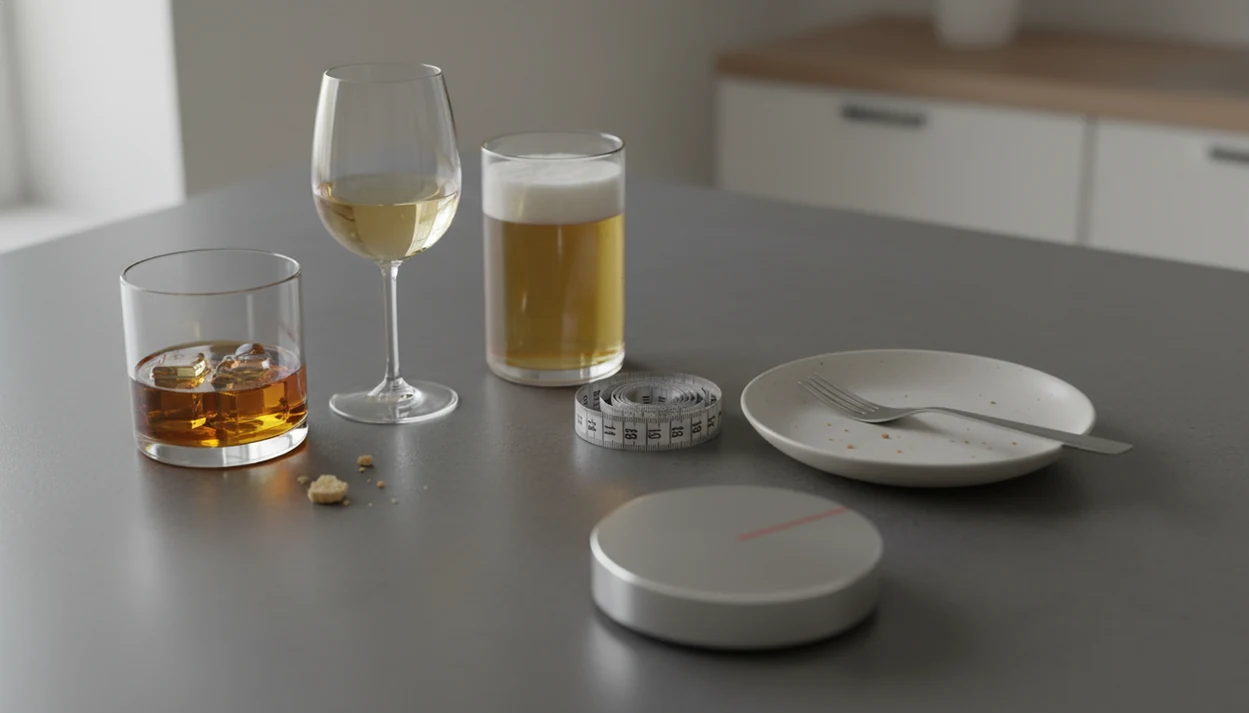
The calories in one drink are only part of the picture. A second pour, sweet mixer, late-night snack, or short night of sleep can affect the weekly total more than expected. Alcohol also changes which fuels the body uses first, although it does not shut down fat burning for days.
Cutting back can remove a repeat source of calories and make meals, exercise, fasting windows, and sleep more predictable. The scale may not respond immediately, and replacing drinks with soda, desserts, or frequent snacks can cancel the calorie savings.
The quick version
Alcohol can slow weight loss progress, but it does not make fat loss impossible. It adds 7 calories per gram, temporarily shifts fuel use away from fat, can raise appetite, and often worsens sleep and next-day choices. Drinking less may help create a calorie deficit. Results depend on your starting intake and what replaces those drinks.
Five ways drinking can make weight loss harder
Alcohol can make weight loss harder through five main routes: extra calories, reduced fat oxidation, stronger appetite, worse sleep, and disrupted fasting windows. Occasional drinking is not automatically fatal to progress, but regular or heavy drinking narrows the margin for error.
The hard part is usually not one glass of wine. It is the second pour, the chips beside it, the shorter sleep, and the next-day hunger. A lime wedge sinking in club soda can be a useful replacement cue for some adults, but the calorie math still has to be watched.
Use it as private tracking and reset support, not detox care, medical supervision, or nutrition treatment.
Where drink calories and food choices add up
Alcohol affects weight loss by changing both the math and the moment-to-moment choices around food. Cutting back helps most when it makes a sustained calorie deficit easier to keep, not because alcohol removal automatically burns fat.
The effect comes from four connected factors: drink calories, fuel priority, changes in eating behavior, and broken fasting windows.
- Count the alcohol energy from the drink itself, then add mixers, heavy pours, and repeat servings into the weekly total. A few modest drinks can become a large calorie load when tonic, juice, beer size, or cocktails are included.
- Remember fuel priority because the body processes alcohol first. During that window, fat oxidation, using stored fat for energy, can drop while the liver clears alcohol.
- Watch the behavior chain after the first drink. Lower inhibition, stronger cravings, worse sleep, and next-day hunger can lead to more calories than the drink label shows.
- Treat alcohol as fast-breaking if you use intermittent fasting. Alcohol contains energy, ends the fasting state, and shifts metabolism toward clearing alcohol instead of staying in the fasting pattern.
Why fat oxidation drops after alcohol
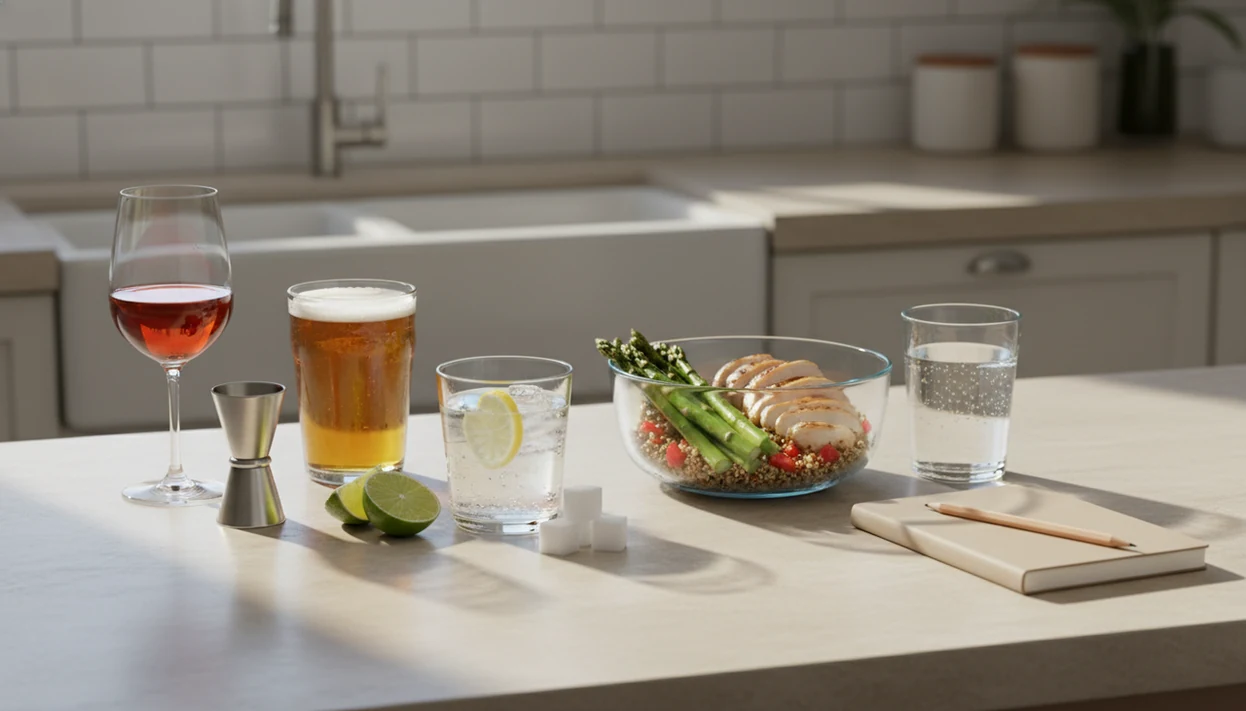
Alcohol slows fat burning because the body treats alcohol as a priority fuel that must be processed before stored fat or carbohydrate. Because the body prioritizes clearing alcohol, fat oxidation can fall temporarily after drinking.
The liver converts alcohol through alcohol dehydrogenase and related pathways. During that process, fat oxidation and carbohydrate oxidation are pushed down. Controlled feeding studies show that alcohol can acutely reduce fat oxidation while the body prioritizes alcohol metabolism, but the size and duration of the effect depend on dose and context. That is an acute effect, not a permanent shutdown of metabolism for days.
This is why the phrase “alcohol slows metabolism” needs careful wording. Alcohol does not freeze fat loss for everyone for 72 hours. It can temporarily suppress fat burning while the body clears the alcohol, especially when drinks arrive with a high-calorie meal. The deeper mechanism is covered in more detail in alcohol weight metabolism.
Talk with a clinician before cutting down or stopping if you drink heavily each day or have had withdrawal symptoms. Call emergency services for a seizure, hallucinations, severe confusion, fever, severe agitation, or uncontrolled vomiting.
Seven calories per gram, before mixers and snacks
- Alcohol is energy-dense: Alcohol provides 7 kilocalories per gram, compared with 4 for carbohydrate, 4 for protein, and 9 for fat (source: https://www.niaaa.nih.gov/publications/brochures-and-fact-sheets/rethinking-drinking).
- Empty calories add little fullness: Empty calories mean energy with little protein, fiber, vitamins, minerals, or lasting satiety.
- Population intake is meaningful: Per the CDC, alcoholic beverages contribute about 4.7% of total daily energy intake among U.S. adults (source: https://www.cdc.gov/nchs/products/databriefs/db110.htm).
- Mixers change the math fast: Beer, wine, sweet cocktails, tonic, juice, soda, and oversized pours can turn “just drinks” into a meal-sized calorie load.
- A deficit can disappear quietly: For many adults, reducing alcohol is often easier than cutting more food because alcohol calories do not usually reduce hunger later.
The sticky bar table under your fingertips is not the issue by itself. The issue is the pattern: a cocktail, then another, then food that was not in the plan. Alcohol empty calories weight gain often happens through repetition, not one dramatic night.
Does drinking less alcohol help with weight loss?
Drinking less can help when it lowers total weekly calories or prevents the eating and sleep patterns that follow drinking. Start by recording the drink type, serving size, alcohol strength, mixer, and number of refills. A glass is not always one standard drink, especially with strong beer, large wine pours, or cocktails made with several shots.
| Drink | What to check | Common source of undercounting |
|---|---|---|
| Beer | Ounces and alcohol percentage | Pints, craft beer, and strong lagers |
| Wine | Measured pour rather than glass count | Large home or restaurant pours |
| Spirits | Number and size of shots | Free-poured drinks and doubles |
| Cocktails | Spirits, juice, tonic, syrup, and refills | Counting only the base liquor |
A 12-ounce regular beer has about 150 calories, according to MedlinePlus guidance on alcohol and diet. Spirits also contain alcohol calories even with soda water or a sugar-free mixer. Lower-calorie choices can reduce the total, but they do not prevent intoxication, sleep disruption, or the temporary change in fuel use.
- Set a specific total or number of alcohol-free days before the week starts.
- Measure home pours and log each drink when it happens.
- Plan dinner and a later snack before drinking.
- Replace one usual drinking occasion with seltzer, tea, or another alcohol-free routine.
- Review drinks, sleep, cravings, food, and weight at the end of seven days.
- Adjust one part of the plan instead of responding to a difficult night with severe restriction.
Does alcohol break an intermittent fast?
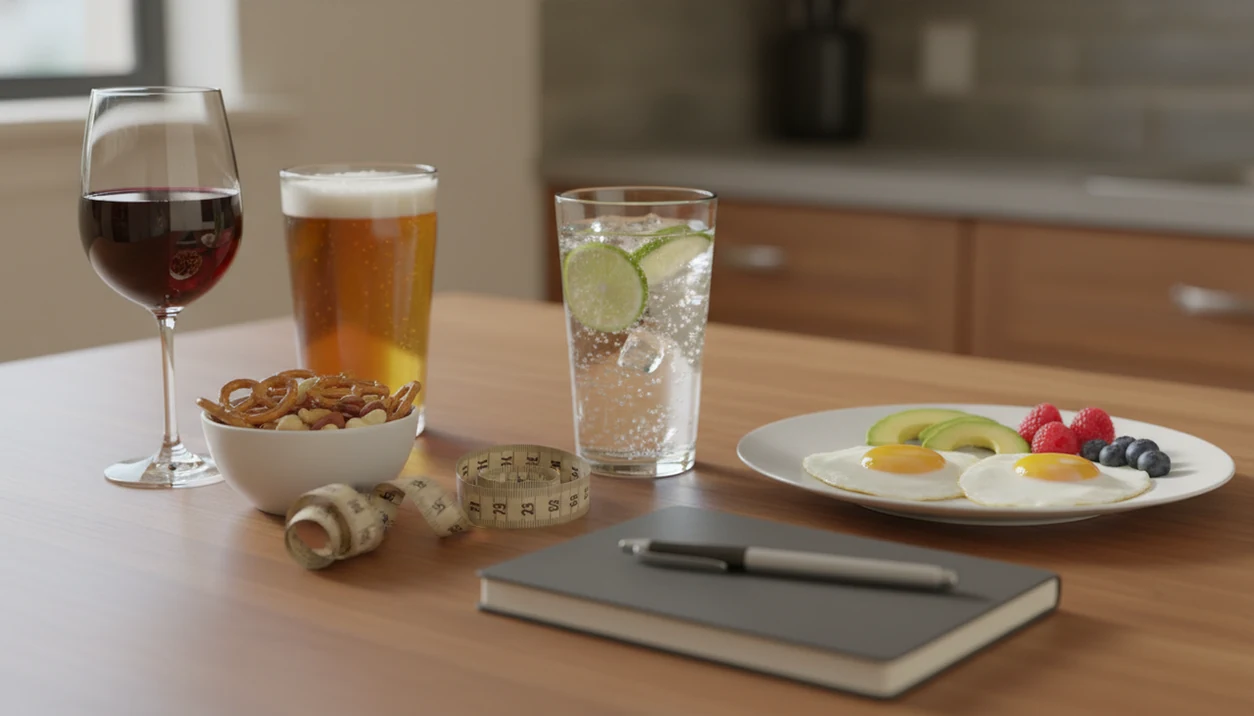
Does alcohol break a fast? Yes, alcohol breaks a fast because it contains calories and triggers a metabolic response, even when the drink is low carb, sugar-free, or small.
Intermittent fasting depends on a fasting window and an eating window. Calories are enough to end the fasting state, and alcohol also changes fuel use while the body processes it. A neat vodka, dry wine, or low-carb canned drink still contains alcohol energy.
If someone chooses to drink, the safer fasting-rule answer is to place it inside the eating window and avoid drinking on an empty stomach. Skip alcohol during a fast if drinking leads to dizziness, overeating, poor sleep, or difficulty stopping at the amount you planned. For alcohol intermittent fasting plans, alcohol can reduce benefits indirectly by worsening sleep, hunger regulation, hydration, and next-day food choices.
Evening drinks, late-night hunger, and poor sleep
Alcohol can increase cravings and reduce inhibition around high-calorie foods, which makes weight loss harder even when the drink calories look modest. The behavioral chain is common: drink in the evening, snack more, sleep worse, wake tired, and reach for more energy-dense food.
There is also a biology layer. Alcohol may affect hunger hormones, blood sugar patterns, and reward cues, though individual responses vary. Decision fatigue matters too. A planned dinner can turn into fries after the first beer, especially when cigarette packs or game-night cans sit on the same table.
The next morning can be confusing. A lower scale number after drinking may reflect dehydration, less food volume, glycogen shifts, or digestion changes. That brief drop on the scale usually reflects water, digestion, or glycogen changes rather than measurable fat loss. For related alcohol effects beyond body weight, the alcohol reduction guides group these mechanisms by brain, body, and craving patterns.
Build a realistic plan to drink less
How to use alcohol reduction for weight loss: build a small tracking routine before changing everything at once. The practical aim is to reduce unplanned calories and identify the situations that lead to extra drinks or food. It is fewer unplanned calories, fewer disrupted fasts, and clearer feedback.
1. Track every drink for one week
- Log every drink with time, type, pour size, setting, craving intensity, and what happened next.
- Set alcohol-free days before cutting portions, because dry days make weekly patterns easier to see.
- Move drinking into the eating window if you use intermittent fasting, and treat the fast as closed once alcohol starts.
- Plan food before the first drink so you are not choosing dinner with lowered inhibition.
- Review cravings, sleep, and weight trends weekly, using patterns rather than one weigh-in.
2. Set alcohol-free days first
A simple starting target is two or three alcohol-free days each week, then adjusting based on sleep, cravings, and appetite.
3. Move drinking into the eating window
If you drink, keep it inside the eating window and avoid an empty stomach.
4. Plan food before the first drink
Plan the meal before the first drink, when portions and food choices are easier to judge.
5. Review cravings, sleep, and weight trends
How quitting alcohol can support weight loss
Quitting alcohol can create a meaningful calorie reduction when drinking was a regular part of evenings or weekends. A 12-ounce regular beer contains about 150 calories, while a 5-ounce glass of wine may contain about 121. Two regular beers on four nights add roughly 1,200 calories per week before mixers, bar food, or late-night snacks. Alcohol itself supplies 7 calories per gram, according to the U.S. Dietary Guidelines evidence review.
| Period | Possible changes | Limits |
|---|---|---|
| First week | Less bloating, fewer salty snacks, and steadier hydration | Water, digestion, and salt can make scale readings jump |
| Weeks 2 to 4 | More consistent sleep, meals, morning activity, and workouts | Sweet cravings or replacement snacks can offset calorie savings |
| Longer term | A sustained calorie deficit may produce measurable fat loss | Results depend on prior intake, food, activity, sleep, and stress |
There is no guaranteed alcohol-free weight-loss timeline. U.S. survey data reviewed by the National Academies found that adults averaged nearly 100 calories per day from alcoholic beverages. Removing that amount would total about 3,500 calories over five weeks, but actual weight change rarely follows calorie arithmetic exactly because appetite, food intake, and activity may change.
For a clearer comparison, track drinks, replacement foods, sleep, and weekly weight averages for 30 days. Do not judge the result from the first few scale readings.
Low-carb drinks and other weight-loss myths
“Calories are controlled, so alcohol does not matter.” Calories matter, but alcohol also changes fuel priority and can make appetite control harder.
“Vodka, tequila, or keto drinks have no effect.” Clear spirits still contain alcohol calories. A sugar-free mixer does not erase the metabolic response.
“Low-carb alcohol does not break a fast.” Any alcoholic drink breaks a fast because calories and alcohol metabolism end the fasting state.
“Alcohol stops fat burning for 72 hours in everyone.” That claim overstates the evidence. Alcohol can acutely suppress fat oxidation, but duration depends on dose, food, body size, and pattern.
“Mixers and late-night food are minor.” They are often the hidden stall. Heavy pours, sweet mixers, bar snacks, and next-day eating can matter more than the drink label. For people comparing private app support, a best drink less app guide can help sort tracking features from medical care.
Alcohol intake and body weight: What studies show
Population-level evidence links more frequent alcohol intake with higher body weight, especially at heavier intake levels. In U.S. adults, each additional daily drink has been associated with a 0.21 kg/m² higher BMI in men and a 0.08 kg/m² higher BMI in women (source: https://pubmed.ncbi.nlm.nih.gov/16014704/).
Heavy alcohol use has also been linked to a 41% higher risk of obesity compared with non-drinkers in population analyses (source: https://bmcpublichealth.biomedcentral.com/articles/10.1186/1471-2458-5-126). These findings are associations, not proof that alcohol causes weight gain in every individual. Observational studies can be affected by diet, activity, income, smoking, sleep, and health status.
Still, the pattern is useful for planning. One occasional drink is different from nightly drinking, large pours, or weekend-heavy intake. Frequent drinking creates more chances for added calories, suppressed fat oxidation, poor sleep, and next-day overeating. A taper goal reviewed on the bus can be more realistic than a dramatic all-or-nothing rule.
Moderation limits are not weight-loss targets
The CDC's alcohol guidance defines moderate drinking as no more than two drinks in a day for men and no more than one in a day for women. These are upper limits, not recommendations to drink and not a promise of weight loss. Drinks cannot be saved during the week and combined into one heavy night without added risk.
- Do not start drinking for possible health benefits.
- Avoid alcohol during pregnancy.
- Check with a clinician if alcohol may interact with medication or a medical condition.
- Get help if you cannot stay within a limit you set or repeatedly lose control of the amount.
Check withdrawal risk before changing your drinking
Before changing alcohol, calories, and fasting at the same time, check safety first. Cutting back can be useful for weight loss, but sudden stopping is not safe for everyone.
- Notice your current pattern before making rules. If you drink daily, wake up needing alcohol, or have shaking, sweating, nausea, severe anxiety, confusion, or past seizures when you stop, do not quit suddenly without medical guidance.
- Avoid fasting with alcohol if it leads to dizziness, binge eating, blackouts, or a feeling that you cannot control the next choice. A fasting plan that falls apart after one drink is giving useful feedback.
- Review medical factors with a clinician if you take medications, are pregnant or trying to become pregnant, have liver disease, or have a history of an eating disorder.
- Set a baseline first by tracking drinks, food timing, sleep, cravings, and weight for a week before changing everything at once.
- Seek urgent care for severe withdrawal symptoms, especially seizures, confusion, hallucinations, chest pain, or extreme agitation.
Withdrawal symptoms can start within hours
For someone who has been drinking heavily for a prolonged period, the first concern is withdrawal safety, not calorie savings. Symptoms can begin about 6 to 12 hours after the last drink or a major reduction. Early signs can include shaking, sweating, anxiety, nausea, insomnia, a rapid pulse, and elevated blood pressure. Alcohol-withdrawal seizures often occur 24 to 48 hours after the last drink, while withdrawal delirium commonly appears 48 to 72 hours afterward, according to an American Academy of Family Physicians clinical review.
Do not stop suddenly without medical advice if you drink heavily each day, need alcohol to prevent morning symptoms, or have had withdrawal, seizures, or delirium before. Treatment planning can include medical monitoring and medication rather than trying to manage symptoms alone.
Alcohol and weight-loss questions
Does alcohol stop weight loss completely?
No. Weight loss can still occur if you maintain a calorie deficit, but alcohol makes that deficit harder to sustain for many people. It adds calories, temporarily reduces fat oxidation, can increase food intake, and may disrupt sleep. Frequency, serving size, mixers, snacks, and next-day choices all affect the result.
Does alcohol break a fast?
Yes. Alcohol contains calories and changes fuel metabolism, so beer, wine, spirits, and low-carb alcoholic drinks all end a fasting window. If you choose to drink, place it inside the eating window rather than using alcohol as a meal replacement. Eating first may also reduce dizziness and impulsive food choices.
How long does alcohol stop fat burning?
There is no fixed number of hours that applies to everyone. Fat oxidation can fall while the body prioritizes alcohol metabolism, but the duration varies with the amount consumed, food, body size, and individual metabolism. Claims that every drink stops fat burning for 72 hours overstate the evidence.
Will quitting alcohol reduce belly fat?
It may help reduce overall body fat if removing alcohol creates a lasting calorie deficit. The body does not selectively burn abdominal fat because alcohol was removed. Early changes around the waist may also come from less bloating, fewer salty foods, and changing water balance rather than immediate fat loss.
Why does the scale sometimes drop after drinking?
A lower reading the next morning commonly reflects dehydration, less food in the digestive tract, or changes in glycogen and water. It is not dependable evidence of fat loss. Rehydrate normally and compare weekly weight averages under similar conditions rather than reacting to one post-drinking measurement.
Are vodka and other clear spirits better for weight loss?
Clear spirits may contain fewer calories than sweet cocktails when served in measured amounts with a calorie-free mixer. They still provide alcohol calories and can affect fat oxidation, appetite, judgment, and sleep. Large pours, doubles, tonic, juice, syrup, and food eaten afterward can quickly change the total.
Is wine better than beer for losing weight?
Neither is automatically better. The useful comparison is calories per actual serving, alcohol strength, number of servings, and what you eat with the drink. A small measured wine pour may contain fewer calories than a strong pint, but an oversized wine glass can contain more than one standard drink.
How quickly can I lose weight after stopping alcohol?
There is no standard timeline. Less bloating or a water-weight change may appear during the first week, while fat loss requires a sustained calorie deficit over time. Results depend on how much you previously drank, replacement foods and drinks, activity, sleep, medications, and health conditions. Some people see no immediate change.