
How to Stop Nicotine and Alcohol Cravings
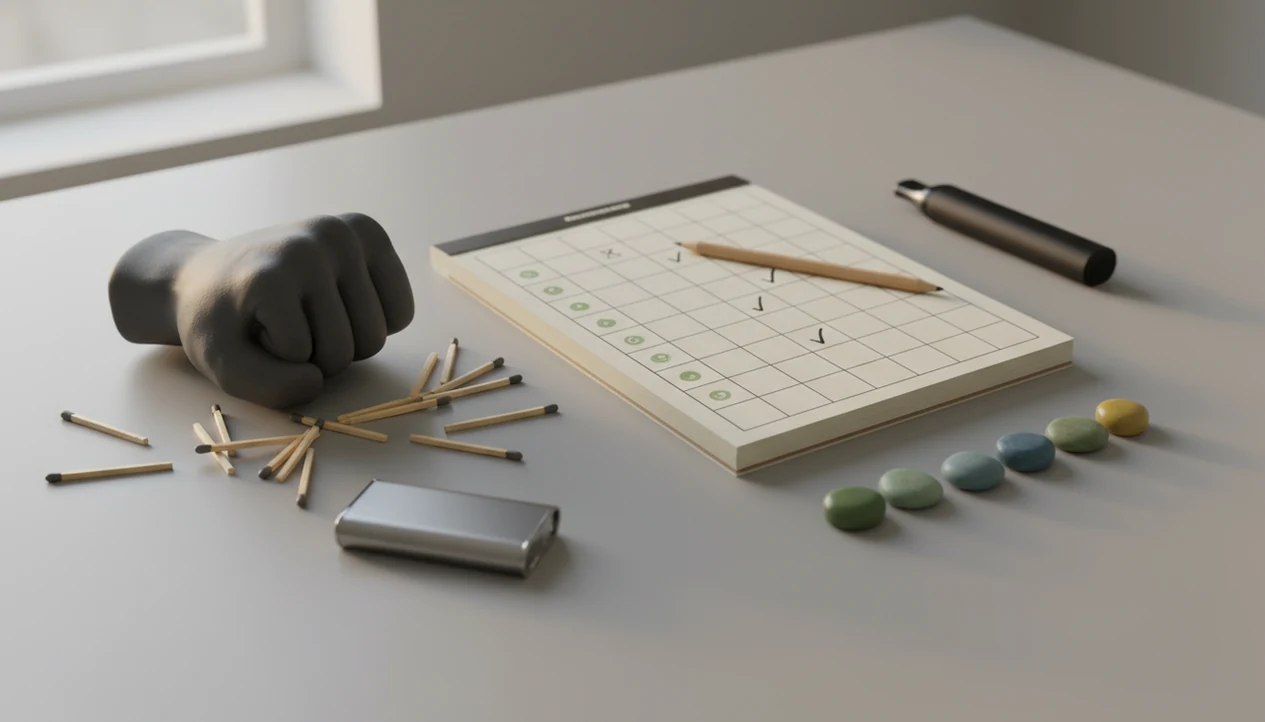
A craving can feel urgent without being an instruction you must follow. Your job is not to make every urge disappear. It is to get through the current one without automatically smoking, vaping, using a pouch, or drinking.
Start with a response you can use in real situations: the 7 a.m. coffee cigarette, the vape in the car, the pouch after lunch, or Friday drinks with coworkers. Then track what happened and adjust the routine before that situation returns.
The short answer
This guide covers nicotine and alcohol cravings, not food cravings. Most urges rise and ease if you delay and use a prepared response. Nicotine medication can reduce withdrawal, while alcohol cravings may need behavioral or prescription treatment. If you drink heavily every day or have had withdrawal before, get medical advice before stopping suddenly because withdrawal can be life-threatening.
What should you do when a craving hits?
Pause, label the craving, and follow a short plan that keeps the substance out of your hands. NIAAA guidance on handling urges recommends treating them as temporary, using distraction and support rather than acting immediately.
- Say what is happening: “This is a craving, not a decision.”
- Delay the next action. Do not drive to the store, open the bottle, or ask someone for a cigarette.
- Change what your body is doing. Walk, shower, breathe slowly, eat something appropriate, or hold a cold drink.
- Use nicotine medication as directed if it is part of your quit plan.
- Record the trigger, intensity from 1 to 10, response, and outcome in a brief craving tracker.
Prepare one sentence for other people: “I’m not using nicotine tonight,” or “I’m skipping drinks.” A clear response reduces decisions during the urge.
How long do cravings last?
A single craving usually rises and falls, but repeated cravings can continue while your brain and routines adjust. The overall timeline depends on the substance, prior use, triggers, medication, and environment.
| Type | What to expect | What helps |
|---|---|---|
| Nicotine | Withdrawal and cravings are generally worst during the first few days. The first few weeks can remain difficult, then symptoms usually improve. | Medication, trigger changes, planned substitutes, and support. |
| Alcohol | An urge can crest and pass, but familiar people, places, emotions, and routines may trigger new urges long after the last drink. | Avoiding predictable cues, urge surfing, treatment, and a written response plan. |
| Learned routine | A cue such as coffee, driving, finishing dinner, or getting paid can keep producing urges after physical withdrawal improves. | Repeat a replacement routine until the cue is no longer automatically followed by use. |
CDC says nicotine symptoms are often hardest early in a quit attempt, but medication can make this period more manageable. Read the CDC overview of withdrawal and quit medicines. For alcohol-specific timing, see how long alcohol cravings can last.
How do you plan for predictable triggers?
Match each common trigger with a specific action that can happen before the craving takes over. “Try harder” is not a plan, but “drink coffee on the porch without cigarettes” is.
| Situation | Plan before it happens |
|---|---|
| Morning coffee | Move cigarettes and lighters the night before. Change the drink, chair, or location. Use a prepared morning cigarette replacement. |
| After eating | Stand up immediately, clear the table, brush your teeth, or take a brief walk. Build a repeatable post-meal routine. |
| Vaping while driving | Remove the device before the trip, clean the cup holder, and place water or gum within reach. Review more car craving strategies. |
| After-work drinks | Choose the route home and evening activity in advance. If you have been medically cleared to stop drinking, remove easy access at home and use an after-work replacement ritual. |
For alcohol, list the people, places, times, emotions, and routines connected to drinking. The guide to common alcohol triggers can help turn that list into practical responses.
Is tracking better than relying on willpower?
Willpower may help you pause, but tracking can reveal recurring triggers and show what to change before the next craving. The goal is useful feedback, not perfect data.
- Choose one target, such as no cigarettes today, no vaping in the car, or two planned alcohol-free nights if stopping is medically safe.
- Log the time, place, substance, emotion, body sensations, access, and craving intensity from 1 to 10.
- Note what happened immediately before the urge, such as coffee, conflict, boredom, food, or seeing someone use.
- Record the response and outcome, even after a slip.
- Review entries every few days and change one repeated cue or routine.
A craving log maps the cue, routine, and reward. It may show that the vape in a hoodie pocket, the cigarette after dinner, or relief after a stressful meeting matters more than a broad label such as “stress.” A rushed note in a parking lot still counts.
Which treatments reduce nicotine cravings?
Nicotine replacement and prescription medicines can reduce withdrawal, so quitting does not have to depend on willpower alone. A clinician or pharmacist can help match treatment to your nicotine use and health history.
- Nicotine patch plus gum or lozenge: The patch provides steadier nicotine, while gum or a lozenge can address sudden cravings. CDC says combining long-acting and short-acting nicotine replacement can reduce withdrawal more than one form alone.
- Nicotine lozenge: CDC instructions commonly call for one lozenge every 1 to 2 hours during the first six weeks. Let it dissolve slowly. Do not chew or swallow it, and follow the product’s dosing limits.
- Varenicline: CDC identifies it as the individual quit-smoking medicine with the highest success rate. It requires a prescription and review of medical history and possible side effects.
Quit-smoking medicines generally work best when used for 6 to 12 weeks or longer, depending on the medicine and plan. Do not stop just because the first few days feel easier. See how quit-smoking medicines reduce cravings, check the CDC lozenge instructions, or compare options in our quit-smoking medication guide.
What helps with alcohol cravings?
Alcohol cravings respond best to a plan that combines trigger management, support, and treatment when needed. Trying to force the urge away can make it feel like a fight, while urge surfing treats it as a wave that can pass.
- Keep a written reason for changing where you can read it quickly.
- Avoid a predictable drinking setting when possible.
- Choose an activity that is incompatible with drinking, such as exercise, cooking, showering, or leaving the location.
- Ask a trusted person, counselor, or mutual-support contact for specific help.
- Discuss medication if cravings remain strong or repeated drinking episodes continue.
NIAAA’s alcohol treatment guidance explains that naltrexone can reduce the urge or reward from drinking, while acamprosate can reduce negative symptoms associated with prolonged abstinence. Naltrexone is not appropriate for some people using opioids or with certain liver problems. Both require clinical assessment. Behavioral treatments can also teach trigger management, coping skills, goal setting, and ways to build support.
Alcohol withdrawal is different from a craving. If you drink heavily every day or have had withdrawal, seizures, or delirium before, do not abruptly stop without medical advice.
Get urgent medical care or call 911 for a seizure, hallucinations, severe confusion, fainting, trouble breathing, chest pain, or rapidly worsening alcohol withdrawal. People with heavy daily drinking or prior withdrawal should seek medical advice before reducing or stopping alcohol suddenly.
What if alcohol and nicotine trigger each other?
Plan for both substances when drinking makes you smoke or vape, or nicotine withdrawal makes alcohol more tempting. Treating only one cue can leave the other route back to use open.
During the early nicotine quit period, consider skipping bars and drinking events. If you have been medically cleared to stop alcohol, remove alcohol along with cigarettes, vapes, pouches, chargers, and lighters. Tell a support person what to do if either craving appears. Our guide to smoking more while drinking explains how to separate these linked routines.
What should you do after a slip?
A slip is information, not proof that the plan failed. Stop the episode when you can do so safely, record what led to it, and restart the next planned action.
- Write down the cue, location, access, feeling, and first action.
- Remove or avoid that specific setup if medically safe.
- Resume nicotine medication according to professional or product instructions.
- Contact treatment support if alcohol use is escalating or withdrawal is possible.
- Change one part of the plan before the same situation returns.
Repeated slips, increasing use, or cravings that interfere with work, sleep, driving, or caregiving are reasons to add professional help rather than making the plan stricter on your own.
Browse the full section
- How to Stop Drinking After Work Without Losing Your Wind-Down Time
Learn how to stop drinking after work with a 30-minute transition plan, a 5-minute craving pause, trigger swaps, and...
- Spot Alcohol Craving Triggers and Interrupt the Urge
Learn common alcohol craving triggers, spot 5 PM and body cues, and use a 10-minute plan. See when symptoms may signal...
- How Long Alcohol Cravings Last, From One Urge to Several Months
Learn how long one alcohol craving usually lasts, when urges tend to ease after quitting, and how to tell a craving from...
- How to Break an Automatic Drinking Habit
Learn how to spot drinking cues, replace the routine, handle slips, and recognize when withdrawal risk means you need...
- Track Nicotine and Alcohol Cravings Before They Take Over
A craving tracker shows when nicotine or alcohol urges hit, what sets them off, and which responses help. Learn the...
- How to Stop Smoking First Thing in the Morning
Break the first-cigarette cue with a timed delay, a 20-minute morning routine, coffee swaps, tracking, and options for...
- How to Stop Alcohol Cravings by Retraining Your Cues
Learn how to stop alcohol cravings with a 10-minute delay, trigger mapping, urge surfing, and a practical seven-day plan...
- How to Break the Cigarette-After-Eating Routine
Smoking cravings after eating come from learned cues and withdrawal. Use a five-minute reset, track triggers, and find...
- Why Sugar Cravings Hit After Quitting Alcohol
Learn why sweets can feel irresistible after quitting alcohol, how long cravings may last, and which meals, snacks, and...
- How to Ride Out an Alcohol Craving With Urge Surfing
Learn a six-step urge surfing exercise for alcohol cravings, how to track the wave, and when a craving may signal...
- How to Stop Vaping While Driving Without Losing Focus
Learn how to stop vaping while driving with a pre-drive car rule, safe craving substitutes, and practical plans for...
- Why Alcohol Makes You Smoke More, and How to Break the Link
Alcohol can strengthen nicotine cravings and weaken your smoking plan. See why the pairing feels automatic and how to...
Nicotine and alcohol craving FAQ
Does having a craving mean I am going to relapse?
No. A craving is an urge, not a prediction or command. Avoid making the next cigarette, vape, pouch, or drink easy to reach, then use the response you prepared. If cravings repeatedly lead to use, add medication, counseling, or other support instead of assuming you lack motivation.
Why do cravings seem to appear out of nowhere?
The cue may be subtle. A smell, time of day, route home, notification, emotion, person, meal, or body sensation can start a learned routine before you consciously recognize it. Record what happened during the five or ten minutes before the urge. Several entries often reveal a recurring pattern.
Should I quit nicotine and alcohol at the same time?
Some people address both because drinking strongly triggers nicotine use. The plan must account for alcohol withdrawal risk. If you drink heavily every day, have had withdrawal before, or are unsure about your risk, get medical advice before reducing or stopping alcohol. Nicotine treatment can still be discussed separately.
What can I use as an oral substitute for smoking, vaping, or pouches?
Options include sugar-free gum, cold water through a straw, crunchy vegetables, hard candy, toothpicks used carefully, or a nicotine lozenge when appropriate. Match the substitute to the situation. Keep it where the nicotine product used to be, such as your car console, desk, or coat pocket.
How can I handle a craving at work without explaining everything?
Use a brief exit that fits your workplace: refill water, walk to the restroom, take a scheduled break, or move to another task. Keep gum or another substitute nearby. If someone offers nicotine or alcohol, a short “No thanks, I’m not using it today” is enough.
What if cravings wake me up at night?
Keep nicotine products and alcohol out of the bedroom, and avoid turning the wake-up into the old routine. Sit somewhere else, drink water, and use medication only as directed. Persistent sleep disruption, severe anxiety, sweating, shaking, or a racing heart after reducing alcohol needs prompt medical advice.
Is a slip the same as a full relapse?
Not necessarily. A slip is a single use or short episode, while a relapse generally means returning to an established pattern. Respond early: end the episode safely, record the trigger, restore your treatment plan, and get more support if slips are becoming frequent or harder to stop.
Sources and further reading
- National Institute on Alcohol Abuse and Alcoholism: Tips for Quitting Drinking and Recovering From a Drinking Episode
- Centers for Disease Control and Prevention: Quit Medicines Help You Through Tough Times
- Centers for Disease Control and Prevention: How Quit-Smoking Medicines Work
- Centers for Disease Control and Prevention: How to Use the Nicotine Lozenge
- National Institute on Alcohol Abuse and Alcoholism: Frequently Asked Questions About Alcohol Treatment
- National Institute on Alcohol Abuse and Alcoholism: Recommend Evidence-Based Treatment
- National Institute on Alcohol Abuse and Alcoholism: Treatment for Alcohol Problems