
How Drinking Less Can Support Your Fitness Goals
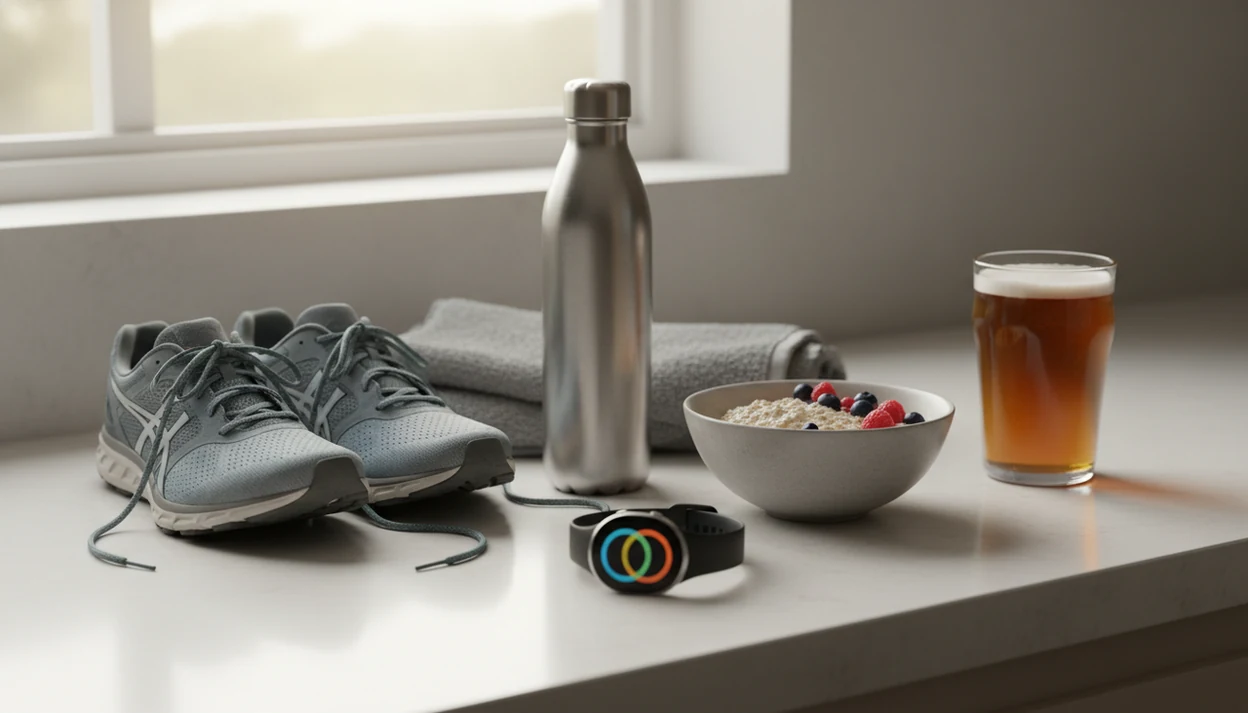
You may train consistently all week, then find that Friday drinks make Saturday's long run harder than expected. Or the post-lifting beer that feels relaxing may be followed by poor sleep, heavy legs, and a shortened workout the next day.
The useful question is not if one drink ruined your progress. Look at the repeated tradeoff between drinking and the outcomes you care about: strength, pace, recovery, body composition, or simply getting to the gym as planned. Treat alcohol as a training variable, not a character judgment.
The quick version
Alcohol can affect fitness by disrupting sleep, hydration, muscle repair, nutrition, and next-day training. The effects depend on dose, timing, and drinking pattern. Drinking less, especially after hard sessions and before key workouts, can improve consistency. Track drinks beside sleep, soreness, energy, pace, and completed workouts for 2 to 4 weeks to find your pattern.
Muscle repair takes the first hit after hard training
Drinking less for fitness can improve recovery because alcohol affects the same systems your training depends on: sleep quality, hydration, glycogen replenishment, and muscle repair. The biggest fitness cost usually comes from repeated moderate-heavy drinking or binge patterns, not one isolated drink at dinner.
In one controlled recovery study, alcohol intake after exercise reduced muscle protein synthesis by 24-37% compared with non-alcohol recovery conditions: https://journals.plos.org/plosone/article?id=10.1371/journal.pone.0088384.
The quiet clue is often the next morning. Heavy shoulders at happy hour can become a flat workout before breakfast. For most people, the useful question is not “Did I ruin training?” It is, “Does this pattern keep showing up?”
How alcohol affects muscle recovery, performance, and fitness gains
Alcohol after a workout can interfere with the repair process that supports muscle growth. In a controlled study, a large post-exercise dose of 1.5 grams of alcohol per kilogram of body weight reduced myofibrillar muscle-protein synthesis by about 37% compared with protein alone during early recovery. Protein reduced the size of the effect but did not remove it. See the controlled study of alcohol and post-exercise muscle repair.
That dose was high, so the result should not be used to claim that one occasional drink stops muscle growth. A review of alcohol and exercise recovery found that dose, timing, and repeated exposure matter. The clearest concern is a pattern of heavier drinking during the hours when the body is replacing fluid and glycogen, repairing muscle, and preparing for sleep.
Stiffness and flexibility are imperfect clues
You may feel stiff after drinking because fluid balance, sleep, and general recovery were poor. You may also feel normal even when cellular repair has been affected, so soreness alone cannot tell you how well you recovered. After heavy lifting, a long run, or demanding mobility work, an alcohol-free recovery night gives your body fewer competing tasks. Eat a planned meal, replace fluids, and prioritize sleep before deciding about alcohol the following day.
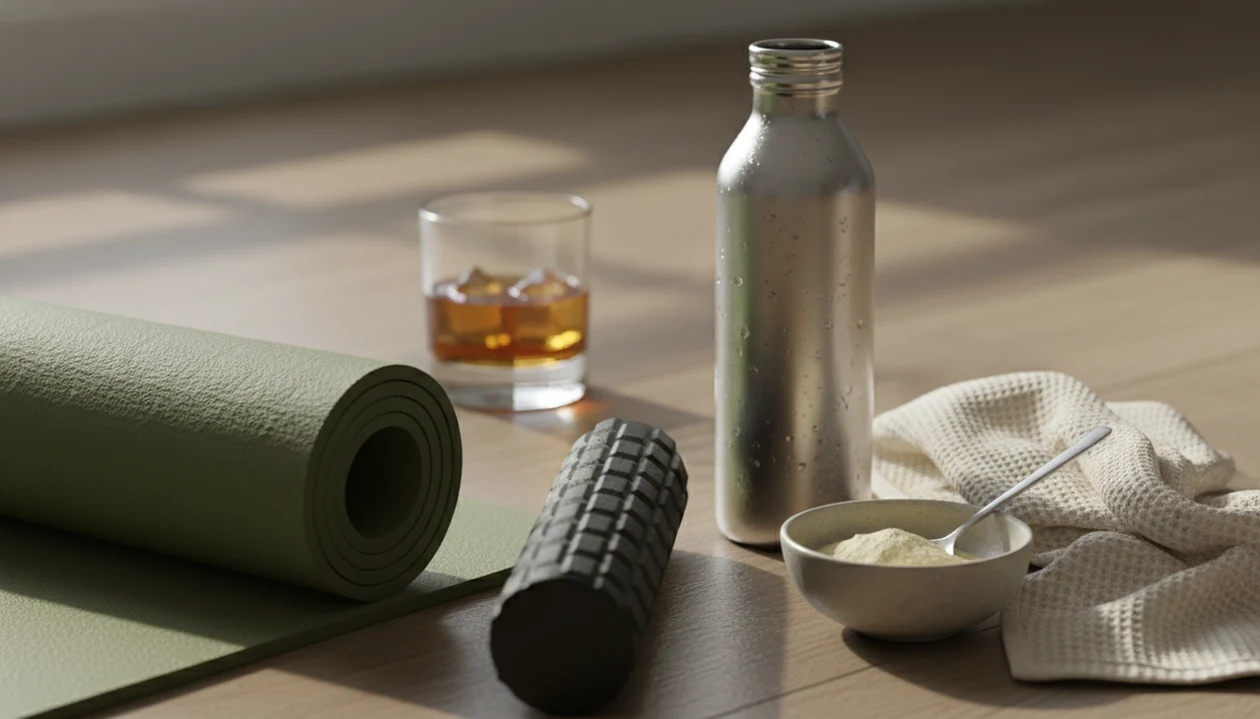
Five ways alcohol can change workout recovery
- Even small amounts of alcohol can interfere with workout recovery by affecting sleep depth, hydration, and next-day readiness.
- Alcohol after intense workouts can slow muscle repair and glycogen replacement, especially when food, fluids, and sleep are already poor.
- A 12-ounce regular beer at 5% alcohol contains about 153 calories, and alcohol provides 7 calories per gram; NIAAA defines that as one U.S. standard drink: https://www.niaaa.nih.gov/alcohols-effects-health/overview-alcohol-consumption/what-standard-drink.
- CDC surveillance has reported that 55.1% of U.S. adults drank alcohol in the past month and 24.4% reported at least one binge-drinking occasion: https://www.cdc.gov/alcohol/data-stats.htm
- The U.S. Dietary Guidelines define moderate drinking as up to 1 drink per day for women and up to 2 drinks per day for men, while noting that drinking less is better for health than drinking more: https://www.dietaryguidelines.gov/resources/2020-2025-dietary-guidelines-online-materials.
Calories are not a moral scorecard. They are training inputs. A half-poured wine glass on the counter still counts when you are comparing recovery days.
Pair each drink with the next day's training data
Alcohol and fitness tracking works by pairing alcohol inputs with next-day outputs such as sleep, resting heart rate, workout completion, pace, perceived exertion, soreness, cravings, and mood. The method uses pattern recognition, not perfection.
In plain English, you are looking for repeat links. Two beers after leg day may not tell you much. Four Fridays in a row with worse Saturday runs tells you something useful. Habit loops matter here: a cue, a drink, and a delayed training cost can become automatic unless you make the pattern visible.
A large U.S. survey found that adults meeting physical activity guidelines had 1.5-2 times higher odds of being moderate or heavy drinkers compared with inactive adults. Active people may need clearer guardrails, not fewer.
Good alcohol-reduction tracking tools deliver habit visibility and reset prompts, not diagnosis or medical treatment.
Build a useful alcohol fitness log in five steps
Use an alcohol fitness tracker by connecting each drink to a training outcome you actually care about. Faster runs, better lifting recovery, steadier fat loss, and fewer skipped sessions are easier to judge than vague “being healthier.”
- Set a weekly drink target tied to one fitness goal, such as faster 5K pace, better squat recovery, or drink less for weight loss.
- Log each drink with timing, quantity, setting, and whether it was planned or impulsive.
- Record next-day metrics such as sleep, energy, resting heart rate, soreness, workout completion, cravings, and mood.
- Review patterns after 2-4 weeks instead of judging one rough morning as proof.
- Reset with one small change, such as alcohol-free training nights, a two-drink cap, or alternating with non-alcohol drinks.
A calendar dry day marked green can feel small, but it gives you a clean data point.
Weekend drinks vs Saturday and Sunday workouts
Does weekend drinking affect fitness if you train during the week? Yes, it can. Weekend drinking can add hundreds of calories, reduce sleep quality, delay recovery, and lead to skipped workouts even when Monday through Thursday look disciplined.
The pattern is familiar. Friday 6 p.m. drinks make Saturday’s long run feel harder. A Saturday binge can flatten Sunday lifting. Late-night alcohol can leave Monday motivation thin, even if the workout clothes are already packed.
Beer, wine, cocktails, and mixers add up quickly. No shame math, just math. Alcohol also changes food choices for many people, which can make a planned deficit disappear without anyone noticing.
If you plan to reduce rather than stop, start by keeping alcohol away from the sessions that matter most, such as long runs, heavy lifting days, and race weekends. If sleep is the weak link, start with drink less to sleep better on nights before training.
If you drink heavily most days, drink in the morning, have had withdrawal before, or develop shaking, sweating, vomiting, or marked anxiety when alcohol wears off, get medical advice before cutting down quickly. Call 911 for a seizure, hallucinations, severe confusion, fever, or trouble staying awake.
Running: protect long runs, intervals, and race blocks
Runners may notice alcohol quickly because endurance training depends heavily on hydration, sleep, glycogen, and pacing discipline. Alcohol can worsen dehydration and sleep quality, both of which matter before long runs and interval sessions.
Drinking before or after hard endurance work can reduce performance and slow glycogen replenishment. A single glass is not proof that a training block has failed, but repeated drinking around long runs and speed work can keep cutting into recovery. It does mean “I ran ten miles, so alcohol does not count” is not how recovery works.
For runners, the most practical rule is to avoid alcohol before long runs and speed work because those sessions expose small recovery problems fast. During race blocks, use stricter limits. Before intervals, schedule alcohol-free nights.
The tongue craving mint vapor after a run is a different cue, but the same tracking logic applies: notice the trigger before it decides for you.
Set limits before the first pour
These five strategies reduce alcohol without requiring social isolation. They work as behavior design: reduce friction, pre-commit, change defaults, and track streaks.
- Training-night rule: Keep nights before hard workouts alcohol-free.
- First-drink delay: Start with food, water, or a non-alcohol drink before deciding.
- Two-drink cap: Set the limit before you arrive, not after the first round.
- Alternate-drink method: Put water or a zero-proof option between alcoholic drinks.
- Post-workout recovery swap: Replace the automatic drink with protein, fluids, and a planned meal.
If mood is part of the pattern, the related guide on drink less for anxiety and mood may help you separate stress relief from habit.
Count standard drinks before choosing a limit
A glass, can, or cocktail is not always one drink. One U.S. standard drink contains about 14 grams of pure alcohol. The usual equivalents come from the standard drink definition:
| Drink | Serving | Alcohol content |
|---|---|---|
| Beer | 12 ounces | 5% |
| Wine | 5 ounces | 12% |
| Distilled spirits | 1.5 ounces | 40% |
CDC guidance on moderate alcohol use sets upper limits of two drinks in a day for men and one for women on days alcohol is consumed. These are not fitness targets or guarantees of safety. CDC defines binge drinking as four or more drinks for women or five or more for men on one occasion. See the CDC definitions of excessive alcohol use.
Measure strong beer, large wine pours, and mixed drinks instead of counting containers. Before a social event, set a maximum, choose alcohol-free days, and avoid keeping surplus alcohol at home. These steps are included in the CDC's Check Your Drinking guidance.
Which recovery signals deserve a weekly review?
An alcohol fitness tracker is most useful when you compare drinking days with repeated performance signals. Review weekly patterns, not every single data point, because stress, food, training load, illness, and travel can also change your numbers.
| Signal | What to watch | What it may suggest |
|---|---|---|
| Sleep duration | Fewer hours after drinking | Recovery time may be compressed |
| Sleep quality | More waking or lighter sleep | Alcohol may be disrupting rest |
| Resting heart rate | Higher next morning | Stress load may be elevated |
| Workout completion | Missed or shortened sessions | Drinking may be affecting consistency |
| Perceived exertion | Easy workouts feel hard | Readiness may be lower |
| Soreness | Longer soreness window | Repair may be slower |
| Pace or lifting performance | Slower splits or weaker sets | Fuel, sleep, or recovery may be impaired |
| Motivation and cravings | More urges or lower drive | Trigger patterns may be linked |
For many active adults, weekly review is easier than daily judgment because it turns one rough day into usable feedback.
Alcohol and exercise questions
Does alcohol affect workout recovery?
Yes. Alcohol can interfere with sleep, hydration, glycogen replacement, and muscle-protein synthesis. The effect is more concerning with large doses, repeated drinking, poor nutrition, or alcohol soon after demanding exercise. One isolated drink does not prove that a workout was wasted, but a repeated pattern can reduce recovery quality and training consistency.
Can I drink alcohol after lifting weights?
You can, but alcohol immediately after hard lifting is poorly timed for muscle repair, rehydration, eating, and sleep. Large post-exercise doses have reduced muscle-protein synthesis in controlled research. If strength or muscle growth matters to you, eat, replace fluids, and make the first recovery night alcohol-free when possible.
How long should I wait to drink after a workout?
Research does not provide one exact waiting period that applies to every body, dose, and workout. For a hard lifting session, long run, or race, an alcohol-free recovery night is a practical rule. An easy walk followed by one drink is not equivalent to several drinks after heavy training.
Does alcohol make muscles stiff or reduce flexibility?
Alcohol may leave you feeling stiffer through poor sleep, fluid shifts, and incomplete recovery, but stiffness is not a precise measure of muscle repair. You can feel normal while recovery processes are still affected. Compare mobility and soreness across several drinking and alcohol-free days rather than judging one morning.
Is weekend drinking bad for fitness?
It can be, especially when several drinks disrupt two or three days of training. Friday drinking may affect Saturday sleepiness, hydration, food choices, and workout effort. A Saturday binge can also reach into Sunday recovery. Protect your hardest weekend session first, then compare completion, pace, soreness, and motivation.
Will drinking less help with weight loss?
It may help by reducing alcohol calories and making planned meals and workouts easier to maintain. Alcohol provides 7 calories per gram, and mixers or late-night food can add more. Weight change still depends on overall intake and activity, so drinking less supports the plan but does not guarantee a specific result.
How many drinks count as moderate drinking?
CDC defines moderate use as no more than two drinks in a day for men or one for women on days alcohol is consumed. These are upper limits, not health or fitness goals. Strong beer, large wine pours, and cocktails may contain more than one standard drink, so serving size matters.
Can I stop drinking suddenly if I exercise regularly?
Regular exercise does not protect against alcohol withdrawal. If you drink heavily or daily, need a morning drink, or have had shaking, sweating, hallucinations, or seizures after stopping, do not quit suddenly without medical advice. Withdrawal can become life-threatening and may require medication and monitoring.