
How Alcohol Connects AFib With Ischemic and Bleeding Strokes
The quick version
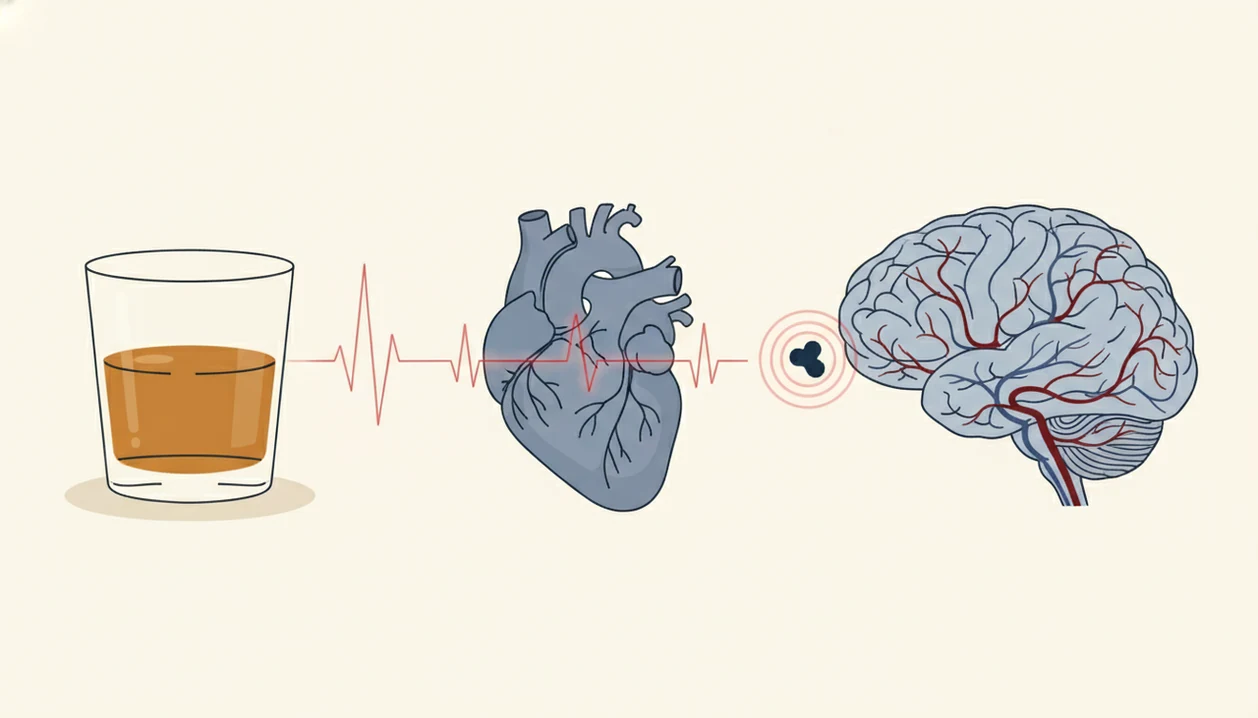
Alcohol can increase AFib and stroke risk by disrupting heart rhythm, raising blood pressure and complicating bleeding risk. AFib can allow a clot to form in the heart and travel to the brain. Cutting back may reduce AFib episodes, but it does not replace blood thinners or other prescribed treatment. Heavy daily drinkers need medical advice before stopping.
A fluttering or racing heartbeat after a night of drinking may settle by morning, but that does not confirm that everything is fine. AFib can come and go, and some episodes cause few noticeable symptoms. Drinking can also combine with dehydration, poor sleep, nicotine and missed medication to increase cardiovascular strain.
The safest response depends on your drinking pattern, blood pressure, medications and history of AFib or stroke. Reducing alcohol may help, but stopping suddenly can create a separate medical risk for people who have become physically dependent.
How alcohol, AFib and stroke risk connect
Alcohol can affect stroke risk through three main pathways: AFib, blood pressure, and bleeding risk. Ischemic stroke means a blocked blood vessel in the brain; hemorrhagic stroke means bleeding in or around the brain.
Even short-term drinking can matter for susceptible people. A person may notice a fluttering chest after a party, then dismiss it once the rhythm settles. That is understandable, but it is not a clean safety signal. AFib can come and go.
Risk generally rises as drinking becomes heavier, more frequent, or concentrated into binges. Alcohol can also worsen sleep, dehydration, and blood pressure, which are common AFib triggers. If alcohol also leads to missed medication or falls, the risk picture becomes more complicated.
Risk rises differently with a single heavy night, regular drinking, uncontrolled blood pressure and missed medication.
Five numbers that put the risk in context
- In a continuous-monitoring study, one alcoholic drink was associated with about twofold higher odds of an AFib episode in the next four hours.
- In the same research area, two or more drinks were linked to more than threefold higher odds of AFib in the next four hours.
- A large observational study found that one alcoholic drink per day was linked to a 16% higher risk of developing atrial fibrillation compared with not drinking.
- A 2022 dose-response meta-analysis of more than 10 million participants found that each additional daily drink increased AFib risk by 6%.
- Among people with AFib, atrial fibrillation is associated with about a fivefold higher ischemic stroke risk compared with no AFib.
Sources: acute alcohol-triggered AFib monitoring study, Annals of Internal Medicine/PubMed: https://pubmed.ncbi.nlm.nih.gov/34461004/; alcohol dose and incident AFib meta-analysis, European Heart Journal: https://academic.oup.com/eurheartj/article/42/12/1170/6125685; AFib and stroke risk overview, CDC: https://www.cdc.gov/heart-disease/about/atrial-fibrillation.html.
These are population-level findings, not a personal forecast. Still, they fit the same clinical concern: alcohol can trigger rhythm changes quickly, and repeated rhythm changes can add to long-term stroke risk.

What happened when regular drinkers with AFib abstained
A randomized trial followed 140 adults with paroxysmal or persistent AFib who had been drinking at least 10 standard drinks a week. After six months, AFib had returned in 53% of the abstinence group and 73% of the group that continued drinking. Abstinence was associated with a 45% lower rate of recurrence during follow-up.
| Outcome | Abstinence group | Continued-drinking group |
|---|---|---|
| AFib recurrence | 53% | 73% |
| Median AFib burden | 0.5% of monitored time | 1.2% of monitored time |
The randomized AFib abstinence trial provides direct evidence that reducing alcohol exposure can lower AFib recurrence and burden in regular drinkers. It does not show that quitting alcohol removes stroke risk, and it was not designed to establish a safe withdrawal method for dependent drinkers.
From an irregular heartbeat to a blocked brain artery
Alcohol-related AFib can raise ischemic stroke risk when the upper heart chambers quiver instead of pumping in a coordinated way. That quivering can let blood pool, form a clot, and send that clot through the bloodstream to the brain.
How alcohol works in this pathway is partly electrical and partly environmental. Drinking can contribute to dehydration, autonomic nervous system swings, poor sleep, and short-term electrical instability in heart tissue. Alcohol can make the heart's electrical timing less stable, especially when drinking is combined with dehydration, poor sleep or stress.
The pathway is easier to picture than to feel. A sticky bar table under the fingertips, one more round, then a racing pulse in bed two hours later. The symptom may pass, but repeated alcohol-triggered AFib episodes can still contribute to cumulative stroke risk.
Weekly totals can hide concentrated drinking, so preventing binges may matter more than staying below a weekly number while still drinking heavily on one night.
Call 911 for face drooping, arm weakness, speech trouble, chest pain, fainting, severe shortness of breath, a seizure, confusion or a sustained rapid or irregular heartbeat. If you drink heavily every day, drink in the morning or have had withdrawal symptoms before, get medical advice before reducing or stopping alcohol.
Can a drinking binge trigger holiday heart syndrome?
Can binge drinking trigger AFib that matters for stroke risk? Yes. Holiday heart syndrome describes alcohol-triggered AFib or another arrhythmia after heavy drinking, often in someone who may not have known they were vulnerable.
Some emergency department series have linked 35% to 62% of AFib cases to recent alcohol use. Source: StatPearls/NCBI Bookshelf holiday heart syndrome review: https://www.ncbi.nlm.nih.gov/books/NBK537185/. Symptoms may include palpitations, fluttering, shortness of breath, chest discomfort, dizziness, or fatigue. The late-night kebab shop smoking crowd is one common setting where alcohol, nicotine, salt, poor sleep, and dehydration stack together.
A rhythm returning to normal does not automatically mean the episode was harmless. Urgent evaluation is needed for stroke symptoms, chest pain, fainting, severe shortness of breath or a rapid heartbeat that does not settle.
Face drooping, arm weakness, and speech trouble are emergency symptoms. Call 911 immediately.
Sleep disruption can be part of the same trigger chain, and the related pattern is covered in alcohol sleep fatigue.
High blood pressure and bleeding in the brain
High blood pressure is a major risk factor for brain bleeds. Alcohol can raise blood pressure, especially with heavy or binge drinking, and that extra pressure can stress blood vessel walls in the brain.
A hemorrhagic stroke is bleeding in or around the brain. It is different from an ischemic stroke, where a clot blocks blood flow. Alcohol does not guarantee a brain bleed, but it can contribute to the conditions that make bleeding more likely or more severe.
The alcohol blood pressure brain bleed concern is sharper for people who already have hypertension, prior stroke, liver disease, frequent falls, or medicines that affect clotting. Anticoagulants and antiplatelet medicines can reduce clot-related risks, but bleeding consequences may be more serious if an injury or vessel rupture occurs.
If blood pressure readings rise after drinking nights, that is useful data. Write down the time, number of drinks, reading, sleep, and symptoms.
Blood thinners, alcohol and hemorrhagic stroke risk
Many people with AFib are prescribed anticoagulants to reduce clot-related ischemic stroke risk. These medicines can be important, but they also make bleeding events more consequential.
Alcohol may complicate that balance in several ways. It can disrupt adherence, increase falls risk, affect liver metabolism, impair platelet function, or destabilize INR control for people taking warfarin. DOAC medicines have different monitoring rules, but alcohol can still matter for bleeding and injury risk.
Do not stop a prescribed blood thinner because you are worried about alcohol hemorrhagic stroke risk. That can increase clot-related stroke risk quickly for some patients. The safer step is to ask a clinician what alcohol limit fits your medication, AFib history, blood pressure, and fall risk.
Blood thinner decisions depend on the specific medicine, AFib history, blood pressure, liver health and risk of falls. Alcohol can still increase the consequences of a fall, missed dose or bleeding event.
Reduce alcohol without interrupting AFib treatment
Reducing or quitting alcohol may reduce AFib triggers and improve blood pressure control. A practical plan tracks drinks, palpitations, sleep, blood pressure, cravings, and missed-medication risks in one place.
How alcohol reduction works is mostly about interrupting habit loops and lowering trigger load. Habit loops pair a cue, a behavior, and a reward; withdrawal kinetics and sleep rebound can make the first few alcohol-free days feel uneven. A useful log entry is specific: 9:40 p.m., stress after work, craving 7/10, sparkling water, walked outside, no drink.
- Record each drink with time, amount, and setting.
- Log palpitations, sleep quality, blood pressure, and next-day fatigue.
- Set alcohol-free days and avoid binge drinking windows.
- Review patterns weekly, especially symptoms within four hours of drinking.
- People with AFib, a prior stroke, hypertension or prescribed blood thinners should discuss alcohol limits with the clinician managing those conditions.
It should be treated as behavior-change support, not diagnosis, detox care, medication guidance, or a substitute for a clinician.
For broader behavior-change context, the alcohol reduction guides and best drink less app guide explain related tracking options.
Make the first alcohol-free days medically safe
For someone who drinks heavily every day, the transition away from alcohol may create short-term cardiovascular strain. Withdrawal can begin within hours and may include shaking, sweating, anxiety, insomnia, nausea, vomiting, increased pulse and higher blood pressure. Seizures, hallucinations, confusion and delirium can be life-threatening.
- Tell a primary care, addiction medicine or cardiology clinician the true daily amount and timing of your drinking.
- Report morning drinking, previous withdrawal symptoms, seizures, hallucinations, liver disease and any use of sedatives or opioids.
- Ask if withdrawal can be managed at home or needs supervised outpatient or inpatient care.
- Keep taking prescribed anticoagulants, heart rhythm medicines and blood pressure medicines unless the prescriber changes them.
- Establish which symptoms mean calling 911 before the cut-down or quit attempt begins.
NIAAA guidance on alcohol withdrawal describes the symptoms and potentially fatal complications of abrupt cessation. Alcohol reduction supports heart health, but stroke prevention guidance from the World Health Organization still calls for effective management of AFib, hypertension and other vascular risks.
Do not use fewer palpitations as a reason to skip or stop a blood thinner. Stroke-prevention treatment changes require the prescribing clinician.
How the medical evidence was assessed
This page checks alcohol, AFib, stroke, and medication claims against clinical and public-health sources, not anecdotes alone. It gives the most weight to CDC and NIH materials, peer-reviewed journals, and medication safety references when the topic involves blood thinners or bleeding risk.
- Start with public-health guidance for definitions, emergency symptoms, and baseline risk framing.
- Compare specific alcohol-and-AFib claims with peer-reviewed studies or reviews.
- Separate population findings from personal predictions, because observational alcohol studies can show associations but cannot prove what will happen to one individual.
- Flag medication and bleeding questions as clinician-level decisions, especially for anticoagulants, antiplatelets, prior stroke, falls, liver disease, or uncontrolled blood pressure.
- Update the framing when stronger clinical or safety sources change the balance of evidence.
Important source URLs used for this page include: https://www.cdc.gov/heart-disease/about/atrial-fibrillation.html; https://pubmed.ncbi.nlm.nih.gov/34461004/; https://academic.oup.com/eurheartj/article/42/12/1170/6125685; https://www.ncbi.nlm.nih.gov/books/NBK537185/. Recurring palpitations after drinking deserve medical assessment, especially with fainting, high blood pressure, a previous stroke or blood thinner use.
Questions about alcohol, AFib and stroke
Can one alcoholic drink trigger AFib?
It can in a susceptible person. Continuous-monitoring research found that AFib episodes were more likely during the four hours after drinking. A single drink will not trigger AFib in everyone, but repeat palpitations after even small amounts are worth recording and discussing with a clinician.
How does AFib cause an ischemic stroke?
AFib makes the upper chambers of the heart quiver instead of pumping in a coordinated rhythm. Blood can pool there and form a clot. If the clot travels to an artery supplying the brain, it can block blood flow and cause an ischemic stroke.
Does wine affect AFib differently from beer or liquor?
There is no reliable reason to consider wine harmless for AFib. The amount of alcohol and how quickly it is consumed generally matter more than the beverage type. Large wine pours, strong beers and cocktails may contain more alcohol than people estimate.
Can alcohol cause a hemorrhagic stroke?
Alcohol can contribute to hemorrhagic stroke risk by raising blood pressure and complicating bleeding, particularly with heavy or binge drinking. Concern is greater for people with uncontrolled hypertension, liver disease, previous stroke, frequent falls or medicines that affect clotting.
Is any amount of alcohol safe while taking a blood thinner?
There is no single safe limit for every person taking an anticoagulant or antiplatelet medicine. The answer depends on the drug, liver health, blood pressure, fall risk and drinking pattern. Do not stop the medicine because of drinking concerns. Ask the prescriber for an individual limit.
Will alcohol-related AFib go away after I stop drinking?
An individual episode may stop, and reducing alcohol can lower AFib recurrence and overall burden. That does not prove the underlying risk is gone. AFib can return or occur without clear symptoms, so continue prescribed treatment and ask a clinician about rhythm monitoring and stroke-risk assessment.
Can I stop drinking alcohol cold turkey if I have AFib?
Not without medical advice if you drink heavily every day, drink in the morning or have had shaking, sweating, seizures, hallucinations or severe anxiety after stopping before. Abrupt withdrawal can raise heart rate and blood pressure and may cause seizures or delirium. A clinician can plan safer care.