

How Alcohol Affects Gallstones, Bile and Upper Abdominal Pain
Bottom line
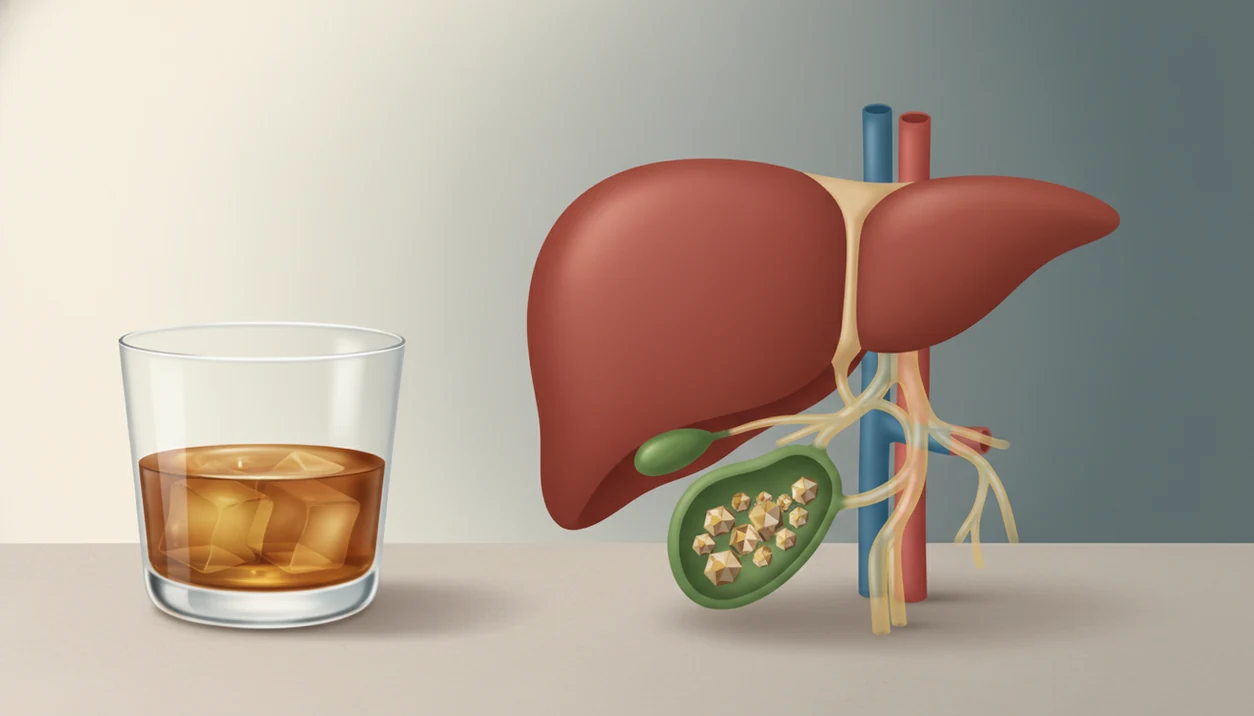
Alcohol can change bile chemistry, liver function and gallbladder movement, but it does not reliably prevent or directly treat gallstones. Moderate drinking is associated with lower cholesterol gallstone risk in some observational studies, while heavy drinking can damage the liver and contribute to pigment stones. Alcohol cannot dissolve stones or safely flush the gallbladder.
Pain after a drink does not automatically mean alcohol caused a gallstone. A rich meal, an existing stone, gallbladder contraction, liver disease or pancreatitis may be involved, and the symptoms can overlap. The location, duration and accompanying signs matter more than the drink alone.
If you are cutting back after heavy daily drinking, consider withdrawal risk separately from gallbladder risk. A large reduction can trigger symptoms within hours, so get medical advice before changing your intake abruptly.
Where alcohol fits among gallstone risk factors
Alcohol can affect bile production, bile composition, and gallbladder emptying, but those effects depend on the drinking pattern and the person’s liver health. The key split is moderate-drinking research versus heavy-drinking harm.
Gallstones are common. NIDDK estimates that gallstones affect about 10% to 15% of U.S. adults NIDDK statistics, so alcohol is only one piece of a much larger risk picture. Cholesterol levels in bile, bilirubin handling, weight change, pregnancy, age, diabetes, and family history often matter more.
A weeknight pour after laptop shutdown may feel medically neutral. It still counts.
Alcohol is not recommended as gallstone prevention. Even when studies find lower cholesterol gallstone rates among moderate drinkers, that does not make alcohol a treatment, a flush, or a safe strategy for someone with pain after drinking.
Why alcohol's effect on bile is not one simple story
- Gallstones form when bile hardens. Bile substances such as cholesterol or bilirubin can crystallize, collect, and form stones inside the gallbladder.
- Moderate alcohol is linked with lower cholesterol gallstone risk in several reviews. A 2019 meta-analysis of 24 studies found alcohol consumption was associated with decreased gallstone risk the NIH.
- Heavy alcohol use can disturb bile flow. Chronic heavy drinking can injure the liver, and liver injury can change bile production and bilirubin handling.
- Alcohol may slow gallbladder emptying in some settings. Small studies suggest alcohol gallbladder emptying effects may contribute to bile stasis, but results are not consistent.
- Public-health guidance does not recommend alcohol for prevention. The possible gallstone association is outweighed by known risks, including liver disease, pancreatitis, injury, cancer, and dependence.
How the liver makes bile and handles alcohol
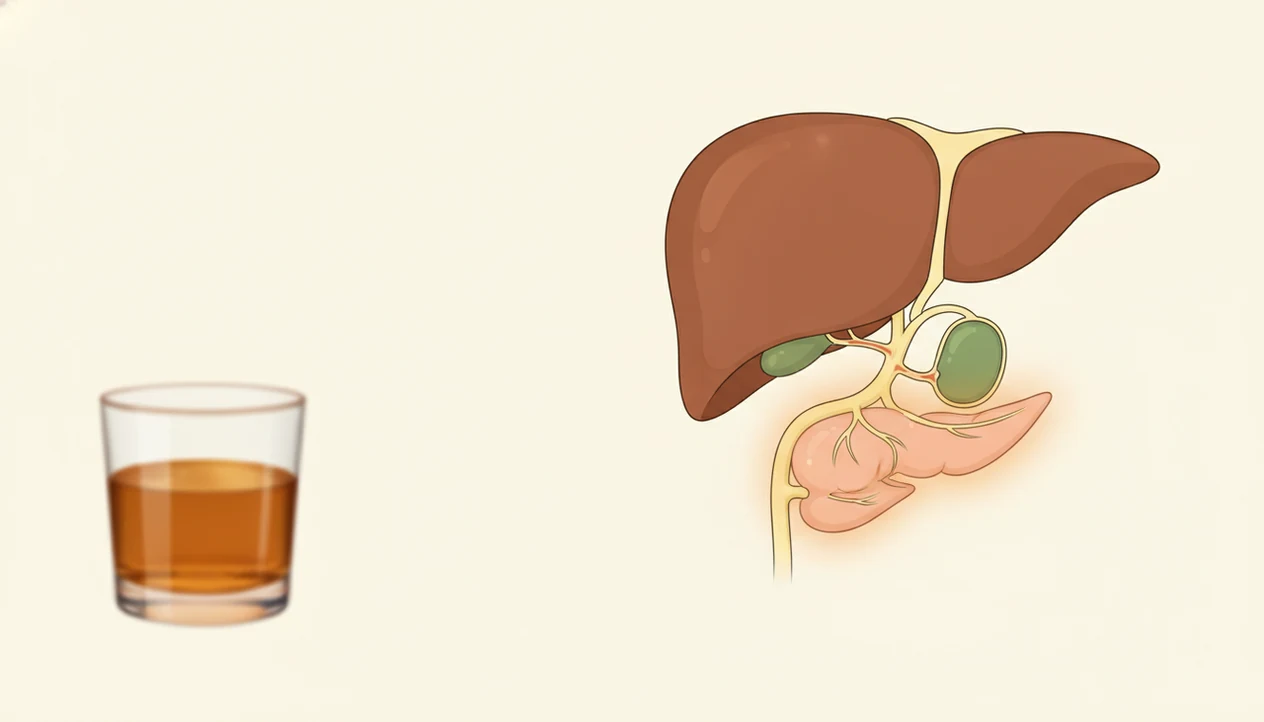
Bile is a liver-made digestive fluid that is stored and concentrated by the gallbladder between meals. It contains bile acids, cholesterol, bilirubin, phospholipids, and electrolytes, and it helps the intestine digest fats.
Alcohol is mainly metabolized in the liver. That matters because bile production is also a liver function. When alcohol exposure stresses liver cells, it can alter bile flow, bile acid balance, inflammation, and bilirubin processing. Gallbladder symptoms can begin with changes in the liver, which controls bile production, bile chemistry and bilirubin processing.
Alcohol’s gallbladder effects are usually indirect through the liver, bile chemistry, and digestion rather than alcohol “crystallizing” inside the gallbladder. For people comparing alcohol’s effects across body systems, the same liver-centered logic appears in topics like alcohol and b vitamin deficiency, where intake affects nutrient handling before symptoms become obvious.
Recurring gallbladder symptoms need a medical assessment rather than experiments with drinking more, drinking less or changing alcohol types.
Seek urgent care for severe or persistent upper abdominal pain, fever, jaundice, repeated vomiting, dark urine or pale stools. If you drink heavily or have had withdrawal symptoms before, get medical advice before stopping or sharply reducing alcohol because withdrawal can be life-threatening.
Does moderate drinking reduce cholesterol gallstones?
Does moderate alcohol lower cholesterol gallstone risk? Observational research often says it is associated with lower risk, but it does not prove alcohol prevents gallstones.
The 2019 meta-analysis found alcohol consumption was associated with a significantly decreased risk of gallstones. Proposed mechanisms include lower biliary cholesterol, altered bile acid composition, and metabolic differences among moderate drinkers. These are plausible explanations, not instructions to drink.
Per CDC guidance, moderate drinking means up to 1 drink per day for women and up to 2 drinks per day for men CDC alcohol data. That definition is a ceiling, not a target. Many people do better with less, especially if alcohol worsens reflux, sleep, anxiety, triglycerides, or liver markers.
A sparkling water in a rocks glass can be a useful substitution cue. Not glamorous, just practical.
For someone reducing alcohol, symptom tracking is often safer than trying to reproduce “moderate” intake from population studies.
What the lower-risk association actually showed
A 2019 systematic review and dose-response meta-analysis combined 16 case-control studies and 8 cohort studies. It included 24,401 gallstone cases and 2,432,471 person-years of follow-up. Alcohol use was associated with a lower overall gallstone-disease risk, with a pooled relative risk of 0.84. The association weakened above about 28 grams of alcohol per day.
Those studies observed drinking patterns rather than assigning people to drink. They cannot show that alcohol prevented the stones, and factors such as diet, weight, income or health status may partly explain the association. A 2025 evidence review of asymptomatic gallstones found no randomized controlled trials establishing alcohol as prevention. There is no medical reason to start drinking or preserve a drinking habit to avoid gallstones.
A statistical association is not a prescription. Alcohol does not treat stones that have already formed.
Heavy drinking, liver damage and pigment stones
Heavy alcohol use is a different risk category from moderate intake. Chronic heavy drinking can contribute to cirrhosis, impaired bile handling, bilirubin changes, and pigment gallstone risk.
| Stone or risk pattern | Main bile issue | Alcohol-related concern |
|---|---|---|
| Cholesterol gallstones | Too much cholesterol relative to bile acids | Moderate intake is associated with lower risk in some studies |
| Pigment gallstones | Bilirubin-rich stone material | More common with cirrhosis and altered bilirubin metabolism |
| Cirrhosis-related stones | Impaired liver processing and bile flow | Chronic alcohol abuse may contribute through liver disease |
Cirrhosis is a recognized risk factor for gallstones, especially pigment stones, because impaired liver processing can change bilirubin handling and bile composition; if the exact 79% versus 26% figures are kept, add the original clinical-series citation inline. Heavy drinking does not directly form pigment stones in every person, but alcohol-related liver disease can create conditions that favor them. It points to liver disease, bilirubin handling, and bile flow as the pathway.
Get prompt medical care when gallbladder pain occurs with jaundice, fever, repeated vomiting or persistent pain in the right upper abdomen.
Gallbladder emptying vs bile stasis
Gallbladder emptying means the gallbladder contracts after meals and releases bile into the small intestine. Bile stasis means bile sits too long, becomes more concentrated, and may be more likely to form sludge or stones.
Small studies suggest alcohol may slow gallbladder emptying in some contexts. If bile stays in the gallbladder longer, cholesterol crystals or sludge could theoretically have more time to form. That mechanism sounds tidy, but the evidence is not tidy.
Here is the tension: slower emptying could support stone formation, yet moderate-drinking studies often show lower cholesterol gallstone risk. Both can be true if alcohol affects bile acids, cholesterol secretion, hormones, meals, and liver metabolism differently across people.
The pocket-sized reality is messier. One person notices bloating after wine; another has no clear pattern until a fatty meal and alcohol overlap.
Can drinking trigger a gallbladder attack?
Does alcohol cause gallstones? Alcohol does not directly cause gallstones in everyone who drinks, and it cannot dissolve, flush, or cure stones that already exist.
Alcohol may still matter after diagnosis. It can worsen indigestion, dehydration, liver strain, inflammation, and pancreatitis risk. It may also make it harder to notice the early pattern of symptoms, especially when pain follows restaurant meals, late eating, or heavier drinking.
A gallbladder attack often causes steady pain in the right upper abdomen or upper middle abdomen, sometimes with nausea or pain toward the back or shoulder. If alcohol reliably precedes that pain, it is worth telling a clinician rather than assuming the drink was harmless.
For wider alcohol risk context, our alcohol artery disease risk guide explains why a single “moderate drinking” claim rarely captures total health risk.
Can alcohol cause or worsen gallbladder pain, bile duct problems, gallstones, or pancreatitis?
Alcohol may coincide with gallbladder pain without being the sole trigger. A restaurant meal can combine alcohol, fatty food and late eating, making the pattern hard to separate. More serious possibilities include an inflamed gallbladder, a stone blocking a bile duct or pancreatitis. Symptoms offer clues, but they cannot confirm the cause at home.
| Possible problem | Typical pain pattern | Other warning signs | Response |
|---|---|---|---|
| Gallbladder attack | Steady pain in the upper right or upper middle abdomen, sometimes reaching the back or right shoulder | Nausea or bloating, often after a meal | Seek same-day advice if severe, prolonged or recurrent |
| Inflamed gallbladder | Upper right pain and tenderness | Fever, vomiting or worsening pain | Urgent medical evaluation |
| Blocked bile duct | Upper right or upper middle pain | Jaundice, dark urine, pale stools or fever | Urgent or emergency care |
| Acute pancreatitis | Severe upper middle pain that may go straight through to the back | Repeated vomiting, fever, rapid pulse or a swollen abdomen | Emergency evaluation |
How gallstones can inflame the pancreas
The bile duct and pancreatic duct empty close together. A gallstone can lodge near their shared outlet and prevent pancreatic enzymes from draining normally. Those enzymes may then activate inside the pancreas and damage its tissue. This is why gallstones can cause acute pancreatitis.
Heavy alcohol use is another major cause of acute pancreatitis, separate from gallstones. Severe upper abdominal pain should not be dismissed as a hangover, indigestion or withdrawal. Jaundice, fever, repeated vomiting, confusion, rapid pulse or pain lasting several hours calls for prompt assessment.
The risk factors that often matter more than alcohol
Alcohol is not usually the dominant gallstone risk factor for most people. Established risks include sex, age, pregnancy, family history, obesity, rapid weight loss, diabetes, some lipid patterns, and diets high in refined carbohydrates or low in fiber.
Look for overlapping risks, including rapid weight change, diabetes, liver disease, diet and family history.
- Weight and rapid weight loss: Both obesity and fast weight loss can shift bile cholesterol balance.
- Triglycerides and diabetes: Alcohol can affect triglycerides and glucose regulation in some people.
- Liver disease: Heavy drinking can impair bile flow and bilirubin handling.
- Diet quality: Alcohol often travels with late meals, fried food, or missed breakfast.
- Family history: Genetics can raise risk regardless of drinking pattern.
A national survey analysis estimated about 6.3 million U.S. men and 14.2 million U.S. women had gallbladder disease. That scale is why alcohol should be viewed in context, not as the whole explanation.
Build a useful drink, meal and symptom record
If gallstones or bile concerns are present, track drinks, symptoms, triggers, and pain timing before drawing conclusions. A useful log entry includes time, amount, meal type, pain location, nausea, and what happened next.
Avoid binge drinking, and do not use alcohol as a gallstone prevention tool. Seek medical care for right upper abdominal pain, fever, jaundice, repeated vomiting, pale stools, dark urine, or symptoms that do not settle.
Good alcohol reduction tools help people track limits, dry days, cravings, and resets, not decide whether abdominal pain is safe to ignore. For practical behavior-change options, compare the best drink less app guide with medical advice from your clinician.
When symptoms recur after alcohol or meals
Use this information as a safety filter, not as a reason to experiment with alcohol. If drinking and gallstone-like symptoms overlap, the goal is to document the pattern, reduce avoidable risk, and know when to get help.
- Start a simple log that records each drink, meal type, pain location, nausea, and timing. Include whether pain appears after fatty food, late meals, alcohol, or combinations of these.
- Stop using alcohol as a test for prevention, flushing, or symptom checking. A pain-free night does not prove alcohol is safe for your gallbladder, and a painful one does not diagnose the cause.
- Avoid binge drinking while abdominal symptoms, abnormal liver tests, or liver concerns are unresolved. Heavier episodes can blur symptoms and add liver, pancreatitis, and dehydration risks.
- Call a clinician if right-upper-abdominal pain keeps returning after meals or alcohol, especially if it is steady, radiates to the back or shoulder, or comes with nausea.
- Seek urgent care for jaundice, fever, repeated vomiting, dark urine, pale stools, or severe pain that does not settle.
Make sure cutting down is safe
For someone who drinks heavily or has physical dependence, the immediate risk from a large reduction may be alcohol withdrawal. Symptoms can begin about 6 to 24 hours after stopping or substantially reducing alcohol and commonly peak within 24 to 72 hours. Tremor, sweating, anxiety, nausea, insomnia and a rapid pulse can be early signs. Seizures, hallucinations and delirium are emergencies. See the clinical alcohol withdrawal timeline for more detail.
- Get same-day medical advice before cutting down if you drink heavily every day, need a morning drink to stop shaking or have had withdrawal before.
- Do not attempt an unsupervised detox with alcohol, sedatives or medication prescribed to another person.
- Call emergency services for a seizure, confusion, hallucinations, severe shaking, chest pain, trouble breathing or inability to keep fluids down.
Medical care can reduce withdrawal risk and distress. The National Institute on Alcohol Abuse and Alcoholism treatment guide describes options for finding appropriate help.
Questions about alcohol, bile and gallstones
Does alcohol cause gallstones?
Alcohol does not directly cause gallstones in everyone who drinks. Gallstones develop through several factors, including bile cholesterol, bilirubin handling, gallbladder emptying, body weight, rapid weight loss, pregnancy, diabetes and family history. Heavy drinking can still contribute indirectly by damaging the liver and changing bile flow or bilirubin metabolism.
Can alcohol prevent gallstones?
Some observational studies associate moderate drinking with fewer cholesterol gallstones, but they do not prove prevention. No randomized trial has established alcohol as a gallstone-prevention treatment. Starting to drink, drinking more or continuing an unwanted habit for this possible association is not recommended.
Can alcohol dissolve or flush out gallstones?
No. Alcohol cannot dissolve gallstones, clear a blocked bile duct or flush sludge from the gallbladder. A temporary change in pain does not mean a stone has passed. Existing stones may require monitoring, medication in selected cases, a procedure or gallbladder surgery, depending on symptoms and clinical findings.
Why does my gallbladder hurt after drinking alcohol?
The drink may overlap with a fatty meal, late eating, dehydration or an existing gallstone rather than acting alone. Gallbladder pain is often steady and felt in the upper right or upper middle abdomen, sometimes reaching the back or right shoulder. Repeated episodes need medical assessment.
Does alcohol slow gallbladder emptying?
Small studies have produced inconsistent results. Alcohol may alter gallbladder movement in some settings, but proposed protective mechanisms include more emptying and changes in bile chemistry. The evidence is too mixed to predict an individual's response or use alcohol to control bile stasis.
Can I drink alcohol if I have gallstones?
There is no single safe answer for every person with gallstones. Avoid alcohol if it repeatedly precedes pain, worsens nausea or conflicts with liver disease, pancreatitis, medication or medical advice. Do not use drinking as a symptom test. Heavy daily drinkers should seek medical guidance before abruptly stopping.
How can I tell gallbladder pain from pancreatitis?
Gallbladder pain often sits in the upper right abdomen and may spread to the right shoulder or back. Pancreatitis more often causes severe upper middle pain extending straight through to the back, commonly with vomiting. The patterns overlap, so severe, persistent or worsening pain needs urgent evaluation.
Is wine safer than beer or liquor for the gallbladder?
No alcohol type has been shown to treat gallstones or reliably prevent attacks. Total alcohol, serving size, drinking pattern, accompanying food and personal medical conditions matter more than the label on the drink. If wine, beer or liquor repeatedly precedes pain, stop using it as a test and contact a clinician.