

How Alcohol Affects Mouth, Throat, and Voice-Box Cancer Risk
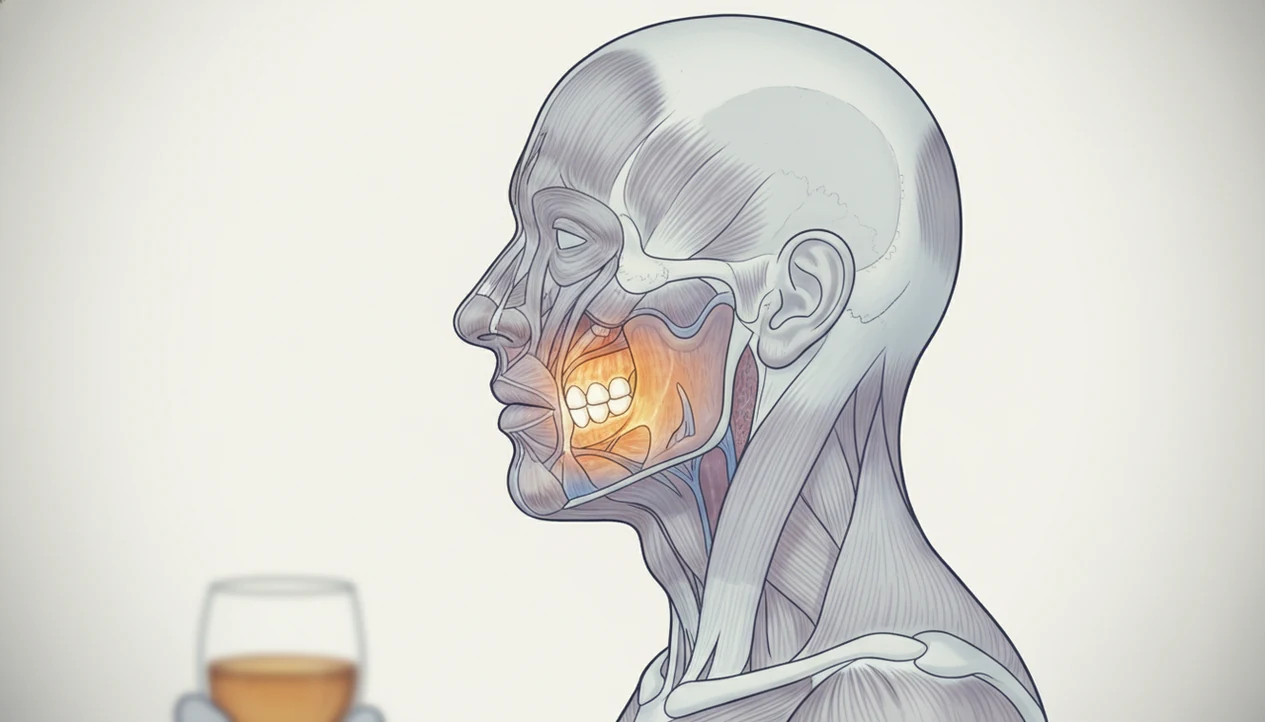
The risk is not limited to people who drink liquor or become intoxicated. A nightly glass of wine, several weekend beers, or frequent mixed drinks all expose mouth and throat tissues to ethanol. The amount and frequency add up over time.
This does not mean everyone who drinks will develop cancer. Tobacco, HPV, age, genetics, and other exposures also affect risk. Still, alcohol is one factor you can change. Cutting down reduces ongoing exposure, while stopping offers the lowest alcohol-related cancer risk. People who drink heavily or daily may need medical help to do that safely.
Bottom line
Alcohol causes some cancers of the mouth, throat, and voice box. Ethanol and its breakdown product acetaldehyde can damage cells and DNA. Risk generally rises as drinking increases, and alcohol combined with tobacco is especially dangerous. Beer, wine, and liquor all expose the body to ethanol, so no type of alcoholic drink is risk-free for cancer prevention.
Where alcohol-related head and neck cancers occur
Alcohol-related head and neck cancer means drinking alcohol can contribute to cancers in the mouth, pharynx, larynx, and nearby upper airway tissues. Head and neck cancer is not one disease; it is a group of cancers that start in different lining surfaces, glands, and throat structures.
Alcohol is a known cause of cancers in the oral cavity, pharynx, and larynx. It can raise risk even in someone who never smokes, although the risk is much higher when smoking and drinking overlap. According to the National Cancer Institute, heavy alcohol use can be associated with up to five times the risk of oral cavity and throat cancers compared with not drinking. the National Cancer Institute alcohol data.
That can feel abstract until the habit has a location. The weeknight pour after laptop shutdown, repeated for years, is not just a relaxation routine. It is repeated exposure for tissues that touch alcohol on the way down.
Five facts that change how you read the risk
- Alcohol is a proven cancer risk factor for the mouth, pharynx, and larynx, according to the National Cancer Institute the National Cancer Institute alcohol data.
- Alcohol cancer risk is dose-related, so drinking more often or in larger amounts generally raises risk more than drinking less.
- Alcohol and tobacco interact multiplicatively for oral and pharyngeal cancers, which means the combined risk is more than a simple add-up.
- Acetaldehyde is a key mechanism linking alcohol to throat cancer risk because it can damage DNA and proteins in cells lining the mouth and throat.
- HPV is also a major cause of oropharyngeal cancer, so alcohol is important but not the only risk factor.
For people trying to reduce future cancer risk, cutting down weekly alcohol exposure is often more practical than waiting for one dramatic quit date because it gives you more decision points to practice.

From ethanol exposure to DNA damage
Alcohol-related head and neck cancer works through repeated tissue exposure, chemical byproducts, and weakened repair systems. The simple version is this: ethanol touches sensitive lining cells, then the body breaks ethanol into acetaldehyde, a toxic compound that can injure those cells.
Acetaldehyde and throat cell DNA damage
Acetaldehyde can bind to DNA and proteins. That can interfere with normal cell repair and may increase the chance that damaged cells survive when they should not. Researchers also study alcohol’s effects on immune function and DNA repair, but those pathways are harder to reduce to one clean rule.
Alcohol irritation in upper airway tissue
Alcohol can irritate the mouth and throat lining. Irritated tissue may be more vulnerable to carcinogens from tobacco smoke or other exposures. Picture the dry mouth after skipping drinks, then the “I need something” feeling that pushes another pour. The biology and the habit loop can reinforce each other, which is why understanding the alcohol habit loop matters.
Throat location matters: oropharynx vs hypopharynx
The pharynx is the throat region behind the nose and mouth. Alcohol is strongly linked with cancers of the oral cavity, pharynx, and larynx, but different throat locations have different risk patterns.
| Site | Plain-language location | Alcohol link | Important caveat |
|---|---|---|---|
| Oropharynx | Back of tongue, tonsils, soft palate area | Alcohol can contribute to risk | HPV is a major cause here |
| Hypopharynx | Lower throat, near the entrance to the esophagus | Strong alcohol and tobacco relevance | Often grouped with other throat cancers |
| Larynx | Voice box | Alcohol is a known risk factor | Smoking often overlaps |
| Oral cavity | Mouth, lips, gums, tongue surface | Strong alcohol link | Direct contact with alcohol matters |
Oropharynx cancer and HPV overlap
Per the CDC, about 70% of oropharynx cancers are linked to HPV CDC. That means a throat cancer discussion should not blame alcohol alone.
Hypopharynx and larynx alcohol links
Hypopharynx and larynx risks are often discussed with alcohol and tobacco together. A hoarse voice that lingers is not something to self-diagnose in an app.
Arrange prompt medical or dental care for a persistent mouth sore, tongue patch, hoarseness, swallowing problem, unexplained ear pain, bleeding area, or neck lump. Do not abruptly stop after prolonged heavy or daily drinking without medical advice, and seek emergency help for seizures, hallucinations, severe confusion, breathing trouble, or uncontrolled vomiting.
Nasal cancers need a more careful answer
Does alcohol raise nasal cancer risk? The honest answer is that alcohol evidence is strongest for cancers of the mouth, pharynx, larynx, and esophagus, while nasal cavity and nasopharyngeal cancers are nearby but not emphasized as strongly in mainstream alcohol-cancer guidance.
The nasal cavity is the space inside the nose. The nasopharynx is the upper throat behind the nose. They sit close together, but they are not the same tissue site, and they do not have identical risk profiles.
Don’t assume every upper airway cancer has the same alcohol link. For alcohol nasal cancer risk, the careful wording is “less central” rather than “no connection.” If you are reducing alcohol for overall cancer prevention, the case is already strong without overstating the nasal evidence.
Why alcohol and tobacco are worse together
Combined alcohol and tobacco exposure is more dangerous for oral and throat cancer risk than either exposure alone. Multiplicative risk means the two exposures amplify each other instead of simply stacking like one plus one. The National Cancer Institute notes that people who use both alcohol and tobacco have much higher risks of oral cavity and throat cancers than people who use either exposure alone the National Cancer Institute alcohol data.
Alcohol may make mouth and throat tissues more vulnerable to tobacco carcinogens. It can irritate lining cells and act as a solvent, which may increase contact between carcinogens and tissue surfaces. Then nicotine adds its own habit loop: the gas station counter beside menthol packs, the lighter in the car door, the after-meal reach before thinking.
For someone who drinks and smokes, practical risk reduction should target both routines. Drinking less matters. Quitting smoking matters. If tobacco is part of the picture, make it a separate treatment target because it is one of the clearest head and neck cancer risks you can change.
Dose, frequency, and what the statistics can tell you
Population data show that alcohol contributes meaningfully to cancer burden, but statistics cannot predict one person’s exact outcome. In the United States, about 27% of cancers of the mouth, pharynx, and larynx can be attributed to alcohol use, according to the Head and Neck Cancer Alliance headandneck alcohol data.
The National Cancer Institute estimates that alcohol consumption caused about 5% of all U.S. cancer cases in 2019, or nearly 100,000 cases the National Cancer Institute alcohol data. It also estimates alcohol caused about 4% of U.S. cancer deaths that year, or nearly 25,000 deaths.
Dose and frequency both matter. A single brunch menu with bottomless mimosas is not the same as daily drinking, but repeated “special occasions” can become a weekly pattern. For cancer risk, less alcohol is better than more, and zero alcohol is the lowest-risk option.
The practical cancer-prevention target is total ethanol: drink less week after week, or stop with medical guidance if withdrawal could be a concern.
Cancer risk falls gradually after drinking stops
Stopping alcohol does not immediately return cancer risk to the level of someone who never drank. The benefit builds over years. An NCI evidence review of oral cancer prevention describes a pooled analysis of 13 studies in which people who had stopped drinking for at least 20 years had lower odds of oral-cavity and laryngeal cancers than current drinkers. The reported odds ratio was 0.69.
That finding comes from observational research, so it cannot predict one person's outcome or prove an exact recovery schedule. A 2024 federal review of alcohol and cancer risk also found that long-term cessation or reduced drinking is associated with lower risk for some alcohol-related cancers. The slow timeline is not a reason to delay. Every lower-drinking day reduces current ethanol exposure.
Cut weekly alcohol exposure with a repeatable plan
Less alcohol is better for cancer risk, and zero alcohol is the lowest-risk choice. If zero feels too big today, start by reducing total weekly exposure and making the next drink harder to pour without thinking.
- Set a weekly drink limit before the week starts.
- Log each drink the same day, not from memory on Sunday night.
- Name the trigger, such as stress, social pressure, boredom, or the first drink after work.
- Use an if-then plan, like “If I want a second drink, then I wait 20 minutes and drink water first.”
- Reduce tobacco exposure if you smoke or vape nicotine, because alcohol and tobacco together raise risk sharply.
- Reset the plan after a slip instead of saying, “I already messed up, so why not keep going?”
For a broader habit plan, the alcohol reduction guides can help you choose a first experiment.
Check withdrawal risk before making a sudden cut
The cancer benefit develops slowly, but withdrawal safety matters right away. If you have been drinking heavily or daily for a prolonged period, ask a clinician about a safe plan before stopping suddenly. The National Institute on Alcohol Abuse and Alcoholism warns that withdrawal can include shaking, sweating, anxiety, insomnia, vomiting, a rapid pulse, high blood pressure, seizures, and delirium tremens.
- Tell the clinician how much and how often you drink, including the size and strength of each drink.
- Report any previous withdrawal, seizures, hallucinations, severe confusion, pregnancy possibility, medical conditions, medications, or mental health concerns.
- Ask if outpatient care is appropriate or if you need closer medical supervision and prescription medication.
- Call emergency services for a seizure, hallucinations, severe confusion, fever, marked agitation, breathing trouble, or uncontrolled vomiting.
Withdrawal symptoms may begin within hours. A clinical overview of substance withdrawal timing places many early symptoms around 6 to 36 hours after the last drink, seizures within roughly 6 to 48 hours, and delirium tremens around 48 to 96 hours.
Do not wait on persistent mouth, throat, or neck symptoms
Seek medical care when mouth, throat, voice, swallowing, or neck symptoms persist, recur, or feel unusual for you. An app can help you notice patterns, but it cannot examine tissue, screen for cancer symptoms, or decide whether a lump is harmless.
- Contact a primary care clinician if a sore throat, hoarseness, voice change, swallowing trouble, ear pain, or unexplained neck lump lasts more than a short time or keeps coming back.
- Call a dentist promptly for mouth sores, gum changes, tongue patches, bleeding spots, or denture-related areas that do not heal.
- Ask about an ENT clinician if symptoms involve the throat, voice box, tonsil area, or neck, especially if they persist despite routine care.
- Seek urgent help now for severe bleeding, breathing trouble, choking, rapidly worsening face or neck swelling, or swelling that makes it hard to swallow saliva.
- Talk with a clinician before cutting down quickly if you drink heavily every day or have had withdrawal symptoms, seizures, shaking, confusion, or morning drinking. Alcohol withdrawal can be dangerous, and some people need a supervised taper or detox plan.
Questions about alcohol and throat cancer
Can alcohol cause throat cancer?
Yes. Alcohol is a proven cause of cancers in parts of the throat, including the pharynx and larynx. It can contribute to cancer through direct tissue exposure and acetaldehyde-related damage. Drinking does not mean cancer is inevitable, but risk generally rises as alcohol intake increases.
Does light drinking raise head and neck cancer risk?
There is no established amount of alcohol that guarantees zero cancer risk. Lower intake generally means lower risk than heavier intake, but moderation limits are not cancer-safety thresholds. For cancer prevention, drinking less is better than drinking more, and not drinking creates the lowest alcohol-related risk.
Is wine or beer safer than liquor for throat cancer?
No alcoholic beverage is considered risk-free for cancer prevention. Beer, wine, and liquor all contain ethanol, which the body converts into acetaldehyde. Drink size and alcohol concentration affect the ethanol dose, but choosing wine or beer instead of liquor does not remove the cancer risk.
How quickly does cancer risk fall after quitting alcohol?
Risk does not reset immediately. Observational evidence suggests that it declines over years and may take decades to approach the risk of people who never drank. Research has found lower head and neck cancer risk among people who stopped for 20 years or longer, but individual timelines vary.
Why are alcohol and smoking especially dangerous together?
Alcohol and tobacco amplify each other's effects on mouth and throat tissues. Their combined risk can be greater than simply adding each risk separately. Alcohol may irritate tissue and increase its contact with tobacco carcinogens. Addressing both exposures offers more protection than focusing on only one.
How is HPV-related throat cancer different from alcohol-related cancer?
HPV is a major cause of oropharyngeal cancer, which affects areas such as the tonsils and back of the tongue. About 70% of oropharyngeal cancers are linked to HPV. Alcohol can still contribute to risk, but it should not be treated as the only possible cause of a throat cancer.
What are possible early signs of mouth or throat cancer?
Possible signs include a mouth sore that does not heal, a persistent sore throat, hoarseness, trouble swallowing, an unexplained neck lump, ear pain, bleeding, or a red or white mouth patch. These symptoms often have noncancerous causes, but persistent or recurring changes need an examination.
Can I stop drinking suddenly to lower my cancer risk?
Not safely in every case. If you drink heavily or daily, have had withdrawal before, or have a history of seizures or delirium tremens, get medical advice before making a sharp reduction. Alcohol withdrawal can become life-threatening and may require monitoring and prescription medication.