

How Alcohol Affects Blood Vessels in the Brain
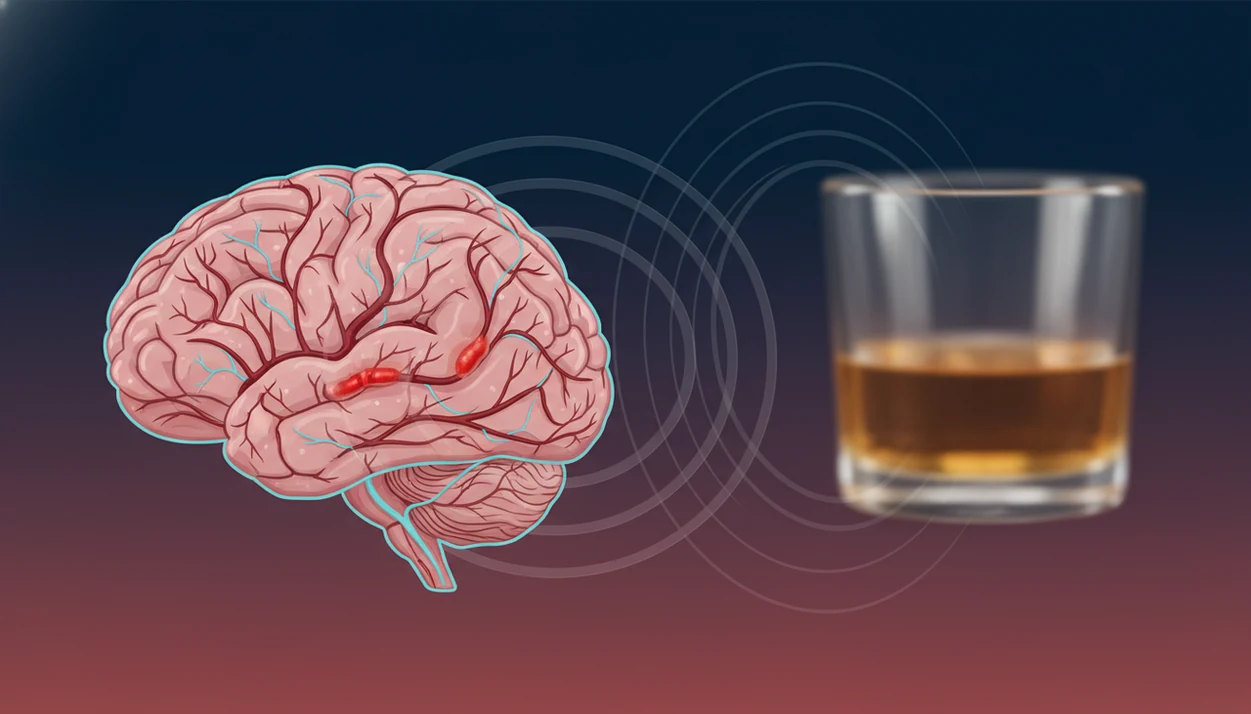
Brain vessel damage rarely announces itself after a particular drink. High blood pressure, irregular heart rhythm, inflammation, and changes in clotting may build risk over years. Some injuries remain silent until they affect walking, planning, balance, or memory.
The amount and pattern both matter. Heavy daily use and binge episodes create more concern than an occasional drink, especially alongside smoking, diabetes, high cholesterol, atrial fibrillation, or an earlier stroke. Sudden neurological symptoms are an emergency, not something to sleep off.
Short answer
Heavy or repeated drinking can harm brain blood vessels by raising blood pressure, disrupting heart rhythm, and damaging vessel walls. This can increase the risk of blocked or bleeding strokes and small-vessel injury. Reducing alcohol may lower ongoing risk, but heavy daily drinkers should seek medical advice before stopping because sudden withdrawal can be dangerous.
Five ways drinking can threaten brain circulation
- Long-term heavy drinking can injure both large brain arteries and the small vessels that feed deep brain tissue.
- Alcohol and stroke risk are linked through high blood pressure, atrial fibrillation, clotting changes, inflammation, and direct vessel stress.
- Silent strokes and small vessel disease can accumulate without one obvious “stroke moment.” The first clue may be slower walking or foggier planning.
- Alcohol vascular dementia risk rises when repeated vascular injury reduces steady blood flow to areas involved in memory, attention, and judgment.
- Risk is not destiny. Stopping or sharply reducing alcohol may reduce ongoing vascular strain, especially when blood pressure and nutrition are treated.
The pattern matters. A weeknight pour after laptop shutdown is not the same exposure as years of heavy daily drinking, but repeated patterns are what clinicians ask about.
How does alcohol injure a brain vessel?
Alcohol damages brain blood vessels by stressing the vascular lining, raising blood pressure, increasing inflammation, and making vessels less flexible over time. The vessels supplying the brain can become stiffer, narrower, or more vulnerable to injury.
How alcohol brain blood vessel damage works: repeated exposure can disturb endothelial function, which is the vessel lining’s ability to relax, signal, and protect itself. High blood pressure can then thicken and narrow small arteries, reducing oxygen delivery to brain tissue. Atrial fibrillation adds another pathway. Alcohol can trigger irregular heart rhythm in some people, allowing clots to form and travel to the brain.
A sudden headache behind the eyes at dusk is not proof of vessel damage. Still, new neurological symptoms deserve attention. Heavy drinking is the clearest risk pattern, although studies also examine moderate and former heavy drinking because past exposure may leave measurable vascular changes.
For the heart-side pathway, the broader evidence is covered in alcohol cardiovascular risk.
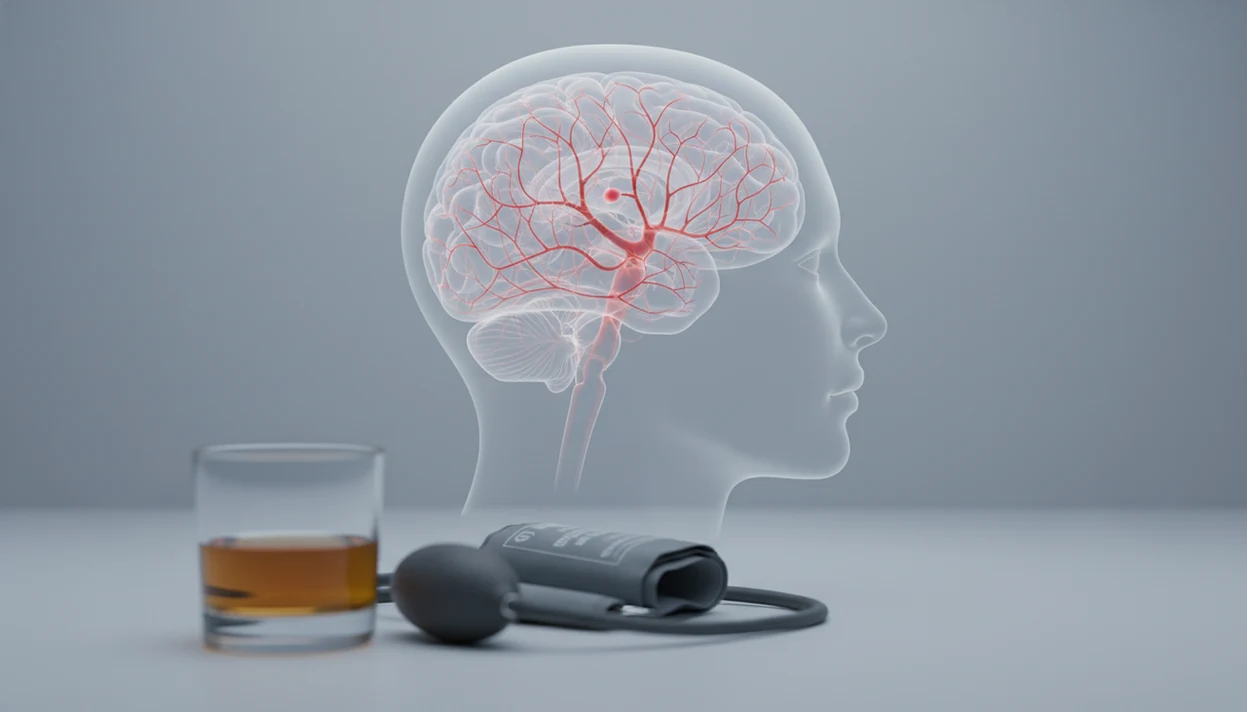
Blocked stroke vs bleeding stroke
Alcohol can increase stroke risk, especially with high or very heavy consumption. The main pathways are clots, atrial fibrillation, high blood pressure, and damaged brain arteries.
Ischemic stroke happens when blood flow is blocked. Alcohol may contribute by raising blood pressure, promoting atrial fibrillation, and damaging arteries that are already vulnerable from smoking, diabetes, or cholesterol. Hemorrhagic stroke happens when a vessel bleeds. Alcohol does not “cause” every brain bleed, but blood pressure spikes and weakened vessels can increase risk in susceptible people.
A 2019 meta-analysis of 27 prospective studies found that high alcohol consumption was associated with about a 14% increased stroke risk compared with low consumption, with higher risk at very heavy levels ahajournals.
Stroke symptoms are urgent: sudden weakness, face droop, speech trouble, severe headache, vision loss, or balance loss. Treat a sudden neurological change as an emergency and call 911. Do not wait to see if it clears.
How alcohol affects brain aneurysm development and rupture risk
Alcohol has not been shown to cause every brain aneurysm, and one drink cannot be identified as the cause of a particular rupture. The stronger concern is that heavy drinking can raise blood pressure and add stress to a vessel that is already vulnerable. Binge drinking may cause especially sharp blood pressure changes.
In a large 2017 observational study, current drinkers had 36% higher odds of aneurysm rupture than people who never drank. Among current drinkers with aneurysms, each additional daily drink was associated with 13% higher rupture odds. These findings show an association, not proof that alcohol alone caused the ruptures. Read the study of alcohol use and intracranial aneurysm rupture.
If you have a diagnosed aneurysm
- Ask your neurosurgeon or clinician if you should avoid alcohol or follow a personal limit.
- Bring an accurate record of drinks per day, binge episodes, blood pressure readings, and nicotine use.
- Take prescribed blood pressure medicine as directed.
- Do not stop heavy daily drinking abruptly without medical guidance.
A sudden severe headache, vomiting, stiff neck, fainting, seizure, weakness, or confusion can signal bleeding around the brain. Call 911 immediately.
Damage inside the brain's smallest arteries
Alcohol small vessel disease in the brain refers to injury in tiny arteries and arterioles that supply deep brain tissue. These vessels are small, but their damage can affect thinking, walking, mood, and balance.
Hyaline arteriolosclerosis means the small-vessel wall becomes thickened and less flexible. Think of a narrow road with stiff shoulders; traffic can still pass, but flow is less adaptable. A 2024 neuropathology study found heavy drinkers had a 133% increased risk of hyaline arteriolosclerosis compared with never-drinkers, after adjustment for other factors wiley.
Small vessel disease is associated with silent strokes, white matter injury, slowed processing speed, gait changes, and loss of coordination. It can show up as missed steps on stairs before it shows up as a dramatic event.
Important limit: autopsy and observational data show associations. They cannot prove alcohol alone caused every vessel finding in every person.
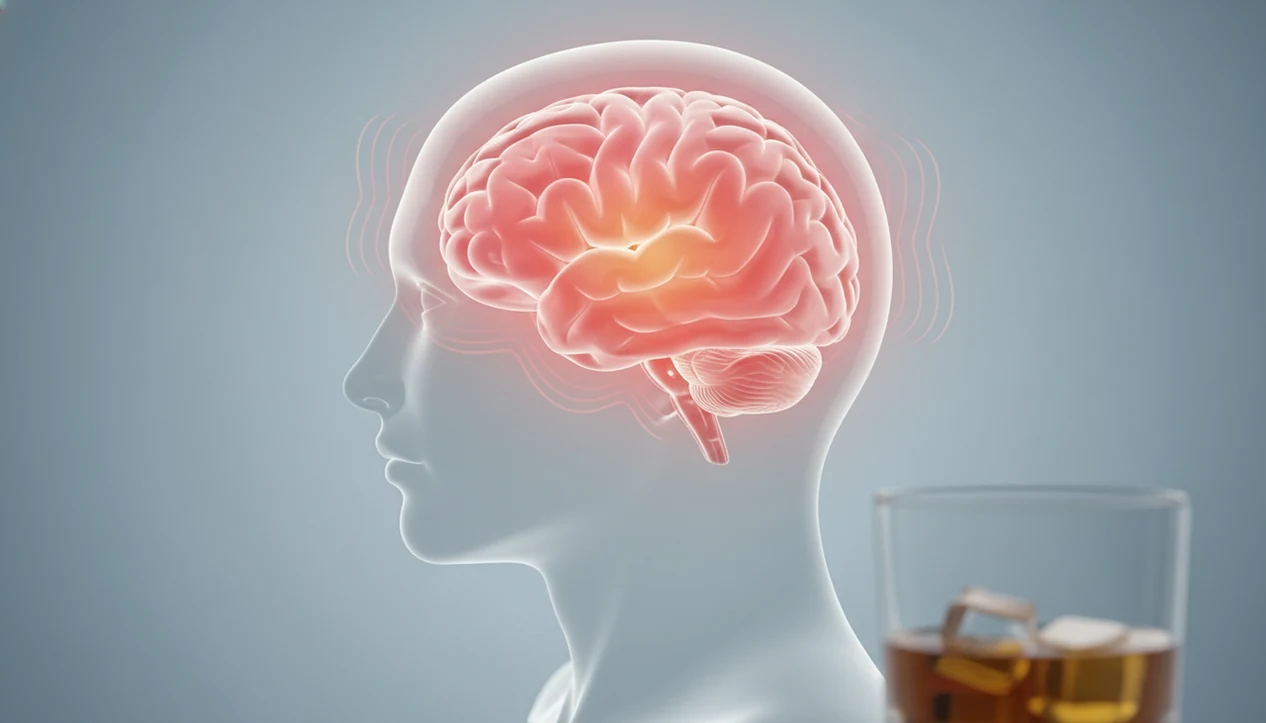
What brain scans may show
Cerebral small-vessel disease may appear on imaging as white-matter hyperintensities, lacunar infarcts, or cerebral microbleeds. A 2023 observational study found a dose-dependent association between alcohol consumption and overall small-vessel disease burden. That does not prove alcohol caused every scan finding, because age, blood pressure, smoking, diabetes, and other factors also matter.
A scan result should be interpreted with symptoms and medical history. Someone with microbleeds, a prior stroke or transient ischemic attack, high blood pressure, or blood-thinner use should discuss alcohol reduction with a clinician. See the study of alcohol and cerebral small-vessel disease.
Can vascular damage affect memory and judgment?
Vascular dementia is cognitive decline driven by impaired blood flow, strokes, or small-vessel injury. Alcohol may raise vascular dementia risk when repeated drinking contributes to blood pressure problems, heart rhythm changes, and cumulative brain vessel damage.
The affected skills are often practical ones: planning, attention, judgment, mood regulation, and speed of thinking. Memory can suffer too, especially when vascular injury overlaps with alcohol-related nutritional deficiency or brain shrinkage. The related brain-volume evidence is discussed in alcohol brain shrinkage dementia.
In a French cohort of more than 31 million adults, alcohol use disorders were associated with about a 3-fold higher risk of all dementia and a strong association with vascular dementia thelancet. Dementia UK guidance also states that exceeding 14 units per week among people with alcohol-related brain damage increases dementia risk, including vascular dementia dementiauk alcohol data.
Alcohol-related brain damage can appear in middle age. Not only old age. That detail matters when a family notices work errors, falls, or personality changes before retirement.
Call 911 for sudden face droop, weakness, speech trouble, severe headache, seizure, fainting, vision loss, or loss of coordination. If you drink heavily every day or have had withdrawal symptoms, seizures, or delirium before, get medical advice before reducing or stopping alcohol.
Symptoms that can signal a circulation problem
Possible brain vessel symptoms linked to heavy alcohol use fall into two groups: emergency stroke symptoms and slower cognitive or movement changes. New, sudden, worsening, or unexplained neurological changes need medical evaluation.
Emergency stroke symptoms
Sudden weakness, facial droop, speech trouble, severe headache, vision changes, loss of coordination, or abrupt balance loss can be stroke symptoms. Emergency care is needed, even if alcohol intoxication seems like a possible explanation.
The sticky bar table under fingertips is not the issue. Missing half a sentence or dragging one foot is.
Slower cognitive and balance changes
Silent small strokes may cause no obvious single event. Over time, they can appear as new confusion, slower thinking, mood shifts, walking changes, balance problems, or repeated falls.
Alcohol withdrawal, intoxication, head injury, falls, and nutritional deficiency can mimic or worsen neurological symptoms. Sudden symptoms need emergency assessment, while changes that develop gradually still deserve a prompt medical review.
Can alcohol cause brain swelling, and when is it an emergency?
Alcohol does not make every hangover headache a case of brain swelling. True cerebral edema is a dangerous buildup of fluid or pressure in or around brain tissue. Heavy drinking can contribute indirectly through a bleeding or blocked stroke, head injury, severe electrolyte imbalance, liver failure, inflammation, or thiamine deficiency.
| Problem | Typical timing | Possible signs |
|---|---|---|
| Cerebral edema | Hours to days | Severe headache, repeated vomiting, worsening confusion, seizure, marked drowsiness, or weakness |
| Wernicke encephalopathy | Can develop acutely | Confusion, abnormal eye movements, and poor coordination |
| Long-term alcohol-related brain injury | Months to years | Slower thinking, memory trouble, mood changes, and poor balance |
Vomiting, poor food intake, or drinking large amounts of plain water can disturb sodium levels. Severe low sodium can draw water into brain cells. Falls while intoxicated can also cause a brain injury that is mistaken for ordinary drunkenness.
Call 911 for a seizure, severe or rapidly worsening headache, one-sided weakness, inability to stay awake, repeated vomiting, fainting, or sudden confusion. Do not wait for the person to sober up.
Get help quickly for these neurological changes
Seek medical help right away for sudden neurological symptoms, especially after heavy drinking or during withdrawal. Alcohol can blur the picture, but intoxication should not be used to explain away a possible stroke.
- Call 911 immediately for sudden face droop, arm or leg weakness, speech trouble, confusion, severe headache, vision loss, loss of coordination, fainting, seizure, or abrupt balance trouble.
- Get urgent same-day care for new worsening confusion, repeated falls, severe vomiting, head injury, tremor with agitation, hallucinations, chest pain, or an irregular racing heartbeat.
- Book prompt medical review for slower changes such as foggy thinking, new memory problems, mood shifts, unsteady walking, numbness, headaches that keep returning, or blood pressure readings that stay high.
- Ask about withdrawal risk before stopping abruptly if you drink heavily every day. Detox may need medication or monitoring, because withdrawal can cause seizures or delirium.
- Request a full risk check including blood pressure, heart rhythm, nutrition, thiamine status, diabetes, cholesterol, smoking, and falls risk.
Apps, drink logs, and symptom notes can make the appointment clearer. They support care; they cannot diagnose vessel damage, stroke, withdrawal, or dementia.
Build a safer alcohol reduction plan
You reduce alcohol-related brain vessel risk safely by lowering alcohol exposure while also treating the medical risks that make stroke more likely. If you drink heavily every day, start with medical advice before cutting off suddenly, because withdrawal can be dangerous.
- Measure your baseline: Track how many drinks you have, when they happen, blood pressure readings if you have them, and any symptoms such as headaches, palpitations, numbness, confusion, or balance changes.
- Ask for medical guidance: Talk with a clinician about withdrawal risk and stroke risk factors, including hypertension, atrial fibrillation, diabetes, cholesterol, smoking, nutrition, and thiamine status.
- Set a safer target: Choose a realistic reduction plan, dry days, or abstinence support. If withdrawal is possible, make the plan supervised rather than sudden.
- Notice your triggers: Record the moments that lead to drinking, such as poor sleep, skipped meals, stress, smoking breaks, boredom, or evening cravings.
- Review your week: Look for patterns in drinking, sleep, nicotine use, meals, blood pressure, and cravings, then adjust the next week’s plan before the pattern hardens.
Count standard drinks and plan for withdrawal risk
Measure alcohol in standard drinks, not glasses. In the United States, one standard drink is about 12 ounces of regular beer, 5 ounces of wine, or 1.5 ounces of 40% spirits. Strong beer, a large wine pour, and many mixed drinks count as more than one. The CDC drink-checking guide can help translate containers and pours.
- Write down each drink before pouring it.
- Record the size and alcohol percentage.
- Mark binge episodes, palpitations, headaches, balance problems, and high blood pressure readings.
- Ask a clinician about withdrawal risk if drinking is daily or heavy.
- Address smoking, blood pressure, cholesterol, diabetes, sleep, and nutrition alongside alcohol use.
Withdrawal may begin 6 to 24 hours after the last drink or a major reduction. Symptoms often peak within 24 to 72 hours, although timing varies. Seizures and delirium can occur. Review the clinical alcohol withdrawal timeline and NIAAA guidance on withdrawal and recovery, then seek personal medical advice rather than attempting an unsupervised detox.
Questions about alcohol and brain circulation
Does alcohol damage blood vessels in the brain?
Heavy or repeated drinking can contribute to damage by raising blood pressure, impairing the vessel lining, changing clotting, and increasing the chance of atrial fibrillation. These effects may injure large arteries or small vessels over time. Alcohol is one risk factor among others, including smoking, diabetes, age, and high cholesterol.
Can alcohol cause a blocked or bleeding stroke?
Alcohol can raise the risk of both types, especially at high intake. A blocked stroke may follow atrial fibrillation, clot formation, or narrowed arteries. A bleeding stroke may follow a blood pressure surge or rupture of a vulnerable vessel. Alcohol does not account for every stroke, but sudden symptoms always need emergency care.
Can one night of binge drinking affect brain circulation?
A binge can produce sharp changes in blood pressure, heart rhythm, hydration, and clotting. That does not mean every binge causes permanent vessel damage, but it may trigger a serious event in someone with high blood pressure, atrial fibrillation, an aneurysm, or another vulnerable blood vessel.
Is wine safer than beer or liquor for brain blood vessels?
No type of alcohol is reliably protective. The amount of pure alcohol and the drinking pattern matter more than the beverage. Large wine pours, strong beers, and mixed drinks may contain multiple standard drinks. Current guidance does not support starting or continuing alcohol to protect the heart or brain.
Can alcohol-related small-vessel disease improve after quitting?
Reducing or stopping alcohol can lower ongoing vascular strain, especially when blood pressure, nutrition, diabetes, cholesterol, and smoking are also addressed. Some thinking, balance, or nutritional problems may improve, but established strokes, microbleeds, or severe vessel injury may not fully reverse. Recovery depends on the type and extent of damage.
Can alcohol cause silent strokes?
Heavy drinking can add to the conditions that cause small, sometimes unnoticed strokes, including high blood pressure, atrial fibrillation, and small-vessel disease. A silent stroke may cause no dramatic event, but accumulated injury can affect walking, processing speed, planning, mood, or balance. Imaging and medical assessment are needed for diagnosis.
Is it safe to drink with a brain aneurysm?
There is no single safe limit for every diagnosed aneurysm. Size, location, blood pressure, smoking, family history, and prior bleeding all affect risk. Ask the clinician managing the aneurysm for a personal recommendation. Heavy daily drinkers should also ask how to reduce safely because abrupt withdrawal can raise blood pressure and cause seizures.
How quickly can alcohol withdrawal become dangerous?
Symptoms may start 6 to 24 hours after the last drink or a major reduction and often intensify over 24 to 72 hours. Tremor, sweating, anxiety, nausea, and insomnia can progress to seizures, hallucinations, severe confusion, or delirium. Heavy daily drinkers should not attempt sudden withdrawal without medical advice.