
How Alcohol Changes REM, Deep Sleep, and 3 AM Wake-Ups
The quick version
Alcohol can make you fall asleep faster, but it usually makes sleep lighter and more fragmented later in the night. It may delay or suppress REM sleep, interrupt deep sleep, and contribute to vivid dreams, sweating, anxiety, and early waking. Drinking more or drinking closer to bedtime generally causes greater disruption.
A nightcap can feel effective because sedation arrives quickly. The problem often appears several hours later, when alcohol levels fall and normal sleep cycles become less stable. You may wake hot, thirsty, anxious, mentally alert, or unable to return to sleep even after spending seven or eight hours in bed.
Timing, amount, medications, nicotine, stress, sleep apnea, and drinking history can all change the pattern. Sleep may improve after cutting back, but heavy daily drinkers and people with past withdrawal symptoms need medical advice before reducing abruptly.
Why a nightcap can split the night in two
- Alcohol may reduce sleep latency, which means you can fall asleep faster, but it often lowers sleep quality after the first few hours.
- Alcohol REM sleep disruption usually starts with early-night REM suppression, then later REM rebound, vivid dreams, and restless awakenings.
- The 2-3 AM wake-up after drinking is a common rebound pattern, not just bad luck or a noisy room.
- Falling blood alcohol levels can raise arousal, heart rate, cortisol signaling, body temperature shifts, thirst, and bathroom trips.
- Dose, timing, tolerance, age, medications, nicotine, sleep apnea risk, and baseline sleep health all change the effect.
The pattern is familiar: the weeknight pour after laptop shutdown feels calming, then the brain snaps awake before dawn. The drink helped with shutdown. It did not protect the night.
Sedation first, fragmented sleep later
Alcohol disrupts sleep architecture by changing the normal cycling between light NREM sleep, deep sleep, and REM sleep. Sleep architecture is the structure of the night, not just the number of hours in bed.
Here is how alcohol disrupts sleep cycle architecture in plain terms: alcohol slows the nervous system early, then the brain rebounds as alcohol is metabolized. That first phase can feel like help. Your eyelids drop, your thoughts soften, and sleep arrives quickly. Later, the sedative effect fades. The brain moves toward lighter sleep, more wakefulness, and less stable REM timing.
A 2018 meta-analysis of 27 studies found that alcohol near bedtime reduced REM sleep and increased wakefulness in the second half of the night, with stronger effects at higher doses the NIH. For most adults, moving drinks earlier is often easier than relying on a nightcap because it gives the body more time to metabolize alcohol before REM-rich sleep begins.
REM suppression, vivid dreams, and morning fog
Does alcohol reduce REM sleep and cause vivid dreams? Yes, evening drinking can suppress REM sleep early in the night, then trigger a later REM rebound that feels like intense dreams, restless sleep, or mental static.
REM is the dream-heavy sleep stage linked with emotional processing, memory, and next-day mental sharpness. When alcohol pushes REM down early, the brain may try to catch up later. That catch-up can be messy. You might wake from a strange dream with a tight chest and that “I need something” feeling, even though nothing obvious is wrong.
Research published in 2014 reported that a high dose of alcohol before bed reduced REM sleep by about 9% in the first half of the night and increased wakefulness later the NIH. REM disruption can show up as anxiety, irritability, poor concentration, and feeling unrefreshed after enough hours in bed. For mood-specific patterns, the link between alcohol and serotonin levels is part of the same next-day picture.
Get medical advice before abruptly reducing alcohol if you drink heavily every day or have had shaking, sweating, hallucinations, seizures, or severe withdrawal. Call emergency services for a seizure, hallucinations, marked confusion, trouble breathing, or chest pain.
How alcohol affects REM sleep and the sleep cycle
REM sleep becomes more frequent toward morning. Alcohol may delay the first REM period and reduce early-night REM, then make sleep less stable as the sedating effect wears off. That timing helps explain why someone can spend seven or eight hours in bed but wake with poor recall, irritability, or mental fog. A review of alcohol and sleep research describes shorter sleep onset followed by disrupted later-night sleep and altered REM patterns.
Dream enactment is different from vivid dreaming
Vivid dreams after drinking do not automatically mean REM sleep behavior disorder. Probable REM sleep behavior disorder involves movements or actions during dreams, sometimes including shouting, punching, kicking, or falling out of bed. A large U.S. community study of 11,905 adults found that current drinkers were 23% more likely than non-drinkers to have probable REM sleep behavior disorder six years later. The association does not prove alcohol caused the disorder.
Regular or heavy drinking is also associated with chronic insomnia and fragmented sleep. Sleep problems are common in alcohol use disorder and can continue after drinking stops, according to a review of sleep during alcohol recovery. Violent dream enactment, injuries during sleep, severe insomnia, or gasping and choking call for medical evaluation.
Why do you wake up around 3 AM after drinking?
Why does alcohol wake me up at 3am? As blood alcohol levels fall, the brain can shift from sedation into rebound arousal, which makes sleep lighter and easier to break.
Cortisol and adrenaline may contribute to that wired feeling, though the exact hormone pattern varies by person and study. The body is not simply “dry.” It may be warmer, thirstier, more alert, and more reactive. Sweating, racing thoughts, a bathroom trip, reflux, low blood sugar feelings, and anxiety can all pile onto the same wake-up.
A glass of water helps thirst. It does not fully prevent REM rebound or nervous-system rebound. Hydration may ease thirst, but it cannot prevent REM rebound or the rise in alertness that can leave you awake at 3:17 AM. If the wake-up comes with next-day heaviness, the broader pattern is covered in alcohol sleep fatigue.
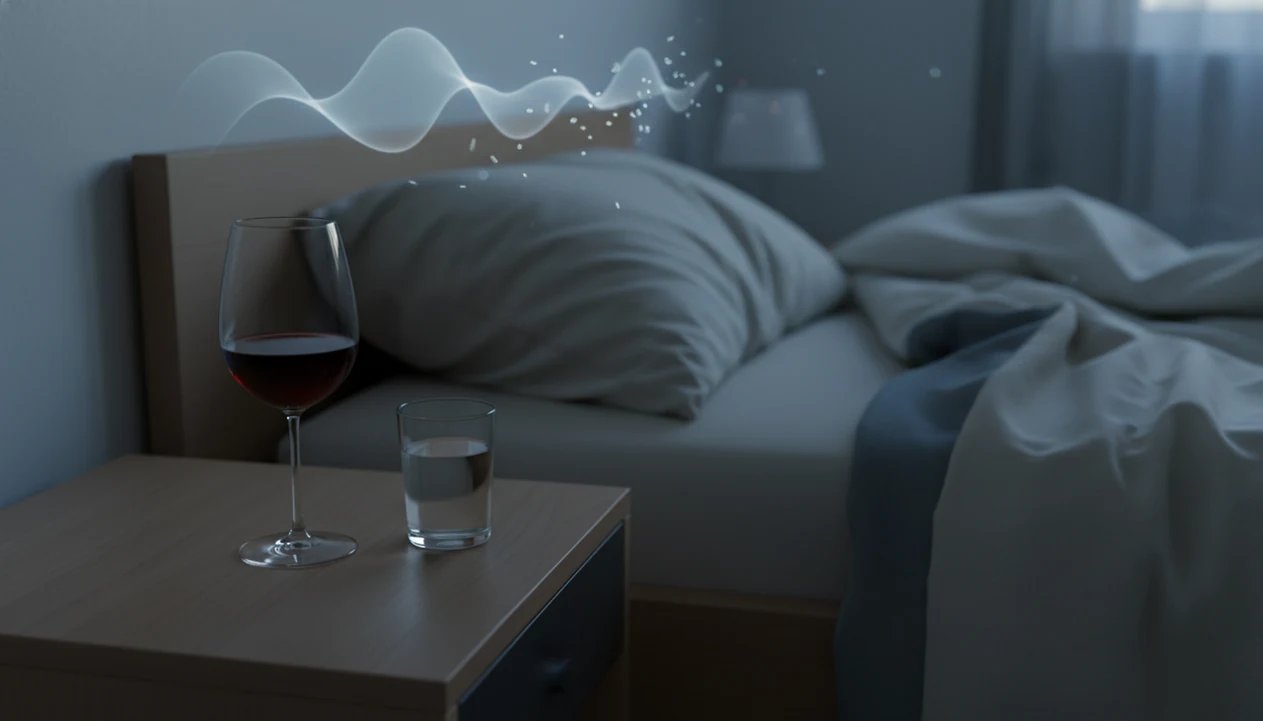
Why alcohol causes waking up at 3 AM and how cortisol and sleep disruption contribute
Cortisol normally begins rising before morning as part of the body's daily alerting rhythm. Alcohol can collide with that process as its sedating effect fades. Lighter sleep, sympathetic activation, temperature changes, sweating, reflux, thirst, and a bathroom trip may arrive in the same window. This does not mean every 3 AM awakening is a proven cortisol spike. It is often a combination of alcohol wearing off and the body becoming naturally easier to wake.
| Possible cause | Common clue |
|---|---|
| Alcohol rebound | Sweating, anxious thoughts, or a racing heart after later or heavier drinking |
| Sleep apnea | Loud snoring, choking, gasping, morning headache, or witnessed breathing pauses |
| Perimenopause | Heat surges, cycle changes, or daytime hot flashes |
| Medication effect | New alertness or vivid dreams after starting or changing a dose |
| Stress or insomnia | Problem-solving thoughts and similar awakenings on alcohol-free nights |
Six practical adjustments
- Leave several alcohol-free hours before bed when possible.
- Try one fewer drink rather than adding another sleep remedy.
- Record the drink time and exact wake-up time.
- Keep the bedroom cool and address thirst before lying down.
- Use a steady morning wake time and get outdoor light.
- Seek an evaluation for repeated choking, severe sweats, chest pain, or persistent insomnia.
Melatonin, body temperature, and circadian timing
Your circadian rhythm is the body’s internal timing system for sleep, hormones, appetite, alertness, and temperature. Alcohol can disturb that timing system even when it seems to help you fall asleep.
Melatonin is one of the body’s “night is starting” signals. Evening alcohol can interfere with normal melatonin timing and weaken the clean handoff into sleep. Alcohol can also disrupt circadian signaling and sleep-stage timing through effects on hormones, temperature regulation, and nighttime arousal NIAAA alcohol data. Core body temperature is another signal. It should drop at night, but alcohol can create warmer, sweatier, more unstable sleep. That is the hot pillow, damp shirt, covers-on-covers-off kind of night.
Repeated nightcaps also teach the brain to expect chemical sedation at bedtime. Then natural sleep can feel strangely unavailable when you skip the drink. Weekend-only drinking still counts for that night. A patio table with an ashtray and pint can set up both alcohol and nicotine cues, which makes the circadian hit more complicated than “just one drink.”
Sleep myths that make the nightcap harder to drop
- Myth: A nightcap is good for insomnia. Alcohol can shorten sleep onset, but it tends to damage REM sleep and second-half sleep continuity.
- Myth: Faster sleep means better sleep. Sedation is not the same as stable sleep architecture.
- Myth: Almost nobody uses alcohol this way. The National Sleep Foundation reports that around 20% of Americans use alcohol to help them fall asleep sleepfoundation alcohol data.
- Myth: 2-3 AM wake-ups are only dehydration. Thirst matters, but rebound arousal, REM rebound, temperature shifts, and stress hormones can also contribute.
- Myth: Sleep fully normalizes after one week for everyone. Some people improve quickly; heavy or long-term drinking can leave sleep unsettled for weeks or months.
For people using alcohol as a sleep tool, replacing the nightcap with a repeatable wind-down routine usually works better than arguing with cravings in bed because the routine gives the brain a predictable cue.
Run a one-week alcohol timing test
Use sleep-cycle clues as a small experiment, not a courtroom verdict. Look for repeat links between your drinking time, drink count, and awakenings during the second half of the night.
- Track one week of basics: what time you drank, roughly how much, when you went to bed, and whether you woke around 2-3 AM. Add a quick morning note about dreams, anxiety, sweat, bathroom trips, and fog.
- Move alcohol earlier for several nights, then compare the same wake-up window. If the clock stops grabbing you at 3 AM, timing may be part of the pattern.
- Mark common confounders beside the alcohol notes, including caffeine, nicotine, late meals, cannabis, stress spikes, anxiety, and medication changes.
- Anchor the next morning with outdoor light and a fixed wake time, even after a choppy night. That steadies the body clock more than sleeping late to “repair” the night.
- Repeat one wind-down cue before bed, such as a shower, dim lights, or the same short reading routine.
- Escalate to clinical support if you have withdrawal symptoms, severe insomnia, panic, loud snoring, gasping, or breathing pauses.
How alcohol affects deep sleep, REM sleep, sleep cycles, and next-day brain fog
Deep stage 3 sleep supports physical restoration, while REM sleep contributes to memory, emotional processing, and mental sharpness. Alcohol can increase early-night sleep pressure, but that heavy initial sleep does not guarantee normal recovery. Later fragmentation gives the brain fewer uninterrupted passes through light sleep, deep sleep, and REM. Tolerance may weaken the sleepy feeling without protecting sleep quality.
A 14-day sleep comparison
| Track | What to record | Pattern to compare |
|---|---|---|
| Awakenings | Clock time and minutes awake | Later or heavier drinking versus earlier or no drinking |
| Dreams | Intensity and remembered details | Changes after drinking and during dry nights |
| Morning function | Mood, focus, headache, and fog before noon | Repeat differences on similar work or family days |
| Heart rate | Wearable trend, if available | Your own baseline, not another person's number |
| Cravings | Alcohol, cigarette, or vape urges | Stronger urges after broken sleep |
Wearables estimate sleep stages and should be treated as trend tools, not diagnostic devices. The most useful result is a pattern repeated across several comparable nights. Official guidance on cutting down alcohol also notes that reducing alcohol can improve sleep and morning restfulness.
How sleep changes after cutting back
Sleep can improve as alcohol intake falls, but the timeline is uneven. Some people notice fewer 3 AM wake-ups within days. Others have lighter sleep for weeks, especially after long-term or heavy drinking.
Sleep disturbance is common in alcohol use disorders and may persist into abstinence, which can raise relapse risk. This pattern alone does not establish an alcohol use disorder. It does explain why the thought “I already messed up, so why not keep going?” can feel louder after a bad night.
Use a simple recovery loop: keep a consistent wake time, get morning light, set an earlier caffeine cutoff, make a wind-down routine, and track what changes after dry days.
For broader habit work, the alcohol reduction guides can help you connect sleep, cravings, mood, and decision points.
Poor sleep after cutting back may be withdrawal
A few restless nights do not prove that alcohol is necessary for sleep. Insomnia, anxiety, sweating, nausea, palpitations, and vivid dreams can occur during withdrawal. Symptoms often peak during the first 48 hours and improve over 3 to 7 days, while sleep can take about a month to settle, according to alcohol withdrawal guidance. Recovery varies, especially after long-term heavy drinking.
A 2022 systematic review of sleep during alcohol withdrawal found that REM changes generally moved toward baseline within about four weeks of sustained abstinence, although some people recover more slowly. Sleep benefits and withdrawal safety are separate issues.
If you drink heavily every day, need alcohol to stop shaking or sweating, or have had withdrawal before, contact a clinician before reducing suddenly. Seizures, hallucinations, or marked confusion require emergency medical care, not home treatment.
Clinical withdrawal guidance identifies seizures, hallucinations, and confusion as severe symptoms that need urgent assessment.
Signs that need more than sleep tips
Alcohol-related sleep disruption is common, but some signs deserve extra help. Loud snoring, gasping, suspected sleep apnea, severe insomnia, panic attacks, depression, or withdrawal symptoms should not be handled by sleep tips alone.
Mixing alcohol with sedatives, opioids, benzodiazepines, or sleep medications can be dangerous. Heavy daily drinkers should get medical advice before stopping suddenly, especially after previous shaking, seizures, hallucinations, confusion, or severe withdrawal.
A private tracking app can support behavior change, but it cannot listen to breathing, check oxygen levels, diagnose panic, or manage withdrawal risk. If alcohol is tied to panic, avoidance, or social fear, alcohol and social anxiety may help you map the trigger loop before you choose support.
Alcohol and sleep questions
Why do I wake up at 3 AM after drinking?
Alcohol's early sedating effect may be fading just as sleep naturally becomes lighter and the body's pre-waking alert signals begin to rise. Sweating, thirst, reflux, anxiety, temperature changes, and bathroom trips can add to the awakening. Repeated gasping, choking, or breathing pauses may point to sleep apnea instead.
Does alcohol affect deep sleep?
Alcohol changes the normal order and stability of sleep stages. It may increase heavy sleep early in the night, but later awakenings can interrupt the repeated cycles needed for restorative deep sleep and REM sleep. Total hours in bed therefore may look normal even when morning restfulness and concentration are poor.
Why do I have vivid dreams after drinking?
Alcohol may suppress or delay REM sleep early, followed by unstable REM or REM rebound later. Waking during a vivid dream also makes it easier to remember. Shouting, kicking, punching, falling from bed, or injuring yourself or another person is different from vivid dreaming and should be discussed with a clinician.
When should I stop drinking before bed?
There is no cutoff that guarantees normal sleep. Leaving several alcohol-free hours before bed generally gives the body more time to process alcohol, and the page's tracking plan uses timing as a personal comparison. Amount still matters, so moving the same large quantity earlier may not prevent fragmented sleep.
Is one type of alcohol worse for sleep?
The amount of alcohol and how close you drink it to bedtime usually matter more than beer, wine, or liquor by itself. Mixers with caffeine can add alertness, while carbonation or acidic drinks may worsen reflux for some people. Compare standard drink amounts rather than assuming one beverage category is safer for sleep.
Can cutting out alcohol cause insomnia?
Yes. Insomnia, vivid dreams, anxiety, sweating, and agitation can occur during alcohol withdrawal and early recovery. Symptoms often improve over days to weeks, but heavy daily drinkers should not stop suddenly without medical advice. Previous shaking, seizures, hallucinations, confusion, or severe withdrawal increases the need for supervised care.
How can I sleep better after drinking less?
Keep a fixed wake time, get outdoor light in the morning, limit late caffeine, and use the same quiet wind-down routine each night. If you remain awake for about 30 minutes, leave bed for a calm activity until sleepy. Persistent insomnia, loud snoring, gasping, panic, or severe night sweats deserves medical evaluation.