

How Alcohol Affects Your Kidneys and When to Get Care
Short answer
Alcohol can strain the kidneys by increasing urination, contributing to dehydration and electrolyte changes, and raising blood pressure. Binge drinking can sometimes trigger acute kidney injury, while repeated heavy drinking may add to long-term kidney risk. Severe flank pain, very low urination, swelling, confusion, persistent vomiting, or blood in urine needs prompt medical care.
Kidney trouble after drinking does not always feel dramatic. You might notice concentrated urine, swelling, vomiting, a dull ache below the ribs, or much less urination than usual. Some of these symptoms have causes other than the kidneys, but they should not be dismissed as an ordinary hangover when they are severe, new, or getting worse.
Your risk also depends on the pattern. A rapid binge with little food or water puts different stress on the body than an occasional drink. Chronic kidney disease, high blood pressure, diabetes, liver disease, illness, and certain medications can make alcohol more hazardous.
Where alcohol-related kidney risk rises
Alcohol does not only affect the liver. Your kidneys also respond to alcohol-related dehydration, blood pressure changes, and the extra filtering demands that follow heavy drinking.
The highest-risk patterns are heavy drinking, binge drinking, and drinking with chronic kidney disease, high blood pressure, diabetes, liver disease, or certain medications. One standard drink per day may not raise kidney disease risk for most people without CKD, based on current kidney-health guidance, but individual risk varies. A person who drinks after a salty meal, skips water, and takes blood pressure medicine is not in the same risk group as someone without those factors.
How does alcohol affect your kidneys?
Alcohol-related kidney strain works through hydration, blood pressure control, hormone signaling, inflammation, and kidney blood flow.
Your kidneys filter waste, balance fluid, manage electrolytes such as sodium and potassium, and help regulate blood pressure. Alcohol has a diuretic effect, which means it can make you urinate more. If you do not replace fluids, urine becomes more concentrated and electrolytes can shift. That is one reason a hangover can feel like dry mouth, heavy legs, and an “I need something” signal from the body.
Alcohol can also affect oxidative stress and inflammation. During heavy or repeated drinking, oxidative stress and inflammation can place additional chemical strain on kidney tissue. The liver-kidney connection matters too. Alcohol-related liver disease can change circulation in ways that reduce healthy kidney blood flow.
For most adults, kidney risk is not about one isolated drink; it is about dose, repetition, dehydration, and medical context. For more on filtering strain, read about alcohol kidney filtration.
How alcohol affects kidney function and filtration
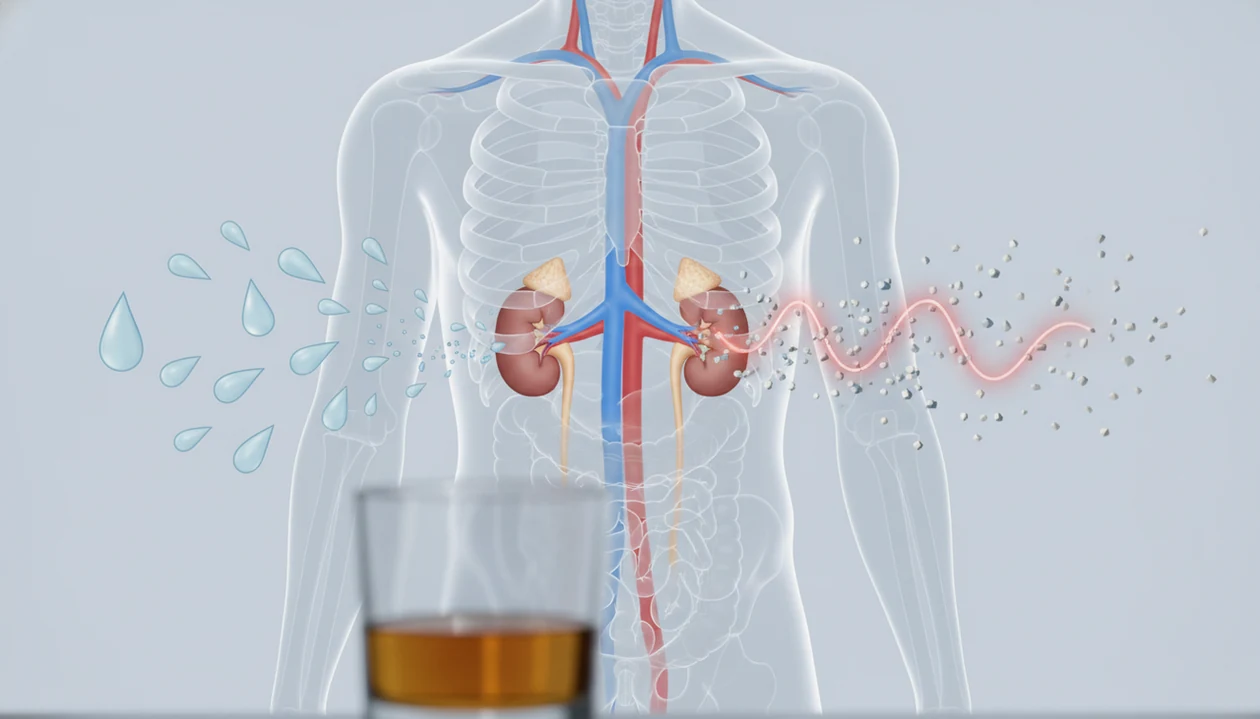
The kidneys continuously filter blood, remove waste, balance sodium and potassium, control fluid levels, and help regulate blood pressure. Alcohol interferes with the hormone signal that helps the body conserve water. The result is more urination, especially early in a drinking episode. If that lost fluid is not replaced, the volume of blood reaching the kidneys can fall and urine can become more concentrated.
Several stresses can arrive at once
- More urine output can contribute to dehydration.
- Vomiting or diarrhea can increase fluid and electrolyte loss.
- Poor food intake can add to weakness and metabolic stress.
- Repeated heavy drinking can raise blood pressure, a major cause of kidney damage.
- Alcohol-related liver disease can alter circulation and reduce healthy kidney blood flow.
These effects help explain why drinking can make kidney filtration less stable without causing obvious permanent damage every time. A hot walk home, several drinks, vomiting, and little water create a much riskier combination than alcohol alone. Reduced urination, swelling, confusion, or persistent vomiting after such an episode needs medical assessment rather than home treatment.
Direct kidney damage vs indirect strain
Does alcohol hurt your kidneys? Alcohol can hurt kidney health directly and indirectly, but the risk depends on dose, frequency, hydration, blood pressure, and existing health conditions.
Light occasional drinking is different from heavy or binge drinking. About one standard drink per day does not appear to increase kidney disease risk in most people without CKD, according to kidney-health guidance. Personal risk may still be high with chronic kidney disease, diabetes, uncontrolled blood pressure, liver disease, or medication interactions. A person with chronic kidney disease, diabetes, uncontrolled blood pressure, liver disease, or medication interactions may need stricter limits or abstinence.
Normal labs can be reassuring, but they are not a permission slip for heavy drinking. Kidney damage can be silent for years. A useful assessment combines symptoms, blood pressure, medications, drinking pattern, and kidney tests instead of relying on one normal result.
Alcohol and kidney failure: sudden injury vs long-term risk
Alcohol can contribute to kidney failure, but one drink does not usually make otherwise healthy kidneys suddenly stop working. The immediate concern is acute kidney injury after a severe binge, especially when drinking is combined with vomiting, diarrhea, heavy sweating, poor fluid intake, infection, muscle breakdown, or medications that affect kidney function. Very low blood volume and disrupted electrolytes can sharply reduce filtration. Severe cases may require hospital treatment and temporary dialysis.
| Problem | Time frame | How alcohol may contribute |
|---|---|---|
| Acute kidney injury | Hours to days | Severe dehydration, vomiting, low blood pressure, electrolyte disturbance, or muscle breakdown |
| Chronic kidney disease | Months to years | Repeated heavy use, high blood pressure, liver disease, diabetes, and repeated acute injuries |
Recovery from acute kidney injury depends on its cause, severity, treatment timing, and the person's health before the episode. Chronic kidney disease may not cause obvious early symptoms and is not proven absent just because someone feels better after cutting back.
Get urgent medical care for very low or no urination, confusion, fainting, shortness of breath, major swelling, blood in urine, severe vomiting, or intense flank pain.
Kidney-area pain after drinking: warning signs
Alcohol dehydration kidney pain can happen when fluid loss, concentrated urine, vomiting, electrolyte imbalance, and hangover physiology overlap. Still, flank or back pain after drinking is not automatically a normal hangover.
Pain in the kidney area may involve dehydration, kidney stones, infection, muscle strain, or acute kidney injury. The rain-specked windshield during a smoke break might be the moment someone notices a dull ache under the ribs, then brushes it off because “it was just last night’s drinks.” That is understandable, but repeated or sharp pain deserves attention.
Seek urgent care for severe flank pain, fever, blood in urine, reduced urination, swelling, confusion, persistent vomiting, or pain when you already have CKD. Medical evaluation is also wise if the pain is new, unusual, recurrent, or stronger than your usual hangover symptoms.
Flank pain has several possible causes, so symptoms and testing should guide the diagnosis.
Seek urgent care for very low or no urination, blood in urine, severe flank pain, major swelling, confusion, shortness of breath, fainting, or persistent vomiting. If you drink heavily every day or have had withdrawal before, get medical advice before stopping suddenly.
Assess your symptoms before planning to cut back
Use this information to separate “I should cut back sometime” from “I need medical help or a safer plan tonight.” Kidney-related risk is practical: symptoms first, then patterns, then limits.
- Check urgent symptoms before focusing on habit change. Severe flank pain, fever, blood in urine, reduced urination, swelling, confusion, or persistent vomiting belongs in medical care, not a tracking note.
- Name your risk factors honestly, including chronic kidney disease, high blood pressure, diabetes, liver disease, fluid limits, and medications that affect blood pressure, blood sugar, pain, sleep, or hydration.
- Compare your usual pattern with binge or heavy-use patterns. The label on the bottle matters less than how much, how fast, how often, and what happens afterward.
- Set your plan before the first drink: your drink limit, water rhythm, food, ride home, and stopping cue.
- Bring notes to a clinician when symptoms repeat or risk factors stack up. Include pain timing, urine changes, blood pressure readings if you have them, and your real drinking pattern.
Is alcohol hard on the kidneys?
Alcohol can make kidney regulation harder by changing urine output, hydration, blood pressure, electrolytes, and blood flow. The sharpest risk often comes when several stresses stack together. Examples include drinking quickly after skipping dinner, taking alcohol while sick with fever or diarrhea, or using ibuprofen or naproxen during dehydration without medical advice.
Lower the strain before the first drink
- Record your drinks, pour sizes, and timing for 7 days so the pattern is visible.
- Set a limit before drinking begins, when decisions are clearer.
- Eat and use water or a nonalcoholic drink to slow the pace.
- Avoid combining drinking with dehydration, severe illness, or heavy sweating.
- Contact a clinician about swelling, reduced urination, flank pain, bloody or foamy urine, or changed kidney test results.
Do not independently stop prescribed blood pressure, diabetes, or kidney medicines. During vomiting, diarrhea, fever, or poor fluid intake, ask a clinician or pharmacist about medicines that might add to kidney risk. This is especially relevant for NSAID pain relievers such as ibuprofen and naproxen.
Alcohol, dehydration, and kidney stone risk
Alcohol is not best described as a guaranteed direct cause of kidney stones, but dehydration is a known stone risk factor. Alcohol’s diuretic effect can leave urine more concentrated if fluids are not replaced. For stone prevention, NIDDK emphasizes drinking enough liquid, especially water, because concentrated urine can help minerals form stones (NIDDK).
Beer does not reliably “flush out” kidney stones. That myth sticks because alcohol can increase urination, but more urine is not the same as safe hydration. Stone prevention usually focuses on water intake, medical evaluation, diet factors, stone type, and condition-specific advice. Alcohol is not a kidney stone treatment.
| Drink choice | Hydration effect | Kidney stone relevance |
|---|---|---|
| Water | Replaces fluid without alcohol | Supports diluted urine, a common prevention goal |
| Beer | Contains fluid plus alcohol | May increase urination and worsen dehydration if not balanced |
| Spirits | Higher alcohol concentration | Easier to dehydrate, especially with poor fluid intake |
| Wine | Still alcohol | Amount and pattern matter more than the label |
Kidney stone prevention usually centers on steady hydration and advice matched to the stone type, diet, medications, and medical history. More detail is covered in alcohol kidney stones.
Blood pressure links heavy drinking with kidney disease
Alcohol chronic kidney disease risk is strongest with heavy drinking, especially when high blood pressure, diabetes, smoking, or existing kidney damage are already present. Heavy drinking is associated with about double the risk of developing CKD and can worsen existing kidney disease.
Blood pressure is one of the main pathways. Even two alcoholic drinks per day has been linked to a higher risk of high blood pressure, and high blood pressure is a major cause of kidney disease. NIDDK identifies high blood pressure as both a cause and a complication of kidney disease (NIDDK), and the American Heart Association advises limiting alcohol to help manage blood pressure (heart alcohol data). Add smoking, and the risk picture gets more crowded. Nicotine can tighten blood vessels, raise cardiovascular strain, and make after-drink cravings harder to manage.
The lighter offered across bar stools can become a decision point for both habits.
People with CKD may also need to count alcohol toward fluid limits and review medication interactions with a clinician. If kidney disease has progressed, the risks belong in a medical conversation, not a guess. Related severe outcomes are covered in alcohol and kidney failure.
Kidney tests can find problems before symptoms appear
Kidney damage can remain quiet for years. Feeling normal, producing plenty of urine, or recovering from a hangover does not confirm that filtration is healthy. The CDC's kidney disease prevention guidance identifies blood pressure control as an important part of protecting kidney health.
- Blood pressure checks help identify a major kidney risk factor.
- A blood creatinine test is used to estimate filtration with an eGFR.
- A urine albumin test can detect protein leaking into urine.
- Electrolyte tests may be needed after severe vomiting, dehydration, or reduced urination.
Ask about testing if you drink heavily, have high blood pressure or diabetes, already have kidney disease, or have had repeated episodes of dehydration and reduced urination. Test timing and interpretation should come from a clinician who knows your health history and medications.
Reduce alcohol-related kidney strain safely
Cutting back can reduce dehydration episodes, support healthier blood pressure, lower binge-related acute kidney stress, and make symptoms easier to interpret. It does not guarantee kidney repair or reverse chronic kidney disease.
Build the plan around decisions made before drinking starts:
- Set a drink limit before the first pour, not after the second.
- Alternate with water so alcohol is not your only fluid.
- Avoid binge drinking by planning your exit, ride, or last-call rule early.
- Track triggers such as dinner prep, boredom, pain, or social pressure.
- Plan alcohol-free days and treat each one as a tiny win.
- Check with a clinician before setting an alcohol limit if you have CKD, blood pressure problems, liver disease, or medications that affect hydration or kidney function.
It can support mindful alcohol reduction, but it cannot diagnose kidney pain, kidney stones, chronic kidney disease, or medication safety.
For behavior-change help beyond kidney health, the alcohol reduction guides explain cravings, triggers, and practical limit-setting.
Do not let an unsafe withdrawal plan add kidney risk
If you drink heavily every day, need alcohol to stop shaking, or have had withdrawal symptoms before, do not suddenly stop without medical advice. Withdrawal can begin 6 to 12 hours after the last drink. Sweating, vomiting, poor fluid intake, a racing heart, and major blood pressure changes can add stress during an attempt to protect your kidneys.
The NHS alcohol dependence guidance lists anxiety, sweating, tremor, nausea, insomnia, and a fast heartbeat among withdrawal symptoms. Symptoms are often worst during the first 48 hours and commonly improve over 3 to 7 days, according to NHS alcohol treatment guidance.
Call emergency services for a seizure, hallucinations, severe confusion, fainting, chest pain, severe vomiting, or inability to keep fluids down. These symptoms cannot be treated safely with water, supplements, or more alcohol at home.
Questions about alcohol and kidney health
Does alcohol hurt your kidneys?
Alcohol can strain kidney function by increasing urination, contributing to dehydration and electrolyte changes, and raising blood pressure. Heavy and binge drinking carry the greatest concern. Existing kidney disease, diabetes, liver disease, illness, vomiting, and certain medications can make a drinking episode more hazardous.
Can alcohol cause kidney pain?
Pain in the flank or back after drinking may come from dehydration, a kidney stone, infection, muscle strain, or acute kidney injury. Alcohol alone does not identify the cause. New, severe, or repeated pain needs medical assessment, especially with fever, vomiting, reduced urination, painful urination, or blood in urine.
Can alcohol cause kidney stones?
Alcohol is not a reliable direct cause of every kidney stone, but dehydration can leave urine more concentrated and make stone formation more likely in susceptible people. Beer does not flush out or treat stones. Prevention usually depends on water intake, diet, stone type, medications, and individual medical advice.
Is beer worse for your kidneys than other alcohol?
Beer is not automatically safer or more harmful than wine or spirits. Total alcohol, serving size, drinking speed, hydration, and existing health conditions matter more than the label. A large can or strong beer may contain more than one standard drink, and beer should not be used as a kidney stone treatment.
Can kidneys recover after heavy drinking?
Some acute kidney injuries improve after prompt treatment and correction of dehydration or other causes. Recovery depends on severity, treatment timing, and prior kidney health. Chronic kidney disease may not fully reverse. Feeling better after a drinking episode cannot replace blood pressure, blood, and urine testing when kidney injury is suspected.
Can people with chronic kidney disease drink alcohol?
Some people with chronic kidney disease may be advised to avoid alcohol or follow a strict limit. The answer depends on kidney stage, fluid restrictions, blood pressure, liver health, diabetes, and medications. Ask the clinician managing your kidney disease before assuming that a general drinking limit applies to you.
Does quitting alcohol help your kidneys?
Cutting down or quitting can reduce dehydration episodes, binge-related kidney stress, and alcohol's effect on blood pressure. It does not guarantee that established kidney damage will reverse. Heavy daily drinkers should get medical advice before stopping suddenly because withdrawal can cause vomiting, sweating, seizures, and dangerous fluid or blood pressure changes.
Why do I urinate more after drinking alcohol?
Alcohol interferes with a hormone signal that helps the body conserve water, so the kidneys release more urine. That does not mean alcohol is cleaning the kidneys. If fluid is not replaced, increased urination can contribute to dehydration, concentrated urine, thirst, headache, weakness, and electrolyte disturbance.