
How Alcohol Affects Serotonin, Anxiety, and Mood
The short version
Alcohol may briefly increase relaxed or upbeat feelings, but it does not provide a lasting serotonin boost. Regular or heavy drinking can disrupt serotonin signaling, sleep, stress circuits, and mood regulation. This can contribute to next-day anxiety, irritability, or sadness. Cutting back may help, but people who drink heavily or daily should get medical advice before stopping.
The first drink may soften tension, while the next morning brings a racing mind, flat mood, or unusually short temper. That contrast is more useful than any claim that alcohol simply raises or depletes one brain chemical. Serotonin matters, but so do dopamine, GABA, glutamate, stress hormones, sleep, and learned drinking cues.
Look at the full pattern: how much you drink, when you drink, how you sleep, and how you feel one or two days later. If physical dependence may be present, make safety the first step rather than attempting an abrupt stop alone.
The short-term lift and the longer serotonin disruption
Alcohol and serotonin levels describe how drinking changes a brain chemical involved in mood, anxiety, sleep, and emotional balance. Alcohol can temporarily increase serotonin activity, but repeated drinking may disrupt how serotonin is produced, released, and received.
The answer changes depending on timing: alcohol may alter serotonin activity during drinking, then leave mood regulation less stable as it wears off. Early in a drinking session, some people feel lighter, warmer, or less tense. Later, especially after regular use, baseline mood can feel lower and more reactive.
Serotonin is not the whole story. Alcohol also affects dopamine, GABA, glutamate, cortisol, sleep architecture, and habit loops. The Friday 6 p.m. drink that makes a cigarette feel automatic is not just “willpower.” It is chemistry, context, and repetition working together.
What alcohol changes as it enters and leaves the brain
Alcohol first changes feel-good signaling. Serotonin and dopamine activity may rise, and GABA activity increases, which can make the body feel looser and the mind less guarded. Several calming and reward systems change at the same time, which helps explain why the early effects can feel stronger than a single serotonin shift.
The brain then pushes back. With repeated drinking, serotonin signaling can become less steady, dopamine reward response can shift, and glutamate can rebound as alcohol leaves the system. That rebound is one reason people describe feeling wired but tired, raw, or emotionally hungover.
Serotonin also interacts with sleep timing and stress response. If alcohol fragments sleep, the next morning can bring a headache behind the eyes at dusk, a short temper, or a flat mood that seems out of proportion. For a deeper look at the sleep piece, alcohol disrupts sleep cycle patterns in ways that can worsen next-day anxiety.
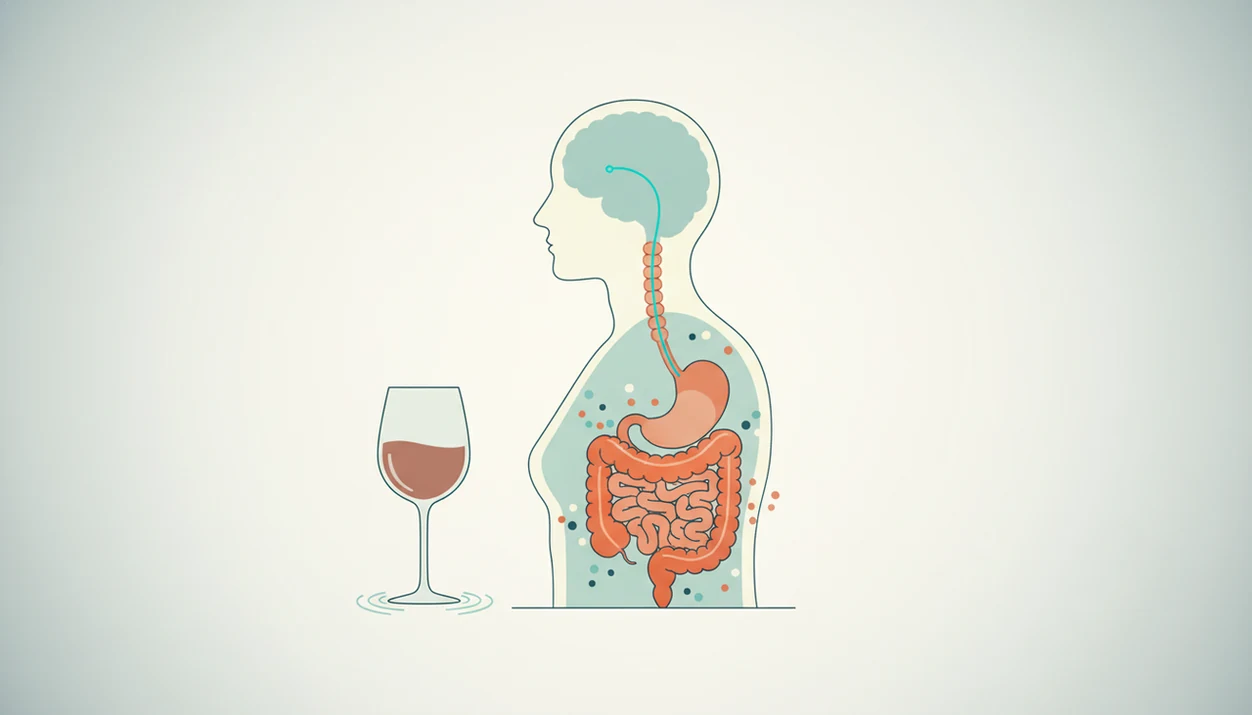
How alcohol affects serotonin through the gut-brain axis
Alcohol and gut serotonin are connected, but the common idea that drinking simply uses up serotonin is too narrow. Alcohol can affect serotonin-related signaling alongside gut inflammation, microbiome changes, nutrition, sleep fragmentation, dehydration, stress hormones, and rebound anxiety. Those effects can overlap, which is one reason sadness or irritability after drinking cannot be reduced to a single chemical shortage.
| Claim | More accurate view |
|---|---|
| Alcohol depletes serotonin. | Alcohol disrupts serotonin-related signaling, but it does not simply empty a fixed serotonin supply. |
| A healthy gut prevents low mood. | Gut health may matter, but sleep, stress, nutrition, anxiety, and withdrawal risk also affect mood. |
| Probiotics reset mood after drinking. | They are not a standalone treatment for alcohol-related mood changes. |
| Feeling sad means something is wrong with me. | Low mood can reflect poor sleep, body stress, rebound anxiety, or repeated alcohol exposure. |
After reducing alcohol, digestion, sleep, cravings, and mood may improve on different schedules. The first days can include choppy sleep, stronger urges at the usual drinking hour, and unpredictable digestion. Over the following weeks, look for pattern changes rather than a promised serotonin reset date: fewer anxious mornings, steadier digestion, improved recovery after stressful days, and less pressure to keep drinking after one slip. Diet quality, fiber, medications, drinking history, and medical conditions can all affect the timeline.
How alcohol affects oxytocin and emotional bonding
Alcohol and oxytocin can shape a social moment in different ways. Oxytocin is involved in touch, caregiving, trust, stress regulation, and social behavior. A 2021 systematic review found that most available human and animal studies linked acute alcohol exposure with suppressed stimulus-evoked oxytocin release, although results varied by dose, sex, timing, and study design. That does not mean every drink affects every person or relationship in the same way.
| System or effect | Likely role | Possible relationship risk |
|---|---|---|
| Dopamine | Reward, excitement, motivation, and wanting | The bar, bottle, or drinking ritual may become the cue for feeling connected. |
| Oxytocin | Touch, caregiving, trust, stress buffering, and social salience | Its effects depend on context and are not always purely positive. |
| Alcohol's felt effect | Lowered inhibition and temporary relaxation | A conversation may feel intimate without producing stable trust or clear communication. |
A controlled lactation study also found lower oxytocin release after moderate alcohol consumption than after a nonalcohol control. Milk let-down provides a measurable oxytocin response, but it is not a direct model of romantic trust or sexual intimacy. Relationship history, conflict, safety, memory, and the amount consumed still matter. Alcohol may make an evening feel more romantic through reward and lowered inhibition while weakening the attention, judgment, and consistency that support connection after the evening ends.
Five links between drinking, anxiety, and low mood
- Alcohol can temporarily increase serotonin and dopamine, which helps explain the early relaxed or upbeat feeling after a first drink.
- Regular or heavy drinking can lower baseline serotonin function, making ordinary stress feel sharper the next day.
- Hangxiety can involve serotonin depletion, poor sleep, dehydration, and a rebound in stress systems after alcohol wears off.
- Self-medicating anxiety with alcohol can create a loop: anxiety leads to drinking, drinking disrupts mood regulation, and symptoms return stronger.
- Reducing or quitting alcohol can allow mood regulation to recover over time, especially when sleep and daily routines become steadier.
The empty bottle beside the recycling bin can feel like evidence against you. It is better read as data. A pattern you can see is a pattern you can change.
Get medical advice before stopping suddenly if you drink heavily or daily, have had withdrawal before, or develop shaking, sweating, agitation, nausea, or a racing heart when alcohol wears off. Call emergency services for a seizure, hallucinations, severe confusion, fainting, chest pain, persistent vomiting, rapidly worsening symptoms, or thoughts of harming yourself.
Check withdrawal and medication risks before cutting back
Before cutting back, note your drinking frequency, amount, timing, sleep quality, anxiety, irritability, mood, and cravings for at least a week. Record the pattern without grading yourself. You are looking for repeatable links between drinking, sleep, cravings, and mood.
Heavy daily drinkers should speak with a clinician before stopping abruptly, because alcohol withdrawal can be medically risky. People taking SSRIs, other psychiatric medications, sleep medicines, or anti-anxiety medications should also ask a qualified professional how alcohol fits with their treatment.
Self-tracking can support private behavior change, but it does not diagnose depression, provide detox care, or replace medical support.
Count the alcohol, not just the containers
A U.S. standard drink contains about 14 grams of alcohol. Container size can be misleading, especially with strong beer, large wine pours, cocktails, or shared bottles. The CDC guidance for checking your drinking recommends measuring accurately, recording each drink, deciding limits in advance, and planning alcohol-free days.
| Drink | Typical serving | Alcohol strength |
|---|---|---|
| Beer | 12 oz | 5% ABV |
| Wine | 5 oz | 12% ABV |
| Spirits | 1.5 oz | 40% ABV |
CDC moderation limits are no more than two drinks in a day for men or one for women on days alcohol is consumed. These are upper limits, not health targets. Binge drinking generally means five or more drinks for men or four or more for women on one occasion. If you drink heavily or regularly, tolerance does not prove that stopping suddenly is safe.
Track the effects for 7 to 14 days
To find alcohol serotonin anxiety patterns, track the delayed effects of drinking for 7 to 14 days, not just how you feel while drinking.
- Log each drink with the time, amount, and setting.
- Rate sleep quality the next morning, including wake-ups and early-morning restlessness.
- Score mood and anxiety once in the morning and once in the evening.
- Note irritability and cravings, including nicotine, vape, sugar, or more alcohol.
- Review delayed changes one and two days later, especially hangxiety, flat mood, short temper, and poor sleep.
An urge note typed under a table is still useful data. If cravings feel tied to replacement urges, the guide to alcohol replacement cravings explains why one habit often borrows energy from another.
Change the situations that lead to another drink
Reducing drinking triggers can reduce the number of times your serotonin, sleep, and stress systems get pushed off balance. Start with predictable situations: work stress, social pressure, boredom, loneliness, poor sleep, and the first drink after an argument.
- Delay the first drink by 20 minutes and do something physical during the gap.
- Set a drink limit before you arrive, not after the second round.
- Alternate alcohol-free drinks so the pace slows without a public announcement.
- Leave earlier when the room starts pulling you toward another drink.
- Plan the ride home before the trigger window begins.
A 20-minute delay can work better than making a new decision after each round, when alcohol has already weakened judgment and strengthened the pull of another drink. The late-night kebab shop smoking crowd can make “just one more” feel normal. A plan made earlier protects tomorrow’s mood.
Support steadier mood after reducing alcohol
Serotonin and mood regulation may improve gradually over weeks to months after sustained alcohol reduction or quitting. Alcohol reduction is usually the strongest lever, while small lifestyle habits work best as support, not magic fixes.
- Protect sleep with a consistent wake time and fewer late-night drinking cues.
- Get morning light soon after waking, even for a short walk.
- Move daily with walking, cycling, stretching, or light strength work.
- Eat regular meals with protein, fiber, and enough total food.
- Stay connected to one or two people who support the change.
Supplements and “serotonin hacks” are often oversold. Bring persistent depression, panic, medication concerns, or possible withdrawal symptoms to a qualified healthcare professional rather than trying to correct them with supplements. Our broader alcohol reduction guides cover related brain, body, and craving changes in more detail.
Review mood and sleep after 2, 4, and 8 weeks
Review alcohol mood swings serotonin changes after 2, 4, and 8 weeks. Compare your baseline mood, anxiety, sleep, irritability, cravings, and stress tolerance with the notes you made before cutting back.
- Compare morning anxiety against your first week of tracking.
- Check sleep depth and how often you wake at 3 a.m.
- Look for fewer mood crashes after social nights or stressful workdays.
- Review cravings for alcohol, cigarettes, vapes, or late-night food.
- Reset the plan after a slip instead of restarting from zero.
Progress may be uneven. A hard day does not prove alcohol caused every feeling, and a good week does not mean the brain is finished adapting. If depression, panic, withdrawal symptoms, or unsafe thoughts appear, seek clinical support promptly. For drink limits and tracking tools, a best drink less app guide can help compare practical options.
Why anxiety can rise before it improves
As alcohol wears off, reward activity can fall while stress circuits become more active. The result may be anxiety, irritability, emotional distress, or a flat feeling between drinking episodes. The NIAAA review of alcohol, addiction, and recovery describes this negative emotional state as part of the cycle that can push a person toward temporary relief from another drink.
Early symptoms do not establish your long-term baseline. A Cochrane review of anxiety and alcohol-use problems reported that withdrawal can cause a short-term increase in anxiety, with symptoms often stabilizing over roughly 4 to 8 weeks after abstinence begins. Timelines vary, and this is not a reason to attempt an unsupervised detox. Persistent panic, depression, or severe anxiety needs a clinical assessment.
Brief serotonin effects vs lasting mood improvement
Does alcohol improve mood because it raises serotonin? Not in a reliable long-term way. The early lift can be followed by lower baseline mood, poorer sleep, and more anxiety.
These four claims confuse a brief chemical effect with lasting mood regulation:
- “Alcohol raises serotonin, so it helps mood.” A short-term rise does not mean long-term regulation improves.
- “If alcohol calms anxiety, it is fixing low serotonin.” Alcohol can mask anxiety while disrupting the systems that help you recover from stress.
- “Only heavy drinkers get alcohol serotonin anxiety.” Sensitive people may notice mood swings from regular moderate drinking, especially with poor sleep.
- “One sober week fully resets serotonin.” Some people feel better quickly, but longer patterns may take weeks or months to stabilize.
Mood, anxiety, trauma, work stress, sleep, habits, and environment all interact with alcohol. For related reward-system shifts, alcohol reward system changes can explain why relief and craving often arrive together.
Alcohol use disorder, anxiety, and depression can overlap
Alcohol and mood symptoms often overlap, but that does not mean every low mood is alcohol use disorder or every anxious person has a diagnosis. The evidence points to risk patterns, not personal blame.
NIAAA reported that in 2022, an estimated 29.5 million people aged 12 or older in the United States, or 10.5% of that age group, had alcohol use disorder, according to NIAAA’s 2022 National Survey on Drug Use and Health summary: https://www.niaaa.nih.gov/alcohols-effects-health/alcohol-topics/alcohol-facts-and-statistics. A 2021 review reported that people with mood and anxiety disorders are about 2 to 3 times more likely to have alcohol use disorder than the general population. Source: Frontiers in Psychiatry review on alcohol use disorder comorbidity, 2021: https://www.frontiersin.org/articles/10.3389/fpsyt.2021.692072/full. In a population-based study cited in that review, 83% of people with alcohol dependence had a lifetime co-occurring mood, anxiety, or personality disorder.
Globally, the World Health Organization estimates alcohol contributes to more than 3 million deaths each year, WHO alcohol fact sheet: https://www.who.int/news-room/fact-sheets/detail/alcohol and is a major risk factor for mental and behavioral disorders. Those numbers are large, but your next step can still be small: track, reduce, review, and ask for help when symptoms feel unsafe.
Alcohol, serotonin, and mood questions
Does alcohol lower serotonin?
Alcohol does not simply drain a fixed supply of serotonin. It may temporarily alter serotonin and reward signaling while you drink. With regular or heavy use, signaling can become less stable, especially as alcohol wears off. Poor sleep, stress-system rebound, and withdrawal can then contribute to low mood, anxiety, and irritability.
Why does alcohol make anxiety worse the next day?
The calming effects fade as alcohol leaves the body, while stress and excitatory systems rebound. Alcohol can also fragment sleep, cause dehydration, and lower reward activity. Together, these changes can produce a racing mind, shakiness, irritability, or dread the next morning, sometimes called hangxiety.
How long does alcohol affect serotonin and mood?
There is no single serotonin reset time. A single night can affect sleep and mood the next day, while patterns linked to regular drinking may take weeks or months to settle. Anxiety related to early withdrawal may stabilize over roughly 4 to 8 weeks, but drinking history, health, medications, and withdrawal risk change the timeline.
Why do I feel sad after drinking alcohol?
Post-drinking sadness can come from several overlapping effects, including disrupted serotonin-related signaling, lower reward activity, fragmented sleep, dehydration, stress hormones, rebound anxiety, and conflict or regret from the night before. Repeated low mood after drinking is worth tracking. Persistent or severe depression should be assessed by a clinician.
Does alcohol affect dopamine as well as serotonin?
Yes. Alcohol can temporarily increase reward signaling involving dopamine, which can make a drink, setting, or ritual feel especially appealing. Repeated drinking can shift the reward response, making ordinary activities feel flatter and alcohol cues more compelling. GABA, glutamate, stress circuits, and sleep also contribute to the overall effect.
Can alcohol affect serotonin through the gut?
Alcohol can affect gut inflammation, the microbiome, digestion, nutrition, and gut-brain signaling. Those changes may contribute to mood symptoms, but they do not support a simple claim that alcohol uses up gut serotonin. Sleep, anxiety, stress, withdrawal, diet, medications, and overall drinking patterns also need to be considered.
Does alcohol affect oxytocin and emotional bonding?
Alcohol can affect oxytocin pathways, and much of the available human and animal evidence suggests acute exposure can suppress oxytocin release triggered by a stimulus. Alcohol may still make an interaction feel intimate by lowering inhibition or increasing reward. That feeling does not necessarily produce lasting trust, safety, or clearer communication.
How can mood regulation recover after drinking less?
Start with sustained alcohol reduction, provided it is medically safe. Support it with a regular wake time, morning light, daily movement, regular meals, and contact with supportive people. Track mood and sleep at 2, 4, and 8 weeks. Supplements cannot replace withdrawal assessment or treatment for persistent depression, panic, or alcohol use disorder.