
How Alcohol Changes Prefrontal Control and Decisions
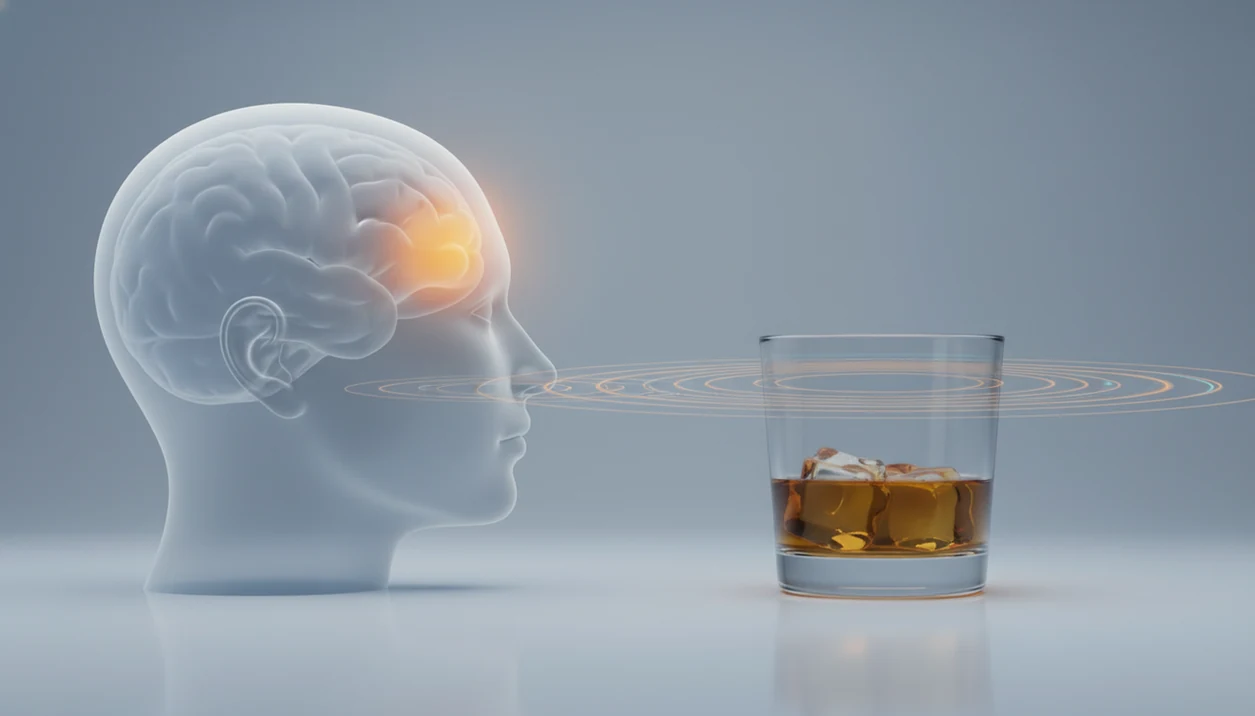
The first drink can change the decisions that follow. A two-drink limit feels less urgent, another round seems harmless, or a late-night message suddenly looks like a good idea. This can happen before speech, balance, or appearance makes the impairment obvious.
The prefrontal cortex helps hold goals in mind and interrupt automatic behavior. Alcohol makes that control less reliable while strengthening attention to immediate cues. Understanding that shift can help you plan around vulnerable moments instead of treating every broken limit as a failure of character.
The quick version
Alcohol temporarily weakens the prefrontal cortex functions that support inhibition, planning, working memory, and judgment. Immediate rewards can feel more convincing while future consequences carry less weight. Repeated heavy drinking is linked with longer-lasting changes, although some brain function may improve after drinking is reduced or stopped. Recovery varies by drinking history and health.
The brain functions alcohol disrupts first
Alcohol affects the prefrontal cortex by weakening the brain’s control center for inhibition, judgment, planning, and long-term thinking. The shift often happens before someone looks obviously drunk, which is why a planned limit can disappear quietly.
| Brain system | Usual job | Alcohol effect | Real-life result |
|---|---|---|---|
| Prefrontal cortex | Pause, plan, compare outcomes | Less executive control | “I’ll just have one more” feels reasonable |
| Working memory | Hold goals in mind | Goals get slippery | The two-drink limit stops feeling urgent |
| Risk evaluation | Check consequences | Future costs feel distant | Texting, spending, arguing, or driving can seem less risky |
| Reward circuits | Notice pleasure and relief | Immediate reward gets louder | A second round wins over tomorrow’s plan |
That weeknight pour after laptop shutdown is a common decision point. The first drink doesn’t only relax you; it weakens the system you needed to refuse the next one.
For adults trying to cut back, the safest plan is made before drinking starts because later decisions are being made with less control available.
What happens to prefrontal control after drinking?
Alcohol temporarily reduces the efficiency of top-down control from prefrontal networks. As alcohol takes effect, the mental pause between an urge and an action becomes less reliable.
How alcohol prefrontal cortex effects work: alcohol changes signaling across brain systems involved in inhibition, working memory, risk evaluation, planning, and flexible thinking. It does not simply add confidence. It removes some braking, dulls consequence-checking, and makes the most immediate reward feel more convincing.
Researchers sometimes use the phrase transient hypofrontality to describe temporary reduced frontal control. It is useful shorthand for what alcohol can do in the moment, not a personal diagnosis or a label for every drinking episode.
The amount matters, but so does context. Poor sleep, stress, food intake, tolerance, genetics, mental health, medication use, and drinking history can all change how fast judgment slips. Someone may sound steady at the bar and still make decisions they would reject at noon.
The full self-control pathway is covered in more detail in alcohol prefrontal control.

Five findings about alcohol, inhibition, and judgment
- The prefrontal cortex handles self-control. It supports decision-making, planning, inhibition, working memory, and the ability to stop a routine that has already started.
- Moderate intoxication can weaken executive function. That helps explain why one drink becomes three: the first drink can reduce the control needed to decline the next drink.
- Repeated heavy drinking can change prefrontal circuits. Imaging and laboratory research link alcohol dependence with structural and functional changes in frontal brain regions that support self-control.
- Alcohol does not make people broadly more creative. A low-dose alcohol study found improved performance on a narrow insight task, but impaired executive control and did not improve divergent thinking.
- Adolescent and young adult brains are more vulnerable. Frontal systems are still maturing, so alcohol exposure during this period can be more concerning for impulse control and future risk.
A craving can feel like tight chest, restless legs, and a vague “I need something” signal. Naming that as a brain state, not a command, gives you one clean pause.
Talk with a clinician before stopping if you drink heavily every day, need alcohol in the morning, or have had shaking, hallucinations, confusion, or seizures during past attempts. Call emergency services for a seizure, hallucinations, severe confusion, fever, or extreme agitation.
Why the first drink can weaken the next decision
Why one drink becomes three: the first drink can weaken the same prefrontal control system needed to refuse the next drink. That makes stopping harder at the exact moment stopping becomes relevant.
The loop is simple. Immediate reward gets louder. Inhibition gets lower. Social pressure feels easier to follow. Future thinking gets foggy. A person starts bargaining with tomorrow: “I’ll reset Monday,” or “I already messed up, so why not keep going?”
You see it in small scripts. Someone tops off a glass before noticing. A round arrives and saying no feels awkward. The limit was two, but the third drink is framed as “not a big deal.”
None of that makes the person weak. The pattern links a cue, an automatic response, and a quick reward, while alcohol makes the pattern harder to interrupt. The practical move is to build friction before the first sip, not to expect sharper judgment after it.
Social cues, emotion, and riskier responses
Alcohol can disrupt social decision-making by weakening communication between emotion-processing systems and frontal response-selection systems. The amygdala helps read emotional cues, while the orbitofrontal cortex helps choose a response that fits the situation.
In an fMRI study, acute intoxication reduced functional coupling between the amygdala and orbitofrontal cortex, regions involved in processing social cues and guiding behavior the NIH. In daily life, that can look like missing discomfort, misreading tone, escalating a joke, texting too much, arguing, or oversharing.
Heavy shoulders at happy hour are a small warning sign for some people. The body says “I’m done” before the group says “another?”
The next-day guilt can become its own trigger. Shame says, “fix this feeling,” and alcohol may look like a quick exit. A better streak repair is specific: name the social cue, name the drink count, and decide what changes next time.
How alcohol affects decision making
Alcohol changes communication across systems involved in inhibition, attention, memory, and reward. It increases the slowing influence of GABA and dampens glutamate activity. The practical result is softer mental braking: immediate options attract more attention while delayed costs become harder to hold in mind.
Alcohol myopia and the cue in front of you
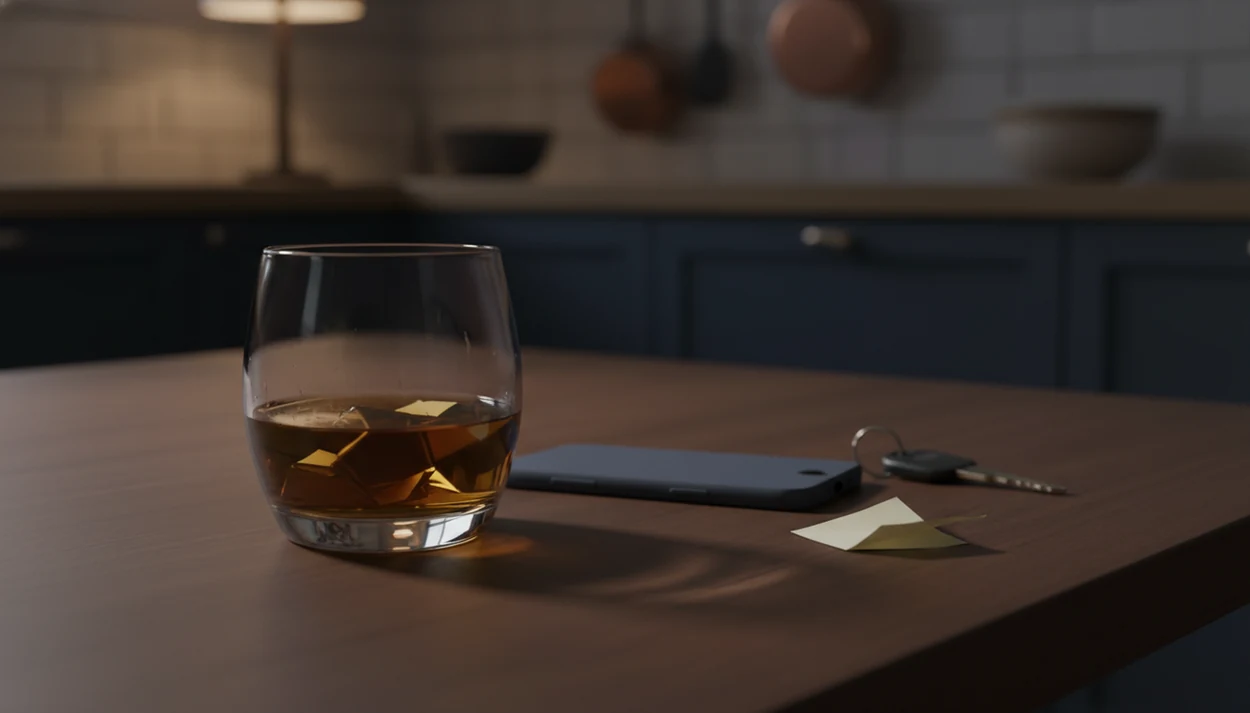
Alcohol myopia describes narrowed attention during intoxication. The brain focuses on the most immediate cue and gives less weight to information outside that narrow view. Car keys on a table, a message notification, a cigarette offered by a friend, or a bartender reaching for another bottle can become more persuasive than tomorrow's plans.
- Driving can seem manageable before coordination feels obviously impaired.
- A text, argument, purchase, or sexual decision may receive less consequence-checking.
- Smoking or vaping cues can become harder to resist after drinking.
- Memory formation can become patchy as intoxication rises, leaving fuzzy recall or a blackout.
Do not use how steady you feel as a driving test. Arrange transportation before drinking starts and keep the keys out of the decision.
Feeling creative vs producing better work
Alcohol can loosen rigid thinking by reducing cognitive control, but that is not the same as improving creative work overall. The “alcohol and creativity” myth grows from a narrow effect and ignores the follow-through cost.
In a placebo-controlled experiment, a low alcohol dose targeting 0.6‰ blood alcohol concentration impaired executive control but improved performance on an insight-based creative problem-solving task; it did not change divergent thinking scores the NIH. That matters because insight tasks, divergent thinking, finished creative output, editing, memory, and sustained productivity are different jobs.
A phrase in a notebook can feel brilliant at 11 p.m. The next morning, it may be three words and a question mark.
Higher doses tend to harm attention, working memory, sequencing, editing, and execution. For people cutting back, “I write better after a drink” can become a permission slip. Try the replacement action first: a walk, a timer, or five minutes of messy notes without alcohol.
For creative work, alcohol may reduce self-criticism briefly, but it usually weakens the planning and memory needed to turn an idea into something finished.
Does alcohol make people more creative?
Alcohol may lower self-criticism and make unusual associations easier to voice, but that feeling is not proof of better creative work. In one placebo-controlled study of 70 adults, mild intoxication around 0.03% BAC improved performance on the Remote Associates Test, a narrow word-association task. It did not improve divergent thinking, which involves producing many different ideas.
| Creative task | Possible immediate effect | Likely limitation |
|---|---|---|
| Generating a loose association | Less filtering may help an idea surface | The idea may only feel more original |
| Holding an idea in mind | No dependable benefit | Working memory becomes less reliable |
| Editing and choosing | The inner critic may feel quieter | Errors and weak choices are easier to miss |
| Finishing a project | Confidence may rise | Planning, sequencing, and follow-through can decline |
If drinking has become your signal to start writing, designing, or playing music, replace the signal rather than the work. Use the same chair, playlist, glass, or start time with a nonalcoholic drink.
Does alcohol make you more creative through transient hypofrontality?
Transient hypofrontality is shorthand for a temporary reduction in frontal control. It can help describe why intoxicated thoughts feel less filtered, but it is not a diagnosis and does not mean the prefrontal cortex has switched off. Lower control may quiet self-monitoring while also weakening attention, working memory, verbal fluency, and error detection.
| Test | Finding | Limit |
|---|---|---|
| 2017 insight study at about 0.03% BAC | Better performance on a remote word-connection task | Executive control declined and divergent thinking did not improve |
| 2020 follow-up at 0.03% and 0.06% BAC | No clear creative-thinking benefit | Verbal fluency was impaired |
Insight tests ask for one fitting answer. Brainstorming, drafting, editing, and producing finished work require different skills. Alcohol may make a rough thought feel exciting while making it harder to retain, evaluate, or develop. That is why the excitement of a late-night idea may outlast the useful details.
Do not drink on purpose as a creativity experiment. Try a repeatable sober cue, then judge the work the next day by what you captured and completed.
Can heavy drinking damage the prefrontal cortex?
Repeated heavy drinking is associated with longer-lasting prefrontal changes, not only short-term lapses in judgment. Imaging studies show people with alcohol dependence have significantly reduced gray matter volume in the prefrontal cortex compared with healthy controls, which is relevant because this region supports executive function the NIH.
Per the NIAAA, an estimated 29.5 million people aged 12 or older in the United States had alcohol use disorder in 2022 NIAAA alcohol data. That number matters because impaired control is not rare, private, or limited to people who “look” unwell.
Animal research adds a neuroimmune angle. Chronic ethanol exposure doubled IL-1β-producing cells in the medial prefrontal cortex and altered inhibitory GABA signaling linked to cognitive decline. Still, animal findings do not translate into exact everyday dose thresholds for humans.
Get a professional assessment if you cannot cut down, develop withdrawal symptoms, or continue drinking despite harm, since those signs may require medical treatment rather than self-guided habit changes.
If body symptoms are part of the concern, alcohol can also affect other organs; the risks are outlined in alcohol and pancreatic damage.
Alcohol and self-control through the prefrontal cortex
Short-term intoxication and long-term alcohol dependence are not the same brain state. A drinking episode can temporarily reduce inhibition, attention, and planning. Repeated heavy drinking can produce more persistent changes in prefrontal structure and signaling, with greater problems involving cravings, flexible thinking, and decision-making.
| Pattern | Likely control problem | Recovery |
|---|---|---|
| Single drinking episode | Temporary reduction in inhibition and planning | Often improves as intoxication and acute after-effects pass |
| Repeated heavy drinking | More frequent cue-driven behavior and executive strain | Improvement is possible, but timing varies |
| Alcohol dependence | Persistent adaptations affecting cravings and control | Recovery may take weeks or months and may be incomplete |
Alcohol can also reconnect old habits. Someone protecting a smoking or vaping quit may find that two drinks bring back a familiar porch, bar, or social cue. The safer response is to plan for the combined trigger before drinking, not to rely on stronger resistance after prefrontal control has already dropped.
Alcohol while the adolescent brain is still developing
Does alcohol affect frontal lobe development? Yes, alcohol exposure can be more concerning during adolescence and young adulthood because the prefrontal cortex is still maturing.
During this period, the brain is refining connections through synaptic pruning and improving signal speed through myelination. Put simply, the brain is trimming unused pathways and strengthening useful ones. Executive control is still coming online, including inhibition, planning, emotional regulation, and future thinking.
NIAAA notes that underage drinking can affect brain development, including areas involved in learning, memory, and impulse control NIAAA alcohol data.
Alcohol during this window can interfere with systems that are already under construction. A single drinking episode cannot predict one person's long-term brain health. It does mean repeated drinking, binge patterns, and early heavy use deserve attention.
For minors, the right next step is not private self-treatment from an article. A trusted adult, pediatric clinician, school counselor, or licensed professional is the safer support route when drinking is happening or pressure is escalating.
Make the important choices before the first drink
The practical way to protect self-control is to make key choices before alcohol lowers prefrontal control. Use a plan that reduces decision load, adds friction, and gives you a replacement action.
- Set the limit early. Decide your drink limit before the first drink, when planning is still clearer.
- Delay the first drink. Start with food, water, or a non-alcoholic drink so the night does not begin on autopilot.
- Avoid rounds. Rounds outsource your limit to the fastest drinker in the group.
- Alternate drinks. Put sparkling water in a rocks glass if you want the hand motion without another serving.
- Plan transport. Arrange the ride before you arrive, not after judgment has shifted.
- Track the trigger. Log where the urge started, what you felt, and what happened next.
Private tracking can help some adults notice patterns: cravings, drink limits, reset points, triggers, and streaks.
For app-based planning, the best drink less app guide explains how tracking, reminders, and limits can support mindful change.
Check withdrawal risk before stopping
If you drink heavily every day or have had withdrawal before, do not stop suddenly without medical advice. Alcohol withdrawal can begin 6 to 12 hours after the last drink. Early symptoms can include anxiety, sweating, nausea, insomnia, shaking, and a rapid heartbeat. Tell a clinician how much you drink, when you last drank, and if you drink in the morning. The NHS alcohol dependence guidance describes symptoms that can signal physical dependence.
Withdrawal is often most intense during the first 48 hours and commonly improves over 3 to 7 days, but severe cases can be life-threatening. Seizures, hallucinations, severe confusion, fever, or profound agitation need emergency care. Medical treatment may include monitoring, withdrawal medication, and nutritional support. This is not a do-it-yourself taper. See the NHS alcohol treatment guidance for an overview of supervised withdrawal.
- Report any previous withdrawal seizure, hallucination, or delirium.
- Mention pregnancy, liver disease, current medications, and other substance use.
- Ask if outpatient care is appropriate or if supervised withdrawal is safer.
Questions about alcohol and frontal control
Does alcohol affect self-control?
Yes. Alcohol can temporarily weaken inhibition, working memory, attention, and planning. That makes immediate rewards more persuasive and goals harder to keep active. The effect helps explain why someone may exceed a limit they sincerely set before drinking.
Can one drink affect decision making?
It can. The degree varies with body size, food intake, drinking speed, medications, sleep, tolerance, and other factors. Judgment may begin changing before a person looks visibly intoxicated, so feeling normal is not proof that driving or another risky choice is safe.
Why does alcohol lower inhibitions?
Alcohol shifts brain signaling away from top-down prefrontal control and toward immediate reward, emotion, and familiar habits. The mental pause that usually checks consequences becomes less reliable. This can increase impulsive talking, spending, arguing, drinking, smoking, or sexual behavior.
What is alcohol myopia?
Alcohol myopia is narrowed attention during intoxication. A person focuses more strongly on the cue directly in front of them and gives less weight to delayed consequences or quieter warning signs. That can make another drink, a risky drive, or an angry reply seem reasonable.
Does alcohol damage the prefrontal cortex?
A single drink does not automatically cause permanent prefrontal damage. Repeated heavy drinking and alcohol dependence are associated with structural and functional changes in frontal brain regions. Individual risk depends on the amount, pattern, duration, nutrition, health conditions, and other exposures.
Can the prefrontal cortex recover after heavy drinking?
Some brain function and structure may improve after drinking is reduced or stopped, but recovery is not immediate or identical for everyone. Attention, sleep, mood, and executive function may change over weeks to months. Long drinking histories and medical complications can limit or slow improvement.
Does alcohol make people more creative?
Alcohol may reduce self-criticism and help with a narrow type of insight problem, but studies do not show a broad creative benefit. It can impair working memory, verbal fluency, planning, editing, and error detection. Feeling more original is different from producing stronger finished work.
Does alcohol affect teenage brain development?
Yes. The prefrontal cortex continues maturing through adolescence and young adulthood, while systems for inhibition, planning, and emotional regulation are still developing. Repeated drinking and binge patterns during this period are concerning, but one event alone does not determine a young person's future.