

Does Alcohol Damage Tooth Enamel, and Can You Limit It?
Bottom line
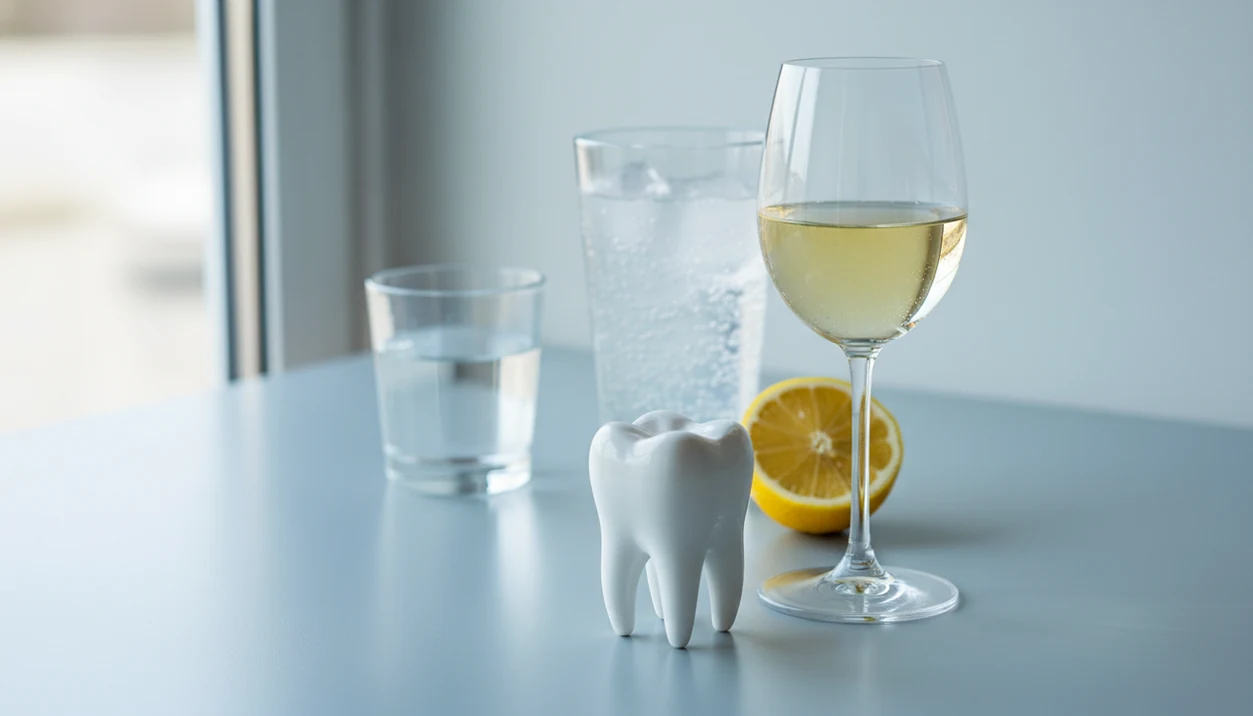
Alcohol can contribute to permanent enamel loss, especially when drinks are acidic, sugary, sipped for hours, or held in the mouth. Dry mouth, reflux, and vomiting add to the risk. Drinking less often, shortening each drinking session, rinsing with water, using fluoride toothpaste, and waiting about 30 minutes before brushing can help protect your teeth.
A glass of wine with dinner and a sweet cocktail sipped all evening do not expose teeth in the same way. Contact time matters. Each acidic sip can soften enamel again, while alcohol-related dry mouth leaves less saliva available to wash away acids and support mineral repair.
Early changes may be easy to dismiss: a brief sting from cold water, rough edges, yellowing, or stains that appear more noticeable. Because lost enamel does not grow back, reducing repeated exposure and getting new symptoms checked early can prevent more extensive damage.
How alcohol-related enamel loss shows up
Alcohol-related enamel erosion means acid is wearing away the hard mineral shell of your teeth. Once that tooth structure is gone, it does not grow back.
The American Dental Association says frequent acidic drinks are a primary risk factor for erosive tooth wear, and erosion causes progressive, irreversible mineral loss ada. Alcohol adds risk because many drinks are acidic, drying, sugary, or sipped for a long time.
The damage often shows up quietly first: a cold-water zing, rough edges, yellowing, or stains that seem to settle faster. Later, thinner enamel can mean more cavities and chips.
Population estimates vary by age and study method, but dental erosion is common enough to be treated as a routine acid-exposure risk rather than a rare edge case.
Five ways a drinking session can expose teeth to acid
- Many alcoholic drinks have low pH, which means they can soften enamel during and after drinking.
- Alcohol dry mouth teeth risk rises because saliva normally buffers acid, washes the mouth, and supports early remineralization.
- Frequent sipping extends acid exposure, even when the drink is not very sweet. A party cooler packed with cans can stretch one “drink period” into hours.
- Sugary mixers, citrus, soda, cider, and energy drinks add both erosion risk and alcohol tooth decay risk.
- Heavy or chronic alcohol use can add extra oral health stress through vomiting, reflux, gum disease, oral infections, and skipped brushing.
For social drinkers, frequency usually matters more than one isolated drink because enamel faces repeated acid challenges over time. For people trying to change several habits, the trigger map often includes the same cue: drink in hand, vape nearby, phone timer ignored.
Acid erosion vs cavities: two different kinds of damage
Alcohol-related tooth damage works through two linked pathways: acid demineralization and reduced saliva protection. Enamel is a highly mineralized surface, mostly built to protect the softer tooth layers underneath.
Low pH matters because acid pulls minerals out of enamel. That process is called demineralization. Acid can soften the surface for a time, and repeated exposure can eventually leave the enamel permanently thinner.
Saliva is the quiet repair crew. It rinses food and drink off teeth, buffers acids, and carries calcium and phosphate that help with early mineral repair. Alcohol can reduce saliva flow, creating xerostomia, or dry mouth.
Dry mouth may sound like a minor inconvenience, but it removes a major defense against acid.
Erosion is different from cavities. Erosion comes from acid directly dissolving mineral. Cavities form when bacteria metabolize sugars and release acids against the tooth surface. Sweet cocktails can do both at once, which is why alcohol oral health advice usually focuses on acid, sugar, and timing together.
Which alcoholic drinks are hardest on enamel?
No alcoholic drink is completely tooth-safe if exposure is frequent. The drink label matters, but sipping time, acidity, sugar, carbonation, citrus, and dry-mouth effects often matter more.
| Drink type | Enamel concerns | Practical note |
|---|---|---|
| Wine | Low pH, long sipping, staining | Wine is often acidic, and published dental research has linked frequent wine tasting with higher erosive tooth wear the NIH. |
| Cider | Acidity, sugar, carbonation | Can create both erosion and decay pressure. |
| Beer | Acidity, carbohydrates, dry mouth | Lower sugar does not mean no risk. |
| Hard seltzer | Carbonation, acidity, flavor acids | “Light” can still be acidic. |
| Straight spirits | Alcohol dryness, possible acidity | Sugar-free does not mean harmless. |
| Cocktails | Sugar, citrus, soda, long sipping | Margaritas and rum-cola style drinks stack risks. |
| Energy-drink mixers | Acidity, sugar, carbonation | Often tough on enamel and sleep. |
A single drink at dinner is different from nursing acidic drinks all evening. That is the decision point most people can actually change.
What studies can tell us about alcohol and tooth enamel
Research supports a link between alcohol-related exposures and enamel erosion, but it cannot assign one exact amount of damage to each drink. A 2024 systematic review of erosive tooth wear estimated a prevalence of about 67% in a broad “drugs and alcohol” risk group. The studies varied substantially, and that figure does not represent the risk from alcohol alone.
Laboratory research helps identify the properties that can harm enamel. A 2026 study of ready-to-drink alcoholic beverages found enamel softening, greater surface roughness, and measurable surface loss. Drinks with higher titratable acidity and acids such as citric or malic acid caused more damage. Because this was a laboratory experiment, it cannot predict how much enamel a specific person will lose.
The useful comparison is not simply spirits vs beer or wine. Acidity, mixers, sipping time, dry mouth, reflux, and how often teeth face another acid exposure all affect risk.
Why does alcohol leave your mouth dry?
Why do my teeth feel worse after drinking alcohol? A common reason is alcohol-related dry mouth, where saliva drops and acids or sugars sit on teeth longer than usual.
Xerostomia is the clinical word, but the lived version is easier to spot: sticky mouth, bad breath, a rough tongue, and that coated feeling the next morning. With less saliva, plaque builds faster, acids are buffered more slowly, and sensitive spots can complain.
Smoking and vaping can compound the problem. The hand-to-mouth reflex after lunch might shift from a drink to a vape before you even think about it, and both can leave the mouth drier.
Reducing alcohol can mean fewer dry-mouth episodes and fewer acid challenges. If evening drinking is also disrupting your rest, Why Alcohol Can Leave You Tired covers the effects that often appear the next day.
See a dentist for persistent sensitivity, visible thinning or yellowing, rough or chipped edges, cavities, or pain. Seek urgent care for facial swelling, fever, pus, trouble swallowing, severe tooth pain, or serious alcohol withdrawal symptoms such as confusion, hallucinations, severe shaking, or seizures.
Sensitivity, stains, cavities, and gum problems
Enamel erosion can make teeth more sensitive, easier to stain, and more vulnerable to cavities. Cleveland Clinic notes that progressing erosion leaves teeth more open to stains, sensitivity, and cavities clevelandclinic.
Pain from cold air or water can be an early sign that enamel has thinned or the layer beneath it is becoming exposed.
Sugar-containing alcoholic drinks add a second pathway. Bacteria in plaque feed on sugars and produce acids, which increases alcohol tooth decay risk. A sweet drink sipped slowly can keep the cue, routine, reward loop going for your mouth as well as your brain.
Heavy or chronic drinking can also overlap with gum disease, oral infections, reflux, vomiting, and missed dental care. That is not a moral judgment. These overlapping factors show where practical changes and dental care may lower risk. If brushing feels inconsistent after late nights, build friction earlier: put fluoride toothpaste beside the sink before you leave, not after you come home tired.
Signs that need a dentist or urgent care
See a dentist when tooth changes are new, visible, or persistent; do not wait until sensitivity becomes daily pain. Get urgent medical or dental help if symptoms suggest infection or spreading inflammation.
- Book a dental visit for new cold sensitivity, chipped edges, translucent tips, rough enamel, or wear you can see in the mirror.
- Seek urgent care for facial or gum swelling, fever, severe tooth pain, pus, trouble swallowing, or redness that seems to spread.
- Ask your dentist what protection or repair fits the damage, such as fluoride varnish for early risk, bonding for small defects, crowns for larger loss, or regular erosion monitoring.
- Discuss reflux, repeated vomiting, eating-disorder concerns, dry-mouth medications, and mouth breathing with qualified clinicians, because acid and low saliva can keep damaging teeth even when brushing is careful.
- Get medical guidance before cutting down alcohol if you have withdrawal symptoms such as shaking, sweating, anxiety spikes, vomiting, confusion, or seizures.
A phone log can help you describe timing and triggers. A dentist can check enamel, roots, gums, bite forces, and old restorations.
Protect your enamel during and after drinking
The goal is to reduce each tooth's contact with acid and support the enamel that remains, not to regrow enamel that has already been lost.
- Shorter sessions: Drink less often or shorten the drinking window so enamel gets fewer acid attacks.
- Water alternation: Alternate alcoholic drinks with water to rinse acids and reduce dry-mouth intensity.
- No swishing: Avoid holding wine, cider, seltzer, or cocktails in your mouth.
- Mixer swaps: Choose fewer sugary, citrus, carbonated, and energy-drink mixers when you can.
- Brush timing: Wait about 30 minutes before brushing after acidic drinks, then brush gently.
- Fluoride support: Use fluoride toothpaste, and ask your dentist about stronger fluoride if erosion is present.
- Early checkups: Schedule dental visits before sensitivity becomes daily pain.
A practical protection plan combines fewer acid exposures, fluoride toothpaste, and dental monitoring when wear is visible. For a broader habit plan, the alcohol reduction guides can help you connect drinking cues with practical replacement actions.
Drink less often without overlooking withdrawal risk
Fewer drinking episodes usually means fewer acid exposures, fewer dry-mouth periods, and fewer nights when brushing gets skipped. In NIAAA national survey data, 56.0% of U.S. adults reported past-month drinking, so this is a practical public-health issue, not a niche concern.
Reduction is behavior change, not a character test. Start with an if-then plan: if the beer fridge hum during dinner prep pulls your attention, then pour water first and set a 20-minute timer.
If app comparisons help you choose a support style, the best drink less app guide covers phone-based options for limits.
Do not stop suddenly if alcohol dependence is possible
Reducing drinking occasions can lower acid exposure, but abrupt withdrawal may be dangerous for someone who drinks heavily every day or is physically dependent. NHS guidance on alcohol dependence and withdrawal says symptoms may begin 6 to 12 hours after the last drink, are often worst during the first 48 hours, and usually last 3 to 7 days.
- Get medical advice before stopping if you drink heavily every day, need a morning drink, have had withdrawal before, or develop shaking, sweating, nausea, anxiety, or insomnia when alcohol wears off.
- Severe shaking, marked agitation, confusion, hallucinations, or a seizure require emergency care.
- Do not rely on water, supplements, or a home taper as a substitute for medical assessment when dependence may be present.
During medically supervised detoxification, NHS treatment guidance discusses adequate fluids and avoiding excessive caffeine, which can worsen anxiety and sleep problems. A clinician can decide if medication or supervised care is needed.
Alcohol and enamel questions
Does alcohol damage tooth enamel?
It can contribute to enamel damage through acidic drinks, reduced saliva, sugary mixers, and repeated sipping. Alcohol percentage alone does not determine the risk. Wine, cider, beer, hard seltzer, premixed drinks, and citrus cocktails can all expose enamel to acid, especially over a long drinking session.
Why do my teeth hurt after I drink alcohol?
Cold or sweet sensitivity may become more noticeable when enamel is worn or dentin is exposed. Dry mouth, cavities, cracked teeth, gum recession, reflux, and teeth grinding can also cause pain. Sensitivity that persists, worsens, or affects one specific tooth should be examined by a dentist.
Which alcoholic drinks are worst for enamel?
Acidic, sugary drinks consumed slowly tend to create the most concerning exposure. Wine, cider, alcopops, hard seltzer, and cocktails containing citrus, soda, or energy drinks may combine several risks. No category is reliably tooth-safe, and switching to spirits does not remove dry-mouth or other alcohol-related risks.
Is beer safer for teeth than wine or cocktails?
Beer may be less acidic or sugary than some wines and cocktails, but that does not make it harmless. Its acidity, carbohydrates, drinking frequency, and contact time still matter. Several beers spread across an evening may expose teeth for longer than one drink consumed with a meal.
Can enamel grow back after alcohol-related erosion?
No. Enamel that has been physically lost does not grow back. Saliva and fluoride can support remineralization of very early surface softening, but they cannot replace missing tooth structure. A dentist may recommend fluoride treatment, sensitivity care, bonding, or crowns based on the amount of damage.
How long should I wait to brush after drinking alcohol?
Wait about 30 minutes after an acidic drink before brushing. Rinse with water first, then brush gently with fluoride toothpaste. The same precaution applies after vomiting because stomach acid softens enamel. Brushing immediately can add mechanical wear while the surface is still vulnerable.
Does drinking water with alcohol protect enamel?
Water can rinse away some acid and sugar and may ease dry mouth, so alternating it with alcoholic drinks is useful. It does not neutralize every risk or make heavy drinking safe. Avoid swishing the alcoholic drink, and do not stretch one serving into hours of repeated sipping.
Will cutting down on alcohol help my teeth?
Fewer drinking occasions and shorter sessions usually mean fewer acid attacks, less dry mouth, and fewer nights when brushing is skipped. Existing enamel loss will remain, but reducing exposure may help prevent further damage. Heavy daily drinkers should get medical advice before stopping suddenly because alcohol withdrawal can be dangerous.