

How Drinking Affects Kidney Stone and Kidney Injury Risk
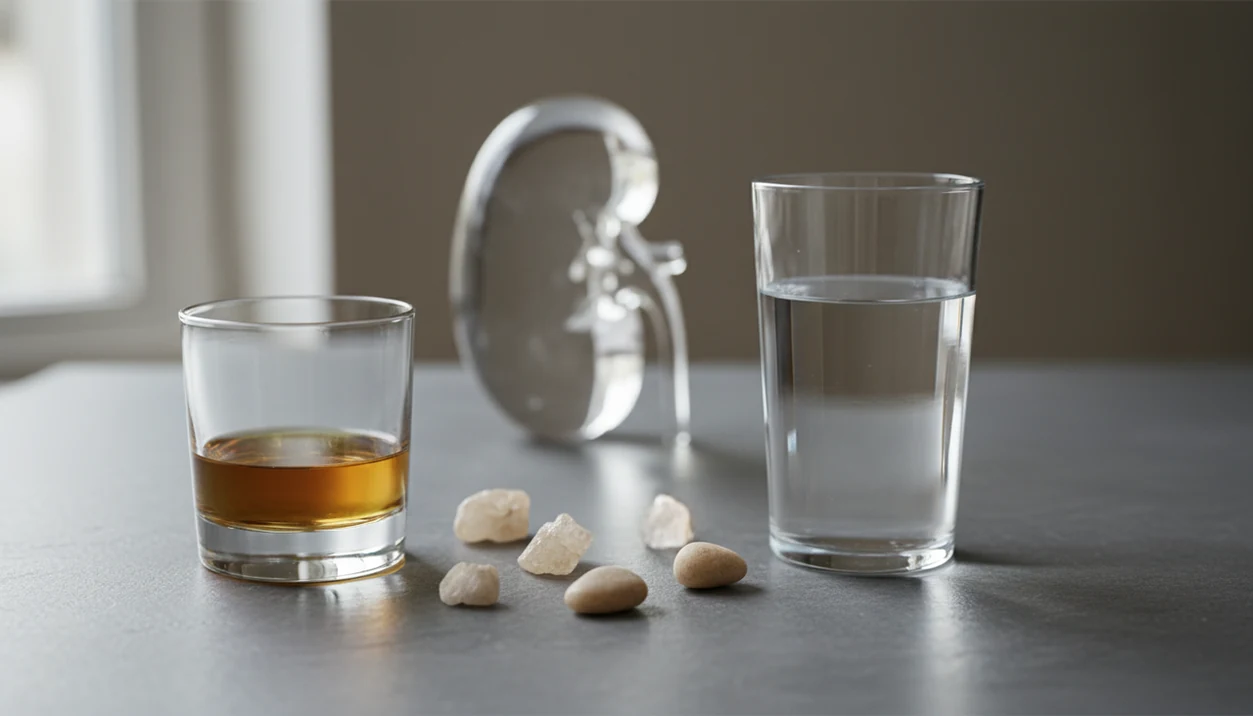
A night of frequent bathroom trips can give the impression that alcohol is flushing the kidneys. The opposite may be happening. Alcohol can increase urine output while leaving the body short on water, especially when drinking is paired with heat, exercise, vomiting, or poor food intake.
The distinction matters because kidney stones and acute kidney injury are different problems. Stones involve crystals forming in urine. Acute kidney injury is a sudden loss of kidney function. Drinking patterns, hydration, existing kidney disease, blood pressure, and medications all affect the risk.
Bottom line
Alcohol is not a proven direct cause of kidney stones. Heavy or binge drinking can still create conditions that raise concern, including dehydration, concentrated urine, vomiting, and sudden kidney stress. Beer and wine are not stone treatments. Severe flank pain, fever, blood in the urine, persistent vomiting, or very low urine output needs medical attention.
Two Separate Risks: Stones and Sudden Kidney Injury
Alcohol is not a proven direct cause of kidney stones, but heavy drinking can raise kidney stress through dehydration, blood pressure changes, and poor fluid balance. Kidney stone risk and kidney injury risk overlap, but they are not the same thing.
Kidney stones form when minerals in urine become concentrated enough to crystallize. Acute kidney injury is a sudden drop in kidney function. A person can have one without the other.
The pattern matters. A single small drink with dinner is different from a hard night where you wake up thirsty, nauseated, and barely urinating. That second pattern is where dehydration and kidney strain become more concerning.
Moderate-drinking studies do not apply cleanly to everyone. Existing kidney disease, high blood pressure, medications, pregnancy, and alcohol use disorder concerns can change the risk picture quickly.
Does Alcohol Cause Kidney Stones Directly?
“Does alcohol cause kidney stones?” The accurate answer is no, not in a simple one-drink-equals-one-stone way. Alcohol alone is not considered a proven direct cause of kidney stones.
Kidney stones usually come from a mix of urine chemistry, urine concentration, diet, genetics, supplements, medications, and medical conditions. Calcium, oxalate, uric acid, and other substances can crystallize when urine becomes too concentrated.
Alcohol’s main kidney-stone pathway is dehydration. It can make you pee more, but that does not mean your body is well hydrated. After a party cooler packed with cans, the next morning’s dark urine tells a more useful story than the number of bathroom trips overnight.
For people comparing kidney symptoms more broadly, our guide to alcohol and kidney problems explains how alcohol can affect hydration, blood pressure, and filtration stress.
Why More Urination Can Still Mean Dehydration
Alcohol dehydration affects kidneys by increasing urine output while lowering the body’s available water, which can leave urine more concentrated. More peeing is not the same as better hydration.
Alcohol can have a diuretic effect by suppressing vasopressin, a hormone involved in water balance; the Merck Manual notes that alcohol can increase urine output through this pathway: https://www.merckmanuals.com/home/hormonal-and-metabolic-disorders/pituitary-gland-disorders/central-diabetes-insipidus. The result is more fluid leaving through urine, even as the body's available water falls. When total body water drops, the kidneys have less fluid available to dilute minerals and waste products.
That matters because concentrated urine gives stone-forming substances less room to stay dissolved. Calcium, oxalate, uric acid, and other compounds may become more likely to form crystals in the right setting. The process is chemistry, not willpower.
The kidney-protective basics are straightforward: choose water for hydration, limit heavy drinking, and replace fluids steadily after alcohol. Preventing dehydration-related stones usually starts with steady fluid intake, then adjusts for diet, stone type, medical conditions, and prior stone history.
Seek urgent care for severe flank pain, fever, blood in the urine, persistent vomiting, confusion, swelling, breathlessness, fainting, or very little urine. Call 911 for a seizure, hallucinations, severe shaking, or severe confusion, and do not abruptly stop alcohol without medical advice if you drink heavily every day or have withdrawal symptoms.
When Heavy Drinking Can Trigger Acute Kidney Injury
“Can alcohol cause acute kidney injury?” Yes, heavy or binge drinking can contribute to acute kidney injury, which means a sudden decline in kidney function. This is different from kidney stones and can become urgent.
Binge drinking is commonly defined as about 4 drinks for women or 5 drinks for men within about 2 hours, according to the National Institute on Alcohol Abuse and Alcoholism: https://www.niaaa.nih.gov/publications/brochures-and-fact-sheets/binge-drinking. In that setting, dehydration, vomiting, blood pressure shifts, and direct alcohol stress can reduce the kidneys’ ability to filter blood normally.
The body can feel off fast. Reduced urination, swelling, confusion, severe weakness, or signs of severe dehydration after heavy drinking should not be treated as a normal hangover. Get urgent medical care for kidney symptoms that are sudden or severe, especially with fever, very low urine output, or an inability to keep fluids down.
For a deeper kidney-function angle, alcohol kidney filtration damage covers how filtration strain can build over time.
Beer and Wine Studies Do Not Prove Prevention
Some studies link beer or wine intake with lower kidney stone odds, but those findings are observational. They show an association, not proof that alcohol prevents stones or should be used as treatment. For example, a 2024 NHANES-based analysis reported lower kidney-stone odds among some beer and wine drinkers, but the authors described the evidence as observational rather than proof of prevention: https://www.frontiersin.org/journals/nutrition/articles/10.3389/fnut.2024.1354198/full.
| Finding from a 2024 U.S. analysis | Reported association | What it does not prove |
|---|---|---|
| Beer intake | Odds ratio 0.76 versus non-drinkers | Beer prevents or treats kidney stones |
| Wine intake | Odds ratio 0.75 versus non-drinkers | Wine is protective for every person |
| Moderate wine intake, over 14 to 28 g/day | Odds ratio 0.54 versus non-drinkers | Drinking wine is safer than stone prevention habits |
People who drink beer or wine moderately may also differ in diet, income, medical care, water intake, or other behaviors. Those differences can shape results.
So, no, beer is not a kidney-stone therapy. A weeknight pour after laptop shutdown may feel harmless, but using alcohol as a “flush” can backfire if it replaces water or leads to heavier drinking.
Cut Back Without Losing Sight of Hydration
Alcohol reduction protects kidney health most directly by reducing binge episodes, improving hydration routines, and lowering avoidable kidney stress. Aim first for fewer high-risk nights and fewer episodes of vomiting or dehydration. It is fewer high-risk nights.
- Set a drink ceiling. Decide the limit before the first drink, not after the second.
- Alternate with water. Put water between alcoholic drinks, especially at restaurants or parties.
- Track drinking days. Fewer drinking days often make hydration habits easier to keep.
- Reset after a slip. Treat a broken limit as data, not a restart from zero.
If you use a tracking tool, keep it practical: log drink limits, dry days, cravings, and trigger patterns. More behavior-change strategies are collected in our alcohol reduction guides.
Cutting Down Safely if You Drink Heavily
Do not suddenly stop drinking without medical advice if you drink heavily every day, need alcohol in the morning, or become shaky, sweaty, anxious, nauseated, or unable to sleep when alcohol wears off. These can be withdrawal signs. NHS alcohol support guidance recommends getting medical help to plan withdrawal when physical dependence is possible.
- Write down the number, size, and strength of your usual drinks, including morning drinks.
- Tell a clinician about previous withdrawal, seizures, pregnancy, kidney or liver disease, and any sedatives you take.
- Follow a clinician-directed plan. Medication and monitoring may be needed, as described in the UK clinical guidance for alcohol treatment.
Withdrawal can begin within hours to about one day. Seizures commonly occur within 12 to 48 hours, while delirium tremens often develops around two to three days after stopping. These timelines from clinical alcohol detoxification guidance are warnings, not a schedule for detoxing alone.
Match Your Plan to Your Kidney History
Use this information as a risk check, not as permission to treat kidney symptoms at home. The safest plan starts with your own kidney history, blood pressure pattern, medications, and how often drinking turns into dehydration or vomiting.
- Review your baseline risk. Consider past stones, kidney disease, high blood pressure, diuretics, NSAIDs, lithium, diabetes medicines, or any clinician advice to limit alcohol.
- Hydrate around drinking. Drink water before, during, and after alcohol instead of counting beer, wine, or liquor as useful fluid replacement.
- Avoid binge situations. Be especially careful when alcohol is paired with vomiting, hot weather, heavy exercise, fever, diarrhea, or an illness that already lowers fluid balance.
- Watch your body’s signals. Track very dark urine, sudden changes in urination, flank pain, fever, blood in urine, swelling in the feet or legs, or unusual weakness.
- Seek care quickly. Get medical help for severe flank or abdominal pain, fever with urinary symptoms, confusion, fainting, inability to keep fluids down, or very low urine output after drinking.
Kidney Symptoms That Should Not Wait
Kidney stone symptoms and kidney injury warning signs can overlap, but both deserve attention when symptoms are severe. Do not use alcohol, water loading, or an app to replace clinician evaluation.
Possible kidney stone symptoms include severe flank pain, pain that moves toward the lower abdomen or groin, blood in the urine, nausea, vomiting, frequent urination, or pain with urination. Some people describe it as pain that will not let them sit still.
Possible acute kidney injury warning signs include reduced urination, swelling in the legs or feet, confusion, severe dehydration, unusual fatigue, nausea, or shortness of breath.
Urgent care is warranted for fever, severe pain, inability to keep fluids down, very low urine output, fainting, confusion, or symptoms after heavy drinking. If kidney failure risk is part of your concern, the related alcohol and kidney failure page explains the difference between acute and chronic kidney problems.
Alcohol and Kidney Stone Questions
Can beer help pass or prevent a kidney stone?
Beer is not a recommended kidney stone treatment. Some observational research has found lower stone prevalence among certain beer drinkers, but that does not prove beer prevents stones. Alcohol can worsen dehydration, and the increased urination does not reliably flush out a stone. Water is the more appropriate hydration choice.
Does wine cause kidney stones?
Wine has not been shown to directly cause kidney stones. Some population studies report lower stone odds among moderate wine drinkers, but those results may reflect differences in diet, hydration, or health habits. They do not show that wine prevents stones or is safe for every person.
Can drinking alcohol make kidney stone pain worse?
Alcohol may make the situation harder to manage if it causes dehydration, nausea, vomiting, or delayed treatment. Severe pain in the side or back, especially with fever, blood in the urine, or difficulty urinating, needs medical evaluation. Do not use alcohol to numb the pain or try to force the stone out.
Can binge drinking cause acute kidney injury?
Heavy or binge drinking can contribute to acute kidney injury through dehydration, vomiting, blood pressure changes, muscle breakdown, or alcohol-related illness. Warning signs include very low urine output, swelling, confusion, severe weakness, breathlessness, and persistent vomiting. These symptoms require urgent medical assessment rather than hangover care at home.
Is liquor worse for the kidneys than beer or wine?
The total alcohol amount, speed of drinking, hydration, and resulting illness usually matter more than the beverage type. Liquor can make it easier to consume a large amount quickly. Any drink can contribute to kidney stress when it leads to intoxication, vomiting, dehydration, or repeated blood pressure problems.
Can I drink alcohol while I have a kidney stone?
Alcohol does not help dissolve or pass a stone and may worsen dehydration. Ask a clinician if you have kidney disease, take medicines that interact with alcohol, or have been told to limit fluids. Seek care if pain is severe, you develop a fever, or vomiting prevents you from keeping fluids down.
Will cutting down on alcohol help my kidneys?
Cutting down can reduce binge episodes, dehydration, vomiting, and blood pressure strain. It does not guarantee that existing stones will disappear, since stone type and urine chemistry also matter. If you drink heavily every day or develop shaking, sweating, nausea, anxiety, or morning vomiting, get medical advice before stopping suddenly.