

How Alcohol Affects Blood Vessels and Circulation
The quick version
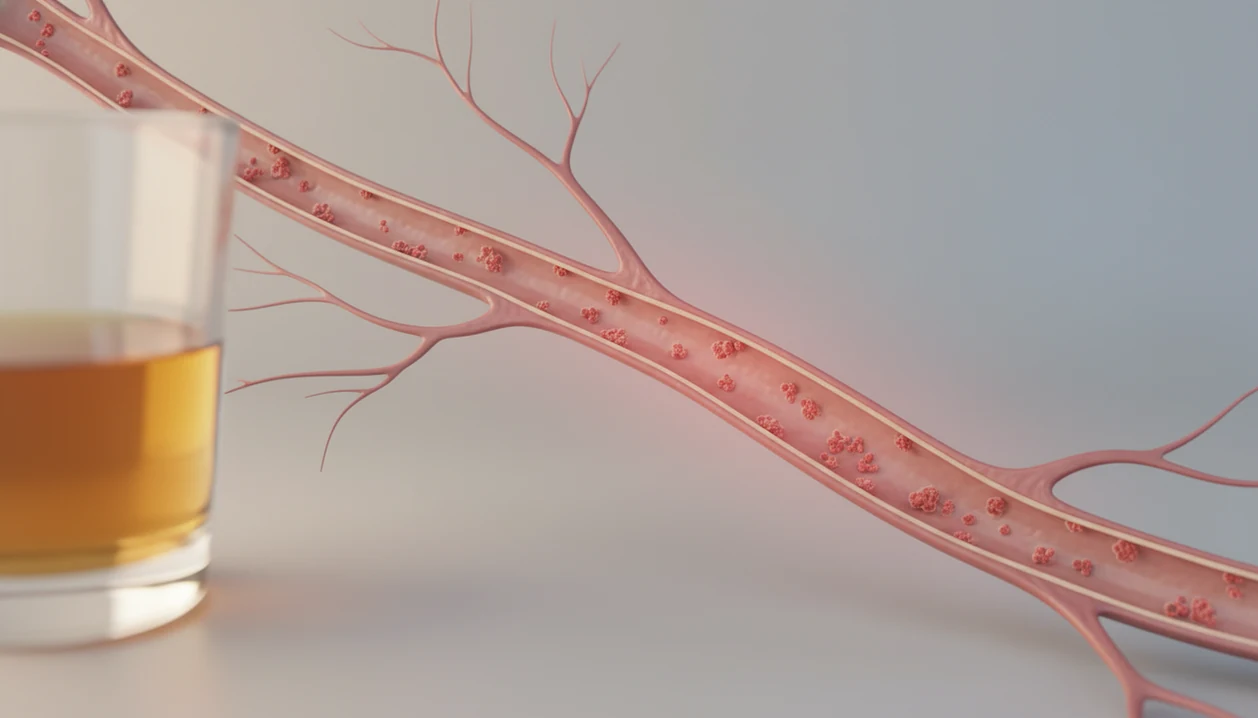
Alcohol can temporarily widen blood vessels, but frequent heavy or binge drinking can raise blood pressure, impair vessel function, trigger atrial fibrillation, and increase clot-related and bleeding-related stroke risk. Reducing alcohol may lower some strain. If you drink heavily most days or have withdrawal symptoms, get medical advice before cutting down or stopping because withdrawal can be dangerous.
A warm face or flushed skin after a drink can look like improved circulation. It is actually a short-term response and says little about what alcohol is doing to blood pressure, heart rhythm, or the inner lining of blood vessels.
The larger concern is the pattern over time. Heavy drinking, repeated binges, dehydration, poor sleep, smoking, and untreated high blood pressure can combine to strain the heart and circulation. New palpitations, walking-related calf pain, swelling, or neurologic symptoms deserve more attention than flushing alone.
The full scope of alcohol-related vessel damage
Alcohol blood vessel damage means alcohol-related injury to the circulation system, not just visible damage to veins or arteries. It can involve artery stiffness, vein changes, high blood pressure, clotting shifts, irregular rhythm, and reduced blood flow to the brain, heart, or legs.
The important point is scope. Alcohol can affect the pump, the pipes, the pressure, and the blood moving through them. Someone may have normal liver enzymes and still have alcohol-related hypertension, palpitations, poor sleep, or a rising resting heart rate.
The National Institute on Alcohol Abuse and Alcoholism reports that chronic heavy drinking increases the risk of ischemic heart disease and heart attack, and can cause cardiomyopathy, high blood pressure, and arrhythmias NIAAA alcohol data. For a wider body-system view, our guide to what alcohol does to your body covers related effects beyond circulation.
Why feeling warm does not mean better circulation
Alcohol can dilate blood vessels in the short term, but heavy or repeated drinking can promote constriction, stress-hormone activity, artery stiffness, and high blood pressure. That mix is why a warm face after one drink does not mean better circulation.
Here is how it works. The endothelium is the inner lining of blood vessels. When alcohol contributes to oxidative stress and vascular inflammation, that lining may regulate tightening, widening, and clotting less effectively. Arterial stiffness means the vessels do not stretch and relax as well with each heartbeat.
Blood pressure is the central mechanism. Higher pressure repeatedly pushes against vessel walls, increasing strain in the brain, heart, kidneys, and legs. CollegeDrinkingPrevention.gov, supported by NIAAA, states that chronic misuse and binge drinking can raise blood pressure because heavy alcohol use triggers stress hormones that constrict blood vessels. An American Heart Association scientific statement notes that 3 or more drinks per day is associated with significantly higher systolic and diastolic blood pressure ahajournals.
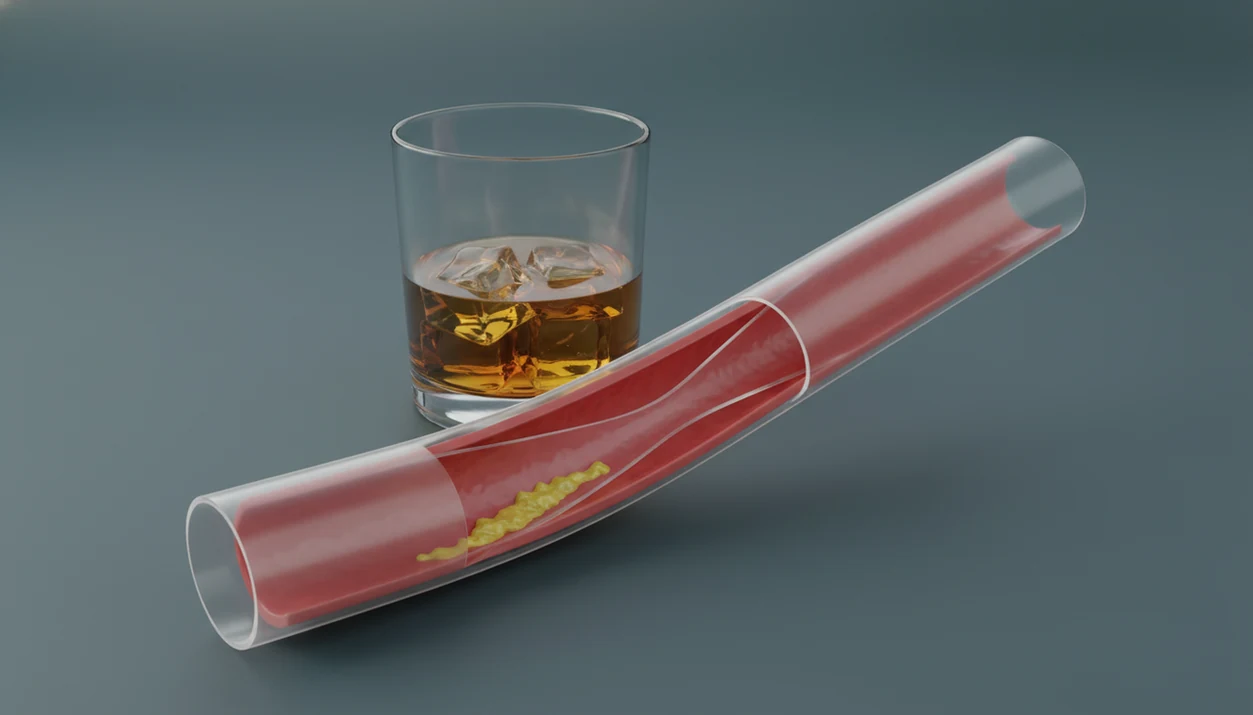
How alcohol affects blood vessels and the risk of peripheral artery disease, carotid artery disease, and aortic aneurysm
Alcohol does not simply clog arteries. Peripheral artery disease and carotid artery disease commonly involve plaque that narrows arteries, while an aortic aneurysm is a weakened or widened section of the aorta. Alcohol is not proven to directly cause each condition, but heavy drinking can add pressure through hypertension, inflammation, heart rhythm problems, and poor vessel function.
| Condition | What happens | Symptoms worth reporting |
|---|---|---|
| Peripheral artery disease | Narrowed leg arteries reduce blood flow, especially during activity. | Calf, thigh, or buttock pain with walking, cold feet, numbness, or slow-healing foot sores. |
| Carotid artery disease | Plaque narrows arteries carrying blood to the brain. | Sudden weakness, facial droop, speech trouble, confusion, or vision loss. |
| Aortic aneurysm | Part of the aorta becomes abnormally widened or weakened rather than clogged. | Often silent. Sudden severe chest, back, or abdominal pain requires emergency care. |
What the aneurysm evidence shows
The evidence on alcohol and aortic aneurysm is mixed. One nationwide study linked alcohol-related diseases with nearly 2.4 times the incidence of abdominal aortic aneurysm. A Swedish cohort of about 80,000 adults found inverse associations at some reported intake levels, including hazard ratios of 0.80 for men drinking 10 glasses weekly and 0.57 for women drinking 5 glasses weekly compared with 1 glass weekly. Those observational findings do not prove alcohol protects or strengthens the aorta, and other differences between drinkers can affect the results.
Do not use alcohol to prevent artery disease or aneurysm. Smoking, high blood pressure, family history, and an existing aneurysm require medical follow-up and the recommended imaging schedule.
Check your baseline risks before tracking symptoms
Before tracking symptoms at home, make sure you know your baseline risks and your safety limits. A log is useful only if it does not delay urgent care or make alcohol withdrawal more dangerous.
- Confirm your medical starting point by noting whether you have atrial fibrillation, high blood pressure, prior stroke or TIA, known vascular disease, or anticoagulant use. These change how seriously palpitations, pressure readings, and neurologic symptoms should be treated.
- Use reliable equipment if you plan to measure blood pressure. Choose a validated upper-arm home cuff, use the right cuff size, and sit quietly before readings instead of checking during panic, exercise, or immediately after a drink.
- Ask about withdrawal risk before abruptly stopping if you drink heavily, drink daily, or have had shakes, sweating, seizures, hallucinations, or severe anxiety when cutting back.
- Write down common confounders including current medications, caffeine, nicotine, cannabis, decongestants, ADHD stimulants, pre-workout products, and other stimulant exposure.
- Set emergency thresholds in advance. Chest pain, fainting, one-sided weakness, facial droop, speech trouble, sudden severe headache, or a dangerously high blood pressure reading should trigger urgent medical help, not more tracking.
Call emergency services for facial droop, one-sided weakness, speech trouble, fainting, chest pain, sudden severe shortness of breath, a seizure, severe confusion, or sudden severe chest, back, abdominal, or head pain. If you drink heavily most days or have had withdrawal symptoms, get medical advice before reducing or stopping.
Build a seven-day alcohol and circulation log
Use a simple log to connect drinking patterns with blood pressure, rhythm symptoms, sleep, and circulation signals before you change your plan. A week of notes can make a clinic visit more useful than a vague memory of “I’ve been drinking less.”
- Record each drink with time, amount, and context, including binge episodes or the Friday 6 p.m. drink that makes another habit feel automatic.
- Measure blood pressure at consistent times, if you have a home cuff, and write down unusually high or low readings.
- Log palpitations such as racing heart, skipped beats, dizziness, shortness of breath, fatigue, or chest discomfort.
- Track circulation clues including leg swelling, cold feet, calf pain with walking, headaches, poor sleep, and morning shakiness.
- Flag neurologic warning signs such as one-sided weakness, facial droop, speech trouble, vision changes, fainting, or sudden severe headache.
- Share the log with a clinician if symptoms appear, or if you have AFib, hypertension, prior stroke, or known vascular disease.
Recovery apps should deliver daily behavior support and pattern visibility, not diagnosis, detox management, or emergency care.
Plan alcohol reduction around withdrawal risk
Heavy drinking can raise blood pressure and provoke abnormal rhythms, but abrupt reduction can also cause a rapid pulse, elevated blood pressure, sweating, tremor, anxiety, nausea, seizures, or delirium. Symptoms may begin within hours. NIAAA advises people who may be physically dependent to seek medical help rather than trying to manage withdrawal alone. Its guidance on getting alcohol treatment explains why supervised care and medication may be needed.
- Get assessed before cutting down if you drink heavily most days or need alcohol to feel normal.
- Tell the clinician about past shaking, sweating, severe vomiting, hallucinations, seizures, or confusion.
- Do not rely on a universal home taper schedule. The pace and level of supervision must be individualized.
- Call emergency services for a seizure, hallucinations, severe confusion, chest pain, severe breathing trouble, or stroke signs.
Circulation symptoms that cannot wait
Seek urgent medical help when alcohol-related symptoms could involve the brain, heart, or loss of consciousness. Do not use a tracker, app, or “wait and see” plan for stroke signs, chest pain, fainting, or a sudden severe headache.
- Treat these as emergencies: facial droop, one-sided weakness, trouble speaking, sudden vision changes, chest pain, fainting, or the worst headache of your life.
- Arrange prompt medical evaluation for a new irregular heartbeat, repeated palpitations after drinking, shortness of breath, reduced exercise tolerance, or recurring dizziness.
- Ask directly about alcohol limits if you have atrial fibrillation, Moyamoya disease, prior stroke or TIA, aneurysm history, anticoagulant use, or another circulation disorder.
- Get supervised help before cutting back if withdrawal has ever caused shaking, confusion, seizures, hallucinations, severe agitation, or symptoms that felt unsafe.
- Bring your records to the appointment, including home blood pressure readings, drink logs, symptom timing, medications, caffeine or stimulant use, and any patterns after binge episodes.
Use symptoms to decide what needs measurement, a clinic visit, or immediate emergency care rather than assuming every sensation has the same cause. It is to separate useful self-tracking from symptoms that deserve medical eyes.
AFib, alcohol, and clots that can reach the brain
Does alcohol chronic atrial fibrillation increase stroke concern? Yes, because atrial fibrillation is an irregular rhythm in the upper chambers of the heart that can reduce smooth blood movement and allow clots to form.
If a clot forms inside the heart, it can travel through the bloodstream to the brain. That can cause an ischemic stroke. Alcohol-related AFib may occur after binge drinking, sometimes called “holiday heart,” but repeated episodes may also fit a recurrent or chronic atrial fibrillation pattern.
The body notices rhythm changes before the chart does, sometimes. People describe a racing heart in bed, dizziness while standing, shortness of breath on stairs, unusual fatigue, or chest discomfort. A sour stomach before a social event may be anxiety, alcohol anticipation, rhythm sensitivity, or something else entirely.
Suspected AFib needs medical evaluation because checking the rhythm and preventing stroke may require risk scoring, monitoring, or medication.
The 2023 ACC/AHA/ACCP/HRS atrial fibrillation guideline says patients seeking rhythm control should minimize or eliminate alcohol because it can trigger AFib episodes ahajournals.
AFib risk rises as daily alcohol intake rises
A 2022 systematic review and meta-analysis found that each additional drink per day was associated with a 6% higher relative risk of AFib. Relative risk does not predict exactly what will happen to one person, but the dose pattern matters. One more daily drink was not neutral at the population level. Read the AFib and alcohol meta-analysis.
People who already have AFib may notice episodes after a binge, dehydration, poor sleep, or drinking combined with stimulants. A racing or irregular heartbeat, dizziness, breathlessness, fainting, or chest discomfort should not be diagnosed from a watch or home log alone.
Clot-related vs bleeding-related stroke
Does alcohol stroke risk blood vessels in the brain? Heavy alcohol use is linked with higher concern for both ischemic stroke, which is blockage-related, and hemorrhagic stroke, which is bleeding-related.
The overlap matters. High blood pressure can weaken vessel walls. AFib can allow clots to form. Alcohol-related clotting changes can affect platelets and clotting factors. Vascular inflammation can make blood vessels less stable and less responsive. These risks can stack, especially when heavy drinking, poor sleep, dehydration, smoking, and high blood pressure travel together.
The common “alcohol thins the blood” idea is too simple. A mild clotting effect does not cancel out pressure spikes, rhythm triggers, or bleeding risk. NIAAA notes that alcohol misuse can raise stroke risk and contribute to high blood pressure, cardiomyopathy, and arrhythmias NIAAA alcohol data; stroke risk is also shaped by AFib, clotting changes, and blood pressure control.
Stroke prevention usually means reducing heavy alcohol use while also treating high blood pressure, AFib, smoking, diabetes, and other major risks.
Moyamoya disease and other fragile circulation conditions
Direct research on alcohol and Moyamoya disease is limited, so it is not accurate to say alcohol causes Moyamoya disease. Moyamoya disease is a rare cerebrovascular condition involving narrowed blood vessels near the base of the brain and altered collateral circulation. NINDS describes Moyamoya disease as progressive narrowing or blockage of arteries at the base of the brain, which can reduce brain blood flow and raise stroke risk the NIH.
Still, alcohol can create stressors that matter in people who already have brain blood vessel disease. Blood pressure spikes, dehydration, AFib, sleep disruption, and vascular inflammation may be more concerning when brain circulation is already fragile or surgically managed.
Anyone with Moyamoya disease, prior stroke, TIA, aneurysm, vascular malformation, severe migraine with neurologic symptoms, or anticoagulant use should ask their clinician what alcohol limit, if any, fits their case. The same caution applies if alcohol tends to trigger fainting, severe headaches, unusual neurologic symptoms, or irregular heartbeat. For related brain-vessel reading, the page on alcohol and brain aneurysm explains another high-stakes vascular concern.
Five myths about alcohol and vascular health
1. “Red wine is heart-healthy at any amount.” Any possible benefit is limited and does not erase the blood pressure, rhythm, cancer, and stroke risks of heavier drinking.
2. “Alcohol thins blood, so stroke risk goes down.” Alcohol can affect clotting, but heavy use is linked with both ischemic and hemorrhagic stroke pathways.
3. “Young adults do not get alcohol-related AFib.” Binge drinking can trigger irregular rhythm even in younger people, especially with poor sleep, dehydration, stimulants, or repeated heavy weekends.
4. “Normal liver tests mean my vessels are fine.” Liver panels do not measure artery stiffness, AFib, blood pressure strain, or brain circulation.
5. “Flushing means improved circulation.” Warmth and redness can reflect temporary vessel widening, not healthier vessels.
If alcohol also changes appetite, shaking, or cravings, alcohol blood sugar cravings may explain part of the loop.
Signs that cardiovascular strain may be easing
Better circulation after reducing alcohol may show up as lower blood pressure trends, fewer palpitations, steadier resting heart rate, better sleep, fewer headaches, less swelling, improved exercise tolerance, and fewer alcohol cravings. The change is usually easier to trust when you measure it.
A health milestone ping during a commute can feel small, but it gives the brain proof that the plan is moving.
Improvement varies. Some pressure and rhythm triggers can improve after cutting back, but established cardiovascular disease may need ongoing care. Chest pain, fainting, one-sided weakness, sudden severe headache, new neurologic symptoms, blackouts, or irregular heartbeat should be checked urgently.
For people reducing alcohol after repeated limit breaks, a private tracker is often easier than memory alone because cravings, sleep, blood pressure, and weekend patterns are easy to rewrite in your head by Monday.
Alcohol and circulation questions
Does alcohol damage blood vessels?
Frequent heavy or binge drinking can contribute to high blood pressure, inflammation, artery stiffness, and impaired vessel function. It can also trigger abnormal heart rhythms that change blood flow. A single flushed face does not show permanent damage, but repeated heavy exposure can add to cardiovascular risk over time.
Does alcohol dilate or constrict blood vessels?
Alcohol may temporarily widen vessels near the skin, causing warmth or flushing. That does not guarantee better circulation. Heavy or repeated drinking can activate stress responses, raise blood pressure, and impair the vessels' ability to tighten and relax normally. The response also varies with dose, timing, medications, hydration, and existing disease.
Can alcohol increase stroke risk?
Yes, especially with heavy or binge drinking. Alcohol can raise blood pressure, trigger AFib, alter clotting, and contribute to vessel dysfunction. These pathways are linked with both ischemic stroke from blocked blood flow and hemorrhagic stroke from bleeding. Sudden weakness, facial droop, or speech trouble requires emergency care.
Can alcohol trigger atrial fibrillation?
Alcohol can trigger AFib in some people, including after a binge. Possible symptoms include a racing or irregular heartbeat, breathlessness, dizziness, fatigue, or chest discomfort. Some episodes cause few symptoms. New palpitations or an irregular pulse should be medically assessed because AFib can raise stroke risk.
Does alcohol affect circulation in the legs?
Heavy drinking can worsen factors that affect leg circulation, including high blood pressure, heart weakness, swelling, and poor vessel function. Repeated calf, thigh, or buttock pain during walking that improves with rest can be a sign of peripheral artery disease. A suddenly cold, pale, numb, or painful leg is an emergency.
Does alcohol clog arteries?
Alcohol is not a substance that directly coats or plugs arteries. Artery narrowing usually involves plaque and is influenced by factors such as smoking, blood pressure, cholesterol, and diabetes. Heavy drinking can still worsen cardiovascular risk by raising blood pressure, promoting inflammation, disrupting heart rhythm, and making other risk factors harder to control.
Is red wine good for blood vessels?
Red wine should not be started as a treatment for circulation or heart health. Observational studies suggesting benefits from moderate drinking cannot prove that alcohol caused those benefits. Drinking can still raise the risks of high blood pressure, AFib, stroke, cancer, and other conditions, especially as intake increases.
Can circulation improve after cutting down on alcohol?
Some people notice steadier blood pressure, fewer palpitations, better sleep, less swelling, or improved exercise tolerance after reducing alcohol. The amount and timing of improvement vary, and established artery or heart disease still needs treatment. Heavy daily drinkers should arrange medical guidance before cutting down because withdrawal can destabilize pulse and blood pressure.