

How Alcohol Affects Women, From BAC to Organ Damage
The short version
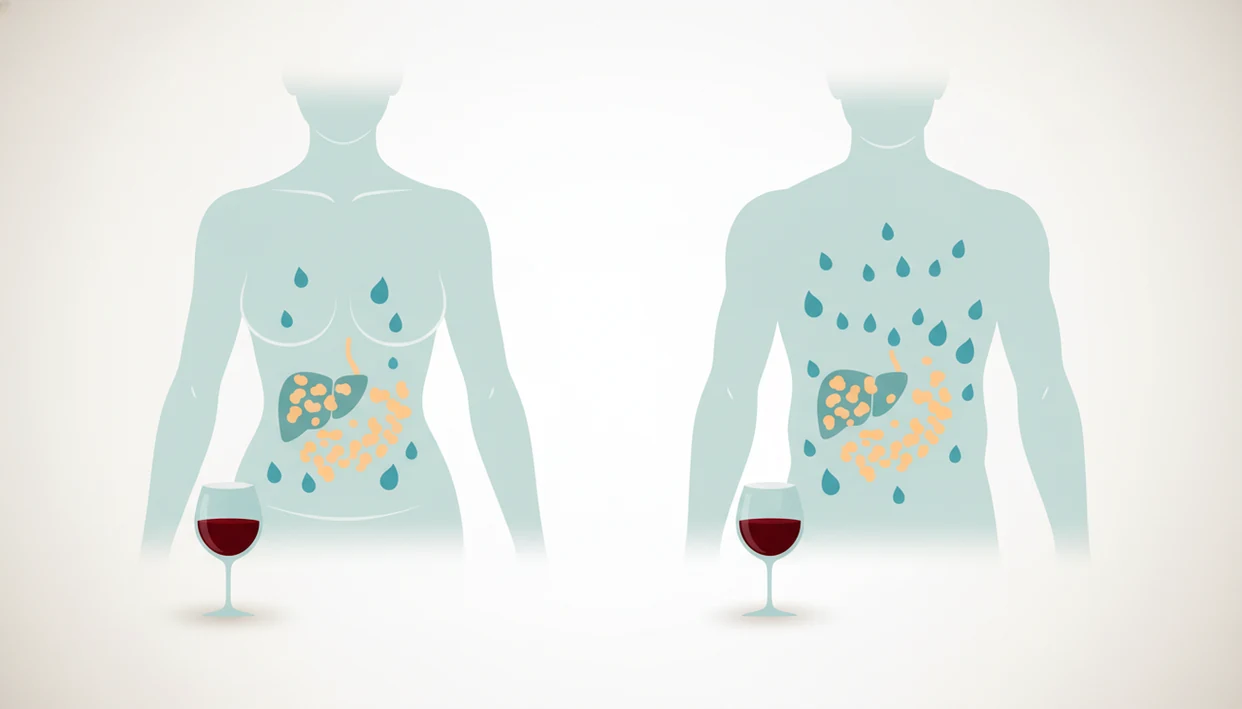
Alcohol often produces a higher blood alcohol concentration in women than in men after the same amount. Average differences in body water, body fat, alcohol distribution, and enzyme activity contribute. Women may also develop liver, heart, brain, and cancer-related harm after less cumulative exposure. Body size, food, medications, genetics, and drinking pace still affect each person’s response.
Two people can share the same bottle of wine and have very different nights and mornings. For many women, alcohol becomes more concentrated in the blood, so impairment may arrive sooner even when body weights are similar. Feeling fine is not a reliable BAC test.
The differences extend beyond intoxication. Regular or heavy drinking can affect sleep, mood, blood pressure, heart muscle, liver health, and breast cancer risk. Hormonal changes and medications can add another layer. Understanding these patterns can help you count drinks more accurately, notice changes earlier, and decide when medical advice is needed.
Why the same drink can hit women harder
- Women generally reach a higher blood alcohol concentration after the same alcohol dose because alcohol spreads through body water, and women often have less total body water.
- Alcohol can feel stronger and last longer in women, especially when sleep, food intake, medication, or stress changes the picture.
- Health risk can rise at lower drinking levels for women, including risks involving the liver, heart, brain, and breast cancer.
- Biology is not destiny. Body size, genetics, drinking history, health conditions, and medications still change individual response.
A weeknight pour after laptop shutdown can look small on paper. The next morning may not feel small.
Body water, body fat, and alcohol distribution
Alcohol affects women’s bodies differently because alcohol distributes mainly into body water, not body fat. With less total body water, the same amount of alcohol can become more concentrated in the bloodstream.
Women often have proportionally more body fat and less body water than men, even at similar body weight. That is one reason two people can drink the same glass of wine and show different BAC curves. First-pass metabolism also matters. Alcohol dehydrogenase, an enzyme active in the stomach and liver, helps break down alcohol before and after it reaches circulation. Differences in this pathway can change how much alcohol reaches the bloodstream.
A 2019 review reported that women reach higher peak BACs than men after the same dose, even when body weight is considered, because of body composition and body water differences the NIH. For readers reducing intake, our alcohol reduction guides explain related body and craving patterns in plain language.
Higher BAC vs slower alcohol metabolism
'Women metabolize alcohol slower' is a useful shorthand, but it is more accurate to say that women often have higher alcohol exposure from the same drink. Alcohol response depends on absorption, distribution, peak BAC, and elimination.
Absorption is how alcohol enters the bloodstream. Distribution is where it goes once absorbed, mostly into body water. Peak BAC is the highest concentration reached. Elimination is how the body clears alcohol, mostly through liver enzymes. Women may eliminate alcohol at rates that vary by lean mass, drinking history, and liver function, so body size alone is not the full explanation.
The practical point is simpler: a higher peak BAC makes the same drink hit harder. It may also stretch the recovery window, especially after poor sleep or drinking without food.
Shaky fingers over a phone screen at 7 a.m. are not a moral lesson. They are data.
Tolerance can hide impairment, not prevent harm
Tolerance means reduced felt effects, not protection from alcohol-related harm. A woman who seems to “hold her liquor” may still have elevated BAC exposure and long-term health risk.
| Factor | Same-drink effect | Why it matters |
|---|---|---|
| Less body water | Higher BAC | Alcohol is less diluted in circulation. |
| Higher body fat proportion | Higher concentration | Alcohol does not distribute well into fat tissue. |
| Food intake | Slower absorption | A meal can flatten the BAC rise. |
| Medications | Unpredictable effects | Sedatives, sleep aids, and some pain medicines can amplify impairment. |
| Drinking history | More felt tolerance | Organs are not protected by feeling less drunk. |
Genetics, sleep, hormones, body composition, and drinking pace all modify risk. For many women, drink counting works better than relying on “how drunk I feel” because tolerance can misread the body’s actual exposure.
Why hangovers, anxiety, and lost sleep may feel worse
Alcohol hangovers can be worse in women because a higher peak BAC can produce more dehydration, inflammation, sleep disruption, nausea, headache, and next-day anxiety. The pattern is not always dramatic. Sometimes it is just a heavier head after what used to feel like a normal night.
Hormonal changes may influence sleep, mood, body temperature, and perceived hangover severity. Current evidence on menstrual-cycle phase and alcohol processing is mixed, and effects appear small or unreliable for many women. Still, symptoms around a period can make alcohol feel rougher.
Aging adds another layer. Perimenopause and menopause can bring lighter sleep, hot flashes, more anxiety, and slower recovery after disrupted nights. If the bartender reaches for the usual bottle and tomorrow is already crowded, the “usual” may no longer behave like it used to. Alcohol-related anxiety is covered more directly in our alcohol anxiety brain chemistry guide.
If you drink heavily every day, need alcohol in the morning, or develop shaking, sweating, nausea, severe anxiety, or insomnia when you cut back, get medical advice before stopping suddenly. Call emergency services for a seizure, hallucinations, severe confusion, profound agitation, fever, or inability to stay awake.
Long-term risks to the liver, heart, brain, and breasts
- Per the CDC, women who drink have a higher risk of developing cirrhosis and dying from alcohol-related liver disease at similar levels of alcohol use compared with men CDC alcohol data.
- Alcohol can contribute to heart muscle damage and blood pressure changes; women may develop alcohol-related heart harm after fewer years of heavy use.
- Brain effects can include memory, mood, sleep, and cognitive changes, especially when alcohol is used regularly for stress relief.
- Breast cancer is the alcohol-related cancer causing the most deaths among women, and risk rises with any amount of alcohol use, according to CDC cancer guidance CDC alcohol data.
- CDC population data show that about 1 in 5 deaths among U.S. adults aged 20 to 49 is from excessive alcohol use CDC report.
These are population-level risks, not a prediction for one person. Still, the direction is consistent enough for risk reduction planning. For women with medical vulnerability, alcohol triggers acute attacks may be a useful next topic.
How alcohol contributes to heart disease and heart damage in women
Alcohol can raise blood pressure, contribute to abnormal heart rhythms, and weaken the heart muscle over time. In a 2024 Kaiser Permanente analysis, women reporting eight or more drinks per week had a 43% higher coronary heart disease risk than women who drank less. Women in the binge-drinking group were 68% more likely to develop heart disease than women reporting moderate intake. These findings show population-level associations, not a prediction for one person.
Alcoholic cardiomyopathy
Alcoholic cardiomyopathy is weakening or enlargement of the heart muscle associated with alcohol exposure. Reviews indicate that women may develop it after lower lifetime alcohol exposure than men. Possible signs include shortness of breath, ankle or leg swelling, unusual fatigue, palpitations, chest discomfort, and reduced exercise tolerance. A drink count cannot diagnose it. Evaluation may include blood pressure readings, an ECG, blood tests, and an echocardiogram.
Track drinks by occasion as well as by week. A four-drink evening meets the CDC binge-drinking threshold for women, even if the weekly total seems modest.
Alcohol liver damage in women can progress quietly
Women can develop alcohol-related liver injury after fewer years and lower cumulative exposure than men. Early disease may cause few or no obvious symptoms, so feeling well does not rule it out. Wine, beer, and liquor can all damage the liver because ethanol is the relevant exposure.
| Stage | What happens | Possible course |
|---|---|---|
| Fatty liver | Fat accumulates in liver cells. | It may improve when alcohol exposure stops, especially before significant scarring. |
| Alcohol-associated hepatitis | The liver becomes inflamed. | It can become serious quickly and requires medical assessment. |
| Cirrhosis | Permanent scarring changes the liver’s structure. | Advanced disease can cause liver failure, bleeding, fluid buildup, infection, and confusion. |
Get emergency care for yellow skin or eyes, vomiting blood, black stools, new confusion, fainting, extreme weakness, or severe abdominal or leg swelling. If you drink heavily every day, wake up needing alcohol, or have had shaking, sweating, hallucinations, or seizures after cutting down, ask about withdrawal safety before stopping. A clinician may use blood tests, imaging, and your drinking history to assess liver damage.
Count standard drinks instead of relying on how you feel
The NIAAA defines low-risk drinking for women as no more than 3 drinks on any day and no more than 7 drinks per week NIAAA alcohol data. Lower-risk does not mean no-risk, especially during pregnancy, when trying to conceive, with certain medications, with cancer risk, or with liver disease.
For each drinking day, record these three details:
- Drink count: Record the number, size, and alcohol strength.
- Trigger pattern: Note time, setting, craving intensity, and response.
- Recovery signal: Track sleep, anxiety, nausea, and next-day functioning.
A useful log entry looks like this: “6:10 p.m., alone after work, craving 7/10, poured wine, stopped at two.” Specific beats vague.
It can support mindful alcohol reduction, but it is not detox care, emergency care, or a substitute for a clinician.
Put pours into standard-drink terms
The CDC’s guidance on moderate alcohol use defines moderation for women as no more than one drink on a day alcohol is consumed. This is not a guarantee of safety. The CDC defines heavy drinking for women as eight or more drinks per week and binge drinking as four or more drinks on one occasion.
| Beverage | Serving | Alcohol strength |
|---|---|---|
| Beer | 12 fluid ounces | 5% alcohol |
| Wine | 5 fluid ounces | 12% alcohol |
| Spirits | 1.5 fluid ounces | 40% alcohol |
A tall strong beer, generous wine pour, or cocktail with multiple shots can count as two or more drinks. Measure a typical home pour once, then record the actual amount and alcohol percentage. The CDC drink-checking guide can help you compare your pattern with current risk definitions.
Periods, pregnancy, perimenopause, and menopause
Alcohol can worsen sleep problems, anxiety, hot flashes, mood changes, and dehydration in some women. These effects may feel more noticeable during perimenopause or menopause, when sleep and temperature regulation are already changing.
Pregnancy and trying to conceive require separate medical guidance because no safe alcohol level is established during pregnancy. That guidance is different from general “low-risk” drinking limits. If there is possible dependence, stopping suddenly can also require medical supervision.
Menstrual phase does not reliably predict alcohol processing for most women based on current evidence. Some people notice symptom patterns around cramps, mood, cravings, or sleep, but that is not the same as a dependable metabolism rule.
For alcohol reduction, a weekly review is often easier than relying on memory because the stressful nights blur together. The full phone-based comparison is in our best drink less app guide.
Get medical help before withdrawal becomes an emergency
Seek medical help if alcohol withdrawal symptoms are severe, escalating, or making you feel unsafe. After physical dependence develops, stopping suddenly can be dangerous because the nervous system has adapted to alcohol and may rebound too strongly when alcohol is removed.
Withdrawal red flags include shaking or tremor, confusion, seizures, hallucinations, and severe vomiting. Pregnancy, known liver disease, use of sedatives or opioids, and any history of seizures are also reasons to get medical review before cutting down sharply or stopping.
If withdrawal may be a risk, take these steps before making a sharp reduction:
- Call a clinician, urgent care, local crisis line, or emergency service if symptoms feel severe or unpredictable.
- Tell them how much you drink, when you last drank, and whether you use sleep medicines, benzodiazepines, opioids, or other sedating drugs.
- Ask whether you need supervised detox, medication, monitoring, or a slower reduction plan.
- Avoid driving, being alone, or caring for others if confusion, hallucinations, seizures, or severe vomiting appear.
Tracking tools can record patterns and support a change plan, but they cannot provide detox, diagnose withdrawal, or replace clinical treatment.
Questions about alcohol’s effects on women
Why do women often get drunk faster than men?
Alcohol spreads mainly through body water. On average, women have less total body water and proportionally more body fat than men, so the same dose may become more concentrated in the blood. Body weight, food, drinking pace, medications, genetics, and previous alcohol exposure also affect how quickly impairment appears.
Do women metabolize alcohol more slowly?
That phrase is only partly accurate. Women often reach a higher peak BAC from the same amount because of alcohol absorption, distribution, body water, and enzyme activity. Elimination rates vary with lean body mass, liver health, genetics, and drinking history. The practical concern is higher total alcohol exposure, not simply a universally slower clearance rate.
Why can women have worse hangovers?
A higher peak BAC can contribute to dehydration, inflammation, nausea, headache, anxiety, and disrupted sleep. Period symptoms, perimenopause, menopause, stress, medications, and drinking without food may make the next day harder. Research has not found a dependable menstrual-cycle rule that predicts alcohol processing for every woman.
Can women build alcohol tolerance?
Yes, regular drinking can reduce how intoxicated someone feels after a given amount. That tolerance does not lower BAC or protect the heart, liver, brain, or breasts. Needing more alcohol for the same effect can be a warning sign, especially if drinking is becoming difficult to limit or withdrawal symptoms appear between drinks.
How much alcohol is considered heavy drinking for women?
The CDC defines heavy drinking for women as eight or more drinks per week and binge drinking as four or more drinks on one occasion. These are risk thresholds, not safe allowances. For women who drink, the CDC’s moderation limit is no more than one drink on a day alcohol is consumed.
Does menopause change alcohol tolerance?
Some women notice stronger effects during perimenopause or menopause because alcohol can compound lighter sleep, hot flashes, anxiety, dehydration, and mood changes. Aging, medication changes, and shifts in body composition may also matter. There is no single age when tolerance changes, so tracking drink size and next-day effects is more useful than assuming an old limit still fits.
Is wine safer for women’s livers than beer or liquor?
No type of alcoholic beverage is inherently safe for the liver. Ethanol is the relevant exposure, and risk depends on the total amount, frequency, binge pattern, and personal health. A large wine glass or strong beer can contain multiple standard drinks, even when it is served as one glass or can.
Should women stop drinking during pregnancy?
Yes. No safe amount or safe time for alcohol use during pregnancy has been established, and the guidance applies to beer, wine, and spirits. If alcohol was consumed before pregnancy was recognized, stop and discuss the exposure with a clinician. If heavy daily use or withdrawal is possible, seek medical help rather than stopping without supervision.