
Track Nicotine and Alcohol Cravings Before They Take Over
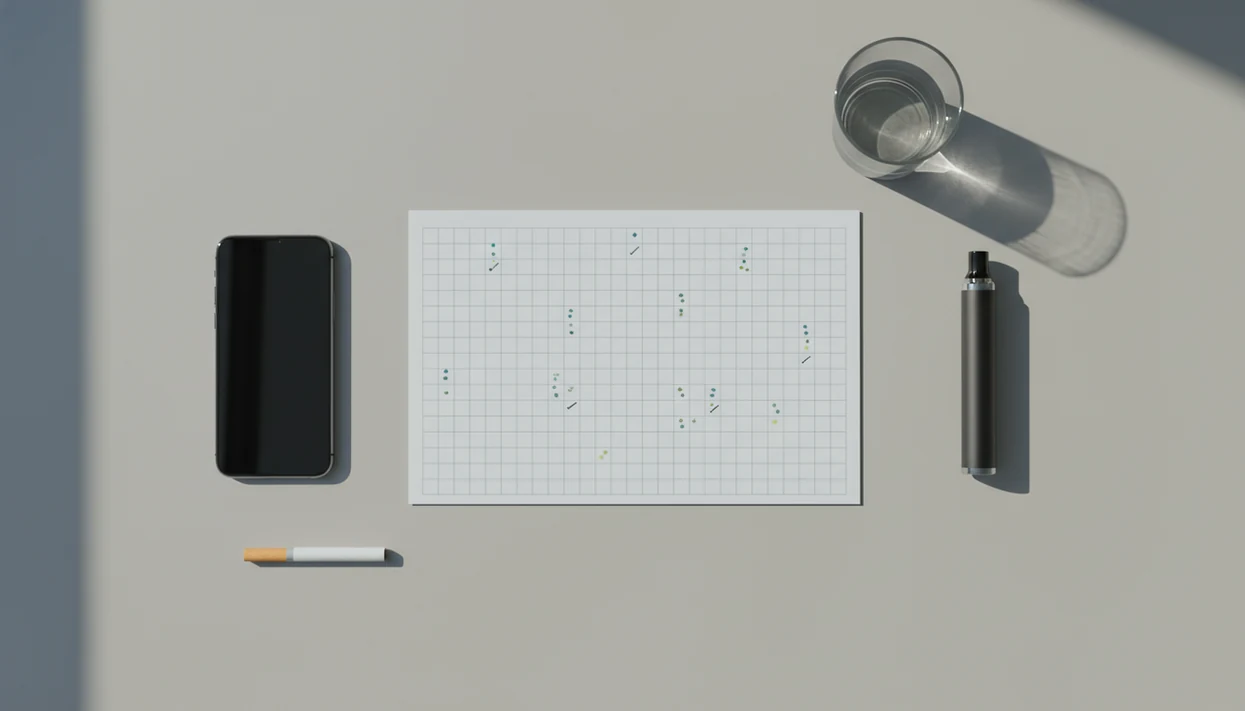
A craving can feel random when you are standing in the kitchen, sitting in traffic, or reaching for a vape without thinking. A short record often shows that the urge has a setting, sequence, and expected reward. Those details give you something practical to change.
You can track cravings in an app, phone note, calendar, or pocket notebook. The format matters less than recording the same few fields each time and reviewing them without treating the log as a scorecard.
The quick version
A craving tracker records when an urge happens, its strength, the trigger, what you did next, and the result. Logging nicotine or alcohol urges in the moment can reveal repeat patterns, such as stress, driving, meals, or social pressure. Review the entries weekly, then prepare one specific response for the trigger that appears most often.
What to record when an urge hits
A craving tracker helps you catch an urge while it is still a choice, before the hand-to-pocket, fridge-door, or “just one” behavior takes over. Its core job is to turn a fast impulse into a logged moment you can understand later.
A useful entry captures the substance involved, the craving intensity, your mood, where you were, who was nearby, and what you were doing. That small set of fields is enough to show whether the urge came from withdrawal, stress, boredom, social pressure, a commute, a meal, or a drink.
A weekly review is useful only when it leads to one concrete change:
- Record the urge as it happens.
- Tag the context instead of judging the craving.
- Review repeated triggers across the week.
- Plan one change for the next high-risk moment.
Use the same timeline for cigarettes, vaping, and alcohol when urges overlap, such as wanting a vape after two beers or craving a cigarette during a dry-day stress spike. The point is not perfect tracking. The point is seeing the loop early enough to interrupt it.
The cue, routine, and reward behind a craving
A craving tracker works by interrupting habit loops before the cue turns into the routine. Writing down the cue and urge can create a brief pause before the familiar response begins.
Behavior scientists often describe habits as a cue-routine-reward cycle. A cue might be the beer fridge hum during dinner prep. The routine is pouring a drink or reaching for a smoke. The reward may be relief, taste, or a break from stress. When you record mood, place, people, and intensity, those repeated cues become easier to see.
According to a Cochrane review, mobile phone-based smoking cessation interventions increased quit rates at six months or longer by about 1.67 times versus minimal support. The review does not show that every craving tracker will work equally well, but it does support structured phone-based help as part of smoking cessation.
The most evidence-backed approach to quitting nicotine is combining behavior support with proven quit aids when appropriate, because cravings involve both learned routines and withdrawal biology.

How to use a habit loop tracker to interrupt cravings
Habit loop tracking separates an urge into a cue, routine, and reward. The cue may be traffic, coffee, tension, a quiet apartment, or seeing someone else use nicotine. The routine is the action you expect to take. The reward is what you hope the cigarette, vape, pouch, or drink will provide, such as relief, focus, numbness, or a break.
| Field | What to enter |
|---|---|
| Setting | Time, place, people, activity, and substance |
| Cue | Emotion, body sensation, object, smell, event, or routine |
| Urge | Intensity from 0 to 10 and the time it began |
| Expected routine | Smoke, vape, use a pouch, pour a drink, or buy more |
| Replacement | Delay, walk, gum, water, breathing, a call, or leaving |
| Result | What happened 10 to 20 minutes later |
- Name the urge without arguing with it.
- Record the cue, including body sensations such as tense shoulders or a tight chest.
- Rate the urge, even if the number is only an estimate.
- Write down the routine you want to delay or avoid.
- Try one replacement action.
- Return 10 to 20 minutes later to record the result.
Track urges you did not act on. Avoided and delayed use can reveal which replacement routines are helping.
Log a craving in five quick steps
Make the entry during the craving window, not only after the urge has passed. Opening the log during a three-minute craving is different from trying to reconstruct the moment at bedtime.
- Open your log when the urge hits. Record the decision point before you smoke, vape, or pour a drink.
- Log the substance. Choose cigarette, vape, alcohol, or the closest match for the urge.
- Tag the context. Add mood, location, people, time, and the activity you were doing.
- Rate intensity and choose a coping action. Use the intensity slider, then pick a delay, breathing, walk, water, text, or exit plan.
- Review your weekly trigger report. Adjust your quit plan around the triggers that keep showing up.
When reaching has become automatic, a one-tap entry can turn the moment into a named trigger and a deliberate coping choice.
For nicotine-only planning, a dedicated nicotine craving tracker can help you compare smoking and vaping patterns more closely.
How to choose and use a craving tracker app
A craving tracker app should make a useful entry possible in 20 seconds or less. Start with substance, time, urge intensity, mood, place, trigger, and what happened next. Extra fields can help later, but a long form that you avoid during real cravings will not produce a reliable pattern.
- Choose one initial goal: quit, cut down, or observe cravings for seven days.
- Log the urge before the details blur.
- Mark the outcome as avoided, delayed, used, or changed plans.
- Review seven days for repeated times, people, places, and emotions.
- Choose one high-risk situation to prepare for during the next week.
Look for a clear privacy description, easy export or deletion controls, and a way to record slips without erasing earlier progress. A unified app may be more practical when drinking regularly precedes smoking or vaping. Separate trackers may be simpler if you have one goal and no meaningful overlap.
End each weekly review with one action, such as changing the drive home, removing alcohol from the house, carrying gum, or contacting support before a high-risk event.
Measure the delay, not just use or no use
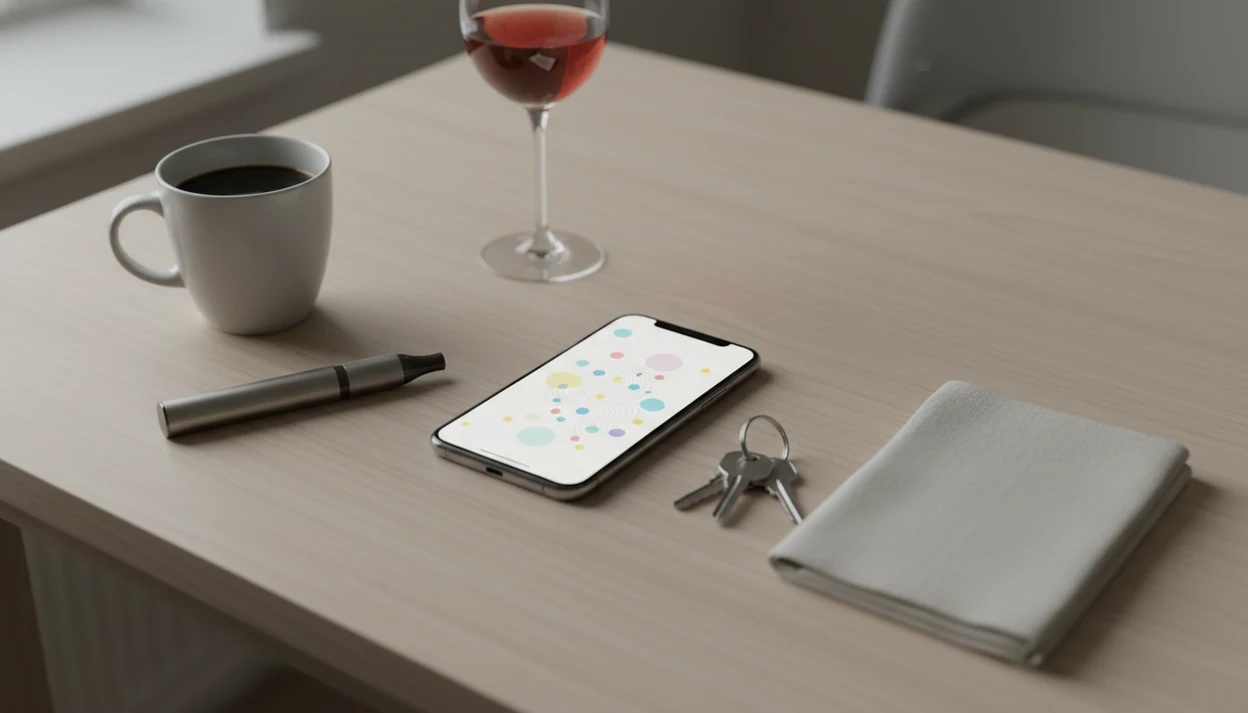
Add four times to the log: when the urge started, when you made a decision, when use began, and when you checked back. If you eventually smoke, vape, use a pouch, or drink, the entry can still show that you delayed longer, used less, or changed the setting. Those changes identify coping actions worth repeating. They also keep a lapse from erasing useful information. NIAAA provides an alcohol consumption tracker for comparing patterns over time.
Why context matters more than a craving count
- A craving tracker reveals trigger patterns by recording when, where, and why urges happen. The first morning cigarette before coffee often looks different from the Friday 6 p.m. drink that makes smoking feel automatic.
- Cravings are temporary and predictable. Many nicotine and alcohol urges peak, shift, and pass within minutes if you can stay out of autopilot.
- A useful tracker links each urge to context, including time, location, mood, people, activity, and substance type. That context turns “I wanted it” into a pattern you can plan around.
- Trackers work best with evidence-based support, not as a stand-alone fix. Counseling, medications, quitlines, and mutual-help options may all matter, depending on the person.
- Consistent logging shows progress over time. Fewer cravings, shorter craving windows, more dry days, or longer gaps between cigarettes can make change feel visible.
When craving tracking is most useful
Use a trigger tracker app when your cravings feel random, social, or tied to routines you cannot yet name. Early quit attempts are especially useful times to log, because the pattern is still blurry.
The same tracking method can support cutting back on alcohol or stopping completely. It also fits vaping users who want to cut back gradually, especially when the mint vape lives in a hoodie pocket and gets checked without thinking. After a slip, logging helps you reset, not restart from zero.
Only about 3-5% of unaided quit attempts stay abstinent at 6-12 months, according to a 2019 evidence summary from the National Centre for Smoking Cessation and Training (co). Structured support matters.
If two cocktails often lead to porch smoking, record both events so you can see which urge came first.
If alcohol is the main pattern, the alcohol craving tracker guide explains limit goals, dry days, and drink-specific triggers.
Talk with a clinician if cravings remain hard to manage, withdrawal symptoms are severe, or substance use is affecting your safety, health, work, or relationships. Call emergency services for seizures, hallucinations, severe confusion, chest pain, or trouble breathing, and do not abruptly stop heavy dependent alcohol use without medical advice.
How to use a nicotine craving tracker for smoking or vaping
Start a nicotine craving tracker a few days before your quit date if possible. That baseline can expose automatic patterns such as the first cigarette before coffee, vaping in the car, using a pouch during meetings, or smoking after alcohol. Keep the log available where you normally reach for nicotine.
- Record time, location, trigger, and urge intensity from 1 to 10.
- Separate withdrawal symptoms, such as irritability or poor concentration, from craving intensity.
- Add the response you tried and the urge score afterward.
- If you use quit medicine, record timing, missed doses, side effects, and cravings before the next dose.
- Review repeated hours and situations once a week.
Nicotine cravings may begin within 1 to 2 hours after the last tobacco use. Withdrawal is generally hardest during the first week, often peaking during the first three days, then declining over the first month. Occasional cue-driven cravings can return later. The National Cancer Institute nicotine withdrawal guide describes this pattern, while the CDC quitting guidance suggests changing activities, walking, drinking water, breathing slowly, or contacting someone when an urge appears.
How to use an alcohol craving tracker to find triggers
An alcohol craving tracker records the decision point, not only the drink. For each urge, note the time, location, people present, preceding event, emotion, intensity, intended action, and outcome. Use outcomes such as resisted, delayed, drank, or changed the plan. If you drank, record the amount without turning the entry into a judgment.
- Set a goal before the usual craving window, such as specific dry days or a planned limit.
- Log the urge within a few minutes.
- Record the first drink before drinking it when possible.
- Count standard drinks rather than cans, glasses, or mixed-drink containers.
- Review several weeks for repeated settings, emotions, people, and differences between planned and actual drinking.
- Change one part of the plan, then keep tracking.
NIAAA recommends tracking drinks and setting both drinking-day and quantity goals when cutting down. Its tips for changing drinking habits also cover trigger avoidance, contacting a trusted person, healthy distraction, and allowing an urge to rise and pass. A separate alcohol craving worksheet can help organize several weeks of entries.
Heavy daily drinking can lead to dangerous withdrawal. Do not stop suddenly without medical advice if you may be dependent or have had shaking, sweating, hallucinations, seizures, a racing heart, or severe confusion during past attempts.
Add medication timing to a nicotine craving log
If you use smoking-cessation medicine, add the medicine, dose, time taken, missed doses, side effects, and time of the next strong craving. FDA-approved quit medicines are commonly used for 6 to 12 weeks or longer, depending on the medicine and plan. A timing pattern may be useful to discuss with a clinician or pharmacist, but do not change the dose on your own. See the CDC guidance on quit-smoking medications.
Questions about tracking cravings
What should I record in a craving tracker?
Record the substance, start time, place, people nearby, mood, body sensations, likely trigger, and urge intensity from 1 to 10. Add what you expected to do, what you actually did, and the result 10 to 20 minutes later. For alcohol, also record the number of standard drinks consumed.
How often should I log nicotine or alcohol cravings?
Log each noticeable urge during the first week or two if that is manageable. Real-time entries are more accurate than reconstructing the day at bedtime. If every urge is too much, focus on the strongest cravings, slips, and repeated high-risk periods. Review the full log once a week rather than checking charts constantly.
How long does a nicotine craving usually last?
Many individual cigarette urges begin to ease after a few minutes, but there is no fixed duration. Cravings can recur frequently during the first days and weeks after quitting, and familiar cues may cause occasional urges much later. Record the start and end time so your plan reflects your own pattern.
Can I track vaping, smoking, and drinking together?
Yes. A shared timeline can show sequences that separate logs miss, such as drinking before smoking or vaping during a stressful commute. Record which urge appeared first, the time between substances, and the setting. If the habits rarely overlap, separate logs may be simpler and still provide enough detail.
Can a craving tracker replace medication or therapy?
No. Tracking can improve awareness and help you prepare for triggers, but it is not a substitute for smoking-cessation medication, counseling, alcohol treatment, or medical care. A tracker can support those services by giving you a clear record of craving timing, withdrawal symptoms, coping attempts, slips, and medication use.
Can writing down cravings make them feel stronger?
Paying close attention may briefly make an urge feel more noticeable, but noticing is not the same as causing it. Keep entries short and pair logging with an action such as walking, slow breathing, water, gum, or contacting someone. Stop staring at the tracker if repeated checking is increasing distress.
When can I stop using a craving tracker?
Consider scaling back when your main triggers are predictable, you have prepared responses, and logging no longer changes your decisions. You might move from every urge to high-risk situations or weekly reviews. Restart detailed tracking before a quit date, medication change, stressful event, social trip, or period when cravings return.