Drinking Cravings at Parties: Social Trigger Plans That Help
Drinking cravings at parties are easier to manage when you decide your limit before you arrive, identify your triggers, bring or choose alcohol-free drinks, set an exit cue, and review what happened afterward. The goal is not perfect willpower; it is a practical social plan that makes the next good choice easier.
> Definition: Drinking cravings at parties are short-lived urges to drink that are activated by social cues, emotions, routines, or environments where alcohol feels expected.
TL;DR
- Party drinking triggers can be external, like friends and open bars, or internal, like anxiety, excitement, loneliness, or habit.
- Cravings usually rise, peak, and fade if you do not act on them, so a 20- to 30-minute coping plan can matter.
- A safer party plan includes a drink limit or no-drink decision, dry options, refusal scripts, a support person, and a clear exit cue.
Party drinking triggers that create social drinking cravings
Quick answer: Drinking cravings at parties are often easier to manage when you make the decision before the craving shows up. A useful plan includes a clear limit, alcohol-free options, a reason to leave, and a quick review afterward so the next event is easier to navigate.
Key takeaways
- Decide your drinking limit before the party, not after the first drink.
- Eat, hydrate, and plan transportation so fatigue or inconvenience does not drive choices.
- Use a specific phrase for declining drinks, such as “I’m good for now.”
- Cravings often rise and fall; delaying a drink can reduce urgency for many people.
- If alcohol withdrawal is possible, do not cut down suddenly without medical guidance.
- A short post-party note can reveal patterns you miss in the moment.
Party drinking triggers are cues that make alcohol feel automatic before you have made a clear choice. They can come from the room, the people, the time of day, or the feeling in your own body.
External triggers include friends buying rounds, music linked to nights out, open bars, a patio table with an ashtray and pint, or seeing everyone else holding a glass. MedlinePlus recommends identifying the people, places, and situations that make you want to drink because these cues can raise relapse risk: https://medlineplus.gov/ency/patientinstructions/000856.htm.
Internal triggers are quieter. Social anxiety, boredom, excitement, stress, loneliness, or the thought “I need a drink to relax” can all start the pull. Cravings are common in these settings, but common does not mean harmless. If the same party pattern keeps ending with more alcohol than planned, take it seriously and plan earlier.
How drinking cravings at parties work in the brain and body
Drinking cravings at parties work through learned habit loops: a cue appears, the brain expects a reward or relief, and the body pushes you toward the familiar action. That is a cue-response loop, not a character flaw.
- Repeated pairings of alcohol with parties teach the brain to expect confidence, belonging, or release.
- The first urge may show up before the first drink, especially when the room looks like past drinking nights.
- Craving intensity is usually time-limited; use urge surfing—notice the urge, delay, and let it rise and fall instead of acting on it (VA Whole Health: https://www.va.gov/WHOLEHEALTHLIBRARY/tools/urge-surfing.asp).
- Urge surfing means noticing the wave without obeying it; delay, distraction, and movement help it pass.
- Changing the environment can interrupt the loop faster than arguing with yourself in the same spot.
For most people, the small next step is physical. Move away from the bar. Get food. Text someone. Let the craving window close.
Before you start: drinking limit, transport, and support requirements
A party plan needs three decisions before you arrive: what you will drink, how you will get home, and who knows your goal. If those are vague, the room will decide for you.
Choose one clear option: no alcohol tonight, one-drink maximum, two-drink maximum, or a leave-before-drinking plan. Then set transport that does not depend on drinking friends or staying until the final song. A taxi app, train time, or sober lift gives you an exit before the bargaining starts.
Pick one support person who understands that you want to drink less at parties. They do not need a speech. “If I say I’m ready to go, back me up” is enough.
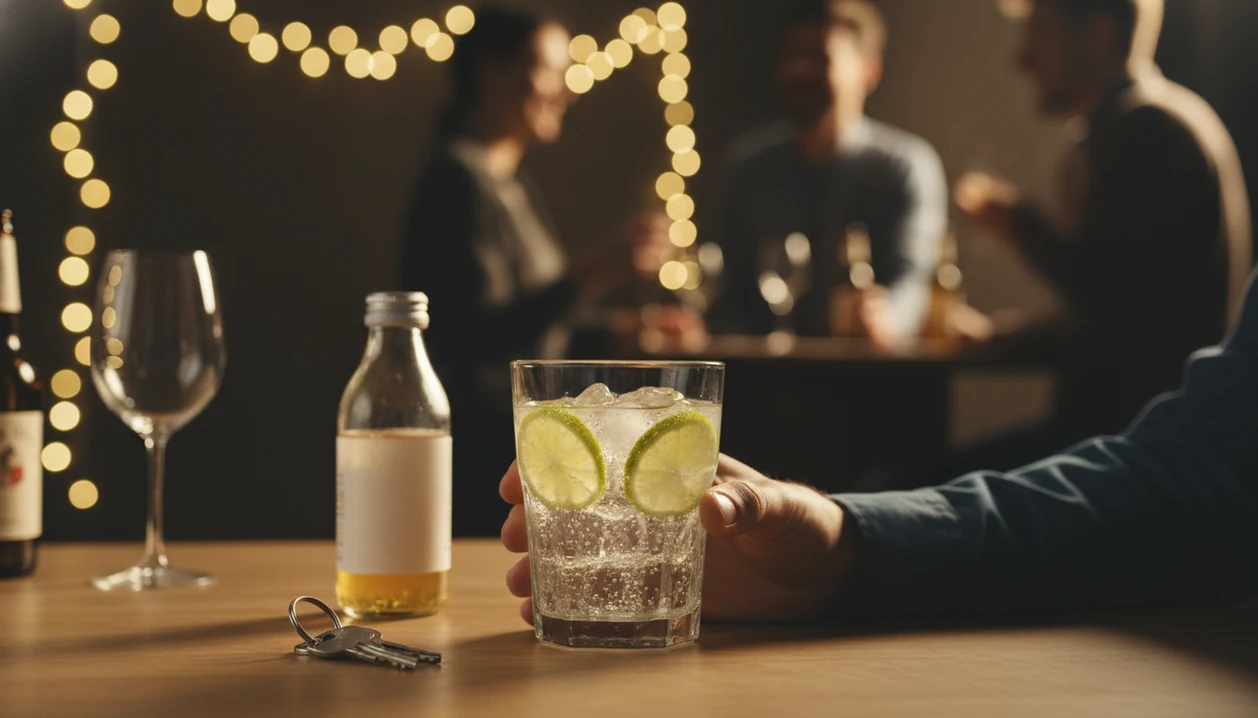
Bring or identify dry options early. Sparkling water in a rocks glass can stop the first awkward offer before it becomes a craving.
How to use a social trigger plan to drink less at parties
A social trigger plan works when it turns a risky night into a sequence of small choices. Write it before the party, use it during the craving window, and review it afterward.
- Set a limit or abstinence decision before you arrive, such as no alcohol, one drink with food, or leaving after one hour.
- Map external and internal triggers by naming the people, places, feelings, and times most likely to pull you toward drinking.
- Pack dry drinks, snacks, gum, or app-based craving tools so your hands and mouth have something to do before urges spike.
- Rehearse refusal lines and redirects such as “I’m good for now” or “I’m pacing tonight,” then change the subject.
- Review the result, cravings, slips, and lessons the same night or next morning so the next plan gets sharper.
A plan is not a promise to be flawless. It is a way to reset, not restart from zero.
Step 1: Set a drinking cravings at parties boundary
What boundary should I set for drinking cravings at parties? Choose a rule that is specific enough to follow under pressure and strict enough to reduce harm.
“I’ll take it easy” usually collapses when a bartender reaches for the usual bottle or a friend says, “Just one.” Stronger boundaries sound like this: no alcohol tonight, leave after one hour, only one drink with food, alternate every alcoholic drink with an alcohol-free drink, or no shots.
Write the boundary before arrival. A note in Me Quit or another private tracker can make the decision feel real before the social noise starts. Tools like Me Quit, a written note, or an alcohol craving tracker help because they move the plan out of your head and onto your phone.
For party cravings, a written boundary is often easier than “deciding in the moment” because social pressure narrows attention.
Step 2: Map external and internal party drinking triggers
Mapping triggers means separating what happens around you from what happens inside you. A friend pouring rounds needs a different response than anxiety, loneliness, or a Friday 6 p.m. drink that makes a cigarette feel automatic.
| Trigger type | Party example | Safer response |
|---|---|---|
| External cue | Open bar near the entrance | Walk past it, get food first, choose a dry drink |
| Social cue | Friend keeps topping up your glass | Use a refusal line and move seats |
| Time cue | Late-night second venue | Leave before the location change |
| Internal feeling | Nervous before small talk | Breathe, text support, start with one safe person |
| Linked habit | Alcohol makes smoking or vaping feel tempting | Use gum, step away from smokers, log both urges |
People who have quit smoking or vaping often already know trigger mapping. The same skill applies here. If nicotine and alcohol cues overlap, an app that tracks cravings and triggers can show patterns you miss in the moment.
Step 3: Pack dry options for social drinking cravings
Dry options work better when they feel intentional, not like a punishment. The point is to reduce both the craving and the social visibility of not drinking.
- Sparkling water with lime: Looks like a standard party drink and gives your hand something to hold.
- Alcohol-free beer or mocktail: Useful when taste and ritual are part of the craving.
- Tea, soda, or a favorite bottled drink: Good for house parties where choices may be limited.
- Snacks, water, and gum: Help when cravings are mixed with hunger, thirst, or the hand-to-mouth habit loop.
That loop matters for people who also quit smoking or vaping. A mint vape in a hoodie pocket and a drink in hand can belong to the same routine. If nicotine urges spike at parties too, a nicotine craving tracker can help separate the alcohol cue from the vape cue.
Small props help. So does pacing.
Step 4: Ride out drinking cravings at parties for 30 minutes
How do I ride out drinking cravings at parties? Treat the urge as time-limited, then follow a short script until the peak passes.
Try this: notice the craving, name it, breathe slowly, delay the decision, move your body, and message someone. “This is a craving, not an instruction” is plain but useful. Shaky fingers over a phone screen still count as taking action if you send the text instead of ordering the drink.
Change location if the urge keeps building. Step outside, use the restroom reset, get food, or start a conversation away from the bar. The daily plan opened in the bathroom is not glamorous. It works because it interrupts the loop.
The most common self-management approach for brief party urges is delay plus environmental change, while higher-risk patterns need added support.
Step 5: Use exit cues when party drinking triggers stack up
Exit cues are signs that the situation is becoming harder than the plan can safely handle. Leaving early is a strategy, not a failure.
Common cues include repeated drink offers, feeling irritated, hiding how much is in your glass, bargaining with your boundary, or staying near the bar even after deciding not to drink. If several cues stack up, do not wait for a dramatic moment.
Use simple scripts. “Early morning tomorrow.” “I promised someone a ride.” “I’m not feeling great.” “I’ve got another commitment.” Or just, “I’m heading out, good to see you.”
If you have already been drinking, do not drive. Use the transport plan you made before arrival, call a sober person, or book a ride. Impaired judgment is not a safe travel coordinator.
Common mistakes with drinking cravings at parties
Party plans usually break in predictable places. Knowing the common mistakes makes them easier to prevent.
- Relying on willpower alone leaves every drink offer to be negotiated in real time.
- Arriving hungry, thirsty, tired, or anxious makes cravings feel stronger and more urgent.
- Treating one drink or one broken rule as “the night is ruined” increases harm.
- Staying with the heaviest-drinking group all night keeps the strongest cues in front of you.
- Skipping the review afterward means the same trigger pattern stays invisible.
A crumpled pack in the car console can teach the same lesson as an empty glass. Habits leave clues. If you track cravings, time, setting, and what happened next, the next plan becomes less abstract.
For people cutting back, one stopped escalation is still progress because it reduces the amount of alcohol consumed that night.
Party drinking plan review after the event
A party review turns one night into useful data for the next social plan. Ask what worked, what triggered cravings, what time the urge peaked, and whether your limit held.
Write down the setting, drinks, craving intensity, support used, and any exit cue you noticed. If you slipped, record what happened before the first drink and what helped you stop or leave afterward. A slip is information, not permission to keep drinking.
If you use Me Quit, keep the review simple: log the setting, craving intensity, drinks, exit cue, and one lesson for next time. A private tracker can support reflection, but it is not diagnosis, detox care, or a guarantee that cravings disappear.
When to get professional help for alcohol cravings
Get professional help when alcohol cravings feel hard to control, keep leading to harm, or make cutting down feel unsafe. This is especially important if your body may be physically dependent on alcohol.
Withdrawal symptoms deserve medical advice before you suddenly stop or sharply reduce drinking. Watch for shaking, sweating, nausea, fast heartbeat, high blood pressure, anxiety, confusion, hallucinations, or any history of seizures. Blackouts, injuries, driving after drinking, repeated arguments, hiding use, or promising “never again” and then losing control are also warning signs.
- Call a doctor, clinic, or addiction service before cutting down if withdrawal symptoms have happened before.
- Ask about therapy, addiction counseling, peer support, or medication options if cravings keep overriding your plan.
- Tell someone trusted if parties, loneliness, or stress are becoming unsafe drinking triggers.
- Use emergency services now if there is danger of self-harm, violence, severe withdrawal, overdose, or an impaired person trying to drive.
Self-guided tracking can support change, but medical and mental health support can add safety, structure, and treatment that a party plan cannot provide.
Limitations
A social trigger plan can reduce risk, but it cannot guarantee that someone will not drink. Alcohol cravings sit on a spectrum, and some patterns need more than self-guided planning.
- Self-help advice is not a substitute for medical, mental health, or addiction treatment.
- Repeated heavy use, blackouts, withdrawal symptoms, or inability to cut down should prompt professional help.
- Cravings tied to trauma, depression, anxiety, or severe stress may need therapy or specialist support.
Clinicians typically recommend medical guidance when alcohol withdrawal, blackouts, or repeated inability to cut down are present.
FAQ
Why do parties trigger drinking cravings?
Parties trigger drinking cravings because social cues, routines, alcohol availability, and expectations can activate learned urges. Internal states like anxiety, excitement, or loneliness can make those urges stronger.
How long do alcohol cravings usually last at a party?
Alcohol cravings often peak and fade within minutes to about half an hour if you do not act on them. Moving away from the cue and delaying the decision can help the urge pass.
What can I say when someone offers me a drink?
Use short lines that do not invite debate, such as “I’m good for now,” “I’m pacing tonight,” or “No thanks, I’ve got an early morning.” Then redirect the conversation.
Can I still enjoy a party without alcohol?
Yes, many people can enjoy parties without alcohol, especially with planning and practice. Dry drinks, supportive friends, and an exit plan reduce the pressure.
What should I drink instead of alcohol at a party?
Practical options include sparkling water, soda with lime, alcohol-free beer, mocktails, tea, or a favorite bottled drink. Choose something you actually like.
When should I leave a party because of drinking triggers?
Leave when repeated offers, bargaining, irritation, hiding drinks, or staying near the bar make your plan harder to follow. Leaving early is a protective choice.
Is one drink a failure if I planned not to drink?
No, one drink is a slip, not a reason to keep drinking. Stop, reset the plan, and review what triggered the drink.
When should I get help for alcohol cravings?
Get help if cravings feel uncontrollable, lead to repeated heavy drinking, cause blackouts, or affect work, school, relationships, or safety. Withdrawal symptoms should be discussed with a medical professional.