Habit Loop Tracking for Nicotine and Alcohol Cravings
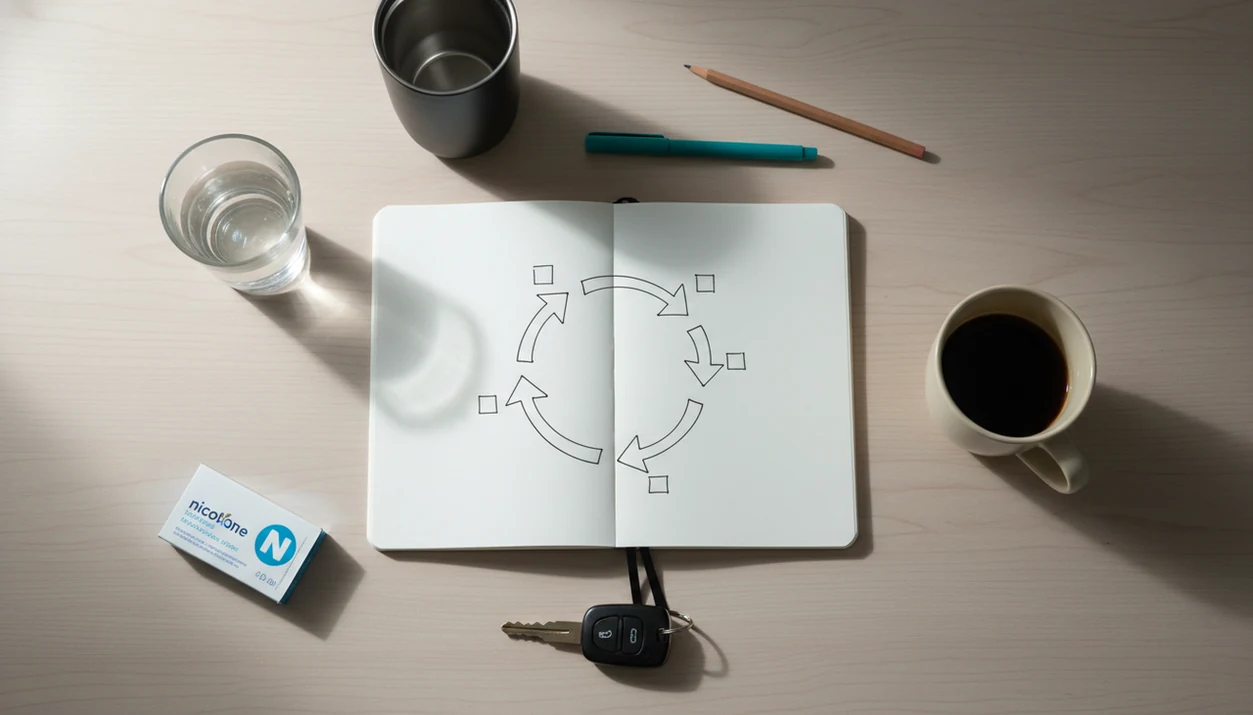
Habit loop tracking helps you spot the cue, craving, routine, and reward behind smoking, vaping, or drinking urges so you can change the pattern instead of relying on willpower alone. The goal is to turn vague cravings into specific, trackable moments you can interrupt with a planned replacement routine.
> Definition: Habit loop tracking is the practice of recording the cue, craving, routine, reward, and urge intensity behind a repeated behavior so the pattern becomes easier to change.
TL;DR
- Nicotine and alcohol cravings often follow a cue → craving → routine → reward loop.
- Track time, place, people, emotion, body sensations, urge level, action taken, and how you felt afterward.
- Use the data to build if-then plans, replacement routines, and relapse-prevention supports.
Habit Loop Tracking Definition for Nicotine and Alcohol Cravings
Quick answer: Habit loop tracking is a way to identify what happens before, during, and after a craving so the pattern becomes easier to change. For many people, naming the cue, urge, action, and reward makes smoking, vaping, or drinking less automatic and creates a place to insert a safer replacement behavior.
Key takeaways
- Track cravings as soon as possible, while the cue and feeling are still fresh.
- Look for repeated time, place, mood, social, or stress patterns rather than one perfect cause.
- A replacement routine works best when it gives a similar reward, such as relief, pause, comfort, or distraction.
- Short notes are often more useful than long journal entries you will not keep doing.
- Review patterns weekly so tracking turns into a plan, not just a record.
- If withdrawal feels severe or alcohol use may be medically risky to stop, talk with a clinician.
Habit loop tracking is a behavior-change method for mapping the cue, craving, routine, and reward behind a repeated urge. For nicotine or alcohol, that might mean stress after work leading to a cigarette, or loneliness at night leading to a half-poured wine glass on the counter.
The point is not to grade yourself. It’s to make the loop visible.
A useful log captures what happened before the urge, what your body felt, what you did next, and what relief or reward followed. Many people notice the same few patterns repeating, such as the first morning cigarette before coffee or the Friday 6 p.m. drink that makes smoking feel automatic. Tools like Me Quit can support this kind of private progress tracking for cravings, streaks, and health milestones.
Habit Loop Tracking Mechanisms in the Brain and Daily Routines
Habit loop tracking works because many cravings run through a cue → craving → routine → reward pattern. The cue starts the loop, the craving creates pressure, the routine is the action, and the reward teaches the brain to repeat it.
With repeated nicotine or alcohol use, behavior can become less deliberate and more cue-driven. Neurobiological research describes a shift from goal-directed brain circuits toward habit circuits with repeated drug use the NIH. In plain terms, the brain starts preparing the routine before you have fully decided.
That’s why willpower alone often cracks when cues are frequent, withdrawal is active, or the routine is tied to relief. The crumpled pack in the car console is not just clutter. It can become a prompt. Habit loop tracking slows that automatic handoff long enough to choose a different next step.
Five Habit Loop Tracking Facts for Adult Cravings
- Cravings often follow a loop: nicotine and alcohol urges commonly move through cue, craving, routine, and reward.
- Useful logs include context: time, place, people, emotion, body sensation, urge intensity, behavior, and short-term reward are the core fields.
- Addiction can become automatic: repeated substance use can train reward-system habit loops that fire before conscious planning catches up.
- Tracking needs a replacement: behavior change tracking works better when paired with a planned alternative routine, not just observation.
- Tracking is support, not a cure: severe dependence often needs counseling, medication, quit programs, peer support, or medical care.
Per the CDC, 68.0% of U.S. adults who smoked cigarettes in 2015 wanted to quit, 55.4% made a quit attempt, and 7.4% had recently quit successfully CDC report. That gap shows why smoking loops are hard to change.
Behavior Change Tracking Setup for Nicotine and Alcohol Cravings
Choose a simple method before the craving window opens. An app, notebook, worksheet, lock-screen note, or voice memo can all work if you’ll actually use it when your fingers are shaky over a phone screen.
Track for pattern recognition, not perfection. Missed logs happen, especially during strong urges. A basic craving tracker can help you compare nicotine and alcohol triggers without turning the process into a spreadsheet project.
The safety line matters. In 2021, NIAAA estimated that 28.3 million U.S. adults met criteria for alcohol use disorder, about 11.3% of adults NIAAA alcohol data. If you may have severe alcohol withdrawal risk, withdrawal seizures, repeated relapse, suicidality, or safety concerns, seek professional help. Me Quit is private support for adults who want to quit smoking, stop vaping, drink less, and track cravings, not emergency or detox care. This article is educational and is not medical advice. If cutting down alcohol causes shaking, confusion, hallucinations, seizures, chest pain, or thoughts of self-harm, use urgent medical support instead of self-tracking.
Six Steps for Habit Loop Tracking During a Craving
Use habit loop tracking during the craving, not only at the end of the day. A three-minute log can interrupt the routine before it becomes automatic.
- Notice the craving without arguing with it; say, “This is an urge, not an order.”
- Log the cue with time, place, people, emotion, and body sensations.
- Rate the urge from 0 to 10, even if the number is a rough guess.
- Name the routine you want to avoid or delay, such as smoking, vaping, pouring a drink, or buying another bottle.
- Choose a replacement routine like walking, slow breathing, calling someone, gum, water, or leaving the room.
- Record the reward or after-effect 10 to 20 minutes later, including relief, irritation, pride, or lower urge intensity.
Opening an app during a craving beats debating with yourself for an hour. For nicotine-specific fields, a nicotine craving tracker can keep the log short enough to use in real time.
Cue Routine Reward Templates for Smoking, Vaping, and Drinking
A good cue routine reward template captures the same fields each time: time, location, people, emotion, body sensation, urge 0 to 10, cue, routine, reward, replacement, and result. Track avoided cravings too. Those are data, not empty boxes.
| Template | Time and setting | Likely cue | Routine to track | Reward or result |
|---|---|---|---|---|
| Nicotine | Driving, coffee, work break, after meals, stress | Smell, schedule, tension, boredom | Cigarette, vape, delay, gum, walk | Relief, focus, calmer hands, lower urge |
| Alcohol | Dinner, evening routine, loneliness, social pressure, boredom | Time of day, people, emotion, meal | Drink, skip, pour less, leave, text someone | Numbness, connection, sleep change, regret, pride |
Nicotine craving log example
“5:20 p.m., car, alone, tense shoulders, urge 8, cue was traffic, wanted mint vape from hoodie pocket, chewed gum and played a podcast, urge fell to 5.”
Alcohol craving log example
“9:10 p.m., kitchen, lonely, tight chest, urge 7, cue was quiet apartment, wanted wine, made tea and texted a friend, urge fell to 4.”
Replacement Routines for Nicotine and Alcohol Craving Logs
Tracking without a replacement routine often leaves the old loop intact. The log tells you where the pattern starts; the replacement gives your body something else to do.
- Delay script: If I want to smoke after dinner, then I wait 10 minutes and brush my teeth.
- Car script: If I want to vape in the car, then I chew gum and play a podcast.
- Connection script: If I want a drink because I feel alone, then I text one person before deciding.
- Exit script: If social pressure spikes, then I step outside, order water, or leave.
Reward substitution matters. The new routine needs some payoff, such as relief, movement, connection, sensory reset, or delay. Contingency management research supports structured reward-based change for substance use, and the same principle can inform small personal rewards the NIH. Review your logs weekly, then update the if-then plans. A focused alcohol craving tracker can make evening patterns easier to spot.
Common Habit Loop Tracking Mistakes and Troubleshooting
The most common habit loop tracking mistakes come from treating the log like a scorecard instead of a pattern finder. Missed entries, vague cues, and weak replacements are fixable tracking problems, not proof that you failed.
- Treat missed logs as information. If you skipped an entry, note what was happening: phone out of reach, urge too fast, shame afterward, people nearby, or alcohol already poured. That tells you where the system needs to be easier.
- Record avoided cravings too. A cigarette not smoked or a drink not poured is a full data point. It shows which cue, replacement, and reward actually worked.
- Name the setting clearly. “Stress” is a start, but “parking lot after work, boss texted, shoulders tight” gives you something you can plan around.
- Choose replacements with a payoff. If walking, gum, tea, breathing, or texting someone gives no relief at all, test a different routine instead of forcing it.
- Use a fast-entry fallback. When urges spike too quickly, write only three words or make a voice memo: cue, urge number, next action. Fill in the rest later.
Common Habit Loop Tracking Myths About Addiction
Myth one: tracking alone cures nicotine or alcohol addiction. It doesn’t. Tracking can make patterns visible, but dependence may still need medication, counseling, medical care, or a quit program.
Myth two: cue routine reward only applies to minor habits. Serious substance use can also become cue-driven, especially when withdrawal, stress, and reward learning overlap.
Myth three: noticing cravings makes them vanish. Sometimes the first week feels louder because you’re finally naming what was already happening. That’s uncomfortable, but useful.
Myth four: one good week means relapse risk is gone. A bartender reaching for the usual bottle can restart an old loop fast. For people comparing tools, an app that tracks cravings and triggers should help identify patterns and support resets, not promise a guaranteed cure.
Addiction is a learned brain-body pattern, not weak character.
When to Seek Professional Help for Nicotine or Alcohol Cravings
Seek professional help when cravings feel unsafe, withdrawal is medically risky, or relapse keeps repeating despite sincere tracking and planning. Habit loop logs can support treatment conversations, but they do not replace care.
Alcohol withdrawal deserves special caution. Get medical help urgently if cutting down or stopping brings shaking that worsens, confusion, fever, hallucinations, seizures, chest pain, severe vomiting, fainting, or extreme agitation. If you have a history of withdrawal seizures, heavy daily drinking, or mixing alcohol with sedatives, do not try to white-knuckle detox alone.
A practical next step list can keep the decision from becoming another late-night debate:
- Call a clinician, urgent care, or local addiction service if withdrawal symptoms are escalating.
- Ask about evidence-based options such as nicotine replacement, varenicline, bupropion, alcohol-use medications, counseling, or a structured quit program.
- Use quitlines, peer support, therapy, or outpatient programs when repeated relapse shows that a private plan is not enough.
- Choose supervised detox or inpatient care when alcohol withdrawal risk, safety at home, or co-occurring mental health symptoms make self-management unsafe.
- Seek emergency help now if you may hurt yourself, hurt someone else, or cannot stay safe.
Limitations
Habit loop tracking is useful, but it has real limits.
- The cue routine reward model simplifies biological dependence, trauma, mental health, pain, housing stress, and social pressure.
- Severe alcohol withdrawal, withdrawal seizures, suicidality, or repeated relapse require professional support, not self-tracking alone.
- Tracking works best as part of a broader plan that may include counseling, medication, quit programs, peer support, or medical care.
Clinicians typically recommend combining self-monitoring with evidence-based support when dependence is moderate, severe, or medically risky; for treatment options, SAMHSA’s national helpline is a starting point SAMHSA.
FAQ
What is habit loop tracking?
Habit loop tracking means recording the cue, craving, routine, reward, and urge intensity behind a repeated behavior. It helps turn cravings into specific patterns you can change.
How do I track cravings when I want to smoke, vape, or drink?
Log the time, place, people, emotion, body sensations, urge level from 0 to 10, action taken, and how you felt afterward. Keep entries short enough to complete during the craving.
What does cue routine reward mean?
The cue is the trigger, the routine is what you do, and the reward is the short-term payoff your brain remembers. Craving is the pressure that connects the cue to the routine.
Can tracking cravings reduce urges?
Tracking can help identify patterns and support better choices, but it may not reduce urges immediately. It works best with replacement routines and other support.
What triggers nicotine cravings?
Common nicotine triggers include stress, coffee, driving, meals, work breaks, alcohol, social settings, and seeing cigarettes or vapes nearby. Withdrawal can make these cues feel stronger.
What triggers alcohol cravings?
Common alcohol triggers include evenings, stress, loneliness, celebrations, meals, boredom, and social pressure. Some people also crave alcohol when a routine or location feels tied to drinking.
What can I do instead of smoking or vaping when a craving hits?
You can walk, chew gum, drink water, breathe slowly, call someone, use a planned nicotine replacement option, or leave the trigger setting. The replacement should be ready before the urge peaks.
Is craving tracking enough to quit nicotine or cut back on alcohol?
Craving tracking is helpful support, but it is not a substitute for medical care or treatment when dependence is severe. Alcohol withdrawal risk, suicidality, or repeated relapse should be handled with professional support.