

The 9 Best Quit Smoking Apps for Plans and Cravings
Our quick answer
NicLess is our top quit smoking app for tracking cigarettes, vapes or nicotine pouches, cutting down gradually and responding to cravings. The MeQuit program ranks second for its structured lesson course. People who prefer an app with thousands of ratings should consider Smoke Free, quitSTART or Kwit. An app works best alongside medication, counseling or quitline support.
The best app to stop smoking should do more than count days. It should help at 7 a.m. when coffee triggers a cigarette, during the drive home when the vape is in the cup holder, and after Friday drinks when old routines return.
We compared current US App Store information, practical features and published research. We did not rank by stars alone. Ratings reflect user satisfaction, not proof that an app produces long-term abstinence. All ratings and counts below were checked in October 2026 and can change.
Quit smoking apps compared at a glance
NicLess has the broadest fit for privately tracking cigarettes, vapes and pouches, while the MeQuit program offers a more structured course. The established apps below have much longer rating histories.
| Rank and app | Best for | Standout tools | Cost model | US App Store rating |
|---|---|---|---|---|
| 1. NicLess | Cravings and multiple nicotine products | Cut-down mode, craving button, private tracking | Free download | No ratings yet |
| 2. MeQuit program | Structured daily lessons | CBT-based lessons and mental exercises | Free download | 3.2 from 5 ratings |
| 3. Smoke Free | Established all-around tracking | Missions, craving map and progress statistics | Free basics, optional purchases | 4.8 from 57,273 ratings |
| 4. quitSTART | Completely free government support | Tailored tips, games and slip recovery | Free | 4.6 from 2,424 ratings |
| 5. Kwit | Gamification and motivation | Levels, breathing and CBT-style tools | Free tier, optional purchases | 4.7 from 2,824 ratings |
| 6. QuitSure | A guided course before quitting | 6-day and 6-week programs | Free download | 4.8 from 1,566 ratings |
| 7. QuitNow | Community support | Chat, achievements and recovery tracking | Free version, paid options | 4.7 from 13,601 ratings |
| 8. EasyQuit | Gradual cigarette reduction | Slow mode, games and health statistics | Free download | 4.7 from 1,149 ratings |
| 9. Flamy | Flexible quit methods | Tapering, quit dates and NRT tracking | Free download | 4.9 from 57 ratings |
Disclosure: NicLess and the MeQuit program are made by the team behind MeQuit, and readers who want a long rating history can start with the established apps listed below.
How we ranked the best apps to stop smoking
We prioritized what an app does before, during and after a craving. Fast coping tools, a practical quit or reduction plan, trigger records, slip recovery and access to established treatment matter more than decorative badges.
- Craving response: Can you open the app and take a useful action before lighting a cigarette?
- Planning: Does it support a quit date, gradual reduction or both?
- Trigger learning: Can it identify coffee, driving, stress, meals, alcohol or social smoking?
- Progress: Does it show time, money and nicotine products avoided?
- Slip recovery: Does one cigarette become useful information instead of a reason to abandon the plan?
- Privacy: Is an account required, and does the app include public or community features?
- Treatment fit: Can the app sit alongside medication, counseling or quitline support?
Research on apps remains mixed. A Cochrane review of mobile phone support found no evidence of improved cessation in its app-specific analysis. A later systematic review and meta-analysis found that apps appeared more useful when added to smoking-cessation medication rather than used alone.
The top three quit smoking apps
The first three cover distinct needs: immediate private tracking, structured lessons and a mature feature set. Your best choice depends on what tends to break down during a quit attempt.
1. NicLess: Best for cravings, tapering and private tracking
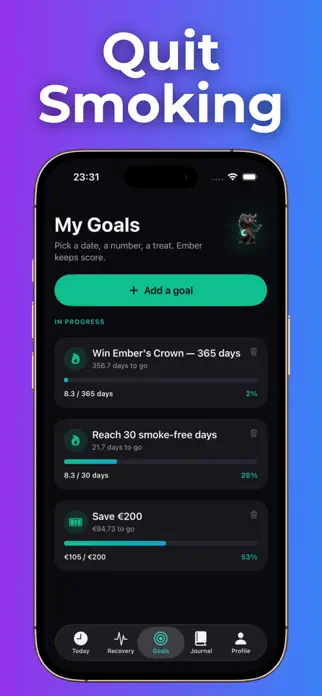
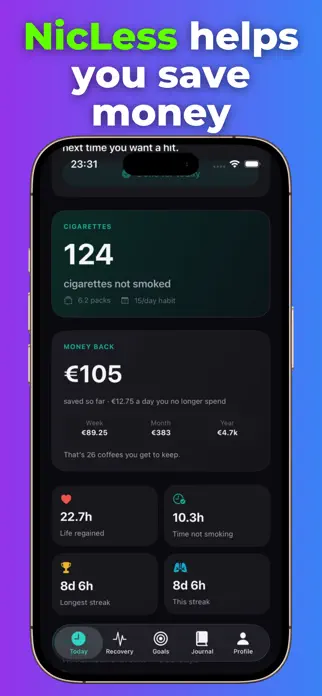
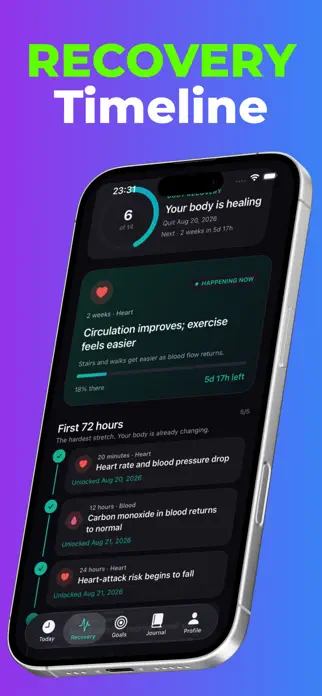
Key features: NicLess tracks cigarettes, vapes and nicotine pouches in one iPhone app. It includes a live nicotine-free clock, money saved, units avoided, five-day quests, a mood check-in and a recovery timeline. Its cut-down mode offers gentle, steady or fast pacing with a falling daily limit. During a craving, you can rate the urge from 1 to 10, tag triggers such as coffee or drinks, breathe through the roughly three-minute peak and save the entry.
Cost and rating: Free download. It launched September 17, 2026, so it has no US App Store ratings yet. No account is needed, and data stays on the iPhone. Honest limit: It is too new to have a rating history, and it is a self-guided tracker rather than clinical treatment. A detailed NicLess and Smoke Free comparison explains the trade-offs.
2. MeQuit Quit Smoking program: Best structured lesson course
Key features: This iPhone course uses CBT, cue exposure and conditioning ideas with hypnosis-style mental exercises. Daily reading, video and exercises take about an hour, with 8 to 10 hours in the full course. You continue smoking during the program and set a quit date when ready. That format may fit someone who wants preparation before removing the 7 a.m. cigarette.
Cost and rating: Free download. It has 3.2 stars from 5 US ratings, which is too small a sample for a firm conclusion. Honest limit: It does not track individual cigarettes, money saved or cravings, and the daily time commitment is substantial.
3. Smoke Free: Best established all-around tracker
Key features: Smoke Free tracks quit time, money, cigarettes avoided, health milestones and cravings. It also offers daily missions, trigger mapping, notes, graphs and savings goals. It is available on iOS and Android. The broad tool set suits someone who wants detailed records rather than a simple counter.
Cost and rating: Basic tools are free, with optional paid features. It has 4.8 stars from 57,273 US ratings. Honest limit: The number of tools can feel busy, and some coaching or plan features require payment. A 2024 randomized evaluation of Smoke Free found no significant difference in six-month continuous abstinence compared with its comparator. Read our full Smoke Free app review for a closer feature breakdown.
Best free and motivational smoking apps
quitSTART and Kwit are the strongest choices here for free public-health support and game-style motivation. QuitSure is more course-driven and asks for consistent participation before the quit day.
4. quitSTART: Best free government-developed app
Key features: Created for Smokefree.gov, quitSTART tailors tips and challenges to your smoking history. It includes preparation guidance, badges, craving games, mood support, a Quit Kit and prompts for getting back on track after a slip. This is a practical free stop smoking app for someone who wants brief activities without selecting a subscription.
Cost and rating: Free. It has 4.6 stars from 2,424 US ratings. Honest limit: Its games and short tips may feel light if you need intensive counseling, medication management or detailed tapering. See our quitSTART review for more detail.
5. Kwit: Best for gamification and milestones
Key features: Kwit uses levels, milestones and progress statistics to make smoke-free time visible. Its tools include guided breathing, mini-games, motivation cards and CBT-based craving support. It is available on iOS and Android and may suit people who respond well to achievements and frequent progress cues.
Cost and rating: A free tier is available, with optional in-app purchases or subscriptions whose prices vary. It has 4.7 stars from 2,824 US ratings. Honest limit: Gamification may lose its pull after the first weeks, and it does not replace medication guidance or counseling. Our Kwit versus Smoke Free comparison covers two established options.
6. QuitSure: Best for completing a course before quitting
Key features: QuitSure offers 6-day and 6-week programs based on CBT, rational emotive behavior therapy and conditioning concepts. Users can continue smoking during the program and quit after completing the exercises. This may appeal to someone who is not ready to set an immediate quit date.
Cost and rating: Free download. The supplied information does not establish current subscription terms, so check the live listing before committing. It has 4.8 stars from 1,566 US ratings. Honest limit: Its store description makes strong claims about removing cravings and withdrawal. No consumer app can guarantee that experience, and nicotine withdrawal is common.
Best apps for community support and gradual reduction
QuitNow is the best fit for social accountability, while EasyQuit and Flamy provide gradual-reduction choices. These options differ sharply in privacy, platform consistency and the depth of their rating histories.
7. QuitNow: Best for community accountability
Key features: QuitNow shows time since the last cigarette, cigarettes avoided, money saved, estimated life regained and health milestones. Its defining feature is an ex-smoker community, which can provide quick encouragement when a work break or stressful evening triggers an urge. It is available on iOS and Android.
Cost and rating: A free version is available. The QuitNow App Store listing has offered paid products from about $2.99 to $34.99, depending on the product or subscription. It has 4.7 stars from 13,601 US ratings. Honest limit: Community advice varies in quality and may not suit people who prefer private tracking.
8. EasyQuit: Best for a gradual cigarette reduction plan
Key features: EasyQuit combines quit-time, money and health statistics with craving games, a diary, badges and a slow mode that creates a reduction schedule. That makes it useful for someone who wants to lower a daily cigarette limit before stopping completely.
Cost and rating: The iPhone app is a free download and has 4.7 stars from 1,149 US ratings. On Android, research notes describe a free version with advertising and a separate Pro app listed at about $10.99 in August 2026. Honest limit: The iOS and Android experiences are not equivalent, and advertising can interrupt the free Android version.
9. Flamy: Best for flexible quit methods
Key features: Flamy lets users pick a quit date or follow a personalized taper. It tracks nicotine-replacement products, cravings, slips, smoke-free time, money and health milestones. Its SOS area offers breathing, distraction and coping prompts. This is useful if you want reduction and medication notes in the same workflow.
Cost and rating: Free download. It has 4.9 stars from 57 US ratings. Honest limit: That high score is based on a small rating count, so it is less informative than ratings based on thousands of responses.

How to choose the right quit smoking app
Choose the app that addresses the moment most likely to lead to smoking. A detailed dashboard has little value if you will not open it when coffee, driving, stress or alcohol makes smoking feel automatic.
- Name the main problem. Pick craving support for sudden urges, tapering tools for gradual reduction, lessons for preparation or a community for accountability.
- Check the platform and cost. Confirm compatibility, what remains free and the current subscription terms before entering payment information.
- Look at the craving screen. Favor an app that provides breathing, delay, distraction or a saved coping action within a few taps.
- Check slip recovery. A useful app records what happened and helps adjust the next response instead of treating one cigarette as total failure.
- Review privacy. Decide if you are comfortable with an account, cloud storage or public discussion. A private app may be better if habit data feels sensitive.
- Add human and medical support. Use the app to support a complete quit plan, not as a substitute for effective treatment.
Try this test: picture your hardest cigarette, such as the one after dinner or during the commute. Choose the app with a clear action for that exact minute.
Contact a clinician, pharmacist or 1-800-QUIT-NOW if withdrawal feels unmanageable, repeated attempts are failing, or you want help choosing medication. Seek urgent care for chest pain, severe breathing trouble, suicidal thoughts or another immediate medical emergency.
What an app can and cannot do
An app can keep a plan visible, interrupt an automatic routine and show trigger patterns. It cannot prove that a short streak will become lasting abstinence, diagnose medical problems or replace evidence-based treatment.
Withdrawal often reaches its highest intensity around days 2 to 3, according to the NCBI nicotine withdrawal overview. Irritability, restlessness, low mood, increased appetite, sleep problems, poor concentration and cravings can occur. Set up your reminders and craving tools before quit day, not after symptoms peak.
Medication can make quitting more manageable. The CDC identifies seven FDA-approved smoking-cessation medications, including nicotine patches, gum and lozenges, plus prescription options. Its nicotine gum guidance also explains how gum may be combined with a patch for breakthrough cravings. Ask a clinician or pharmacist which option is appropriate, especially during pregnancy or when managing other health conditions.
For a broader treatment plan, compare smoking cessation aids. A good working sequence is plan, treat, monitor and escalate: set the quit date or reduction schedule, use treatment correctly, record cravings and get more support if repeated slips continue.
How to set up an app for the first week
Set up the app before your quit date and give each feature a specific job. The goal is not perfect logging. It is catching the routine before your hand reaches for a cigarette.
- Before quitting: Enter your usual daily cigarettes, cost, quit date and hardest trigger times.
- At 7 a.m.: Put the craving button or app shortcut where you can see it before making coffee.
- During the commute: Remove cigarettes and lighters from the car, then schedule a prompt before the usual stop or smoke.
- After meals: Open the breathing or distraction tool immediately, then change rooms or take a short walk.
- Around alcohol: Plan for Friday drinks, since alcohol can weaken a decision made earlier in the day. Consider avoiding or reducing alcohol during the first weeks.
- After a slip: Record the time, place and trigger. Remove the remaining cigarettes and return to the plan at once.
- At night: Review patterns for two minutes and choose one adjustment for tomorrow.
A 24-hour or seven-day counter is meaningful progress, but it is not proof of lasting cessation. Keep using support after the novelty of the streak fades, especially around repeated triggers and stressful events.
Best quit smoking app FAQ
What is the best free quit smoking app?
quitSTART is a strong fully free choice for tailored tips, games and slip recovery. NicLess is a free download for private cigarette, vape and pouch tracking, although it is new and has no ratings yet. Check current listings because free downloads can differ in what they include without payment.
What features should a smoking cessation app have?
Look for a quit date or reduction plan, a fast craving action, trigger tags, smoke-free time, money saved and a constructive slip workflow. Privacy controls also matter. Medication reminders can be useful, but the app should not choose doses or replace instructions from a clinician, pharmacist or official medication guide.
Can an app help me cut down before quitting?
Yes. NicLess, EasyQuit and Flamy include gradual-reduction options. A useful taper sets a falling daily limit and leads to a clear quit date rather than continuing indefinitely. If cutting down repeatedly stalls or withdrawal is difficult, ask about medication and counseling instead of assuming more willpower is the answer.
Is the highest-rated quit smoking app the best one?
Not necessarily. Stars measure user experience and satisfaction, not clinical effectiveness. A 4.9 rating from dozens of people also carries less history than a slightly lower score from thousands. Compare the craving tools, plan structure, privacy and slip support against your needs before relying on the average score.
Should I use nicotine replacement with a quit smoking app?
Nicotine patches, gum and lozenges are established treatments for adults who smoke, and an app can help record timing, cravings and patterns. Follow product directions and ask a clinician or pharmacist about the right approach. Extra guidance is especially useful during pregnancy, after a recent serious medical event or when taking other medications.
What should I do if I smoke after starting a quit app?
Treat the cigarette as a lapse, not proof that the attempt failed. Record the trigger, remove the remaining cigarettes and restart the plan immediately. Change one detail for the next similar situation, such as moving your coffee, avoiding a smoking area or using your craving tool before the urge becomes intense.