

Nicotine Withdrawal Symptoms From the First Hours to Week 4
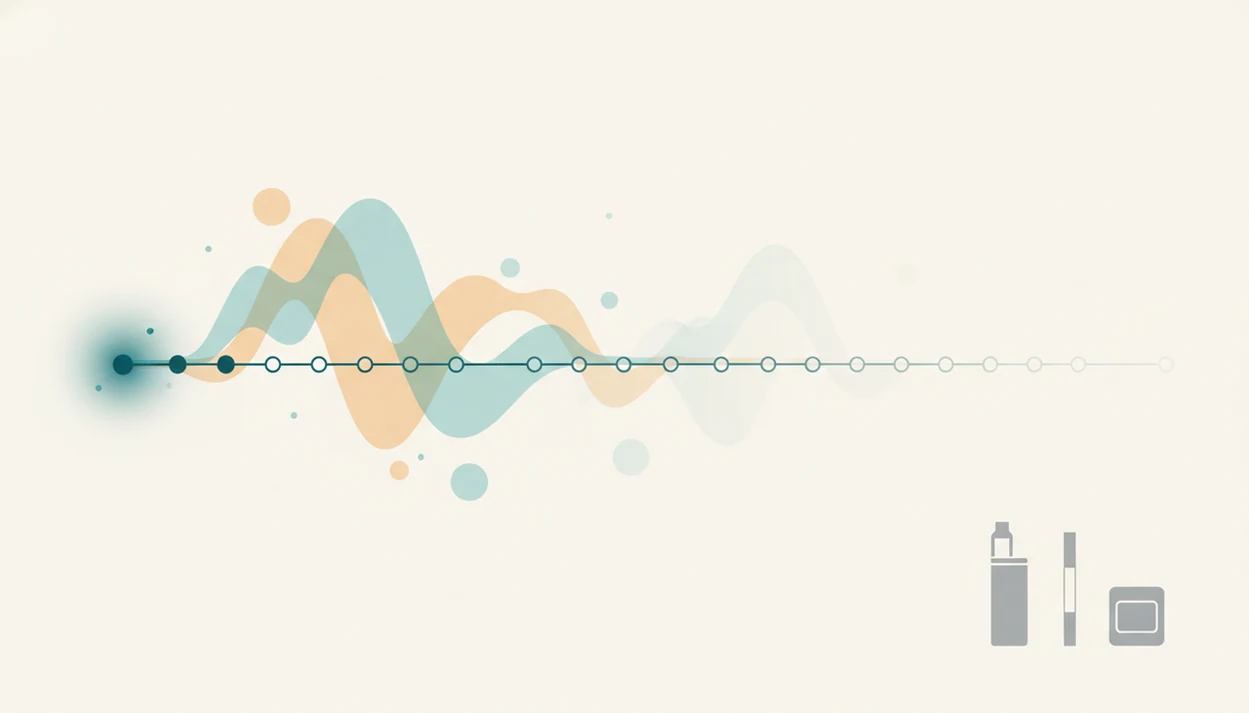
The first nicotine-free morning can feel very different from the third day or third week. Early withdrawal is driven partly by your body adjusting to the absence of nicotine. Later urges are often connected to familiar situations, such as finishing dinner, getting into the car, taking a work break, or having a drink.
A timeline cannot predict exactly how you will feel. It can show when to clear your schedule, arrange support, prepare craving alternatives, and pay closer attention to changes in sleep or mood.
The quick version
Nicotine withdrawal can begin within hours of your last cigarette, vape, pouch, or other nicotine dose. Symptoms are usually strongest during the first three days to one week. Cravings, irritability, poor focus, low mood, and sleep problems generally improve over three to four weeks, although cravings tied to coffee, driving, alcohol, stress, or other routines can return for months.
The nicotine withdrawal timeline in one table
Nicotine withdrawal often starts within 4 to 24 hours, peaks around day 2 or 3, and improves across the next 2 to 4 weeks. The craving part can last longer because routines keep reminding the brain what used to come next.
| Time after last nicotine | What often happens | Practical note |
|---|---|---|
| 4 to 24 hours | Cravings, restlessness, appetite changes, early irritability | The first morning cigarette before coffee can feel loud. |
| Days 2 to 3 | Peak cravings, anxiety, low mood, poor focus, sleep disruption | Plan extra support before this window arrives. |
| Days 4 to 7 | Physical intensity may drop, but urges still hit | A work break or car ride can trigger autopilot. |
| Weeks 2 to 4 | Many symptoms ease | Keep tracking sleep, mood, and craving windows. |
| Months later | Cue-based cravings may appear | Stress, alcohol, social settings, and old routines matter. |
The exact timeline varies by nicotine dependence, product type, mental health, sleep, and support.
How long does nicotine withdrawal last?
How long nicotine withdrawal lasts depends on both body chemistry and habit patterns. These five facts are the ground rules before you build a quit plan.
- About 80 to 90% of daily cigarette smokers in the U.S. are estimated to be nicotine dependent, so withdrawal after abrupt stopping is common, according to a 2015 review the NIH.
- Nicotine withdrawal symptoms generally peak around day 3 and taper over the next 3 to 4 weeks for many people.
- The first week after quitting is often a high-risk relapse period because symptoms and routines collide.
- Many smokers need multiple quit attempts before long-term abstinence; that means a reset is normal, not a verdict.
- The CDC reports that more than half of U.S. adult cigarette smokers make a quit attempt in a given year, which is why slips and restarts should be expected rather than treated as rare CDC smoking data.
A timeline makes the rough days less mysterious and helps you prepare for when does quitting smoking get easier.

Why your body and routines both react
Nicotine withdrawal happens because the brain and body are recalibrating after repeated nicotine exposure changes reward, attention, stress, and habit circuits. After repeated use, your brain starts expecting nicotine during specific activities and times of day, so its absence can affect reward, attention, stress, and familiar routines.
Nicotine affects dopamine signaling, which is tied to reward and motivation. It also becomes part of habit loops, like driving, finishing a meal, or stepping outside at work. When nicotine stops, dopamine and stress signaling need time to rebalance.
Physical symptoms and psychological cravings can follow different timelines. Headache or constipation may ease in weeks, but a gas station counter beside menthol packs can still spark an urge later. High-nicotine vapes may add another layer because frequent dosing teaches the brain to expect small hits all day.
When cravings are strong or nicotine dependence is high, behavioral support and an FDA-approved quit-smoking medicine may work better together than either approach alone. Preventive Services Task Force recommends behavioral interventions and approved pharmacotherapy for nonpregnant adults who use tobacco uspreventiveservicestaskforce smoking data.
Contact a clinician if withdrawal symptoms are unmanageable, last longer than expected, or interfere with basic daily functioning. Seek urgent help for suicidal thoughts, severe depression or anxiety, chest pain, fainting, or trouble breathing.
Prepare for the hardest days before you quit
Before you start, make the quit smaller, clearer, and harder to sabotage. A safer plan names what you are quitting, where cravings are most likely to hit, and who will help when the loud days arrive.
- Choose your target before the quit date: cigarettes, vaping, pouches, another nicotine product, or a combination. Dual use can hide in the gaps, so write down every source you reach for.
- List your highest-risk triggers in plain language. Mornings, alcohol, stress, driving, after meals, work breaks, and the bedside phone scroll all deserve a spot if they pull you toward nicotine.
- Decide whether to ask a clinician about nicotine replacement therapy or quit-smoking medication, especially if you use nicotine heavily, have health conditions, or have had severe withdrawal before.
- Tell one trusted person what peak days may look like and how to help: a short text, a walk, no lectures, or keeping alcohol out of the plan for a week.
- Remove easy-access nicotine from bags, cars, desks, coat pockets, and bedside areas so one irritated minute does not become autopilot.
What withdrawal can feel like by hour, day, and week
How does quit smoking withdrawal usually unfold? It commonly begins in the first day, peaks around days 2 to 3, then eases over weeks while trigger-based cravings may continue.
First 24 Hours After Quitting Nicotine
In the first 4 to 24 hours, cravings, restlessness, appetite changes, and irritability may begin. Some people feel oddly foggy before they feel emotional.
Days 2 To 3 Nicotine Withdrawal Peak
Days 2 to 3 are often the peak. Cravings, anxiety, low mood, poor concentration, and sleep disruption can stack together, which is why the nicotine cravings timeline feels personal in this window.
Weeks 2 To 4 Symptom Easing
During days 4 to 7, physical intensity may start dropping, but relapse risk remains high. Across weeks 2 to 4, many symptoms ease, though routines can still pull hard. After one month, cravings do not mean you failed. For the broader body changes, compare this with a quit smoking timeline.
Withdrawal and smoke recovery follow different clocks
Nicotine withdrawal symptoms and recovery from cigarette smoke are related to quitting, but they do not measure the same process. Withdrawal reflects your brain and body adjusting to the absence of nicotine. Smoke recovery includes changes caused by reduced exposure to carbon monoxide and other combustion products.
| Time | Smoke recovery | Possible withdrawal |
|---|---|---|
| 8 hours | Blood carbon monoxide has fallen by about half | Cravings, irritability, or restlessness may be starting |
| 48 hours | Carbon monoxide has fallen to a nonsmoker level | Withdrawal may be close to its most intense point |
| 72 hours | Bronchial tubes begin to relax | Cravings, poor focus, mood changes, and sleep problems may still be strong |
Feeling a strong craving at 72 hours does not mean your body has stopped recovering. It means the withdrawal timeline is still unfolding. The early smoke-recovery milestones come from NHS quit-smoking guidance.
Cigarettes vs vapes vs nicotine pouches
The basic withdrawal process is similar across nicotine products, but the craving pattern can feel different. Product type changes the rituals, dosing frequency, and body cues that keep urges alive.
| Product type | Common craving pattern | What to watch |
|---|---|---|
| Cigarettes | Cravings attach to coffee, meals, driving, work breaks, and alcohol | The Friday 6 p.m. drink can make a cigarette feel automatic. |
| High-nicotine vapes | Frequent dosing loops because the device is easy to use repeatedly | A mint vape in a hoodie pocket can turn into constant checking. |
| Nicotine pouches | Mouth feel, flavor, and long-duration use become cues | Dry mouth or flavor memories may trigger urges. |
| Other oral nicotine | Cravings may center on placement, taste, and timing | Long sessions can blur when one dose ends. |
Research on vaping withdrawal timelines is still evolving compared with cigarette studies. If vaping is your main product, a dedicated stop vaping withdrawal timeline may fit better.
Turn the timeline into a daily quit plan
A nicotine withdrawal timeline is most useful when you turn it into a day-by-day support plan. Use the timeline to prepare for difficult periods instead of being caught off guard by them.
- Set a quit date and mark days 2 to 3 as the first-week danger window.
- Prepare coping tools before the first craving hits, such as gum, water, a walk route, or a three-minute breathing timer.
- Record each craving with the time, trigger, intensity, and response that helped it pass.
- Plan support for peak days, including texts, check-ins, or quieter evenings.
- Consider nicotine replacement therapy or quit-smoking medicines when appropriate, after checking official guidance or a clinician.
- Reset after a slip instead of treating it as total failure.
Medication can reduce withdrawal intensity while a planned quit date gives you time to change routines and arrange support.
Use it as a logging and planning aid, not as diagnosis, detox care, emergency support, or a substitute for a clinician.
Medication plus support can improve the odds of quitting
A quit plan does not have to rely on willpower alone. A Cochrane review of 52 studies found high-quality evidence that combining medication with behavioral support increased the chance of quitting for at least six months by about 70% to 100% compared with brief advice or support alone. The finding applies to smoking cessation and does not mean every medication is suitable for every person.
Options can include nicotine replacement products and prescription medicines. Combination nicotine replacement, such as a long-acting patch with short-acting gum or lozenges, can be more effective than one nicotine replacement product alone. Ask a clinician or pharmacist about product choice, dosing, health conditions, pregnancy, side effects, and interactions. Review the evidence on medication with behavioral support and stop-smoking medication options.
Mistakes that make withdrawal harder to manage
The biggest mistake is treating the timeline like a prediction instead of a planning tool. It should help you prepare for rough windows, changing triggers, and quick resets, not judge whether your quit is “working.”
- Plan beyond day three because the peak is not the whole quit. Days 4 to 7 can still be risky, and weeks 2 to 4 may bring fatigue, sleep changes, or a sudden bad mood.
- Watch for cue-based cravings after physical symptoms start easing. Coffee, the car, alcohol, a work break, or the couch at night can pull harder than expected.
- Treat a slip as data instead of proof that you failed. Ask what happened right before it, what support was missing, and what changes before the next craving.
- Change the routine that keeps producing the same logged craving. If every 3 p.m. break points to nicotine, move locations, add a walk, call someone, or hold something else.
- Get medical guidance if symptoms feel severe, unsafe, or outside your normal range, especially with chest pain, fainting, breathing trouble, severe anxiety, depression, or unsafe thoughts.
Five nicotine withdrawal myths that add unnecessary worry
Quit smoking withdrawal is easier to handle when myths do not add panic. Ongoing cravings are manageable signals, not proof that quitting is impossible.
Myth 1: Withdrawal is over in only a few days. Symptoms may peak early, but many people feel changes for 2 to 4 weeks.
Myth 2: Wanting nicotine after a month means you failed. Cue-based urges can appear months later, especially around stress or alcohol.
Myth 3: Withdrawal is only physical. Mood, attention, sleep, and anxiety are part of the process.
Myth 4: Nicotine replacement therapy only drags out withdrawal. NRT usually smooths withdrawal by delivering controlled nicotine without smoke.
Myth 5: Cold turkey is the only serious way to quit. The most common medically supported way to quit smoking is behavioral support combined with approved medication when appropriate.
If anxiety is the main symptom, the guide to quitting nicotine anxiety goes deeper.
When symptoms need medical attention
Routine nicotine withdrawal can include headache, cravings, irritability, sleep changes, appetite changes, constipation, and trouble concentrating. Uncomfortable does not always mean dangerous, but some symptoms deserve prompt help.
Seek medical advice if symptoms feel unmanageable, last longer than expected, or interfere with work, parenting, school, or basic daily functioning. Urgent help is needed for suicidal thoughts, severe depression, severe anxiety, chest pain, fainting, or breathing difficulty.
Get urgent help rather than waiting for these symptoms to pass.
People with mental health conditions, pregnancy, heart disease, or heavy nicotine use should consider professional guidance before or during quitting. Tracking tools and behavior-change apps can support a quit plan, but they are not emergency care or a substitute for a clinician. If you want the bigger health picture, the benefits of quitting smoking can help you connect hard days to longer-term gains.
Questions about nicotine withdrawal timing
When does nicotine withdrawal start?
Symptoms can begin within a few hours of your last cigarette, vape, pouch, or other nicotine dose. Some people first notice cravings or restlessness, while others develop irritability, poor concentration, appetite changes, or sleep problems later in the first day. The exact timing depends partly on how often and how heavily you used nicotine.
What are usually the worst days of nicotine withdrawal?
The first three days are often the most intense, although the first week can remain difficult. Cravings, anxiety, frustration, low mood, poor focus, and disrupted sleep may overlap during this period. Arrange extra support and reduce avoidable stress before these days arrive rather than waiting until symptoms are already strong.
How long does nicotine withdrawal last?
For many people, withdrawal improves over three to four weeks. Symptoms do not necessarily disappear at the same time. Headaches or restlessness may settle before sleep or concentration improves. Intermittent cravings can continue for several months, especially in situations previously connected with smoking, vaping, or pouch use.
How long does each nicotine craving last?
A craving often rises and falls within a few minutes, even if several waves occur close together. Leave the triggering situation, drink water, chew sugar-free gum, walk briefly, or use cessation medication as directed. A short craving can still feel intense, so prepare your response before the first one arrives.
Can nicotine withdrawal cause headaches or dizziness?
Headaches can occur during nicotine withdrawal, and some people report dizziness after quitting. Hydration, regular meals, sleep, and reducing caffeine may help, since caffeine can feel stronger after smoking stops. Seek medical advice for severe or persistent symptoms, fainting, chest pain, weakness, or dizziness accompanied by breathing trouble.
Can quitting nicotine make anxiety or depression worse?
Anxiety, irritability, frustration, and low mood can increase temporarily during withdrawal. They commonly ease as withdrawal settles, but severe or persistent symptoms should not be dismissed as something you must endure. Contact a clinician promptly if mood changes impair daily functioning. Get urgent help for suicidal thoughts or a mental health crisis.
Does vaping withdrawal last longer than cigarette withdrawal?
There is no single reliable comparison for everyone. The nicotine withdrawal process is similar, but high-nicotine vapes can create frequent dosing patterns throughout the day. This may produce many routine-based urges when the device is removed. Nicotine strength, frequency of use, dependence, and personal triggers matter more than the product label alone.
Does nicotine replacement therapy delay withdrawal?
Nicotine replacement supplies controlled nicotine without cigarette smoke and can reduce cravings and withdrawal symptoms. Some adjustment may occur when it is tapered or stopped, but that does not make treatment pointless. Use the product as directed, and ask a pharmacist or clinician about dose, duration, combining products, pregnancy, or medical conditions.