
The 8 Best Apps to Quit Vaping in 2026
A useful vape quitting app should do more than count nicotine-free days. It should help at 7 a.m. with coffee, in the car, after lunch and during Friday drinks. Look for fast craving tools, trigger notes, realistic taper options and progress that does not disappear after one slip.
We ranked these apps by their fit for adults quitting vaping, not by star rating alone. Ratings show satisfaction, not verified quit rates. App features, prices and free access can change, so check the current store listing before downloading.
Our short answer
NicLess is our top app to quit vaping because it combines a quit clock, gradual cut-down mode, craving help and private on-device tracking for vapes, cigarettes and pouches. It is new and has no ratings yet. The MeQuit program ranks second for people who want structured daily lessons. Established alternatives offer longer rating histories and more vape-specific tracking.
Quit vaping apps compared
NicLess offers the strongest overall mix for tracking nicotine use, cutting down and handling cravings, while the MeQuit program is better for structured lessons. Quit Vaping is the leading established vape-specific choice in this list.
| Rank and app | Best for | Main tools | US App Store rating |
|---|---|---|---|
| 1. NicLess | Private all-in-one nicotine tracking | Cut-down mode, craving button, streaks, trigger journal | No ratings yet |
| 2. MeQuit Quit Smoking program | Structured behavior-change lessons | Daily reading, video and mental exercises | 3.2 from 5 ratings |
| 3. Quit Vaping | Dedicated vape tracking | Puffs, cravings, triggers, quit plans and buddy support | 4.9 from 11,638 ratings |
| 4. Puff Count | Measuring puffs and nicotine strength | Daily limits, graphs, custom plans and friend support | 4.3 from 2,631 ratings |
| 5. Flamy | Choosing between tapering and a quit date | Reduction plan, SOS tools, cravings and NRT tracking | 4.9 from 57 ratings |
| 6. QuitSure | Following a short guided program | 6-day and 6-week programs with psychology-based exercises | 4.8 from 1,566 ratings |
| 7. QuitNow | Community and milestone support | Community, abstinence time, achievements and savings | 4.7 from 13,601 ratings |
| 8. quitSTART | Free public-health coping tools | Challenges, games, badges, tips and slip support | 4.6 from 2,424 ratings |
Ratings and counts are from the US App Store and were checked in October 2026. They can change at any time.
How we ranked the apps
We prioritized practical support during real vaping situations: a disposable within reach at your desk, repeated puffs while driving or a strong urge after coffee. We also considered cost clarity, privacy, taper support, vape-specific tracking and rating history.
- Fast craving help that can be opened before an urge turns into vaping
- Puff, pod, session or nicotine-strength tracking
- A quit-date option, gradual reduction plan or both
- Trigger logging for stress, driving, meals, alcohol and boredom
- Clear progress, savings and slip-recovery tools
- Privacy information and a reasonable amount of data collection
- A free tier or free download, with paid costs stated when supplied
NicLess and the MeQuit program are made by the team behind MeQuit, and readers who want a long rating history can start with the established apps listed below. No consumer app has been established as the single most effective choice. A 2025 review of digital vaping-cessation interventions found promising approaches, but it did not prove that one app is superior.
The top four quit vaping apps
The first four picks cover two different needs: stopping all nicotine with a private tracker, or closely measuring vaping through puffs, triggers and nicotine strength.
1. NicLess: Best overall for private nicotine tracking
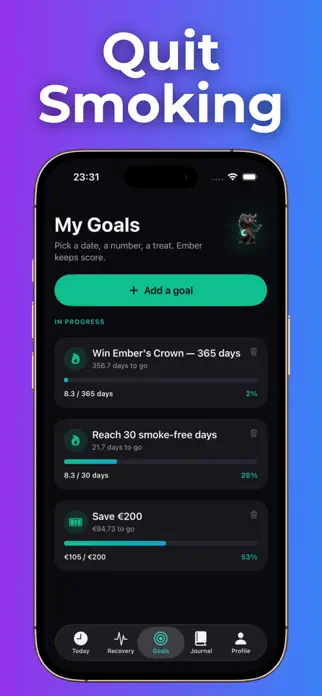
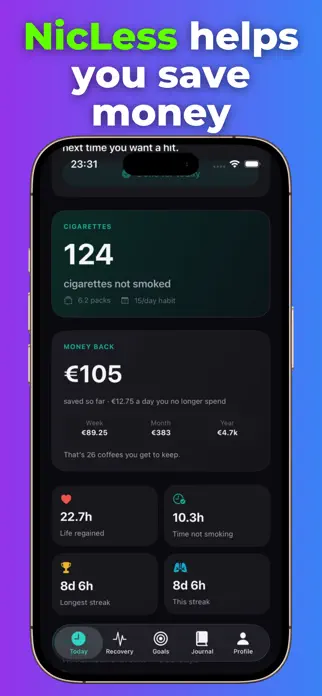
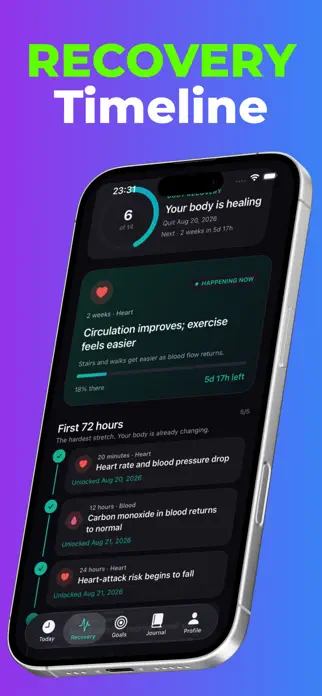
NicLess tracks vapes, cigarettes and nicotine pouches in one iPhone app. It has a live quit clock, money saved, units avoided, five-day quests and a cut-down mode with gentle, steady or fast pacing. Its craving button records intensity from 1 to 10, tags the trigger and guides breathing through the roughly three-minute peak. It is a free download, needs no account and keeps data on the iPhone. Limit: it launched September 17, 2026, and has no US ratings yet.
2. MeQuit Quit Smoking program: Best for structured lessons
The MeQuit program uses CBT, cue exposure, conditioning ideas and hypnosis-style mental exercises. The iPhone course combines daily reading, videos and exercises, taking about one hour a day and 8 to 10 hours in total. You can continue smoking or vaping during the program and set a quit date when ready. It is free to download and has 3.2 stars from 5 US ratings. Limit: it requires focused lesson time and does not track cigarettes, puffs or pods.
3. Quit Vaping: Best established vape-specific app
Quit Vaping includes puff, pod, craving and trigger tracking, plus a buddy system, community forum, future quit date, journal, breathing exercises and daily reduction goals. It is free to download and has 4.9 stars from 11,638 US ratings. Listed purchases include a $19.99 quit plan, $19.99 monthly plan, $64.99 six-month plan and $99.99 annual plan. Limit: the listing does not clearly show which desired tools require payment.
4. Puff Count: Best for puff and nicotine-strength tracking
Puff Count is a vape tracker app for recording puffs, nicotine strength and daily limits. It provides daily, weekly and monthly graphs, goal tracking, custom quit plans and an option to quit with friends. It is free to download and has 4.3 stars from 2,631 US ratings. No subscription price was supplied in the reviewed facts. Limit: its measurement-heavy approach may feel like extra work if you want guided lessons rather than frequent logging.
Four more apps worth comparing
These apps are good fits for taper planning, guided exercises, community or a completely free public-health tool. Several began as smoking apps, so check how well their fields match your vaping pattern.
5. Flamy: Best for tapering or setting a quit date
Flamy lets you choose a set quit date or a gradual personalized reduction plan. It tracks cravings, slips, money, milestones and nicotine replacement products. SOS support includes breathing, distractions and coping ideas. The app is free to download and has 4.9 stars from 57 US ratings. No paid subscription price was supplied. Limit: its rating history is much smaller than those of Quit Vaping, Puff Count or QuitNow.
6. QuitSure: Best for a time-limited program
QuitSure offers 6-day and 6-week programs based on CBT, rational emotive behavior therapy and conditioning concepts. Users can continue smoking or vaping while completing the program. It is free to download and has 4.8 stars from 1,566 US ratings. No subscription price was supplied. Limit: claims in its store description about quitting without cravings or withdrawal should not be treated as a guarantee, since nicotine withdrawal varies substantially.
7. QuitNow: Best for community and milestones
QuitNow shows time since quitting, cigarettes avoided, money saved, achievements and health progress. Its community can provide accountability when an urge hits late at night. The app is free to download and has 4.7 stars from 13,601 US ratings. No subscription price was supplied. Limit: it is primarily designed for smoking, so its cigarette-based measurements may not reflect puffs, liquid strength or disposable use.
8. quitSTART: Best free public-health option
quitSTART comes from Smokefree.gov and the National Cancer Institute. It offers tailored tips, challenges, craving distractions, badges, social sharing and help getting back on track after a slip. It is free and has 4.6 stars from 2,424 US ratings. Limit: the app is built around smoking cessation and may not capture vape sessions, pods or nicotine concentration as precisely as a dedicated free vape tracker.
How to choose a vape quitting app
Choose the app that addresses the part of vaping you find hardest. A large rating count means little if the app cannot record your disposable, support a taper or help during the drive home.
- For sudden cravings: Choose a one-tap craving tool with breathing, distraction or a short delay.
- For constant background vaping: Use puff or session tracking to make automatic use visible.
- For gradual reduction: Look for falling daily limits, wider gaps between sessions and nicotine-strength fields.
- For privacy: Check if an account is required, where data is stored and how the developer handles sensitive logs.
- For social support: Consider a buddy feature or community, but review its privacy settings first.
- For structured learning: Pick daily lessons if you can reserve 30 to 60 minutes without interruption.
- For iPhone or Android: Confirm current availability in your device's store. Features and prices can differ by platform.
People trying to find and download a quit vaping app with puff tracking, craving logging, taper goals and progress tools should compare the actual free tier before subscribing. See our broader comparison of apps for quitting smoking, vaping and drinking, or compare NicLess and Kwit directly.
How to use an app to stop vaping
Using a phone or app to help quit vaping works best when you create a specific plan before the hardest craving arrives. Start with honest measurements rather than an idealized estimate.
- For three ordinary days, record puffs, sessions, nicotine strength, time and location. Include the car, work breaks and evenings.
- Choose a quit date or a scheduled taper. NHS guidance gives the practical example of widening the interval from every 20 minutes to every 40 minutes.
- Create two vape-free settings, such as the bedroom and car. Expand them as the week continues.
- Write one response for each major trigger. For example: “If I want to vape after coffee, I will walk for five minutes and chew gum.”
- Put the app on your first home screen. Open the craving tool before searching for the vape.
- Review your records every seven days. Look at nicotine strength and sessions, not only days vape-free.
- If you slip, record what happened and restart the next planned action. One puff does not have to become a full weekend of vaping.
The NHS guide to quitting vaping supports increasing time between sessions, lowering nicotine strength and creating vape-free places. Our step-by-step quitting guide covers tapering, quit dates and cravings in more detail.
Talk with a clinician or pharmacist if you use high nicotine concentrations, are pregnant, have cardiovascular disease or are considering nicotine medication. Call 911 for severe breathing trouble, chest pain, fainting or immediate danger.
What apps can and cannot do
An app can reveal patterns, deliver reminders and give you something concrete to do during an urge. It cannot prove that you are receiving effective treatment, determine your nicotine dose or guarantee that withdrawal will be mild.
A quality assessment of vaping-cessation apps found that the category had limited vape-specific choices and uneven information quality. Read the vaping cessation app assessment. High App Store ratings show that users liked an app, not that a clinical trial confirmed abstinence.
Measure exposure as well as vape-free time. Fewer puffs may not mean less nicotine if you switch to stronger liquid or inhale differently. If you also smoke cigarettes, protecting against a return to regular smoking should be part of the plan. Learn more about what quit apps can realistically help with.
Withdrawal and extra support
Nicotine withdrawal can include cravings, irritability, low mood, poor concentration, increased hunger and sleep trouble. Strong symptoms are not a personal failure, and an app does not have to be your only source of help.
A pharmacist or clinician can discuss nicotine replacement and help match support to your current nicotine use. One NHS-affiliated guide describes patches combined with faster-acting gum, spray or lozenges for some moderate-to-high nicotine users, but medication choices need individual guidance. Read the stop-vaping guidance or our overview of nicotine replacement for vaping.
Get urgent help for chest pain, severe trouble breathing, fainting or thoughts of harming yourself. Contact a clinician if withdrawal, anxiety or low mood is severe, persistent or interfering with daily life.
Quit vaping app FAQ
What is the best app to quit vaping?
NicLess is our top overall choice for private tracking, gradual reduction and fast craving support across vapes, cigarettes and pouches. It is new, however, and has no rating history. Quit Vaping is a stronger fit for people who prefer an established vape-specific app with puff tracking, community features and thousands of ratings.
Is there a completely free quit vaping app?
Several apps are free to download, but a free download does not mean every feature is free. quitSTART is presented as a free public-health app, although it is smoking-focused. NicLess is also a free download. Check each current listing for subscriptions, one-time purchases and limits before entering payment information.
Do quit vaping apps actually work?
Apps can support self-monitoring, trigger awareness, coping plans and accountability. Research on digital vaping interventions is promising, but it has not established one consumer app as the best treatment. Results also depend on how consistently the app is used and if medication, counseling or other support is added when needed.
Should I track puffs or vape-free days?
Track both if possible. Vape-free days show abstinence, while puffs, sessions, nicotine strength and time between uses show gradual change. Puff counts alone can be misleading because people may inhale differently or use stronger liquid. Reviewing all of these measures gives a clearer picture of nicotine exposure.
Can an app help me taper vaping instead of stopping at once?
Yes. A vape tapering app can set lower daily limits, widen the time between sessions or help reduce nicotine strength. The schedule should be specific enough to measure. If reducing vaping leads you back to cigarettes, or withdrawal becomes difficult to manage, speak with a pharmacist or clinician about a safer plan.
How do I stop vaping with an iPhone or Android phone?
Use an app or simple phone tools to record use, set vape-free periods and create reminders before predictable triggers. Put a craving shortcut on the home screen and use alarms for planned session spacing. App availability differs by platform, so check the Apple App Store or Google Play listing before choosing.
What features should a quit vaping app for adults have?
Look for fast craving logging, trigger tags, puff or session tracking, nicotine-strength notes, taper and quit-date options, adjustable reminders, slip recovery and clear privacy terms. Adult triggers often include driving, alcohol, work stress, parenting and coffee. The app should fit those situations without shaming or scare-based messages.
Can I use nicotine replacement while using a quit vaping app?
An app can help record cravings and medication timing, but it should not choose a dose for you. Ask a pharmacist or clinician about patches, gum, lozenges, sprays or other options, especially during pregnancy, with cardiovascular disease, for adolescents or when using high nicotine concentrations.