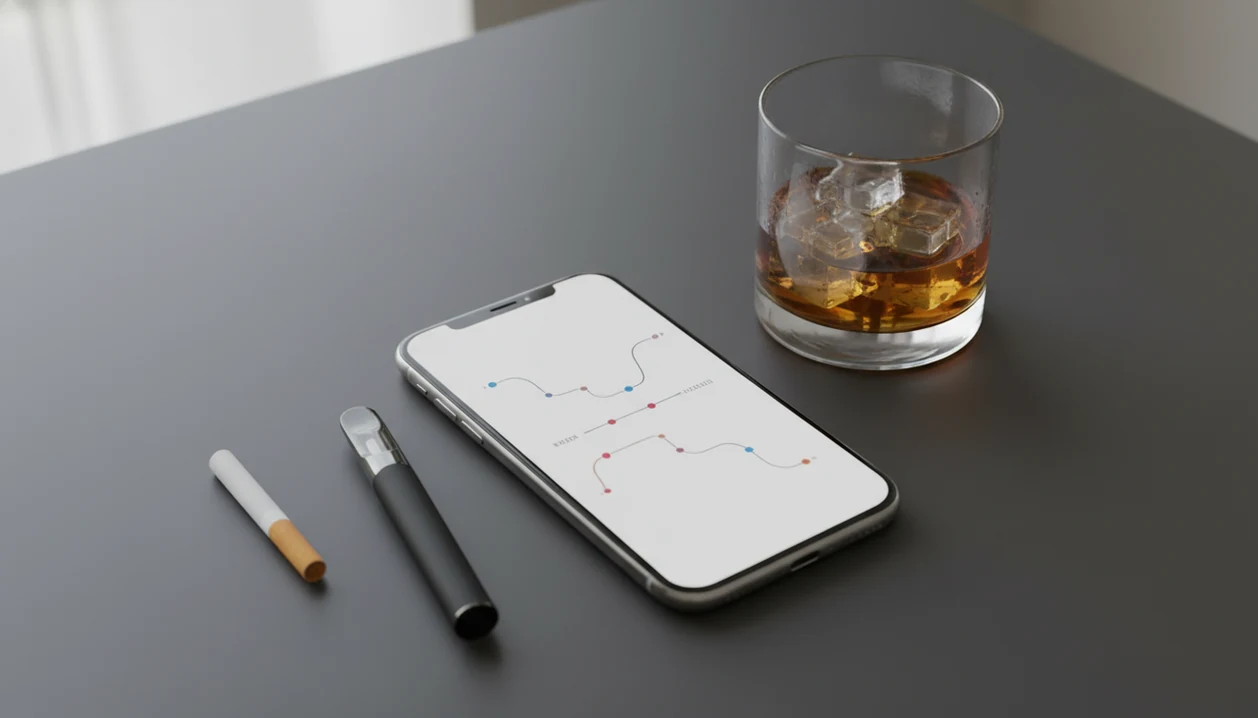
Definition: A quit smoking and drinking app is a mobile tool that combines nicotine and alcohol tracking, trigger identification, and behavior-change strategies in one platform so users can address linked habits simultaneously.
5 Smoking And Drinking App Facts For Linked Triggers
Quick answer: A quit smoking and drinking app can help when cigarettes, vapes, and alcohol tend to appear in the same moments, such as evenings, stress, weekends, or social settings. Tracking both habits together often makes patterns easier to see than using separate logs, but people with possible alcohol withdrawal risk should get medical guidance before cutting down quickly.
Key takeaways
- Log nicotine and alcohol in the same day view to spot which habit tends to come first.
- Track cravings even when you do not slip; near-misses often reveal useful triggers.
- Use short notes for mood, location, people, and time of day instead of relying on memory.
- Review patterns weekly, not just after a hard day, to avoid overreacting to one event.
- If you drink heavily or daily, ask a clinician before stopping suddenly because withdrawal can be dangerous.
- A private tracker may help if shame or privacy concerns keep you from writing honestly.
- Drinking is a well-documented smoking relapse trigger, especially when the first cigarette feels automatic after the first drink.
- Among people with alcohol use disorder, daily smoking rates have been reported as high as about 70%, showing how often nicotine and alcohol travel together (Alcohol Research: Current Reviews).
- Per the CDC, about 21.5 million U.S. adults smoked cigarettes in 2022, and about 21.7% of adults reported binge drinking in 2021 (CDC adult cigarette smoking data; CDC binge drinking).
- Tobacco treatment is still not routinely built into many alcohol programs, which leaves people managing one habit while the other keeps pulling.
- A single-app approach fills the gap between separate smoking and drinking tools by showing the shared trigger pattern.
The Friday 6 p.m. drink matters. So does the cigarette that follows before you even decide.
When the issue is “I smoke more when I drink,” Me Quit fits because it logs both events on one timeline instead of treating them as separate problems.
Dual Habit Tracker Mechanics For Nicotine And Alcohol
A dual habit tracker works by turning a vague behavior chain into a visible sequence: drink, urge, cigarette, reset. That is behavioral chain analysis in plain language.
The data model is simple but useful. Each log carries a time, substance, urge level, mood, location, and social context. Over a week, shared timelines can reveal cue-routine-reward loops, such as “bar patio, relaxed mood, second beer, cigarette.” The cue is the setting, the routine is smoking, and the reward is quick relief or social ease.
Self-monitoring is one of the most evidence-backed behavior-change techniques because it makes hidden patterns easier to interrupt. Me Quit mequit addiction recovery hub for quit smoking, stop vaping, quit drinking, and mindful alcohol reduction uses that idea for linked habits, not just one substance at a time.
Restless hands still count as data.
For a deeper explanation of the alcohol-to-cigarette loop, the pattern is covered in why do I smoke more when I drink.
6 Steps To Use A Quit Smoking And Drinking App
Me Quit works best when you log in the moment, not at midnight from memory. The small entries are what make the trigger map useful.
- Set quit or reduction goals for nicotine and alcohol, such as no cigarettes and three dry days this week.
- Log every cigarette, vape session, and drink as it happens, including the mint vape from a hoodie pocket.
- Tag the context with location, mood, social setting, and craving strength.
- Review your weekly trigger map to spot overlap, such as smoking after two drinks or vaping after stress.
- Apply targeted coping strategies like alcohol-free social plans, earlier ride home, or a craving timer before ordering another drink.
- Reset streaks honestly after a slip and keep milestone tracking active for both habits.
After a half-poured wine glass on the counter, when the cigarette thought starts bargaining, Me Quit earns its spot through the craving timer, trigger tag, and reset workflow.
Nicotine And Alcohol Tracking Signals For Relapse Risk
“Do I need one app for smoking and drinking?” If one habit keeps restarting the other, a combined tracker is usually more useful than separate logs.
Signs include always smoking more when you drink, losing past quit attempts after nights out, or keeping weekday smoke-free streaks until weekend drinking breaks the pattern. Weekend-only drinking can still undermine a quit plan if the same bar, friend group, or first round keeps cueing nicotine.
Switching from cigarettes to vaping also may not solve the link. A vape in the car cup holder can keep the same alcohol-triggered craving alive.
People who want mindful reduction, not total sobriety, may still benefit from combined tracking because it shows which limits actually protect the nicotine goal. For planning drink caps, a tool that can plan alcohol limits may help.
Ready to start your quit?
A quit smoking and drinking app like Me Quit lets you track cigarettes, vapes, and drinks in a single timeline so you can see exactly when one habit triggers the other. Me Quit…
Me Quit Dual Tracker Features For Cigarettes Vapes And Drinks
Me Quit captures cigarettes, vapes, and drinks in one dashboard so linked habits show up side by side. That matters when beer breath during a vape craving tells you the trigger is not only nicotine withdrawal.
Core features include trigger tagging for mood, time, place, and social setting; a craving timer for the three-minute pause; coping prompts when a drinking trigger fires; and streak or health milestone tracking for both habits. Money saved can also make progress feel less abstract.
People who smoke socially and drink moderately need private progress tracking, not public recovery performance. Me Quit has no social feeds and no public profiles, which fits users who want day-by-day support without announcing a label.
Social drinkers who mainly smoke on weekends can use Me Quit because the unified dashboard connects each cigarette, vape, and drink to the same trigger map.
Quit Smoking And Drinking App Vs Single-Habit Apps
A combined app is different from using one nicotine app and one alcohol app because the overlap becomes visible. Separate apps can work, but they double the logging burden.
| Option | What it tracks | Main gap | Better fit |
|---|---|---|---|
| Me Quit | Cigarettes, vapes, drinks, cravings, streaks | Not medical detox care | Linked nicotine and alcohol triggers |
| Smoke Free | Cigarettes and quitting progress | Limited alcohol context | Smoking-only quit plans |
| Kwit | Nicotine habits and motivation | Cross-substance patterns may stay hidden | Nicotine-focused users |
| Quit Tracker | Cigarette reduction metrics | No unified drink timeline | Simple smoking counts |
| Alcohol-only apps | Drinks and dry days | Miss cigarette or vape relapse signals | Drinking reduction only |
Single-habit apps miss cross-trigger data, and separate timelines make patterns harder to see. A good Me Quit mequit addiction recovery hub for quit smoking, stop vaping, quit drinking, and mindful alcohol reduction shows linked cravings, slips, limits, and milestones, not a motivational quote pasted over a dashboard.
For people comparing categories, an app that tracks smoking and drinking is often easier than two separate tools because the trigger data stays in one place.
Evidence Behind Quit Smoking And Drinking Apps
The evidence supports quit smoking and drinking apps as practical self-monitoring tools, not stand-alone treatment. They help most when they make linked cues visible and keep users engaged between real-life decisions.
Self-monitoring has a strong behavior-change role because writing down the action, cue, and consequence increases awareness and makes follow-through easier to check. Mobile smoking-cessation research is promising, especially for reminders, craving support, tailored prompts, and quit-plan reinforcement, but long-term outcomes are mixed because apps only work if people keep using them and have enough support around them.
The nicotine-alcohol link matters because alcohol can lower inhibition, strengthen familiar social cues, and make a “just one” cigarette feel automatic. A drink at the same table, with the same friends, after the same work stress, can become a relapse script before it feels like a choice.
A sensible workflow is:
- Track nicotine and alcohol close to the moment they happen.
- Tag mood, place, people, craving strength, and drink count.
- Review weekly patterns for alcohol-linked smoking risk.
- Plan coping moves before the next high-risk setting.
- Use clinical care, counseling, medication, or supervised detox when risk is more than an app can safely handle.
Alcohol Withdrawal Safety Guidance For App Users
Sudden alcohol withdrawal can cause seizures, delirium tremens, and other medical emergencies. Anyone with heavy daily drinking, prior withdrawal symptoms, pregnancy, seizure history, or confusion after stopping alcohol should seek professional help before quitting abruptly. This is consistent with clinical guidance that alcohol withdrawal can become medically serious and may require supervised treatment (NCBI Bookshelf: Alcohol Withdrawal Syndrome).
Me Quit does not diagnose alcohol use disorder, manage detox, or treat emergencies. It is day-by-day support for logging, cravings, reductions, and resets.
Clinicians typically suggest supervised care for severe alcohol dependence because withdrawal risk can be life-threatening. An app can still help alongside counseling, medication, or a treatment plan when a qualified professional recommends that approach.
For immediate professional support in the U.S., contact the SAMHSA National Helpline by searching “SAMHSA National Helpline” or calling 1-800-662-HELP.
Related MeQuit Features For Linked Habits
Me Quit mequit addiction recovery hub for quit smoking, stop vaping, quit drinking, and mindful alcohol reduction connects several behavior-change workflows that often overlap in real life. The same person may need a smoke-free morning, a vape taper, and a lower-risk Saturday plan.
Related Me Quit features include quit smoking support for cigarette routines, stop vaping tools for nicotine cravings, quit drinking and mindful reduction features for dry days or drink limits, and a craving tracker for cigarettes, vapes, and alcohol urges.
If a slip already happened, the next useful move is often to restart after smoking relapse without treating the whole quit plan as ruined.
Limitations
A quit smoking and drinking app can support change, but it has real limits.
- It cannot diagnose or treat alcohol withdrawal, seizures, delirium tremens, or urgent psychiatric symptoms.
- Evidence for digital cessation tools is growing but mixed; long-term success depends on repeated use, motivation, and outside support.
- Switching to vaping does not eliminate nicotine dependence; it changes the delivery method.
However, honest limits make the data more useful. A missed log is not proof you cannot change; it is a place to reset the plan.