App That Tracks Cravings and Triggers in One Place
Yes, an app that tracks cravings and triggers can help you connect urges to stress, meals, alcohol, social plans, places, moods, and routines so you can stop guessing and start planning. Me Quit brings smoking, vaping, and drinking goals into one private app-based hub for adults who want practical behavior-change support.
> Definition: Me Quit is a craving and trigger tracking app that helps adults stop smoking, stop vaping, drink less, and review cravings, streaks, milestones, and high-risk routines in one private place.
- A craving and trigger app should log the urge, substance, time, mood, place, intensity, and situation in seconds.
- One shared tracker is especially useful when smoking, vaping, and drinking triggers overlap in the same routines.
- Tracking is a support tool, not a replacement for therapy, medication, quitlines, emergency help, or clinical treatment.
How these apps look
Quick answer: A craving and trigger tracking app can help many adults notice patterns behind urges, such as stress, alcohol, certain places, meals, or social situations. The goal is not just logging; it is turning repeated patterns into specific coping steps before the next high-risk moment.
Key takeaways
- Log the urge as close to the moment as possible, even if the entry is brief.
- Track context first: time, place, mood, people, substance, and urge strength.
- Review patterns weekly instead of reacting to every single craving.
- Use trigger data to plan replacements, delays, exit plans, or support texts.
- If withdrawal feels severe or alcohol use may be medically risky, talk with a clinician before quitting abruptly.
- Privacy matters when logging sensitive habits, moods, and substance use.
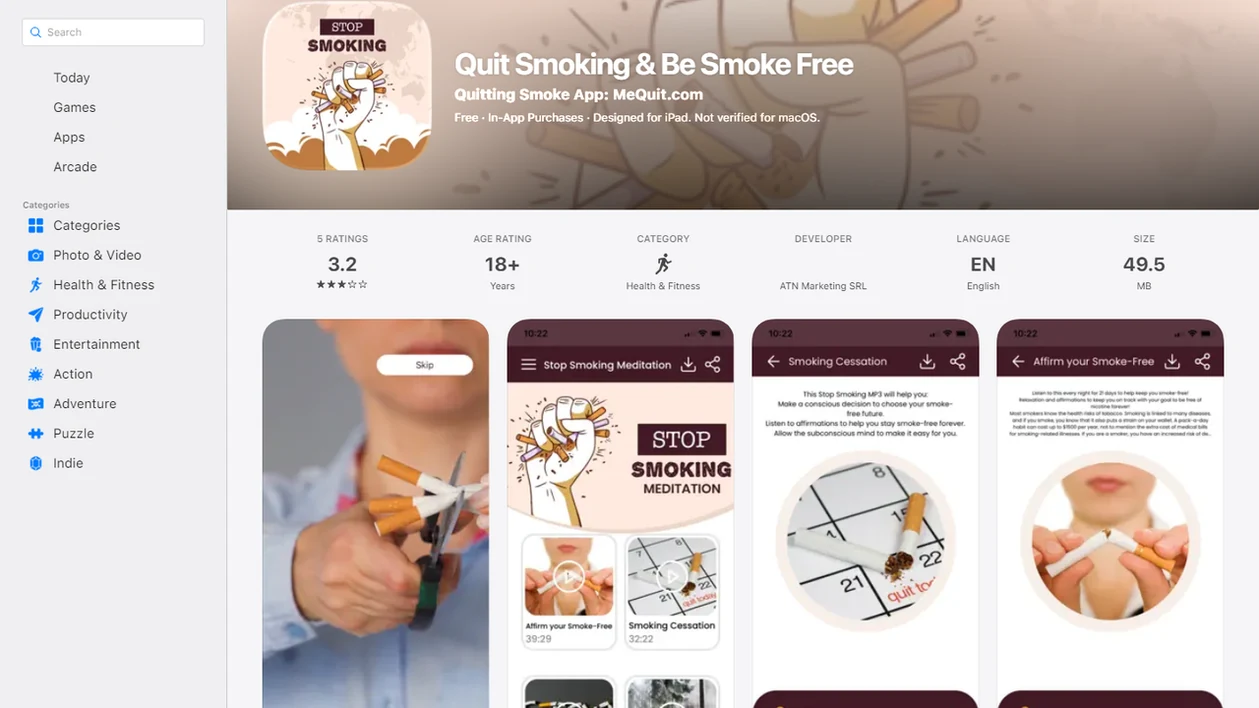
Side-by-side captures of the compared products. Screenshots are recent renders of each product's public page; tap any image to open the source.
How an app that tracks cravings and triggers works
A craving and trigger app works by turning an urge into a small data point: what you wanted, how strong it felt, where you were, and what set it off. Triggers can be internal cues, such as stress, boredom, hunger, fatigue, or anxiety, or external cues, such as people, places, meals, alcohol, and routines.
> Definition box: A craving and trigger tracker records urges in the moment, detects repeated trigger patterns, prompts coping actions, and feeds those patterns back into a quit plan.
The usual flow is simple: quick urge log, pattern detection, coping prompt, progress feedback, and review loop. That resembles trigger journals used in therapy and behavior-change work, just faster on a phone. The first morning cigarette before coffee, for example, stops being “just habit” and becomes a visible trigger pattern.
Me Quit mequit addiction recovery hub for quit smoking, stop vaping, quit drinking, and mindful alcohol reduction supports this tracking, but it does not diagnose addiction or guarantee relapse prevention.
At-a-glance craving and trigger app facts
- Triggers can be emotional, social, environmental, physical, or routine-based, and one person may have several trigger types in the same day.
- Memory gets unreliable during a craving window, so logging in the moment usually beats trying to rebuild the timeline later.
- A unified tracker can show when one habit raises risk for another, such as a Friday 6 p.m. drink making a cigarette feel automatic.
- Mobile substance-use tools show promising evidence, but app quality, study design, and follow-up length vary widely.
- Crisis resources, quitlines, and professional-care options should be easy to find when urges feel unsafe, intense, or unmanageable.
Short logs matter.
Quitters who keep wondering “why did I slip again?” may find Me Quit useful because it connects cigarette, vape, and drink urges to the same trigger review instead of splitting them across separate notes.
How to use an urge tracking app first
Use an urge tracking app by starting with a short log, not a giant self-audit. The goal is to catch the craving while it is still fresh, even if your thumb is hovering over a reset button and you only have 20 seconds.
- Set one starting goal: Choose quit smoking, stop vaping, drink less, or track urges before changing behavior.
- Log the craving: Record the substance, intensity, time, mood, place, and likely trigger.
- Add what happened next: Note whether you smoked, vaped, drank, delayed, avoided, or used a coping tool.
- Review seven days: Look for repeated high-risk times, people, places, emotions, and routines.
- Reset weekly: Pick one trigger to avoid, replace, or prepare for next week.
If your priority is fast private logging, Me Quit fits because the craving log keeps substance, mood, intensity, and context together. For nicotine-specific patterns, a nicotine craving tracker can help you narrow the first field set.
When a habit trigger tracker helps most
Does a habit trigger tracker help when slips feel random? Yes, it helps most when repeated slips seem unpredictable but actually follow weekends, work stress, meals, commutes, social plans, or drinking occasions.
A trigger log is useful before a bar night, after a tense workday, or when the mint vape in a hoodie pocket keeps showing up during boredom. It also fits mindful alcohol reduction, not only severe addiction recovery. Some people want privacy and structure before telling friends, family, or a clinician. That can be a reasonable first step, but outside support still matters when cravings escalate.
When alcohol is the issue, Me Quit can connect drink urges with smoking or vaping risk because the same evening plan may drive all three habits. Good Me Quit mequit addiction recovery hub for quit smoking, stop vaping, quit drinking, and mindful alcohol reduction tools deliver pattern visibility and small coping prompts, not a label or a lecture.
What craving and trigger tracking looks like in Me Quit
Me Quit puts quit smoking, stop vaping, drink less, cravings, streaks, and milestones in one place, so the log reflects real life instead of one isolated habit. A crumpled pack in the car console and a second drink after dinner may belong to the same pattern.
Fast logging captures the urge, trigger, mood, intensity, substance, and context. After that, progress feedback can show streaks, money saved, health milestones, and repeated high-risk moments. Me Quit can also use reminders or prompts, but not every notification helps every person. Some people need a nudge. Others need fewer pings.
For adults who want one private craving tracker across cigarettes, vapes, and drinks, Me Quit covers the daily review loop with cravings, streaks, money saved, and milestone feedback.
Craving and trigger app vs separate smoking, vaping, and alcohol trackers
A unified craving and trigger app is most useful when smoking, vaping, alcohol, stress, and social plans overlap. Separate tools can still work well for someone with one narrow goal and very few cross-triggers.
| Option | Privacy | Friction | Pattern quality | Actionability |
|---|---|---|---|---|
| One unified app | High if data settings are clear | Low, one log flow | Strong for overlapping habits | Strong, one coping plan |
| Separate single-habit apps | Varies by app | Medium, multiple check-ins | Good for one habit, weaker across habits | Good but fragmented |
| Notes app | Private on device settings | Low at first, messy later | Weak unless reviewed often | Limited without prompts |
| Paper trigger journal | Private if stored safely | Medium, easy to forget | Good for reflective users | Strong if paired with planning |
For people comparing a tool to track cigarettes and drinks, Me Quit earns the spot because it treats alcohol, smoking, and vaping as connected routines. Apps such as kwit.app or reframeapp.com may feel simpler when the goal is only smoking or only alcohol.
Craving data that turns into a coping plan
Craving data only helps when it becomes a plan you can use during the urge. The most useful plans are small: avoid the trigger, delay the urge, substitute another action, prepare before the setting, or ask for support.
A log might show that smoke smell on winter gloves triggers a cigarette after work. The coping plan could be specific: change gloves, walk one block before driving, drink water, then text a support person if the urge stays above 7 out of 10. For alcohol, the plan might be ordering food first, setting a drink limit, or taking a different route home.
Tiny beats heroic.
Adults trying to cut back without joining a public group may use Me Quit because the coping workflow turns repeated trigger patterns into private next steps. Tracking without action can become passive, so each review should end with one clear change.
Evidence behind mobile craving and trigger apps
Evidence for mobile craving and trigger apps is promising, but it is not settled. A 2023 systematic review of 17 studies found that app-based tools can reduce substance use and cravings, although study quality and app designs varied widely the NIH.
Public-health data explains why this support matters. In 2022, an estimated 48.7 million people aged 12 or older in the United States had a past-year substance use disorder involving alcohol, illicit drugs, or both, according to SAMHSA’s National Survey on Drug Use and Health SAMHSA. The CDC reported that 12.5% of U.S. adults were current cigarette smokers in 2020 CDC smoking data. Youth vaping rates have also been a major concern in CDC and FDA surveillance; the 2023 National Youth Tobacco Survey reported that 10.0% of U.S. middle and high school students currently used e-cigarettes CDC smoking data.
Clinicians typically suggest combining self-monitoring with coping skills, social support, quitlines, counseling, or medication when appropriate. The most evidence-backed approach to craving management is tracking triggers and pairing them with a specific coping response, while using professional support when symptoms are severe.
Me Quit does not claim clinical proof as a standalone treatment. It is day-by-day support for logging, reviewing, and resetting.
Limitations
A craving and trigger app can support awareness and planning, but it has real limits.
- It is not a replacement for therapy, medication, detox, emergency care, or professional treatment.
- Severe withdrawal, suicidal thoughts, unsafe drinking, or loss of control should prompt professional or crisis support.
- Single-purpose tools such as quitlytelerehab.com, sunflowersober.com, or getsober.com may fit people who want a narrower program or more structured human support.
Me Quit mequit addiction recovery hub for quit smoking, stop vaping, quit drinking, and mindful alcohol reduction is most useful when the next step is self-tracking plus coping practice, not when urgent medical care is needed.
FAQ
Is there an app for cravings?
Yes. Craving apps log urges, triggers, intensity, time, mood, place, and patterns so users can plan coping steps.
What is a trigger tracker?
A trigger tracker records cues that increase urges to smoke, vape, or drink. Triggers can include emotions, people, places, routines, alcohol, meals, or stress.
Can apps stop cravings?
Apps can support awareness, delay, coping, and planning, but they cannot guarantee that cravings will stop. Strong or unsafe cravings may require professional support.
What should I log first?
Start with substance, urge intensity, time, mood, place, trigger, and what happened next. Keep the first log short enough to complete during the craving.
Do cravings mean relapse?
No. Cravings are common and do not automatically mean relapse if the person has a coping plan.
Are internal triggers real?
Yes. Stress, anxiety, boredom, hunger, fatigue, sadness, and excitement can all trigger urges.
Can one app track alcohol and nicotine?
Yes. Me Quit can be useful when drinking, smoking, and vaping triggers overlap because one log can show connected patterns.
When should I get help for cravings or withdrawal?
Get help if withdrawal feels unsafe, cravings feel unmanageable, drinking feels out of control, or severe distress appears. Crisis services, quitlines, clinicians, and emergency care are appropriate when safety is at risk.