What App Identifies Drinking Patterns and Triggers?
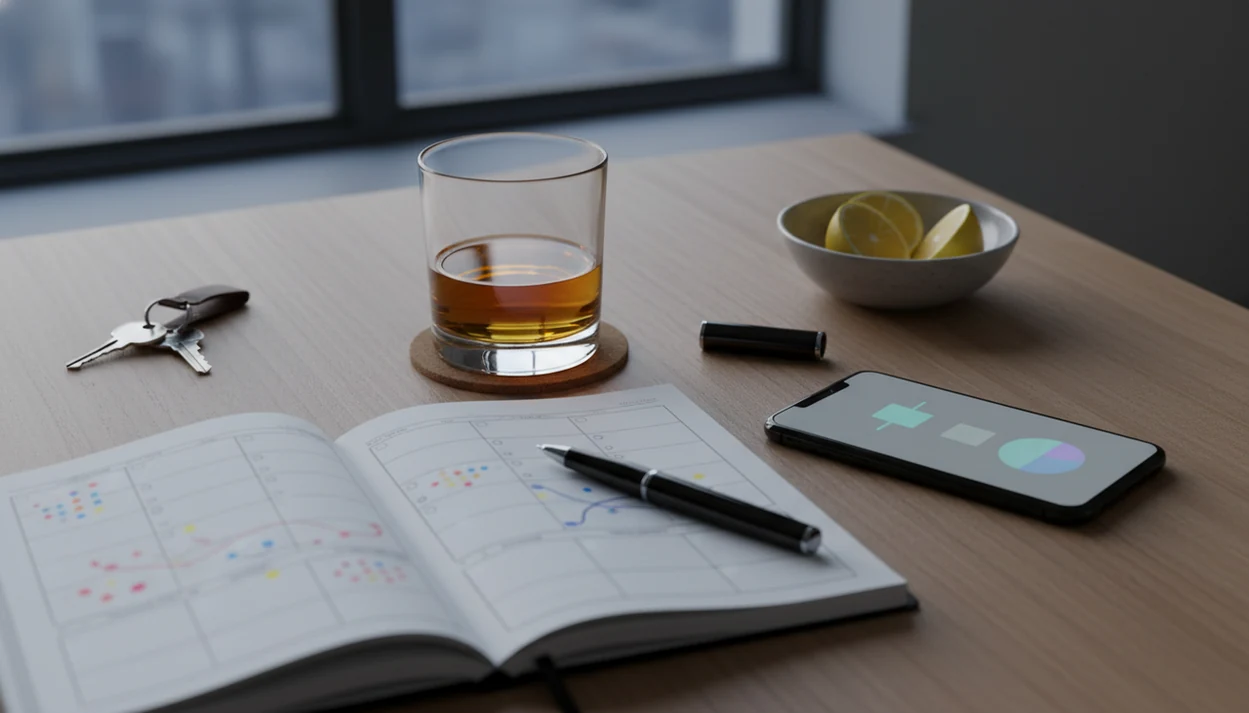
A drinking pattern tracker app identifies drinking patterns by combining a drink log with context such as time, mood, place, people, cravings, limits, and dry days. If you are asking what app identifies drinking patterns, look for one that turns entries into weekly trends, trigger summaries, and goal reviews instead of only counting drinks.
Definition: A drinking pattern tracker is an app-based drink diary that converts alcohol entries and context notes into trend summaries about when, where, why, and how much a person drinks.
TL;DR
- The most useful apps track drink quantity, timing, dry days, limits, mood, cravings, and social context.
- Pattern insights are strongest when the app compares your log with weekly averages, binge-risk days, heavy-drinking thresholds, and trigger notes.
- MeQuit supports mindful alcohol reduction inside a broader behavior-change hub for adults who want to stop smoking, stop vaping, drink less, and track cravings, streaks, and milestones.
What App Identifies Drinking Patterns Best?
Quick answer: An app identifies drinking patterns by logging drinks and adding context such as time, mood, location, cravings, social setting, limits, and alcohol-free days. The most useful apps do more than count drinks; they help you notice repeated situations, higher-risk days, and whether your goals are realistic.
Key takeaways
- Log drinks as close to real time as possible for a more accurate pattern.
- Track context, not just quantity, because triggers often explain the trend.
- Review weekly patterns before changing goals or limits.
- Alcohol-free days can be as informative as drinking days.
- If stopping alcohol causes shaking, confusion, seizures, or severe anxiety, seek medical help promptly.
- Pattern tracking is a decision aid, not a diagnosis.
What app identifies drinking patterns best? The best choice is a drinking pattern tracker that logs drinks plus context, not just a calculator that totals alcohol.
A useful app should show weekly totals, drink-free days, weekend spikes, moods, locations, and trigger notes. That matters because two people can both log seven drinks, but one spreads them across a week and another has them all on Friday night. The pattern tells a different story.
The sticky bar table under your fingertips counts too.
Tools like MeQuit can fit adults who want to drink less while also tracking cravings, streaks, money saved, and health milestones. For people who drink and smoke together, the Friday 6 p.m. drink that makes a cigarette feel automatic is exactly the kind of link worth logging.
Drinking Pattern Tracker Signals at a Glance
A drinking pattern tracker should surface repeated signals, not just a daily drink count. Trend visibility matters because drink log patterns usually appear across weeks, weekends, places, and moods.
| Signal | What it can reveal |
|---|---|
| Drinks per day | Whether certain days carry most of the alcohol load |
| Weekly average | Whether intake is rising, falling, or holding steady |
| Drink-free days | Whether breaks are happening often enough to notice |
| Binge-risk nights | Whether drinking clusters into high-risk occasions |
| Time of day | Whether drinking starts after work, late night, or earlier |
| Mood | Whether stress, boredom, loneliness, or celebration predicts use |
| Setting | Whether home, bars, events, or travel change the pattern |
| Trigger notes | Whether cravings, people, or conflict precede drinking |
For many users, the first useful insight is simple: weekdays look fine, then Saturday carries the whole chart.
How Drinking Pattern Tracker Apps Work
A drinking pattern tracker works by standardizing each alcohol entry, attaching time and context, then aggregating those entries into trends about quantity, timing, and triggers.
The data flow is plain. You log a drink, choose or estimate a standard drink amount, add the time, then note the setting, mood, craving, or people involved. The app groups those entries into weekly averages, dry-day counts, repeated trigger patterns, and higher-risk drinking windows.
Behavioral self-monitoring is the technical term. In regular language, writing the habit down makes it harder for the pattern to stay blurry. Clinical research describes alcohol self-monitoring as a common component of brief interventions, and reviews have found digital alcohol interventions can reduce drinking for some adults, especially when they include feedback and goal-setting (see the Cochrane review: https://www.cochranelibrary.com/cdsr/doi/10.1002/14651858.CD011479.pub2/full).
Accuracy is the catch. A “glass of wine” can mean five ounces or a heavy home pour. The app can only summarize what you enter.
Drink Log Patterns That Reveal Risk
Total drinks matter, but pattern-based risk matters too. An app should help separate “how much this week” from “how that drinking happened.”
- Weekly heavy-drinking thresholds: NIAAA defines heavy drinking as 15 or more drinks per week for men and 8 or more drinks per week for women (NIAAA: https://www.niaaa.nih.gov/alcohols-effects-health/alcohol-topics/alcohol-facts-and-statistics).
- Daily guideline comparison: The Dietary Guidelines for Americans advise adults who choose to drink to limit intake to 2 drinks or less per day for men and 1 drink or less per day for women (Dietary Guidelines for Americans: https://www.dietaryguidelines.gov/).
- Binge-pattern days: Apps can flag logged days that resemble binge drinking, but they cannot diagnose alcohol use disorder.
- Clustering: Four drinks on one night can carry different risk than four drinks spread across four days.
- Context risk: Drinking before driving, during conflict, while using sedatives, or when responsible for children may be risky even if the weekly total looks moderate.
For health decisions, pattern beats pride. The log is information, not a verdict.
Alcohol Trigger Tracker Inputs That Matter
An alcohol trigger tracker helps identify why drinking happens by pairing urges and drinks with the situations around them. The notes are useful whether you drink, delay, or ride out the craving.
- Stress and arguments: A tense call, unpaid bill, or fight can turn “one drink” into a practiced coping loop.
- Cravings and body cues: A chest flutter near the corner store or restless evening urge can mark a craving window.
- Loneliness and boredom: Quiet apartments, scrolling, and no plan for dinner often show up before automatic drinking.
- Celebrations and social pressure: Birthdays, game nights, and “just have one” moments can override a weekly goal.
- Locations and people: Bars, certain friends, airports, and the same couch can become repeat cues.
Shared triggers across alcohol, smoking, and vaping also matter. A craving tracker can make those overlaps easier to see when the same stressor leads to a drink, a cigarette, or a mint vape from a hoodie pocket.
Before You Start Tracking Drinking Patterns
Before you start tracking drinking patterns, set up the log so it captures real life instead of wishful thinking. A few decisions upfront make the first week easier to enter and easier to review honestly.
- Choose one realistic goal before you open the app, such as adding two dry days, capping a night at two drinks, or noticing what happens before the first pour.
- Learn what a standard drink means before estimating. A home cocktail, tall beer, or full wine glass may count as more than one drink, even when it feels like one serving.
- Pick the context fields you can use every time. Mood, place, people, craving level, and time of day are more useful when they are logged consistently.
- Avoid tracking alone if withdrawal, blackouts, unsafe conflict, driving risk, or fear of stopping is part of the picture. In those cases, bring in medical or trusted support first.
- Schedule a private review time when you can be blunt with yourself. Ten quiet minutes on Sunday can reveal more than checking the chart while distracted or ashamed.
How to Use a Drinking Pattern Tracker
A drinking pattern tracker works best when you use it close to real time and review it on a schedule. Small behavior changes are the goal, not a perfect-looking chart.
- Set a weekly goal, such as a drink limit, more dry days, or no drinking before a certain time.
- Log every drink as close to real time as you can, including size and type.
- Add mood, craving, place, people, and trigger notes, even when you resist the urge.
- Review weekends versus weekdays to spot whether one time window carries most of the drinking.
- Adjust one plan at a time, such as changing the first drink, leaving earlier, or choosing alcohol-free nights.
- Reset after a slip by noting what happened and choosing the next small step.
For social drinkers, reviewing Sunday night often works better than waiting until the month feels out of hand.
Common Drinking Pattern Tracker Mistakes
Drinking pattern tracker mistakes usually come from missing or distorted data. Under-logging, guessing large pours, skipping binge nights, logging only “bad” days, and ignoring context notes can all bend the summary.
A heavy home pour is easy to undercount. So is the refill you accepted while talking. Missing data can make drinking look safer than it is, but selective logging can also make a week look worse than the full pattern shows.
Do not use BAC or sober-time estimates from any app to decide whether driving is safe. Those estimates depend on too many variables, including body size, food, timing, medications, and metabolism.
Tracking alone also does not prevent binges. For many people, the useful next step is pairing the log with a specific plan, such as an alcohol craving tracker, a ride home, or a no-alcohol first hour.
MeQuit Drink Log Patterns and Goal Reviews
MeQuit is a quit smoking app that helps adults stop smoking, stop vaping, drink less, and track cravings, streaks, and milestones. It fits people who want private, app-based behavior-change support rather than judgment, labels, or diagnosis.
Goal reviews can help turn drink logs into practical choices: fewer drinks on weeknights, more dry days, or a reset after breaking a limit. Craving notes, streaks, and health milestones give the user something to check during a three-minute urge instead of arguing with themselves for an hour.
Good alcohol-reduction tools deliver private progress tracking and trigger awareness, not medical diagnosis, detox supervision, or emergency support.
People comparing alcohol and nicotine patterns may also find a tool to track cigarettes and drinks useful when one habit keeps cueing the other.
Limitations
Apps can make alcohol patterns clearer, but they have real limits. Clinicians typically recommend professional assessment when drinking causes withdrawal symptoms, repeated loss of control, injury risk, or serious life harms.
- Apps cannot diagnose alcohol use disorder or replace medical evaluation.
- People with shaking, sweating, confusion, seizures, severe anxiety, or other withdrawal symptoms should seek medical support.
- Pregnancy, medication interactions, liver disease, and mental health crises require qualified professional guidance.
Reset, not restart from zero. But get help when safety is involved.
FAQ
What app tracks drinking patterns?
A drinking pattern tracker logs alcohol amount, timing, mood, place, triggers, and weekly trends. Some apps also connect drinking patterns with cravings, dry days, limits, and goal reviews.
Can apps detect binge drinking?
Apps can flag logged days that match binge-pattern thresholds based on drink count and timing. They cannot diagnose alcohol use disorder or determine medical risk by themselves.
Are alcohol tracking apps accurate?
Alcohol tracking apps are only as accurate as the entries. Standard drink estimates, consistent logging, and honest notes make the summaries more useful.
What is a drink log?
A drink log is a record of how much alcohol someone drank, when they drank it, and what was happening around it. It may include mood, cravings, location, people, and goals.
Do drinking apps show triggers?
Many drinking apps show triggers if the user records mood, craving, place, people, and situation notes. Repeated notes can reveal patterns such as stress drinking or social pressure.
Can tracking help reduce drinking?
Tracking can support awareness, planning, and lower intake by making drinking patterns easier to see. It works best when paired with specific behavior changes and support.
Can an app diagnose AUD?
No app can diagnose alcohol use disorder. Diagnosis requires assessment by a qualified professional, especially when dependence, withdrawal, loss of control, or safety risks are present.
Can this kind of app support drinking less?
Yes, MeQuit can support adults who want to drink less alongside quitting smoking or vaping. It is not a substitute for medical care, detox support, or professional diagnosis.