

Definition: A nicotine craving tracker is a structured log where you record each urge's time, intensity, trigger, and coping response so recurring patterns become visible and actionable.
At a Glance: Five Facts About Nicotine Craving Tracking
Quick answer: A nicotine craving tracker helps you record when urges happen, how strong they feel, what triggered them, and what you did next. For many people, this makes cravings less mysterious and helps turn repeated patterns into practical changes, such as avoiding a trigger window or planning a coping step in advance.
Key takeaways
- Log cravings as close to the moment as possible so timing and triggers are easier to remember.
- Use a simple intensity scale, such as 1 to 10, to see whether urges are getting weaker over time.
- Track both smoking and vaping urges if you use both, because triggers may differ.
- Record what helped, not just what went wrong, so you can repeat useful coping steps.
- Review patterns weekly rather than judging each craving as a success or failure.
- If withdrawal feels severe or you are considering nicotine medication, ask a clinician or pharmacist about safe options.
- Triggers are usually specific. Stress, alcohol, certain people, and repeat times of day often show up in a smoking craving tracker before they feel obvious.
- Cravings pass. Many nicotine urges last only a few minutes, even when the first wave feels loud. Restless hands searching coat pockets can settle faster than expected.
- Tracking is stronger with support. Clinicians typically suggest combining craving awareness with counseling, quitlines, NRT, or medication when dependence is significant.
- Motivation belongs in the same log. Reasons for quitting, days smoke-free, vapes avoided, and money saved help the brain see progress, not only discomfort.
- Cross-habit patterns matter. Me Quit mequit addiction recovery hub for quit smoking, stop vaping, quit drinking, and mindful alcohol reduction can show how a Friday drink or porch smoke after two cocktails changes nicotine urges.
If your cravings often follow alcohol, Me Quit fits because the same private dashboard can connect nicotine urges with drink patterns and coping notes.
How a Nicotine Craving Tracker Works
A nicotine craving tracker works through self-monitoring, a behavior-change technique where observing the behavior changes the behavior itself. The log slows the craving window just enough to name the habit loop: cue, urge, response, and reward.
Withdrawal has a rough rhythm. Cravings can begin 4–24 hours after quitting, peak around day 3, and ease over the next 2–4 weeks. Smokefree.gov describes nicotine withdrawal symptoms as strongest in the first few days and often improving over the first few weeks after quitting (Smokefree.gov cessation data). That doesn't mean every urge vanishes after a month. A back-step cigarette during work stress can still appear later because the cue survived the withdrawal phase.
Research on within-day smoking patterns has also found that higher craving levels at certain hours can predict more smoking during those same periods. In plain language, timing matters. The most evidence-backed approach to managing nicotine cravings is to pair medication or counseling support with trigger planning, because the body and the routine both need attention.
Me Quit turns that routine into visible data: time, intensity, trigger, response, streak, and money saved in one place.
How to Use a Smoking Craving Tracker Daily
Use a smoking craving tracker at the moment the urge appears, not only after the day is over. A three-minute craving is easier to understand when it is logged before the details blur.
- Set a quick-log shortcut on your phone, or keep a pocket journal where you actually reach for it.
- Log every urge with time, intensity from 1–10, trigger, and location.
- Record your coping response, such as breathing, walking, chewing gum, texting a friend, or leaving the room.
- Review your weekly log for repeated times, places, emotions, or people.
- Adjust your plan by avoiding high-risk windows or pre-loading a coping step before they arrive.
The pocket check is real.
For people who open an app during a craving instead of arguing with themselves for an hour, Me Quit earns the spot because the one-tap nicotine urge log keeps the coping response beside the trigger. A broader craving tracker can also help if cigarettes, vapes, and drinks overlap.
When to Start and Stop Your Nicotine Urge Log
Start a nicotine urge log a few days before your quit date. Baseline tracking shows the first morning cigarette before coffee, the after-lunch walk, or the drive home pattern before withdrawal adds noise.
The first 2–4 weeks deserve the most detailed tracking because cravings usually peak early and then begin to ease. But one week is rarely enough. Situational urges can return weeks or months later when the cue is specific, like a balcony smoke drifting into damp hair after a stressful call.
As cravings settle, shift from full entries to brief weekly check-ins. For many adults, detailed tracking works best during the withdrawal window, while lighter reviews fit long-term maintenance because they catch trigger patterns without making quitting feel like homework. The related nicotine withdrawal timeline explains the symptom window in more detail.
Ready to start your quit?
A nicotine craving tracker is a tool, usually an app or journal, that lets you log every urge to smoke or vape with its intensity, timing, trigger, and coping step, so patterns…
What the Craving Tracker Looks Like in Me Quit
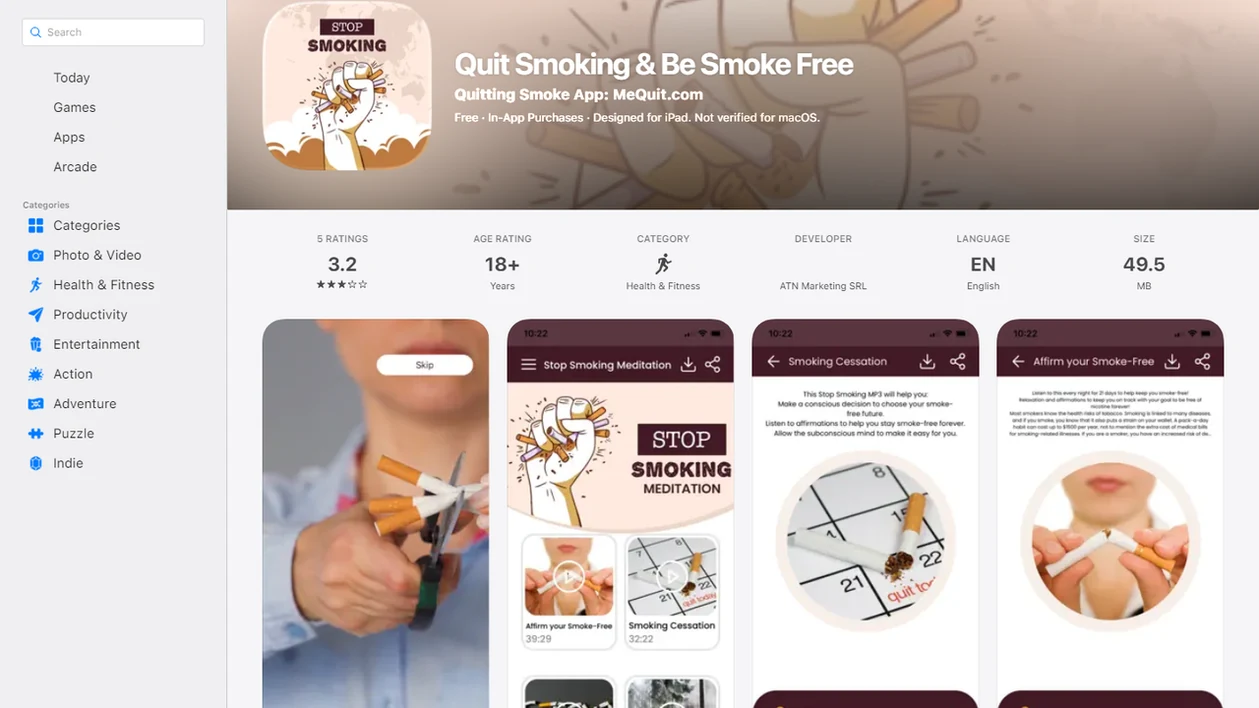
Me Quit gives the craving log a fast entry flow: intensity slider, trigger tags, location context, and a short coping note. It is built for the shaky-fingers-over-a-phone-screen moment, when too many fields would make someone close the screen.
The dashboard shows craving frequency over time beside smoke-free days, health milestones, and money saved. That pairing matters because a hard day can still show progress. Me Quit also includes a cross-substance view, so nicotine urges can be compared with alcohol use patterns without switching tools.
No public feed. No performance identity.
When the issue is private progress tracking, Me Quit fits because it keeps craving entries, streaks, savings, and alcohol patterns in a judgment-free dashboard. Good mequit addiction recovery hub for quit smoking, stop vaping, quit drinking, and mindful alcohol reduction tools deliver pattern visibility, not public confession.
Vape Craving Tracker vs. Smoking Craving Tracker
A vape craving tracker and a smoking craving tracker use the same basic fields because both deal with nicotine dependence. Time, intensity, trigger, location, and coping response still matter.
The cues can look different, though. Cigarettes often attach to outdoor breaks, cars, alcohol, and certain people. Vapes add device cues: charging the battery, changing pods, seeing the mint vape in a hoodie pocket, or finding it in the car cup holder before the commute.
Craving logs are not only for cigarette smokers. If nicotine is the loop, tracking can help identify the loop. Me Quit supports both quit-smoking and quit-vaping tracking in one place, which is useful for people who switch between cigarettes and vapes instead of fully stopping one first. If you need broader trigger detection, the guide on what app identifies smoking triggers covers that workflow.
Nicotine Craving Tracker vs. Quit-Smoking App Alternatives
A nicotine craving tracker is one part of a quit plan, not a replacement for medical or behavioral support. Counseling plus medications such as nicotine replacement therapy can more than double quit success compared with minimal support, according to a major clinical review from Cochrane (cochrane smoking data).
| Option | What it does well | Main gap |
|---|---|---|
| Paper craving journal | Works offline and feels private | Harder to spot weekly patterns |
| App-based tracker | Fast logging, charts, reminders | Requires phone comfort |
| SmokefreeTXT-style programs | Helpful prompts and engagement | Less detailed craving analytics |
| Counseling plus NRT | Strong evidence base | Needs access, planning, and follow-through |
| Kwit or Smoke Tracker | Gamification and cigarette tracking | Less focus on nicotine-alcohol overlap |
| Me Quit | Cravings, streaks, savings, and cross-substance patterns | Not a substitute for clinical care |
If you use NRT, you still need to understand triggers. Quitters who relapse after drinking often need Me Quit because the craving log can sit beside drink limits and pattern review. Related alcohol patterns are covered in the alcohol craving tracker guide.
When to Get Professional Help for Nicotine Cravings
Get professional help when nicotine cravings feel unmanageable, keep breaking your quit plan, or repeatedly lead to slips you cannot reset from. A tracker can show the pattern, but clinical care can add treatment options and accountability.
- Call a quitline if you need same-day coaching, a reset plan, or help choosing a next step after relapse.
- Ask a primary care clinician or pharmacist about nicotine replacement therapy, dosing, side effects, and prescription options that may fit your history.
- Consider counseling if cravings are tied to stress, grief, anxiety, routines with other people, or a strong fear of withdrawal.
- Seek integrated substance-use support if alcohol-linked slips keep showing up, because nicotine and drinking cues can reinforce each other.
- Get urgent support right away if quitting brings severe mood changes, panic that feels unsafe, or thoughts of self-harm.
Me Quit can help you bring clearer notes to those conversations: what time cravings hit, what triggered them, and what you tried. It is a tracking layer, not a medical diagnosis, treatment plan, medication guide, or emergency support service.
Limitations
A nicotine craving tracker can make patterns visible, but it cannot do the whole quit attempt for you. That distinction matters, especially if cravings feel severe or alcohol use is tied to slips.
- Tracking is a support tool, not standalone treatment. Combine it with counseling, quitlines, NRT, medication, or clinical care when needed.
- Data without reflection has limited value. A log only helps when you review it and adjust the plan.
- Me Quit does not provide detox care, diagnosis, emergency mental-health support, or medication instructions.
For adults who need clinical treatment, Me Quit is better used as a day-by-day support layer because it records triggers, coping steps, streaks, and money saved between professional contacts.