

How to Quit JUUL Without Letting Cravings Run the Day
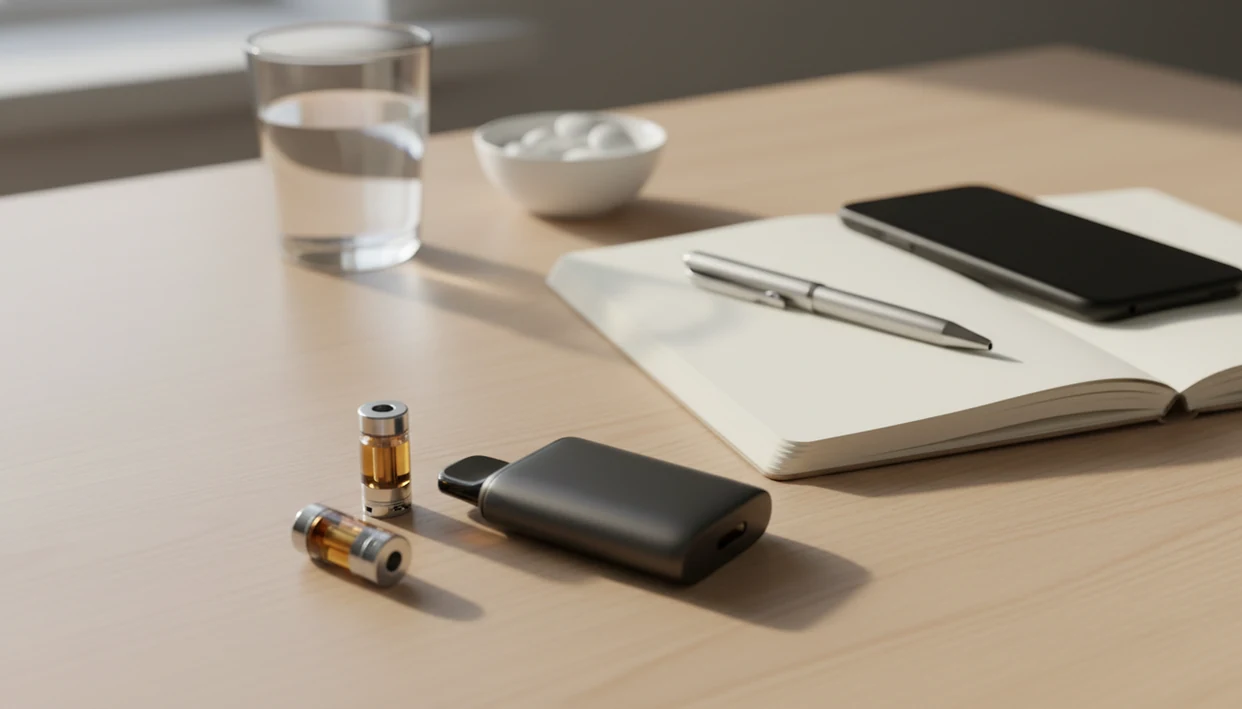
Pod vapes can become part of nearly every activity because they are small, quick, and easy to use repeatedly. You may reach for one before fully noticing the urge. Quitting means dealing with the nicotine drop while also changing routines tied to your car, phone, desk, meals, alcohol, and stress.
Start by observing the pattern rather than judging it. A few days of honest tracking can show where access needs to change and which cravings need a prepared response.
The quick version
To quit JUUL, choose a quit date, remove every device and pod, and prepare for nicotine withdrawal and familiar routines. Track when you vape, then plan a specific response for driving, scrolling, stress, drinking, and other triggers. Nicotine replacement or prescription medicine may help some adults, but vaping-specific evidence is limited, so discuss these options with a clinician.
Why JUUL can become an all-day habit
JUUL-style vapes are compact pod-based nicotine devices, including JUUL, Puff Bar, Breeze, and similar systems. They can be hard to stop because they pair fast nicotine delivery with a repeated hand-to-mouth routine.
Many pods use nicotine salts, which can feel smoother while delivering nicotine quickly. That makes all-day use easy. A few hits while scrolling, another hit before work, another in the car. Soon the brain learns the whole loop: cue, reach, inhale, relief.
Switching brands is not the same as quitting. The pod may change, but the nicotine loop and behavior loop can stay intact.
Per the CDC, JUUL became a dominant device among youth e-cigarette users in 2019-2020, and flavored e-cigarette use remained common in 2023. This page is for adults, but that history helps explain why pod-style devices became so familiar and easy to repeat.
Nicotine withdrawal vs the reach-and-inhale routine
Quitting JUUL-style vapes works by breaking two linked systems: nicotine dependence in the body and a learned routine in daily life. Nicotine salts can make vapor feel smoother while delivering nicotine quickly, which strengthens reinforcement, meaning the brain remembers the fast relief and asks for it again.
Physical withdrawal is the body adjusting to less nicotine. That can bring irritability, low focus, sleep changes, and a restless pressure to use. The separate problem is cue reactivity: the learned pull that shows up when you drive, scroll, drink coffee, finish a meal, or feel stress. This is why cravings may spike hard, ease after a few minutes, then return later around the same place, person, mood, or time of day.
A good plan works with that mechanism instead of arguing with it. Tracking shows which cues are strongest. Removing pods, chargers, and easy purchase routes makes the automatic reach harder to complete. NRT or clinician-guided medication can lower the physical withdrawal load, while replacement actions handle the hand-to-mouth routine. Put distance between the cue and the pod, then make your planned response simple enough to repeat.
Five realities of pod vape withdrawal
- Pod vapes can deliver high, fast nicotine doses, and some users find them as hard or harder to quit than cigarettes.
- Pod vape withdrawal commonly includes irritability, anxiety, poor concentration, sleep disruption, and strong cravings.
- Symptoms often peak during the first week and ease over several weeks, though cravings can return around triggers.
- NRT, prescription medications, digital programs, and text-based support can improve quit outcomes for many people.
- A slip should trigger a plan adjustment, not shame or abandonment.
The headache behind the eyes at dusk is not a character flaw. It is often withdrawal plus a familiar cue.
Behavioral support can address triggers and routines, while NRT or clinician-guided medication may reduce withdrawal for some adults.
Get urgent medical help for chest pain, severe shortness of breath, fainting, severe depression, or thoughts of harming yourself or someone else. Review pregnancy, heart health, mental health, other medicines, and your nicotine use with a clinician before starting varenicline, bupropion, or NRT.
Build your plan before the quit date
Use the plan as a craving-interruption system, not just a counter. Plan what you will do during the first few minutes of an urge, before reaching for the device becomes automatic.
- Set a quit date or taper target that matches your current confidence level.
- Log every pod hit or craving for several days before quitting, including time, place, mood, and urge strength.
- Remove pods, chargers, backup devices, and easy purchase routes before the quit date.
- Build replacement actions for stress, boredom, scrolling, driving, drinking, and social situations.
- Review craving data daily and change the plan after slips instead of restarting from zero.
Good quit smoking and vaping tools deliver private progress tracking and small next steps, not diagnosis, detox care, or a guaranteed cure.
Use this 5 to 10 minute craving drill
Nicotine withdrawal can begin within hours, and urges may feel strongest during the first few days. They usually become more manageable over several weeks, although a familiar situation can bring one back later. The CDC guidance on quitting vaping recommends preparing for withdrawal and learning ways to handle cravings.
- Delay vaping for 5 to 10 minutes. Set a timer so the delay has a clear endpoint.
- Drink water and take slow breaths rather than arguing with the craving.
- Change location or activity. Get out of the car, put down the phone, or leave the room where the device was used.
- Text or call someone supportive if the urge remains strong.
- Record the trigger, craving strength, and what happened. Use that entry to adjust the next response.
Before the quit date, remove pods, chargers, backup devices, and saved purchase shortcuts. A craving is harder to act on when buying or borrowing a vape takes time.
Track the details surrounding each craving
A vape habit tracker should record the signals that surround the urge, not only whether you vaped. Useful fields include time, location, emotion, urge strength, activity, people nearby, alcohol or caffeine use, and whether the craving passed.
- Time: Morning, lunch, late afternoon, and bedtime cravings often have different causes.
- Location: Car, desk, bathroom, couch, porch, or bar can each become a cue.
- Emotion: Stress, boredom, irritation, loneliness, and reward-seeking feel different in the body.
- Activity: Scrolling, driving, after meals, before work, or while drinking can lock in repetition.
- Outcome: Mark whether the craving passed, whether you used a replacement action, or whether you hit the pod.
Tracking separates physical withdrawal from routine-based cues. A cigarette urge after the first beer, for example, may point to a dual trigger rather than nicotine withdrawal alone. Adults who also smoke can connect this with quit smoking daily life triggers.
Which quitting aids have evidence for vaping?
Treatments used for cigarette smoking are often discussed for vaping, but the evidence is not interchangeable. A 2025 Cochrane review of vaping cessation included nine randomized trials with 5,209 participants. It found low-certainty evidence that varenicline may help people quit vaping. Evidence for combination NRT, cytisine, and reducing vaping before quitting was inconclusive.
| Option | Possible role | Main limitation |
|---|---|---|
| Nicotine patch plus gum or lozenge | May provide steady nicotine control with help for breakthrough cravings | Vaping-specific evidence remains inconclusive, and dosing should reflect your nicotine use |
| Varenicline | May reduce cravings for some people | Evidence for quitting vaping is low certainty and it requires a prescription |
| Text or digital support | Can provide prompts, tracking, and coping steps | Evidence is low certainty and does not apply equally to every adult or program |
| Another pod or disposable | May feel familiar | Usually preserves nicotine exposure and the same cue-and-reach routine |
| Nicotine-free vape | Removes nicotine exposure | Can preserve the hand-to-mouth and inhaling pattern |
If you also smoke cigarettes, make a plan that does not send you back to smoking or leave you using both products indefinitely. A clinician or quitline can help match support to your current vaping and smoking pattern. In the United States, confidential coaching is available at 1-800-QUIT-NOW.
Remove the escape routes that undo a quit attempt
Quit attempts often break down because a pod remains easy to reach or a predictable trigger has no planned response. They usually happen before the craving hits.
Keeping a backup device, charger, or “emergency” pod nearby gives the craving a short path. Restless hands searching coat pockets can find more than lint if the old kit is still there.
Another mistake is treating cold turkey as the only legitimate quit method. Some people do well with a hard stop, but others need tapering, NRT, medication, counseling, or text-based support. Cold turkey usually works best when the person has removed access and prepared for high-risk cues, while tapering fits people who need a more gradual reduction plan.
Switching to another disposable or pod vape is also not the same as quitting. If disposables are part of the pattern, a separate quit disposable vapes plan may help.
Do not ignore alcohol, sleep loss, stress, and social cues. One slip is data. Reset, not restart from zero.
When withdrawal calls for medical support
Bring in a clinician when withdrawal is colliding with your physical health, mental health, pregnancy, or ability to function safely. Get urgent care now for chest pain, trouble breathing, fainting, or thoughts of harming yourself or someone else.
Professional support matters most when nicotine withdrawal overlaps with pregnancy, severe anxiety or depression, bipolar symptoms, eating disorder history, heart or lung symptoms, or a medication list that is hard to sort through. NRT can be useful, but patch strength, gum or lozenge timing, and combining products should fit your nicotine level and health situation. Varenicline and bupropion are prescription options, so they should be clinician-guided, especially if you take antidepressants, seizure-threshold medicines, blood pressure medicines, or other complex medications.
- Contact your clinician, pregnancy care team, or a pharmacist before starting medication support if any health factor feels uncertain.
- Bring your vape pattern, pod strength, cravings, past quit attempts, and current medicines or supplements.
- Ask about NRT dosing, side effects, interactions, and when prescription medication makes sense.
- Use apps and trackers for structure, but treat them as planning tools only; they cannot diagnose symptoms, manage emergencies, or replace medical care.
Questions about quitting JUUL
How do I quit JUUL without switching to another vape?
Set a quit date, remove all pods and devices, and prepare responses for your most frequent triggers. Use water, movement, slow breathing, gum, or a change of location during cravings. If withdrawal is difficult, ask a clinician about NRT or prescription medicine instead of moving to another pod system that preserves the same routine.
How long does JUUL withdrawal usually last?
Withdrawal can begin within hours. Cravings, irritability, anxiety, poor concentration, restlessness, sleep changes, and increased appetite are often strongest during the first few days and then improve over several weeks. Trigger-based urges may return later around driving, alcohol, stress, meals, or other situations connected with vaping.
Is JUUL harder to quit than other vapes?
Difficulty depends on nicotine concentration, frequency of use, and how strongly vaping is tied to daily routines. Nicotine salts can feel smooth while delivering nicotine quickly, which can support frequent use. Someone who takes small hits throughout the day may face both substantial withdrawal and many learned triggers, even if each session seems brief.
Can nicotine replacement therapy help with JUUL withdrawal?
A clinician may consider a patch for steady nicotine control plus gum or a lozenge for breakthrough cravings. However, evidence for combination NRT specifically for quitting vaping remains inconclusive. Ask about product choice and dosing if you are pregnant, have heart concerns, take several medicines, or are unsure how much nicotine you use.
Is it better to quit JUUL cold turkey or taper first?
Some people prefer a firm stop, while others need a structured taper. A practical taper removes automatic vaping first, creates scheduled use windows, lengthens the time between sessions, and ends with a final quit date. Evidence for vaping-reduction strategies is still inconclusive, so avoid letting a taper continue without limits or an endpoint.
Do quit vaping apps work for JUUL cravings?
Digital tools can help record triggers, prompt coping steps, and make patterns easier to see. Research suggests text-message support may help youth and young adults, but the evidence is low certainty and does not prove that every app works for every adult. Digital support is best treated as one part of a broader plan.
Does one puff count as a relapse?
One puff is a lapse, and it does not have to become a full return to vaping. Stop immediately, discard or hand over the device, and record what triggered the event. Restart the plan that day. Then change something concrete, such as avoiding alcohol temporarily, removing access, or preparing for the same situation.
What if I smoke cigarettes as well as using JUUL?
Plan for both products so quitting the vape does not lead back to more smoking. Avoid treating long-term dual use as the goal. Record when each product is used, identify overlapping triggers, and ask a clinician or quitline about medication and counseling that address nicotine dependence while prioritizing an end to combustible cigarette use.