Stop Vaping Success Stories With Cravings, Tapering, and Restarts
Stop vaping success stories are usually not perfect cold-turkey transformations; they are realistic accounts of tapering, cravings, stress triggers, slips, and renewed quit attempts that eventually create progress.
Me Quit is a quit smoking app that helps adults stop smoking, stop vaping, drink less, and track cravings, streaks, and milestones.
TL;DR
- Real quit vaping stories often include tapering nicotine strength, spacing out sessions, or resetting after slips.
- Cravings and mood changes are common, and psychological urges may last longer than the first physical withdrawal symptoms.
- The most useful stop vaping results are small, trackable wins: fewer hits, longer vape-free gaps, lower nicotine, and better control.
How Stop Vaping Success Stories Work In Real Life
Quick answer: Stop vaping success stories are most useful when they are treated as realistic examples, not guarantees. For many people, progress comes from noticing patterns, planning for cravings, and restarting quickly after slips rather than expecting one perfect quit attempt.
Key takeaways
- A slip does not erase progress; it can reveal a trigger to plan for next time.
- Cravings often rise and fall in waves, so short delay tactics may help.
- Changing routines can matter as much as reducing nicotine exposure.
- Stress, alcohol, boredom, and social cues commonly make vaping harder to stop.
- Tracking cravings can help separate physical withdrawal from habit loops.
- People with severe withdrawal, mood changes, or medical concerns should ask a clinician about support options.
Stop vaping success stories are imperfect behavior-change accounts, not proof that one method works for everyone. A useful story shows the trigger, craving, response, reward, reset, and repetition behind the quit attempt.
That loop matters. A mint vape in a hoodie pocket can become part of studying, driving, stress breaks, or getting ready for bed. The brain learns the sequence, then asks for it again. Habit loops are trainable, but they rarely disappear because someone feels motivated on Monday.
Both tapering and cold turkey can work, depending on nicotine level, routine, support, and tolerance for withdrawal. In a U.S. longitudinal study of young adult e-cigarette users, 54.2% reported at least one quit attempt over 12 months, but 15.2% reached 30-day abstinence. source
Repeated attempts are normal data, not a character verdict.
Method Behind These Quit Vaping Stories And Results
The stories below are anonymized composite examples based on common quit patterns and cessation evidence. They are not medical claims, guaranteed outcomes, or proof that one plan fits every person.
The tracked signals are concrete: nicotine strength, vaping sessions, craving intensity, trigger patterns, slips, and vape-free days. That is why the middle weeks matter more than a dramatic before-and-after post. Most people need to know what happened on day 9, not just day 90.
Per the CDC, 4.5% of U.S. adults reported current e-cigarette use in 2022, and 46.6% of those adults also smoked cigarettes CDC report. That overlap is one reason quit vaping stories often include smoking, alcohol, stress, or social triggers.
The in-between is where the plan gets tested. Quietly. Repeatedly.
Story 1: Maya’s Stop Vaping Results After A 12-Week Taper
Maya started with daily high-nicotine vaping and automatic hits during work breaks. The device sat beside her keyboard, and every calendar alert became a reason to stand up, inhale, and call it a reset.
Her 12-week taper reduced nicotine strength first, then cut sessions. Weeks 1 to 4 were about delaying the first hit. Weeks 5 to 8 removed the midafternoon break. Weeks 9 to 12 focused on evenings, when late-night scrolling made cravings feel louder.
Morning coffee was rough.
A pharmacist-assisted taper case series found that structured reductions in nicotine concentration and vaping sessions, paired with behavioral counseling, helped participants stop over about 12 weeks source. NHS guidance also supports gradually cutting nicotine and spacing vaping sessions as a practical route to quitting the NHS cessation data.
For people who vape heavily all day, tapering is often easier than quitting abruptly because it separates nicotine reduction from routine change.
Story 2: Jordan’s Quit Vaping Story After Stress Slips
Does vaping once after quitting mean the quit attempt is over? No. A slip is a moment of use; relapse is returning to the old pattern without a reset.
Jordan quit for five days, then vaped after a tense deadline call. The craving did not feel like a choice. Tight jaw, racing thoughts, and the old pocket check showed up together. Ten minutes later, shame tried to turn one hit into a full weekend.
The reset was plain: name the trigger, remove device access, choose a different stress response, and restart tracking that same day. The new response was a walk around the building before replying to stressful messages.
Repeated attempts are common and not proof of failure. The most common medically supported way to recover from a slip is to identify the trigger and restart the quit plan before the old routine rebuilds.
Story 3: Lena’s Vaping Recovery Results From Vape-Free Routines
Lena’s vaping was tied less to nicotine math and more to place. The car cup holder, study desk, after-meal couch, and Friday 6 p.m. drink each carried its own cue.
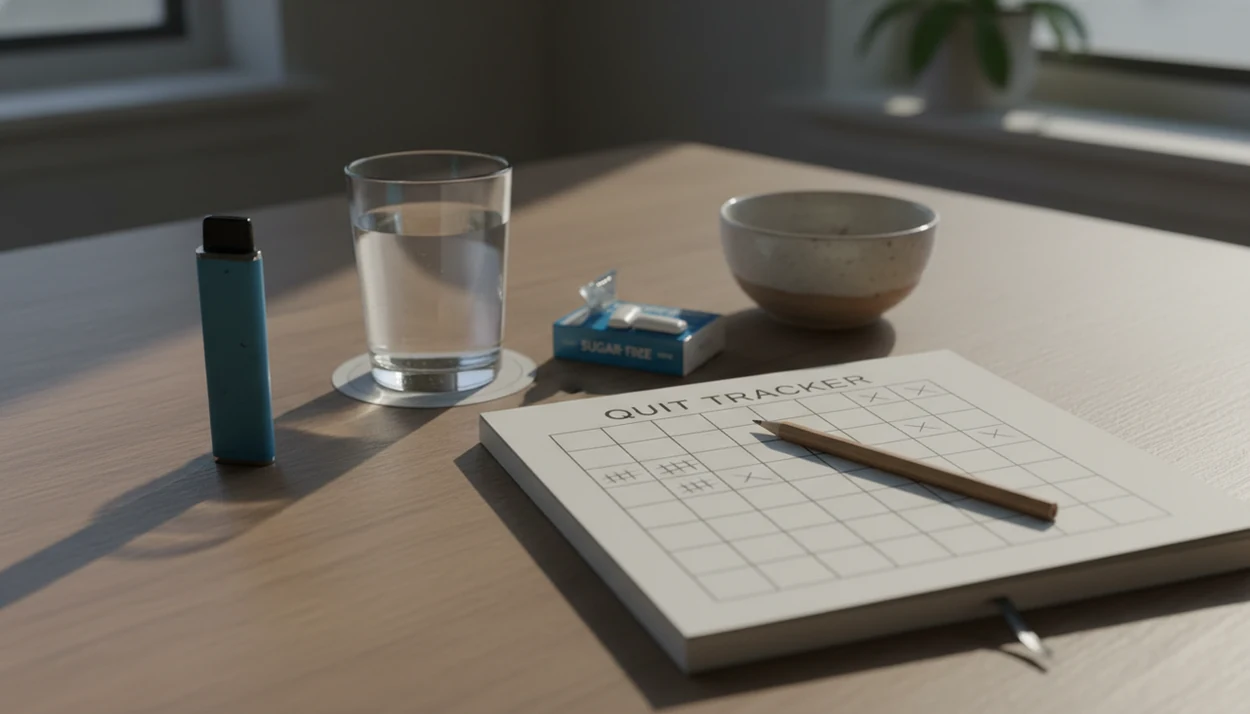
She changed the room before trying to change the feeling. Driving meant water in the cup holder and gum in the console. Studying moved to a library table where vaping was not allowed. After meals, she stood up immediately and washed her face. During alcohol nights, she set a two-drink limit because vaping felt automatic once the bartender reached for the usual bottle.
Small wins showed first: longer gaps between hits, more vape-free spaces, and fewer “where is it?” checks. Then came better energy during morning walks.
Withdrawal did not vanish quickly. It got more predictable. Tools like Me Quit, text support, and counseling can help people turn those patterns into day-by-day support.
How To Use Stop Vaping Success Stories Without Copying Them
Use stop vaping success stories as pattern maps, not scripts. Someone else’s taper, cold-turkey attempt, or restart strategy only helps when you adapt it to your nicotine level, schedule, and triggers.
- Map the story’s trigger pattern, such as driving, stress, alcohol, studying, or waking up.
- Choose one method to test first: taper nicotine, set a quit date, or remove one vaping window.
- Track cravings, sessions, nicotine strength, slips, and vape-free days in a notebook or private app.
- Replace one automatic hit with a short action, such as water, gum, walking, breathing, or texting support.
- Reset after a slip by naming the trigger and restarting the plan the same day.
- Review weekly results, then adjust the plan instead of copying someone else’s timeline.
Apps such as Me Quit can support private progress tracking, streaks, craving logs, and milestones. For a phone-first plan, the app to help me stop vaping guide covers tool options.
Five Common Patterns In Stop Vaping Success Stories
- Tapering appears often. Many quit vaping stories include lower nicotine strength, fewer sessions, or longer gaps before the final stop date.
- Cravings move around. Physical symptoms may ease earlier, but psychological urges can stay tied to driving, stress, alcohol, or bedtime.
- Slips are treated as information. A useful reset asks, “What triggered that hit?” rather than “Why did I ruin everything?”
- Support improves follow-through. Behavioral support, text programs, counseling, community support, and digital tools can make the craving window easier to ride out.
- Small measurable wins matter. Better stop vaping results often start as fewer hits, more vape-free rooms, lower nicotine, and saved money.
NHS guidance notes that it may take several attempts before quitting for good. The vape tapering vs quit date debate is less about pride and more about matching the method to the person.
What Quit Vaping Stories Do Not Show About Recovery Results
Quit vaping stories can hide the messy parts: failed attempts, quiet relapses, ongoing cravings, and weeks where progress looks boring. Self-reported results may also exaggerate speed, certainty, or how easy the final attempt felt.
Reddit-style stories can be useful for hope, but they are not medical advice. They often leave out nicotine strength, mental health history, alcohol use, dual smoking, medication, age, and whether the person had counseling or text support. That missing context matters.
Vaping cessation evidence is also less mature than smoking cessation evidence. Clinicians typically recommend matching quit support to dependence level, withdrawal symptoms, mental health needs, and safety concerns.
Good quit-support tools deliver private tracking, craving support, and reset structure; they do not provide a guaranteed cure or medical supervision.
When To Seek Professional Help For Vaping Withdrawal
Seek professional help if vaping withdrawal feels unsafe, unmanageable, or tangled with health risks. Apps, streaks, and success stories can support a quit attempt, but they cannot replace advice tailored to your body, medications, age, or mental health history.
Watch especially for severe depression, panic, intense anxiety, anger that feels out of control, thoughts of self-harm, days of poor sleep, chest symptoms, or withdrawal that keeps disrupting work, school, caregiving, or recovery from another condition. Extra support also matters during pregnancy, for youth nicotine use, for people who both smoke and vape, and for anyone managing complex conditions such as heart disease, lung disease, substance use, or psychiatric medication changes.
- Contact a clinician if symptoms feel severe, unusual, or risky.
- Ask a pharmacist about nicotine replacement, tapering options, and medication interactions.
- Call a quitline or use evidence-based counseling for coaching between appointments.
- Tell the support person the full picture: nicotine strength, vaping frequency, smoking, alcohol, sleep, mood, and past quit attempts.
- Use apps and stories as tracking aids, not as substitutes for individualized medical care.
Limitations
Stop vaping results vary, and stories should not be read as promises. Keep these limits in mind:
- Severe mood symptoms, pregnancy, youth nicotine use, or complex health concerns may require professional support.
- Nicotine withdrawal can affect sleep, focus, appetite, and mood in ways that disrupt daily life.
- A stop vaping app for adults may help with tracking, but it does not replace medical care.
FAQ
Are quit vaping stories real?
Some quit vaping stories are real personal accounts, but readers should watch for exaggeration and survivorship bias. The most useful stories include slips, triggers, and the method used.
Is tapering better than cold turkey?
Tapering and cold turkey can both work. Tapering may suit people who want gradual reduction, while cold turkey may suit people who prefer a clear stop date.
How long do vape cravings last?
Physical symptoms often ease within days to weeks. Psychological urges can last longer, especially around routines that used to include vaping.
What is the hardest quit day?
Early days are often difficult because nicotine levels drop and routines feel disrupted. The hardest day varies by nicotine strength, frequency, stress, and triggers.
Does one puff reset progress?
One puff is a slip, not automatic proof that all progress is gone. The useful step is to identify the trigger and return to the plan quickly.
What helps vape cravings fast?
Delay, slow breathing, walking, water, gum, and changing location can help during a craving window. Texting support or opening a tracking app can also interrupt the urge.
When do stop vaping results appear?
Small results may appear first as fewer urges, longer vape-free gaps, better control, and more stable routines. Bigger changes often take repeated practice.
Can apps help quit vaping?
Apps can support tracking, reminders, milestones, craving logs, and accountability. They can help organize a quit plan, but they do not guarantee success.