App To Help Me Stop Vaping When Cravings Hit

An app to help me stop vaping should help you log puffs, spot triggers, manage cravings in the moment, and taper nicotine with reminders instead of relying on willpower alone. A private, app-based plan can support adults who want to stop vaping while also tracking related smoking, alcohol, cravings, streaks, and milestones.
A quit-vaping app is a nicotine behavior-change tool that helps you track vape use, respond to cravings, set taper or quit goals, and measure progress over time.
- Use a vape craving app to catch patterns: time, place, mood, device strength, and trigger.
- Set either a quit date or a taper plan using puff limits, nicotine strength reductions, and craving notes.
- Apps work best when paired with behavioral support, counseling, text programs, or nicotine replacement therapy when needed.
How these apps look
Quick answer: A good app to help you stop vaping can make your quit plan more concrete by turning urges, puff patterns, nicotine use, and progress into something you can see. For many adults, tracking plus reminders and coping steps may support behavior change, but withdrawal symptoms or medication questions should be discussed with a clinician.
Key takeaways
- Set one clear goal: quit date, gradual taper, or nicotine-free days.
- Track the context of each urge, not just whether you vaped.
- Use short delay tactics during cravings, such as breathing, walking, or drinking water.
- Review patterns weekly so your plan changes with your real behavior.
- Consider FDA-approved quit medications or counseling if cravings feel unmanageable.
- Choose privacy settings that match how sensitive your nicotine data feels.
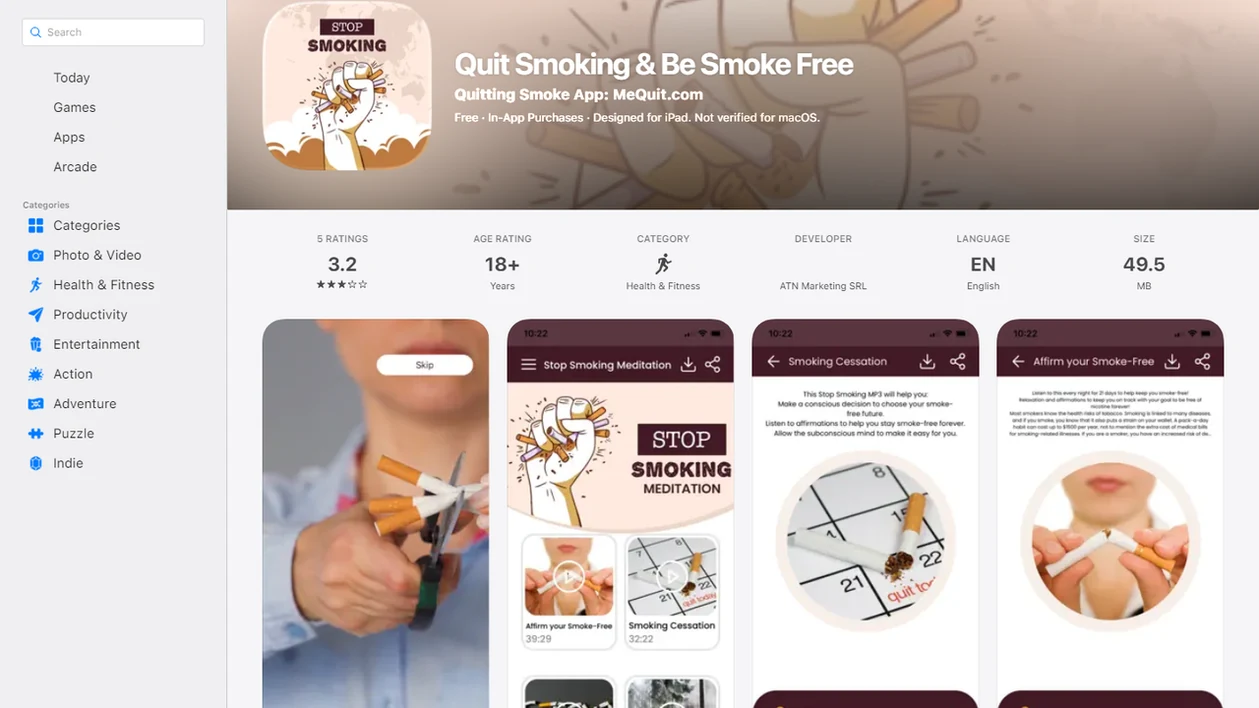
Side-by-side captures of the compared products. Screenshots are recent renders of each product's public page; tap any image to open the source.
What an app to help me stop vaping should do first
“I need a tool for cravings, logging, tapering, and accountability” is the real job of a quit-vaping app. It should help you act during the craving window, not just congratulate you after a vape-free day.
A good setup supports two honest paths: quitting now or cutting down gradually. Some people need a hard quit date. Others need to reduce puffs, sessions, or nicotine strength first, especially if the mint vape lives in a hoodie pocket all day.
Tools like Me Quit can fit here as a practical recovery hub, not a medical treatment claim. The better question is whether the app helps you notice the trigger pattern before your thumb reaches for the device.
At-a-glance features in a help stop vaping app
A help stop vaping app should include more than a day counter. Tracking-only apps record what happened; behavior-change apps also prompt a next action when the urge is active.
| Feature | Why it matters | How to use it |
|---|---|---|
| Puff logs | Shows your real baseline | Log sessions for 7 days before changing goals |
| Craving notes | Separates urges from actual vaping | Mark intensity, mood, and whether you vaped |
| Trigger tags | Finds repeated patterns | Tag stress, driving, meals, alcohol, or boredom |
| Reminders | Interrupts automatic use | Set alerts before high-risk times |
| Taper goals | Makes reduction measurable | Lower sessions, puffs, or nicotine strength |
| Streaks | Builds visible momentum | Track vape-free hours and days |
| Money saved | Makes progress concrete | Enter device, pod, or e-liquid cost |
| Milestones | Connects effort to health change | Review weekly instead of only daily |
For adults comparing options, a free quit vaping app may be enough for basic logs, but coping prompts matter when cravings hit fast.
For comparison, public-health options such as quitSTART, SmokefreeTXT, and Truth Initiative's This is Quitting focus on structured cessation support rather than broad multi-habit tracking.
Before you start using a quit vaping app
Before you open the app, make the first few choices outside the craving window. A clear starting plan gives the app better data and gives you fewer decisions to make when nicotine feels urgent.
- Choose your path. Decide whether you want a firm quit date or a taper plan that reduces puffs, sessions, or nicotine strength over time.
- Write down your baseline. Note your device type, pod or e-liquid strength, usual daily use, and the places where the vape is easiest to reach.
- Pick one backup support. Choose a person, text program, counselor, support line, or other safe option before cravings become intense.
- Check whether extra help fits. If withdrawal has been rough before, or you smoke too, consider whether nicotine replacement or clinician advice may be appropriate.
- Move the easy triggers. Take chargers, pods, disposables, and spare devices out of the car, bedside table, desk drawer, bathroom, or jacket pocket.
This setup does not need to be perfect. It just needs to make the next craving a little less automatic.
How a vape craving app works during an urge
A vape craving app works by interrupting the habit loop: trigger, urge, action, reward, and reflection. In plain terms, it gives you a pause between wanting nicotine and using it.
The data flow is simple. You log the craving, tag the context, get a coping prompt, then review trends later. The prompt might be a delay timer, breathing exercise, urge surfing note, distraction list, or reminder notification. Three minutes can matter. Opening an app during a sharp urge is often easier than arguing with yourself for an hour.
Clinicians typically recommend behavioral support as part of tobacco cessation, and the U.S. Preventive Services Task Force reports that behavioral counseling interventions can increase quit rates compared with minimal support uspreventiveservicestaskforce smoking data. Apps should support those methods, not promise app-only treatment.
How to use a nicotine quit app to stop vaping
The most useful nicotine quit app setup is specific, short, and repeatable. If the plan takes 40 minutes to manage, most people stop using it by Wednesday.
- Set a quit date or taper target. Choose a full stop date or a weekly reduction goal for puffs, sessions, or nicotine strength.
- Log every vape session for a baseline. Record at least several days before judging yourself or changing everything.
- Tag cravings by mood, place, time, and trigger. Include stress, driving, after meals, alcohol, boredom, and device access.
- Use a craving tool before vaping. Try a timer, breathing prompt, urge surfing note, or short walk before you decide.
- Review weekly patterns and reset goals. Adjust the plan after real data, not after one rough evening.
For many adults, a phone-based plan works best when it turns “I should quit” into one small next step before the next puff. The full phone workflow is covered in how to stop vaping with phone.
How to taper vaping with puff logs and nicotine goals
A taper plan uses app data to reduce nicotine exposure without making every craving feel like a test. It works best when you change one or two variables at a time.
- Puffs per day: Reduce the daily puff count gradually instead of guessing.
- Sessions per day: Move from constant access to planned sessions, such as six daily sessions down to four.
- Nicotine strength: Step down e-liquid or pod strength when the previous level feels stable.
- Device access: Keep the device out of the car, bedroom, or desk drawer during high-risk windows.
- Trigger windows: Plan extra support for moments like a pub exit through the smoking area.
Do not replace vaping with cigarettes, alcohol, or another automatic habit. Among U.S. adults who used e-cigarettes in 2021, the CDC reported that 62% also currently smoked cigarettes CDC report, so co-use is not rare. If you are unsure which path fits, the vape tapering vs quit date guide breaks down both options.
Common mistakes with a quit vaping app
The most common mistake is counting vape-free days without logging triggers. A streak can motivate you, but it won’t explain why the same craving appears after dinner or during a late commute.
Don’t turn off reminders too early. The quiet restart after a weekend lapse often begins with one useful alert, not a dramatic new plan. Also log nicotine strength and device type, because a high-strength pod is different from occasional low-nicotine use.
A lapse is data, not proof the plan failed. Reset, not restart from zero. And don’t assume every quit smoking app is tailored to vaping; device access, puff patterns, flavors, and charger habits change the behavior. For a vaping-specific comparison, use a best quit vaping app checklist.
How MeQuit fits adults who vape, smoke, or drink
MeQuit is a quit smoking app that helps adults stop smoking, stop vaping, drink less, and track cravings, streaks, and milestones. That matters because nicotine and alcohol triggers often overlap in ordinary routines.
- Vaping: Log cravings, puff patterns, taper goals, and high-risk moments.
- Smoking: Track cigarette urges, money saved, and health milestones.
- Alcohol: Notice when a Friday 6 p.m. drink makes nicotine feel automatic.
- Private patterns: Review streaks, cravings, and resets without joining a public group.
Good multi-habit recovery tools can deliver private progress tracking and day-by-day support, but they should not claim to diagnose dependence, provide detox care, or guarantee quitting. Adults who want integrated habit tracking may also compare a stop vaping app for adults.
When to get professional help for vaping or nicotine withdrawal
Get professional help when nicotine withdrawal feels bigger than a tracking plan, or when it keeps interrupting work, sleep, relationships, or basic routines. An app can support behavior change, but it does not provide medical care.
Some withdrawal is expected: irritability, cravings, restlessness, and trouble focusing can show up after nicotine drops. The escalation point is when symptoms feel unsafe, unmanageable, or repeatedly pull you back into vaping even with a plan.
- Contact a clinician if you have panic symptoms, depression, severe insomnia, chest symptoms, or withdrawal that feels out of control.
- Ask before using nicotine replacement if you are pregnant, trying to become pregnant, or managing a pregnancy-related health concern.
- Use structured support such as counseling, quitlines, text programs, or medication guidance when cravings keep overpowering your plan.
- Bring your app data to the conversation so your clinician or counselor can see timing, triggers, nicotine strength, and relapse patterns.
- Treat extra help as progress, not failure. The goal is a safer quit plan, not proving you can handle every craving alone.
Limitations
A quit-vaping app can support behavior change, but it has limits. The evidence is still stronger for broader tobacco cessation support than for vape-specific app-only outcomes.
- Apps depend on consistent logging, honest puff counts, and notifications you do not ignore.
- Apps do not directly manage severe withdrawal, panic symptoms, depression, pregnancy-related risk, or medication questions.
- Multi-habit support helps some adults, but it still does not replace professional care when dependence feels unmanageable.
The app is a tool. The support system still matters.
FAQ
Do quit vaping apps work?
Quit vaping apps can support behavior change by helping you track use, manage cravings, and review patterns. They work best with consistent use and added support when dependence feels strong.
What is a vape craving app?
A vape craving app is a tool for logging urges, identifying triggers, and using coping prompts before vaping. It may include timers, breathing exercises, reminder alerts, and craving notes.
Can I taper vaping with an app?
Yes, an app can help you taper by tracking puffs, sessions, nicotine strength, and weekly reduction goals. It works best when you change one variable at a time.
Is quitting vaping harder than smoking?
It depends on nicotine strength, device type, frequency, and personal triggers. Some high-nicotine vape patterns can create frequent cravings because the device is easy to use all day.
Should I set a quit date?
A quit date helps if you want a clear stop point and can prepare supports in advance. A taper plan may feel more realistic if your vaping is frequent or tied to many daily routines.
What should I log in a quit vaping app?
Log puffs, cravings, time, place, mood, trigger, nicotine strength, and whether a coping tool helped. These details show what to change next.
Can apps replace nicotine patches?
Apps do not replace medication or nicotine replacement therapy advice. They can be combined with clinician-approved support when patches, gum, lozenges, or other care are appropriate.
What if I relapse while trying to stop vaping?
Treat relapse as information about triggers, reminders, taper goals, and support needs. Update the plan instead of restarting from zero.