

How to Stop Vaping at Night Without Losing More Sleep
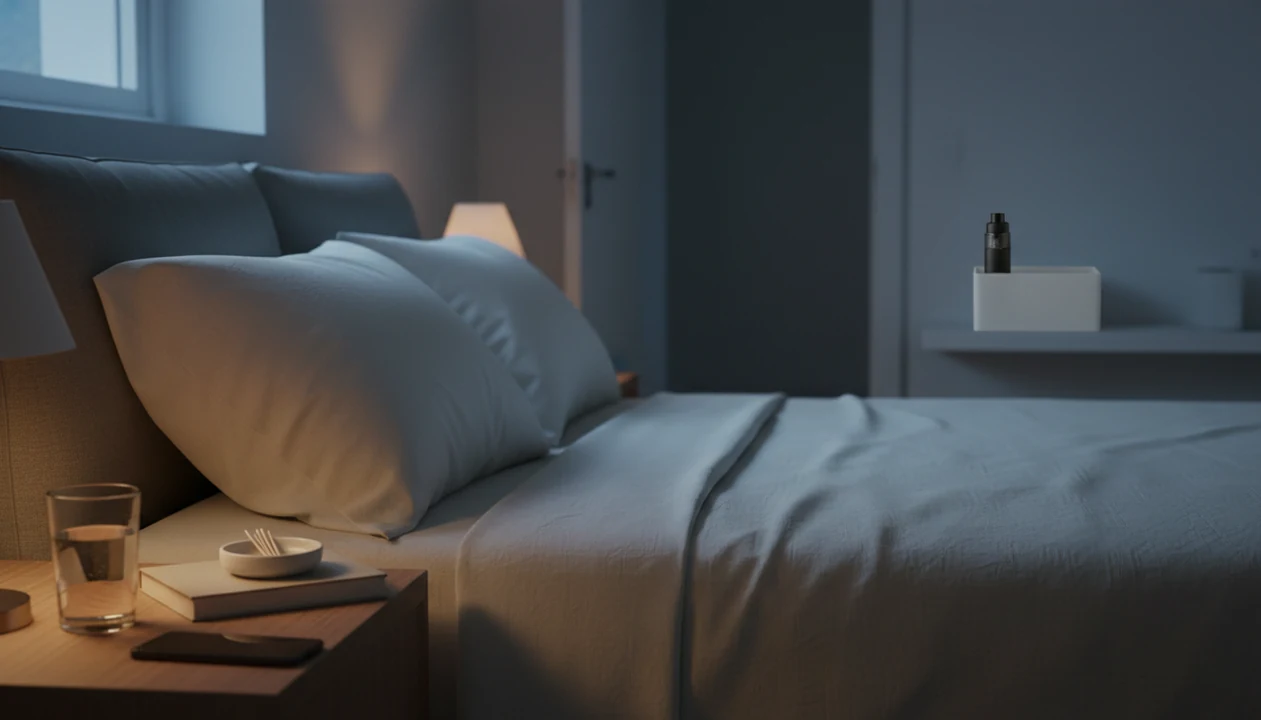
Nighttime vaping can become unusually automatic. The phone comes out, the vape is within reach, and nicotine gets tied to winding down or falling back asleep. Removing the device helps, but the strongest plan also addresses withdrawal and the bedtime routine that signals it is time to vape.
Start with a cutoff you can repeat, even if it is only 45 or 60 minutes before bed. Protect that window for three nights, note when cravings appear, and then move the cutoff earlier. Uneven sleep at first does not mean the plan is failing.
The quick version
Set a firm last-vape time before bed, move the device and charger out of the bedroom, and prepare a 10-minute response for cravings. If you wake wanting nicotine, sit up, drink water, breathe slowly, and use a mint, straw, or gum. Track the time and trigger for several nights so you can adjust the plan based on a pattern, not one rough night.
Why does the last vape of the day lead to another?
Vaping before bed can keep nighttime vape cravings going because nicotine is a stimulant and bedtime is a strong habit cue. If the last thing your brain remembers before sleep is a mint vape in a hoodie pocket, the cue can come back fast when you wake up.
The Sleep Foundation recommends avoiding nicotine at least 4 hours before bed to support better sleep quantity and quality sleepfoundation. A population-based study of young adults also found higher odds of interrupted sleep among people who vaped, with researchers describing a “vicious cycle” between vaping and sleep disruption the NIH.
This is common enough to matter, but it is not a moral panic. Per CDC/NCHS survey data, U.S. adult e-cigarette use rose from 4.5% in 2021 to 6.0% in 2023 CDC. More people are now dealing with bedtime nicotine patterns in ordinary bedrooms, dorm rooms, and parked cars.
Withdrawal, habit cues, and broken sleep
Nighttime vape cravings are usually a mix of habit cues, nicotine withdrawal, and sleep disruption, not proof that nicotine is needed for sleep.
Habit cues are the learned links: bed, phone, charger, vape. Withdrawal is the body noticing that nicotine levels have dropped. Sleep disruption is the lighter, more restless night that can follow nicotine use close to bedtime. Together, they can feel like alertness, irritability, a sour stomach, restless legs, or the odd wide-awake feeling at 2:17 a.m.
The loop is simple. Vape before bed. Sleep lightly. Wake up. Crave nicotine. Vape again. Repeat.
A rehearsed response gives you something concrete to do while the craving rises and passes. Sleep changes can weaken the bedtime cue, but nicotine dependence may also require counseling, a structured quit plan, or medication discussed with a healthcare professional.
The CDC also recommends combining practical quit planning with support options such as coaching, quitlines, medicines when appropriate, and trigger planning CDC smoking data.
Five facts that make bedtime vaping easier to understand
- Nicotine can increase alertness close to bedtime, so vaping late can make it harder to fall asleep or stay asleep.
- A nicotine-free bedtime window is a practical first target; start with a window you can repeat, then expand it.
- Waking up to vape can be withdrawal, not weak discipline, especially if the urge arrives with restlessness or irritation.
- Keeping the vape beside the bed strengthens the cue because the hand can reach before the brain fully wakes up.
- Some people need nicotine-cessation support beyond sleep habits, especially with high-nicotine salts or frequent disposable vape use.
If your device is a high-strength salt vape, the bedtime pattern may feel sharper. Our guide to quit nicotine salts covers that format more directly.
Set tonight's nicotine cutoff before you get tired
Follow a bedtime plan by deciding the rule while you are still clear-headed, then making the room match that rule. The plan should be boring, repeatable, and easy to review after a few nights.
- Choose a realistic nicotine cutoff before the evening starts, not after you are already tired. If four hours feels too big, pick a smaller window you can protect tonight.
- Move the vape out of the bedroom before brushing your teeth, so the clean-mouth cue and the no-vape rule happen together.
- Prepare one substitute for each need: something for your mouth, something for your hands, and something for stress. That might mean a straw, a rubber band, and five slow breaths.
- Use the same 2 a.m. script every time you wake: sit up, drink water, breathe, use the substitute, and return to bed without checking the vape.
- Review three nights of logs before changing the plan. One rough night is noise; three nights can show whether the cutoff, bedroom setup, or substitute needs adjusting.
Use your phone without turning it into another trigger
Use your phone as a quiet tracking tool, not another bedtime trigger. The point is to catch the pattern while it is still small enough to change.
- Set a nightly nicotine cutoff reminder at the same time each evening, even if the first goal is only 60 minutes before bed.
- Log the last vape time with craving intensity, trigger, and location, such as “bedroom, 8/10, scrolling.”
- Turn on Do Not Disturb or app limits so late messages and videos do not pull you back into vaping.
- Open a craving timer if you wake up, then wait three minutes before deciding anything.
- Review several nights together and move the cutoff earlier only when the current window feels repeatable.
A useful recovery hub for quit smoking, stop vaping, quit drinking, and mindful alcohol reduction should deliver simple logs, trigger review, and reset plans, not a guaranteed cure or medical detox.
Talk with a healthcare professional if nighttime cravings remain unmanageable, sleep problems are severe or persistent, or you want help choosing medication. Seek urgent help if insomnia occurs with severe depression, thoughts of self-harm, chest pain, or trouble breathing.
Your final hour before bed, step by step
A quit vaping bedtime routine should make the rule visible before your tired brain starts bargaining. Write it plainly: no vape in bed, no vape on the nightstand.
Build the last hour around repeatable steps. Fill water. Brush your teeth. Put the phone on a charger across the room. Choose one low-stimulation activity, such as folding a shirt, reading two pages, or stretching on the floor. If your mouth or hand keeps looking for the vape, use a straw, toothpick, sugar-free mint, or herbal tea.
Start with a nicotine-free window you can actually keep. If four hours feels impossible tonight, begin with 45 minutes and protect that window for three nights. People using disposables may need a separate plan for device access; our quit disposable vapes guide explains that friction step.
Use this 2 a.m. response instead of reaching for the vape
Waking up wanting to vape is the exact moment to follow a prepared plan, not negotiate while half-asleep.
Use a short script. Pause. Sit up. Drink water. Take five slow breaths. Use your substitute, such as a straw, toothpick, or mint. Return to bed without checking social apps. The craving timer glowing in bed can help, but only if you decided the rule before bedtime.
Do not debate the vape at 2 a.m. That debate is rigged.
Move the device to another room before sleep. If you are quitting fully, consider removing it from the home or asking someone else to hold it overnight. For broader product patterns, a quit nicotine products app can help you compare cues across vapes, pouches, and other nicotine sources.
What the first nicotine-free nights can feel like
Nicotine withdrawal can begin within hours of the last vape. Cravings, irritability, anxiety, restlessness, trouble concentrating, increased appetite, and disrupted sleep may be strongest during the first week, then gradually ease over several days or weeks. The exact timing varies with nicotine strength, frequency of use, and how soon after waking you usually vape.
- Keep the same wake-up time, even after a restless night.
- Do not replace nighttime vaping with alcohol or sedatives.
- Use the same brief craving response each time instead of creating a new plan while tired.
- If you vape once, stop again and record what happened just before it.
The CDC guidance on quitting vaping recommends identifying triggers, removing vaping products, planning for cravings, and getting support. A difficult night is information about the plan, not proof that you cannot quit.
When a bedtime rule is not enough
Nighttime vaping needs stronger support when sleep problems are severe, cravings feel unmanageable, or repeated attempts keep collapsing after dark. Sleep hygiene helps, but it does not fully treat nicotine dependence.
The right level of support depends on how often you vape, the nicotine strength, your withdrawal symptoms, and your health history. Options may include a doctor, quitline, pharmacist, therapist, or nicotine-cessation specialist. Nicotine replacement therapy may help some people, but it should be discussed in the context of age, pregnancy, medications, medical conditions, and how much nicotine you use.
If vaping is tied to cigarettes or Friday 6 p.m. drinking cues, the wider quit smoking for daily life pattern matters too.
Medication support for persistent nighttime cravings
Counseling and medication together provide the best-established support for adults quitting cigarettes. Clinicians may also consider cessation medication for adults quitting vaping, although vaping-specific medication evidence is less extensive. Do not guess at nicotine-replacement doses based only on the label of a disposable or pod, since delivered nicotine can vary.
A 2023 Cochrane review of smoking-cessation medicines found strong evidence for nicotine patches, fast-acting nicotine replacement such as gum or lozenges, and bupropion. A patch plus a fast-acting product can have an additive effect. Ask a doctor or pharmacist what fits your vaping pattern, medical history, pregnancy status, and other medications.
Nighttime vaping questions
Why is my urge to vape strongest at bedtime?
Bedtime may combine falling nicotine levels with a well-practiced cue. If you usually vape while scrolling, charging your phone, or getting into bed, those actions can trigger an urge before withdrawal becomes strong. Stress and tiredness also make an automatic routine harder to interrupt.
How many hours before bed should I stop vaping?
Avoiding nicotine for at least four hours before bed may support better sleep. If four hours feels unrealistic, start with a protected 45-minute or 60-minute window for three nights. Once that feels repeatable, move the cutoff earlier in small steps.
Why do I wake up at 2 a.m. wanting nicotine?
Nicotine levels fall while you sleep, which can produce withdrawal symptoms such as restlessness, irritability, and a strong urge to vape. Waking in the same setting where you normally vape can also activate the habit. Both processes may be happening at once.
What should I do during a nighttime vape craving?
Delay for 5 to 10 minutes. Sit up, drink water, take five slow breaths, and use gum, a mint, toothpick, or straw. Keep the device in another room and avoid opening social apps. Repeat the delay if the urge remains.
Should I keep my vape beside the bed in case cravings get bad?
No. Keeping the vape within reach makes half-awake use more likely and preserves the link between bed and nicotine. Put the device, pods, and charger in another room before brushing your teeth. If you are quitting fully, remove them from the home or ask someone to hold them.
Will my sleep get worse when I stop vaping at night?
It can temporarily. Sleep disruption is a recognized nicotine-withdrawal symptom, and removing a familiar bedtime routine can make the first nights feel unsettled. Keep your wake-up time consistent and avoid replacing vaping with alcohol or sedatives. Get medical advice if severe insomnia continues or affects safety and daily functioning.
Can I taper nighttime vaping instead of quitting cold turkey?
Yes. You can set an earlier last-vape time, reduce evening sessions, or follow a structured reduction plan before stopping. Medication-supported quitting is another option. Because evidence and dosing guidance are stronger for cigarette cessation than vaping cessation, discuss nicotine replacement or prescription medication with a healthcare professional.