

How to Stop Vaping While Driving Without Losing Focus
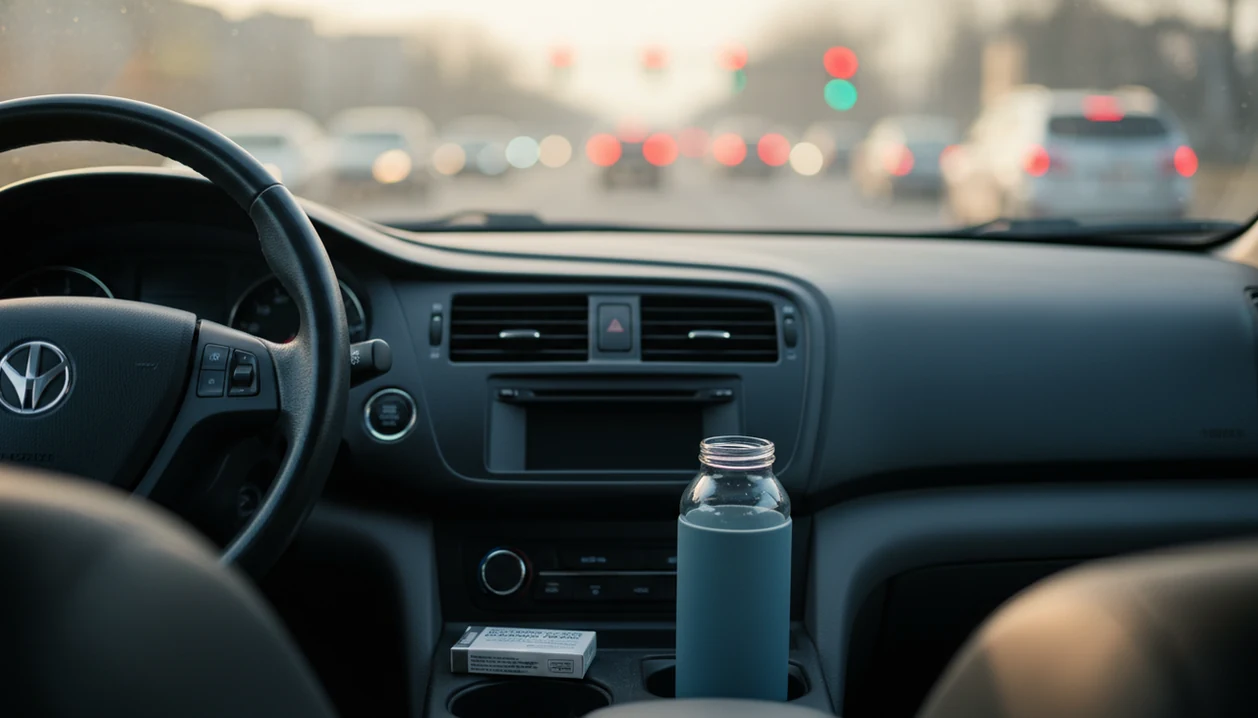
Before you start the engine
To stop vaping while driving, make the entire car a no-vape space before the engine starts. Remove devices, pods, chargers, and spares. Pick one road-safe substitute, such as gum, water, or slow breathing, and use it every trip. If a craving affects your concentration, pull over legally and safely rather than reaching for the vape or your phone.
The hardest drive may be a familiar one: the morning commute, the left turn out of work, or the slow stretch where your hand usually reaches for the console. Those moments can trigger an urge before you consciously think about vaping.
Changing the pattern starts while the car is parked. A clear car rule, an empty cup holder, and one prepared substitute remove decisions from the drive. Each trip completed without vaping gives the old car cue less power.
Why the car can trigger an automatic vape craving
A driving vape trigger is a learned link between nicotine withdrawal and car-specific cues. Starting the engine, pulling onto the commute route, sitting in traffic, smelling the cabin, or seeing the cup holder can all tell the brain, “This is when we vape.”
That automatic feeling is common, not a character flaw. The CDC reported that 4.5% of U.S. adults used e-cigarettes in 2021, which makes vaping routines around work, errands, and driving common enough to plan for directly (CDC). A mint vape in the car cup holder can become as much of a cue as the first morning cigarette before coffee.
The good news is that learned cues can be retrained. Each vape-free drive gives the brain new evidence: car, stress, boredom, no vape, still okay.
Nicotine withdrawal during a drive
- Car nicotine cravings are conditioned triggers layered onto withdrawal. The car cue starts the habit loop, and low nicotine levels make the urge feel louder.
- Most cravings rise, peak, and fade within a few minutes. Delaying until the next song or the next exit can be enough to get through the craving window.
- Removing vape gear weakens the car-vaping association. Devices, pods, chargers, and disposables in the cabin keep the routine easy to repeat.
- Nicotine withdrawal can affect driving comfort. The National Cancer Institute lists cravings, concentration problems, restlessness, anxiety, and sleep changes as common withdrawal symptoms (the National Cancer Institute smoking data).
- Medication support may lower the background intensity. Nicotine replacement therapy or prescription options can help some people, especially when paired with a broader plan to quit nicotine products.
For many drivers, the safest first target is not “never crave.” It is “don’t keep the vape within reach.”

Plan nicotine medication before the drive
Medication may reduce the background withdrawal that makes car cues harder to resist. The CDC advises people quitting vaping to make a plan and discuss treatment with a healthcare professional. Its guidance on quitting vaping notes that a clinician may suggest tools for managing cravings and withdrawal.
| Option | Possible role |
|---|---|
| Nicotine patch | Provides a steady nicotine dose rather than waiting for a craving in traffic. |
| Nicotine gum or lozenge | Can address breakthrough cravings when used according to package directions. |
| Patch plus gum or lozenge | May work well for some adults, but the plan should be settled before driving. |
These are established smoking-cessation medicines, and the evidence for treating vaping dependence is less direct. Review the CDC's quit medication guidance, and ask for medical advice if you are pregnant, have health conditions, take other medication, or use unusually large amounts of nicotine.
For free coaching and an individualized quit plan in the United States, call 1-800-QUIT-NOW. The CDC lists this and other quitline resources.
How to stop vaping while driving: a four-step plan
Use this plan before the car moves. It is easier to stop vaping in the car when the decision is made in the driveway, not in traffic.
1. Set the car rule
- Set a no-vape car rule before starting the engine, even for short errands.
- Remove devices, pods, chargers, and disposables from the cabin, including the glove box and door pocket.
- Clean the car so stale vapor smell, wrappers, and visual cues stop prompting the old routine.
- Place nicotine products out of reach, preferably outside the vehicle, not “just in case” beside you.
- Start a replacement routine with water, gum, a playlist, or three slow breaths before shifting into drive.
- Write down the route and your likely trigger before you leave, then record any craving after you park.
2. Remove the vape gear
A disposable vape under a pillow is one problem; a disposable in the console is another. The car version creates instant access.
3. Replace the first hit
For car cravings, replacement has to be road-safe. Gum, water, and prepared audio beat anything that makes you look down.
4. Log the drive
A quick note before and after the trip turns “I always vape when I drive” into a pattern you can actually adjust.
What can replace vaping without distracting you?
Safe substitutes should keep your eyes on the road and your hands available. Complicated coping tools do not belong in moving traffic.
- Water at stoplights: Sip only when the car is stopped, then put the bottle back where it cannot roll.
- Chewing gum: Choose one flavor and make it the new “engine on” cue.
- Prepared audio: Start a playlist or podcast before leaving, not while merging.
- Slow breathing: Breathe out longer than you breathe in while keeping your gaze forward.
- Delay points: Wait until the next exit, next song, or destination before making any decision.
Do not journal, text, scroll, or do visual grounding exercises while actively driving. If the craving feels distracting or unsafe, pull over somewhere legal. For people quitting disposables, the same car rule can support a wider plan to quit disposable vapes.
If withdrawal, anxiety, or poor concentration makes driving unsafe, pull over in a legal place and do not resume driving until you can focus. Ask a clinician or pharmacist for help if cravings remain difficult to manage or you need advice about nicotine medication.
Long trips, traffic jams, and the drive home
Long drives need a stronger plan than a ten-minute errand. Heavy traffic, road rage, night shifts, stacked errands, and post-work fatigue all raise the odds of reaching automatically.
Plan a vape-free route with rest stops before you leave. Pack water, gum, a snack, and audio while parked. If you normally vape after laptop shutdown, the first drive home can be the highest-risk part of the day, especially when dinner is late and traffic is crawling. For some people, the trigger is oddly specific: the left turn out of the work lot, the smell of fast food on the way home, or the quiet stretch where one hand used to reach for the console.
When withdrawal keeps breaking through your car plan, combine trigger planning with evidence-based quit support, and ask a clinician or pharmacist if medication fits your situation. Nicotine replacement therapy or prescription medication may reduce overall craving intensity for some people, but it should be chosen with a qualified clinician or pharmacist.
For people using high-nicotine salt products, car triggers may feel sharper. A broader plan to quit nicotine salts can make the driving piece easier.
A car slip means the plan needs adjustment. It does not erase every vape-free mile.
Driving without the vape: common questions
Why do I automatically reach for my vape while driving?
Repeated vaping in the car teaches your brain to connect engine sounds, traffic, certain routes, cup holders, and cabin smells with nicotine. Withdrawal can make that learned cue feel stronger. It is a conditioned response, not proof that you lack discipline, and repeated vape-free drives can weaken it.
How long do vape cravings in the car last?
Many cravings rise, peak, and change within a few minutes, but the timing varies. Another urge may appear later in the same trip, especially during early withdrawal. Delay action until the next song, exit, or destination, while keeping your attention on traffic.
How do I avoid vaping in the car?
Remove the vape, pods, chargers, spare liquid, and disposables before the trip. Clean out wrappers and other visual cues. Set one rule for every drive, including short errands, then prepare gum, water, breathing, or audio while parked. Do not keep a spare in the console.
Is vaping while driving distracting?
It can be. Reaching for a device, searching under a seat, changing settings, or dealing with a dropped vape takes attention away from traffic. Withdrawal can also affect concentration. If an urge becomes distracting, pull over legally and safely instead of using a phone or searching for the device.
Can nicotine replacement therapy help with driving cravings?
It may reduce the withdrawal behind the craving. A patch provides steady nicotine, while gum or lozenges can address breakthrough urges. Evidence is stronger for quitting smoking than for quitting vaping, so ask a clinician or pharmacist what fits your nicotine use, health conditions, medications, and pregnancy status.
What should I do before a long vape-free drive?
Remove all vape supplies, plan legal rest stops, and pack water, gum, a snack, and prepared audio. Identify the most difficult part of the route, such as the first hour after work. If fatigue, anxiety, or withdrawal affects concentration, stop somewhere safe before taking any other action.
Does vaping once in the car ruin my quit attempt?
No. Treat it as information rather than a reason to abandon the attempt. After parking, note the route, time, mood, and cue. Remove the device from the car again, adjust the plan, and resume the no-vape rule on the next drive.