

Vaping vs Smoking: How the Health Risks Differ
Bottom line
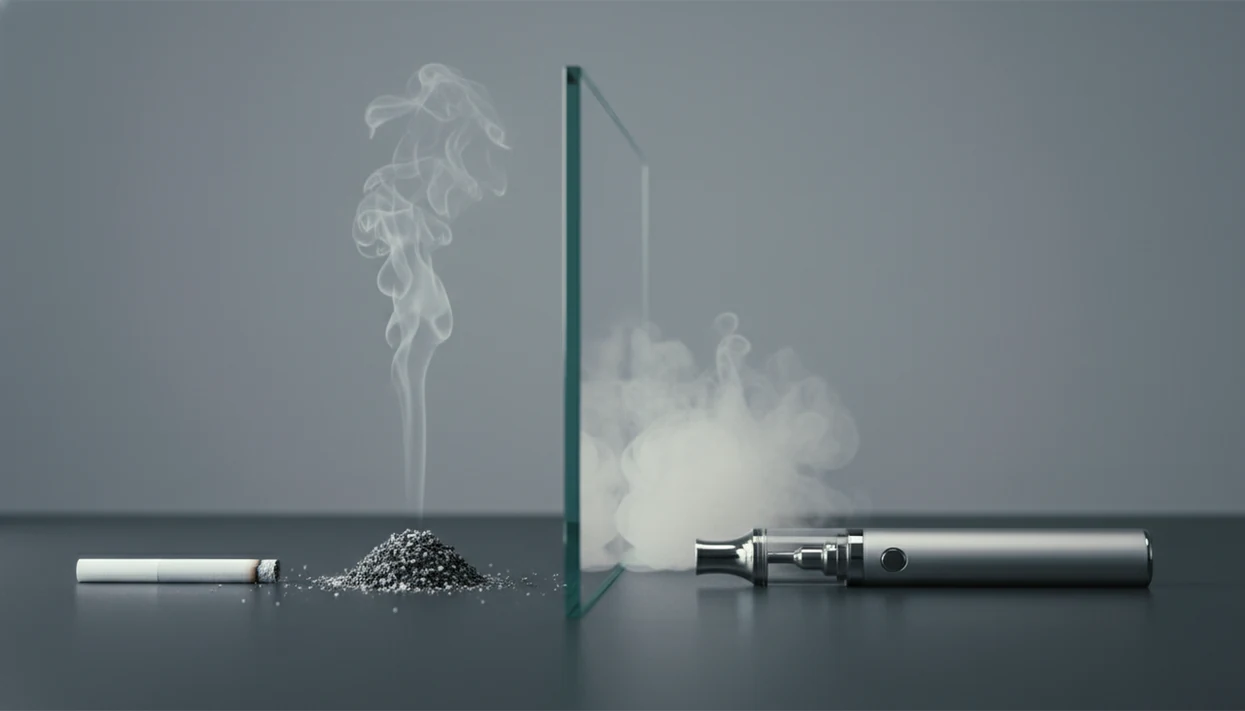
Smoking is generally more harmful than vaping because burning tobacco produces toxic smoke, tar, carbon monoxide, and carcinogens. Vaping avoids combustion, but its aerosol can contain nicotine, particles, metals, and lung irritants. For adults who smoke, switching completely may reduce some exposures. Using both products keeps cigarette-smoke exposure and nicotine dependence active.
The comparison matters most when you are deciding what to stop first. A person who vapes all day and smokes on weekends has a different problem from someone who has replaced every cigarette with a vape. Both use nicotine, but only one pattern still includes burning tobacco.
Look closely at combustion, aerosol exposure, nicotine strength, and dual use. Those details explain why smoking carries the greater overall disease burden, why vaping is not harmless, and why a partial switch can leave more risk in place than expected.
Smoking, vaping, dual use, and quitting compared
Smoking is usually more harmful overall than vaping, but vaping is not safe or risk-free. The key distinction is complete switching versus dual use, because using both products keeps cigarette-smoke exposure in the picture.
| Comparison point | Smoking cigarettes | Vaping nicotine | Dual use | Quitting nicotine |
|---|---|---|---|---|
| Lung exposure | Smoke, tar, particulates, irritants | Aerosol particles and irritants | Both exposure types | Removes both product exposures |
| Heart exposure | Carbon monoxide and smoke toxins | Nicotine and possible cardiovascular stress | Continued smoke plus nicotine dosing | Ends nicotine-driven dosing cycle |
| Nicotine dependence | Usually strong and rapid | Often strong, device-dependent | Often reinforced all day | Dependence cycle can fade over time |
| Secondhand exposure | Well-established smoke risk | Aerosol exposure concern | Both may affect others nearby | No product aerosol or smoke |
| Long-term evidence | Studied for decades | Still developing | Harder to interpret | Health milestones become clearer |
| Quitting implications | Highest priority to stop | May continue dependence | Not an endpoint | Full behavior change |
Quitting nicotine entirely removes the addiction cycle rather than replacing the delivery method. The practical question is whether cigarettes are fully gone, whether nicotine dosing is still frequent, and whether triggers like alcohol, driving, or stress are still paired with either product.
Which nicotine pattern describes you?
This comparison is for adults deciding what their nicotine pattern actually means and what the next safer step should be. People who do not smoke should not start vaping, and anyone weighing risks related to pregnancy, heart disease, or lung symptoms should talk with a clinician.
Use it most if you smoke and are considering a full switch away from cigarettes, or if you vape but still smoke at parties, during stress, after meals, or with alcohol. It can also help if the craving feels like “nicotine” in general, but the real trigger is the first drink, the bar patio, or the walk home.
- Identify whether you currently smoke, vape, use both, or use neither.
- Separate cigarette cravings from vape cravings instead of treating every urge as the same.
- Notice alcohol-linked moments, especially when one drink turns into a cigarette or a stronger vape urge.
- Avoid starting nicotine vaping if you do not already smoke.
- Contact a clinician if you are pregnant, have heart or lung disease, experience chest or breathing symptoms, have blood pressure or medication concerns, or have struggled through several quit attempts.
Smoke, aerosol, and nicotine affect the body differently
Vaping vs smoking risks work through two overlapping pathways: combustion-related harms and nicotine-related dependence. Smoking adds combustion exposure; vaping removes burning tobacco but can still deliver nicotine, particles, metals, and airway irritants.
Cigarette smoke is produced by burning tobacco. That combustion creates tar, carbon monoxide, carcinogens, and thousands of chemicals. The CDC says cigarette smoke contains more than 7,000 chemicals and notes that e-cigarette aerosol generally contains fewer harmful chemicals than cigarette smoke CDC smoking data. Fewer does not mean none.
Vaping heats liquid into aerosol. The aerosol can reach deep into the lungs, and nicotine can affect heart rate, blood pressure, withdrawal relief, and cue learning. Relief after a nicotine dose teaches the brain to connect nicotine with stress, certain places, familiar smells, and repeated times of day. A low battery blink during a craving can feel bigger than it should.
Why burning tobacco makes smoking more harmful
Why is smoking usually more harmful than vaping? The main reason is combustion: cigarettes burn tobacco, and that smoke carries tar, carbon monoxide, carcinogens, and more than 7,000 chemicals.
Combustion is tied to the major disease burden of smoking, including cancer, chronic lung disease, heart disease, vascular damage, and secondhand smoke exposure. Carbon monoxide also reduces the blood’s ability to carry oxygen, which adds strain during daily activity. People often notice the social side first, like stale smoke on a winter coat, but the body exposure is the larger issue.
That comparison should not become permission to treat vaping as harmless. Vaping avoids burning tobacco, yet it can still maintain nicotine dependence and expose the lungs to aerosol. For adults who smoke, the strongest health direction is stopping combustible cigarettes first and not settling into a mixed pattern.
The lung and nicotine risks that remain with vaping
Is vaping safer than smoking? For adults who already smoke, it is generally considered less harmful than smoking, but vape aerosol is not harmless water vapor.
E-cigarette aerosol may contain nicotine, ultrafine particles, heavy metals, volatile organic compounds, cancer-causing chemicals, and flavoring-related toxins. These exposures vary by device type, liquid ingredients, temperature, and nicotine concentration. A mint pod wrapper in a backpack is not just a habit clue; it can also mark repeated dosing across the day.
Vaping can irritate the lungs, and nicotine may stress the cardiovascular system. A peer-reviewed review in PubMed Central reported that vaping showed similar effects as smoking on lung function and cardiovascular function in the studies it reviewed the NIH. EVALI also matters historically: as of February 2020, the CDC reported 2,807 hospitalized U.S. EVALI cases or deaths and 68 confirmed deaths CDC smoking data, though those data should not be generalized to every vaping product without context.
Adults looking for a private quit structure can compare options in the best quit vaping app guide.
Seek urgent care for chest pain, severe shortness of breath, fainting, blue lips, or suddenly worsening breathing. Contact a clinician about persistent coughing, wheezing, chest tightness, pregnancy, heart or lung disease, or help choosing quit medication.
Dual use is not the same as switching completely
Dual use means smoking cigarettes and vaping during the same period. Using both products still exposes the body to cigarette smoke while reinforcing nicotine dependence.
The trap is practical, not moral. Someone may vape in smoke-free places, smoke fewer cigarettes, and delay the quit date because the numbers look better. Reduced smoking can be a step, but it is not finished progress if combustible cigarettes are still part of the week. Friday 6 p.m. drink, cigarette outside, vape later in the car. The pattern can look “reduced” while the loop stays strong.
Switching may only reduce exposure when smoking stops completely. A useful adult decision rule is simple: reduce cigarette exposure only as a step toward complete smoking cessation, not as a permanent mixed pattern.
How strong is the evidence on vaping vs smoking?
The evidence is strongest that cigarette smoking is more harmful overall, mainly because burning tobacco creates toxic smoke. The evidence on vaping is real but still developing, so “less harmful than smoking” should never be read as “risk-free.”
Public health agencies draw a clear line between smoke and aerosol: cigarette smoke contains thousands of chemicals, including many toxic and cancer-causing substances, while e-cigarette aerosol generally has fewer harmful chemicals but can still contain nicotine, particles, metals, and lung irritants. Nicotine guidance from U.S. health authorities is also consistent for adults: nicotine can be highly addictive, and dependence can keep the dosing loop alive even when the product changes.
- Separate cigarette evidence first, because decades of data connect smoking with cancer, heart disease, lung disease, and death.
- Treat vaping evidence as newer, product-dependent, and still unfolding across devices, liquids, and use patterns.
- Check whether the comparison assumes complete switching or ongoing dual use.
- Avoid calling dual-use data clean, because people who use both may differ in dependence, quit attempts, and cigarette reduction.
- Remember that relative risk is a ranking, not a safety label.
Track one normal week before choosing a quit plan
A useful comparison starts with your actual pattern, not a generic ranking of products. Count what happens for one normal week before choosing a quit direction.
- Count cigarettes each day, including partial cigarettes and “only when drinking” smoking.
- Log vaping sessions by time, place, nicotine strength, and device type when you know it.
- Identify nicotine triggers such as waking, driving, work breaks, stress, boredom, and alcohol.
- Note dual-use situations where vaping delays smoking but does not replace it completely.
- Choose a quit direction such as stopping cigarettes first, planning a vape taper, or working toward nicotine-free days.
- Track cravings with a short note on intensity, trigger, coping action, and whether the craving passed.
For a phone-based workflow, the how to stop vaping with phone guide goes deeper into reminders and craving windows.
Five myths that blur the difference between safer and safe
Common myths about “is vaping safer than smoking” often turn a relative-risk question into a false safe-or-dangerous choice. The better question is what exposure remains, what dependence remains, and what pattern helps you actually quit.
- Myth: Vaping is just water vapor. Reality: vape aerosol can contain nicotine, particles, metals, volatile organic compounds, and flavoring-related toxins.
- Myth: Safer than smoking means safe. Reality: lower exposure than cigarette smoke is not the same as no health risk.
- Myth: Dual use is a healthy middle ground. Reality: smoking even some cigarettes keeps combustion exposure active.
- Myth: Nicotine is the only problem. Reality: nicotine drives dependence, but smoke and aerosol can add separate lung and heart exposures.
- Myth: Quitting smoking by vaping ends dependence automatically. Reality: nicotine dosing can continue unless there is a plan to reduce or stop it.
Adults who want a structured comparison between tapering and a fixed quit date can use the vape tapering vs quit date breakdown.
Complete switching vs becoming nicotine-free
The strongest health direction is moving away from combustible cigarettes and, where possible, toward nicotine-free living. Adults who do not smoke should not start vaping, because it adds nicotine addiction and health risk without a quitting benefit.
Adults who smoke and vape should avoid treating dual use as an endpoint. The most evidence-backed direction for reducing smoking-related exposure is complete smoking cessation combined with a plan for cravings, cues, and relapse prevention. Clinicians typically suggest extra guidance for pregnancy, heart or lung disease, heavy dependence, medication questions, or repeated quit attempts.
For people tracking mixed nicotine and alcohol triggers, a private log can help connect the weeknight pour after laptop shutdown with the cigarette or vape urge that follows.
People comparing private tools can also review a stop vaping app for adults if vaping is the main behavior they want to change.
Use quit apps as support, not the whole treatment plan
Phone-based quit support can help with tracking and behavioral prompts, but the evidence does not support treating every app as a proven standalone treatment. A 2025 systematic review of 31 studies found possible improvement in six-month continuous abstinence compared with minimal support, but the authors rated the evidence low-certainty. Structured psychological or behavioral features appeared more useful than simple counters and badges.
Results across reviews are mixed. A 2023 review of nine randomized trials found no statistically significant overall advantage for smartphone interventions, although higher adherence was associated with better outcomes. Apps are best used alongside established options such as counseling, a quitline, nicotine replacement, or prescription medication when appropriate.
App-store ratings reflect user feedback, not verified long-term quit rates.
Symptoms and situations that need clinical advice
Talk with a clinician if nicotine use overlaps with pregnancy, heart disease, chest pain, breathing problems, or several unsuccessful quit attempts. Apps and trackers can support awareness, but they are not medical treatment or a substitute for care.
- Seek urgent care if you have emergency symptoms such as chest pain, severe shortness of breath, fainting, blue lips, or sudden worsening breathing.
- Tell a clinician if you are pregnant, trying to become pregnant, have heart disease, have high blood pressure concerns, or notice wheezing, coughing, tightness, or breathlessness.
- Describe your pattern honestly, including cigarettes, vapes, nicotine strength when known, dual use, alcohol-linked cravings, and first-use timing after waking.
- Ask about options such as nicotine replacement, prescription medications, counseling, quitlines, or a combined plan for withdrawal and relapse prevention.
- Bring up withdrawal if symptoms feel severe, sleep is falling apart, mood feels unmanageable, or you have tried to quit several times and keep returning to the same loop.
Questions about vaping and smoking risks
Is vaping worse than smoking cigarettes?
Smoking is generally more harmful because burning tobacco produces tar, carbon monoxide, carcinogens, and thousands of chemicals. Vaping avoids that combustion, but it still exposes the lungs to aerosol that may contain nicotine, particles, metals, and irritants. Less harmful than smoking does not mean harmless.
Is vaping bad for your lungs?
Vape aerosol can reach deep into the lungs and may contain ultrafine particles, volatile organic compounds, metals, and other irritants. The contents vary by device, liquid, temperature, and use pattern. Get medical advice for ongoing coughing, wheezing, chest tightness, breathlessness, or a sudden decline in breathing.
Does switching completely from smoking to vaping reduce risk?
For an adult who already smokes, replacing every cigarette may reduce exposure to combustion-related toxins. The reduction depends on stopping cigarettes completely rather than using both products. Vaping still carries aerosol and nicotine risks, and it can maintain dependence unless there is a later plan to reduce or stop vaping.
Is using cigarettes and vapes together dangerous?
Dual use keeps cigarette-smoke exposure in place while often extending nicotine dosing across the day. Smoking fewer cigarettes may be a temporary step, but it is not equivalent to quitting smoking. A plan should have a clear endpoint, such as stopping cigarettes completely and then addressing continued vaping.
Is vape aerosol just water vapor?
No. E-cigarettes heat liquid into an aerosol rather than harmless water vapor. That aerosol may contain nicotine, ultrafine particles, heavy metals, volatile organic compounds, cancer-causing chemicals, and flavoring-related toxins. The exact mixture differs across liquids, devices, temperatures, and patterns of use.
Can vaping raise blood pressure or affect the heart?
Nicotine can increase heart rate and blood pressure and may place stress on the cardiovascular system. The effect varies with nicotine concentration, device, dose, and personal health. People with heart disease, chest symptoms, fainting, or blood pressure concerns should discuss nicotine use and quitting options with a clinician.
Are nicotine risks the same in cigarettes and vapes?
Both products can deliver enough nicotine to sustain dependence, withdrawal, and strong cue-based cravings. Delivery speed and dose vary by cigarette, device, liquid strength, and use pattern. Cigarettes add the major harms of combustion, while vaping adds aerosol exposures without burning tobacco.
Should someone who does not smoke start vaping?
No. A person who does not smoke gains no smoking-related risk reduction by starting to vape. Vaping can introduce nicotine dependence and expose the lungs to aerosol. Youth, pregnant people, and people who do not currently use nicotine should avoid vaping.