Stop Vaping Withdrawal Timeline From Day One Onward
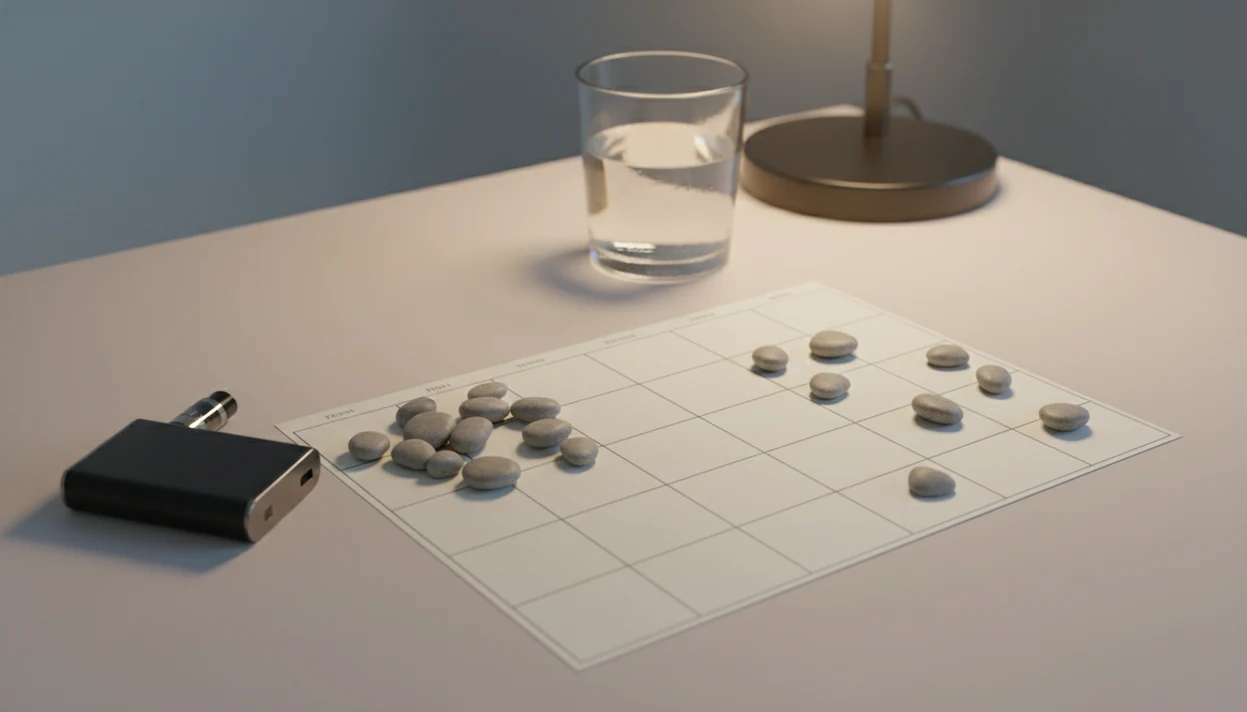
A stop vaping withdrawal timeline usually starts within 4–24 hours, peaks around days 2–3, and eases over the next 2–4 weeks for many people. Clinical nicotine-withdrawal references describe symptoms beginning within hours, peaking in the first few days, and improving over the following weeks merckmanuals smoking data. Cravings and mood changes can still appear later because breaking the habit and trigger loop often takes longer than clearing nicotine withdrawal.
Definition: A vape withdrawal timeline is the rough day-by-day pattern of nicotine withdrawal symptoms, cravings, and habit triggers after a person stops vaping.
TL;DR
- Most nicotine withdrawal symptoms begin 4–24 hours after the last vape and are usually hardest around days 2–3.
- The worst physical symptoms often fade over a few days to a few weeks, with many people feeling much better after about one month.
- Cravings can return for months when triggers appear, even after the main physical withdrawal period has passed.
Stop Vaping Withdrawal Timeline at a Glance
Quick answer: For many people, vaping withdrawal starts the same day they stop, feels strongest in the first few days, and gradually becomes easier over the next several weeks. Physical nicotine withdrawal often improves before habit cues do, so cravings can still show up around stress, routines, alcohol, driving, or social situations.
Key takeaways
- Expect cravings to come in waves; most urges pass faster if you delay, breathe, or change location.
- Irritability, low mood, restlessness, and sleep changes are common early withdrawal symptoms.
- Trigger planning matters because routines can keep cravings active after nicotine levels fall.
- Nicotine replacement or quit-smoking medication may help some people, but it should be discussed with a clinician or pharmacist.
- A slip does not erase progress; review what triggered it and restart the next planned choice.
- Seek medical or mental health support if symptoms feel severe, unsafe, or hard to manage.
The quit vaping timeline usually moves from early cravings to a short peak, then a slower settling period. Physical withdrawal and habit-trigger cravings overlap, but they are not the same thing.
| Time after last vape | What may happen |
|---|---|
| First hours | You may feel normal at first, then notice checking pockets or reaching for the device. |
| Day 1 | Symptoms commonly begin 4–24 hours after the last nicotine dose. Cravings, irritability, headache, and restlessness may appear. |
| Days 2–3 | Withdrawal often peaks. The low battery blink during a craving can feel louder than it should. |
| Week 1 | Physical symptoms may start easing, but routines still pull hard. |
| Weeks 2–4 | Many symptoms fade over about 3–4 weeks, though mood and sleep can still vary. |
| After one month | Triggers may return during stress, alcohol, driving, or social cues. |
Nicotine strength, use frequency, dependence level, mental health, and quit aids can all shift this timeline.
Five Facts About the Vape Withdrawal Timeline
- Symptoms often start 4–24 hours after the last vape, especially for people who used nicotine all day.
- Symptoms often peak around day 2–3, when cravings and irritability can feel most intense.
- Many physical symptoms fade over 2–4 weeks, though the exact pace varies.
- Occasional urges can appear for months because triggers outlast nicotine clearance.
- Severe or worsening mental health symptoms deserve professional support, not just more willpower.
Vaping is common enough that many adults are asking the same questions. The CDC estimated that 4.5% of U.S. adults, about 11 million people, were current e-cigarette users in 2021 CDC report.
The pocket check is real.
For most adults, the early vape withdrawal timeline is temporary, while the habit loop needs a longer plan.
How Vaping Nicotine Withdrawal Symptoms Work
Vaping nicotine withdrawal happens when the brain and body adjust to lower nicotine after repeated exposure. Nicotine affects reward, attention, stress response, and routine reinforcement, so stopping can produce cravings, irritability, restlessness, sleep disruption, headaches, low mood, and brain fog.
High-nicotine disposables and nicotine salts may make the first few days feel sharper for some people. They can deliver nicotine quickly, and frequent small hits train the brain to expect relief on demand. Sweet vapor fog in a bedroom mirror is not just a memory; it is part of the cue pattern.
There are two processes here: chemical withdrawal and learned behavior loops. Chemical withdrawal follows nicotine withdrawal kinetics. Habit loops are the routines tied to driving, drinking, scrolling, work breaks, or seeing a friend vape. A broader nicotine withdrawal timeline can help separate those pieces.
Before You Start a Quit Vaping Timeline
Before quitting, write down your nicotine strength, device type, daily use pattern, and top trigger times. A person using a 5% disposable from wake-up to bedtime may need a different plan than someone borrowing a vape only on weekends.
Set a quit date or a reduction plan. Remove devices, chargers, pods, and backup disposables from easy reach. Plan substitutes for the hand-to-mouth habit: gum, mints, a straw, a water bottle, or a short walk around the block.
Support can include nicotine replacement therapy, clinician guidance, quitlines, trusted people, and tracking tools. MeQuit is a quit smoking app that helps adults stop smoking, stop vaping, drink less, and track cravings, streaks, and milestones. Apps can support a quit plan, but they do not replace medical care, medication advice, or urgent mental health support.
Step 1: Track Day One Vape Withdrawal Symptoms
Day one can bring cravings, irritability, anxiety, restlessness, headache, appetite changes, and concentration problems. Symptoms can begin 4–24 hours after the last nicotine dose, but some people notice the mental pull before the body catches up.
Use the first day to collect data, not judge yourself.
- Log the craving time, intensity, location, trigger, and response.
- Drink water and eat regular meals to avoid adding hunger to withdrawal.
- Move briefly, even for two minutes, when restlessness spikes.
- Delay the urge for five minutes before making any decision.
- Use planned quit aids if you chose them with appropriate guidance.
A chest flutter near the corner store may feel alarming, but a short craving window is common. Severe, unusual, or unsafe symptoms are different and deserve help.
Step 2: Prepare for Peak Vape Withdrawal on Days 2–3
Withdrawal commonly peaks around days 2–3. Strong cravings, irritability, mood swings, sleep disruption, brain fog, restlessness, and increased appetite are all common during this window.
Try a simple peak-day script:
- Delay the vape decision for 10 minutes.
- Distract yourself with a task that uses both hands.
- Drink water or something nonalcoholic.
- Breathe slowly, with a longer exhale than inhale.
- Move your body for a short burst.
- Message someone before you buy a device.
Strong symptoms at this stage reflect nicotine dependence, not failure. Clinicians typically recommend combining behavioral support with approved quit aids when dependence is strong or prior quit attempts were difficult. CDC guidance also notes that counseling and FDA-approved quit-smoking medicines can improve quit success for adults trying to stop nicotine use CDC smoking data. Quit aids can also change the intensity and timing of symptoms, so your day 2 may not look like someone else’s.
Step 3: Manage Week One Quit Vaping Triggers
By week one, physical symptoms may start easing after the peak, but triggers often remain strong. Waking up, driving, work breaks, stress, alcohol, coffee, meals, gaming, scrolling, and social settings can all cue the old routine.
Swap the routine before the craving gets loud. Keep gum in the car. Take a different route after lunch. Text support during the break you used to spend outside. Change rooms if scrolling on the couch always paired with vaping.
Alcohol deserves special attention. Beer breath during a vape craving can lower inhibition and make “just one hit” feel reasonable. People who track both nicotine and drinking often spot patterns faster, especially around Friday evenings. A quit smoking and drinking app can help map those linked triggers without turning the process into a public confession.
Step 4: Review Weeks 2–4 Vaping Nicotine Withdrawal Changes
Do vaping withdrawal symptoms get better during weeks 2–4? For many people, headaches, restlessness, sleep problems, and intense cravings continue easing during this period, but the improvement may be uneven.
Government guidance says withdrawal after quitting smoking or vaping usually lasts from a few days to a few weeks, and many people feel much better after about one month gov smoking data. That does not mean everyone wakes up “normal” on day 30.
Mood, anxiety, and concentration can still fluctuate. Review your logs for craving frequency, duration, and recovery time. Maybe the urge used to last 18 minutes and now fades in six. That counts. The most useful quit vaping timeline measures trend lines, not a fixed finish date.
Step 5: Prevent Relapse After the Vape Withdrawal Timeline
After the main vape withdrawal timeline fades, occasional cravings can still return for months. Stress, social cues, alcohol, old routines, and seeing someone use a familiar device can bring the urge back fast.
A lapse is a moment. A relapse is a return to the old pattern. If you vape once, return to the plan quickly and ask what triggered it. Reset, not restart from zero.
Use milestone tracking, trigger reviews, support messages, and scripts for offers to vape. “No thanks, I don’t use those anymore” works better when you rehearse it before the party. Tools like Me Quit can help with private progress tracking, money saved, and health milestones, but the plan still needs real-world practice.
The worst withdrawal symptoms last only a few days to a couple of weeks for most people, but behavior change continues after that.
Common Mistakes in a Stop Vaping Withdrawal Timeline
Mistake 1: Assuming withdrawal lasts forever. Most physical symptoms ease over days to weeks, even when cravings still show up later.
Mistake 2: Thinking strong withdrawal means quitting is impossible. Strong early symptoms usually mean your brain adapted to nicotine, not that you cannot quit.
Mistake 3: Focusing only on physical symptoms. Mood, sleep, alcohol, stress, and trigger patterns can keep the urge alive after headaches fade.
Mistake 4: Relying on detox teas or supplement hacks. These products have limited evidence for speeding nicotine withdrawal, even if they feel like action.
Mistake 5: Not asking for help. Severe, persistent, or unsafe symptoms need professional support. Quiet suffering is not a quit strategy.
For private tracking, Me Quit mequit addiction recovery hub for quit smoking, stop vaping, quit drinking, and mindful alcohol reduction can support day-by-day planning; it is not a guaranteed cure or medical detox plan.
Limitations
A stop vaping withdrawal timeline is a guide, not a personal forecast.
- There is no one-size-fits-all timeline because nicotine dose, device type, years of use, genetics, stress, and mental health vary.
- Detox products and supplement hacks have limited evidence for speeding nicotine withdrawal.
- People with severe mood symptoms, chest pain, suicidal thoughts, or unsafe withdrawal experiences should seek urgent or professional help.
If symptoms feel medically unusual, involve self-harm thoughts, or include chest pain or severe shortness of breath, treat that as a safety issue rather than a normal craving wave. In those cases, contact emergency services, a clinician, or a crisis line right away.
If you also smoke cigarettes, a quit smoking timeline may help you compare nicotine patterns across products.
When to Seek Medical or Mental Health Help
Get help when symptoms feel unsafe, severe, or different from your usual withdrawal pattern. Cravings, irritability, sleep trouble, and restlessness can be common; chest pain, severe shortness of breath, fainting, or self-harm thoughts are not something to ride out.
Use this as a safety check during your quit timeline:
- Treat chest pain, severe shortness of breath, fainting, confusion, or symptoms that feel suddenly dangerous as urgent.
- Contact emergency services right away if you might hurt yourself or someone else, or if you feel unable to stay safe.
- Reach out for crisis support if severe anxiety, depression, panic, self-harm thoughts, or unsafe urges show up during withdrawal.
- Ask a clinician for quit-planning help if you are pregnant, take medications, have heart or lung disease, live with complex mental health conditions, or have a history of substance use problems.
- Tell someone you trust what is happening so you are not making safety decisions alone during a craving spike.
Withdrawal can be uncomfortable and still be manageable. Unsafe symptoms deserve immediate support, even if they appear during a quit attempt.
FAQ
When does vape withdrawal start after my last vape?
Vape withdrawal often starts 4–24 hours after the last vape. Timing varies by nicotine strength, frequency of use, and dependence level.
What day is usually the hardest when quitting vaping?
Days 2–3 are commonly the hardest because nicotine withdrawal often peaks then. Some people feel the peak earlier or later.
How long do vape cravings last after quitting?
Intense cravings often fade over a few weeks. Trigger-based urges can return for months in familiar situations.
Is quitting vaping cold turkey safe for adults?
Many adults quit vaping abruptly without serious problems. People with strong dependence, pregnancy, medical conditions, or mental health concerns may need quit aids or clinician support.
Why am I so irritable after I stop vaping?
Irritability is a common nicotine withdrawal symptom. It can also come from stress response changes and disrupted routines.
Can vaping withdrawal cause anxiety?
Anxiety can happen during nicotine withdrawal. Seek support if anxiety is severe, worsening, or feels unsafe.
Will my sleep improve after quitting vaping?
Sleep may be disrupted during early withdrawal. It often improves as nicotine withdrawal settles.
Do nicotine patches delay vape withdrawal?
Nicotine patches can reduce withdrawal intensity while supporting quitting. They change nicotine delivery rather than keeping the vaping habit in place.
Why do vape cravings return weeks or months later?
Later vape cravings are often triggered by habits, places, stress, alcohol, or social cues. They do not always mean physical withdrawal has restarted.