Why Alcohol Cravings Hit at the Same Time Every Day
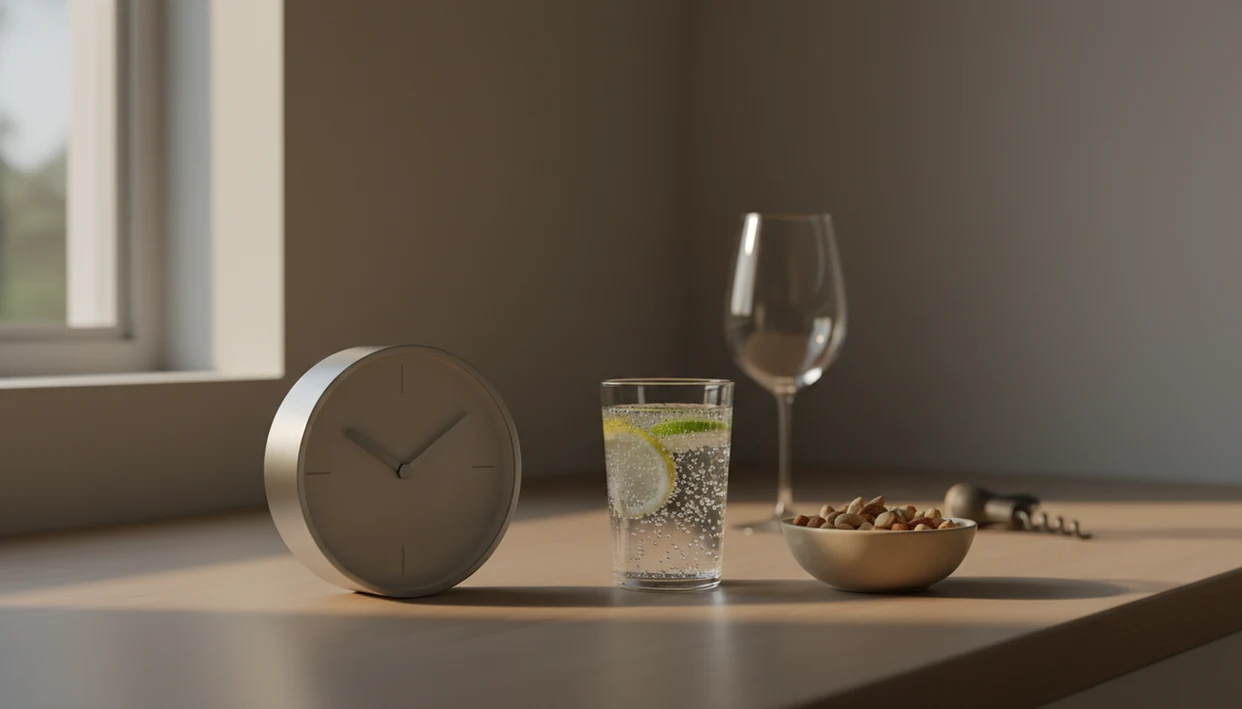
A cue induced alcohol craving happens when your brain has learned to connect a time, place, object, mood, or ritual with drinking, so the urge can appear before you consciously decide anything. That predictable 5pm alcohol craving is often a conditioned habit cue, not a character flaw.
Definition: Cue-induced alcohol craving is a learned urge to drink that is triggered by alcohol-linked cues such as time of day, routines, places, emotions, bottles, glasses, ads, or social settings.
TL;DR
- The craving is often triggered by a cue, not by a sudden lack of willpower.
- Time-based cues such as 5pm, weekends, dinner, and Friday nights can become conditioned drinking signals.
- Breaking the loop usually requires changing the cue, delaying the response, and building a replacement ritual.
At-a-glance signs of cue-induced alcohol craving
Quick answer: Cue-induced alcohol cravings are learned urges that can appear when familiar signals predict drinking, such as a certain hour, glass, meal, room, or emotion. For many people, the goal is not to “argue” with the craving, but to change the cue, delay the response, and repeat a new routine until the old link weakens.
Key takeaways
- A craving can start before conscious choice because the brain recognizes a drinking pattern.
- Changing the first few minutes after a cue often matters more than willpower.
- Physical distance from alcohol cues can make an urge easier to ride out.
- A simple plan works best when it names the cue, the risk window, and the replacement action.
- If you drink heavily or may have withdrawal symptoms, ask a clinician before stopping suddenly.
- Tracking cues over time can reveal patterns that are hard to notice in the moment.
- Time cue: The urge arrives around the same hour, such as 5pm, dinner, payday, Friday night, or Sunday afternoon.
- Place cue: Arriving home, walking into the kitchen, or sitting in the same chair can switch on the craving before you think it through.
- Object cue: Opening the fridge, seeing a wine glass, handling a corkscrew, or noticing bottles in a store aisle can produce a fast pull toward drinking.
- Mood cue: Loneliness, celebration, boredom, stress, or reward-seeking can act like internal drinking cues, especially when they repeat in the same routine.
- Social or routine cue: Cooking dinner, watching a game, meeting friends, or ending work can become linked with alcohol whether you want to quit, cut back, or simply drink less.
The suddenness is real. The trigger was often predictable.
How cue-induced alcohol craving works in the brain and routine
Cue-induced alcohol craving works through a learned loop: cue, craving, drink, and relief. With repetition, the brain starts predicting reward or relief before alcohol is consumed, so the urge may arrive as soon as the cue appears.
In plain terms, the routine teaches the body what comes next. Temporal conditioning alcohol patterns are one example. If the same drink follows the same hour often enough, the clock can become part of the drinking signal. The brain is not “choosing badly” in a moral sense; it is using learned prediction.
Experimental cue-exposure research has found that alcohol-related cues, such as drinks or drinking environments, can increase self-reported craving and physiological reactivity in people with alcohol dependence compared with neutral cues the NIH. That does not mean every craving is a disease symptom. It means habit cues and drinking can become tightly paired.
The loop is learned, so it can be interrupted.
Why a 5pm alcohol craving feels automatic
Why do I crave alcohol at 5pm? 5pm can become a conditioned cue when your brain has repeatedly linked that hour with decompression, reward, food, social contact, or relief from the workday.
Evening cravings often sit at the intersection of hunger, fatigue, stress, and transition. The laptop closes. The house gets quieter. A measuring shot glass near the sink can feel less like an object and more like a signal. For some people, the craving is for alcohol. For others, it is partly for the ritual of “I am done now.”
A situational study found that contextual cues such as parties, restaurants, bars, evenings, and weekends were associated with higher mean craving than neutral situations frontiersin. Predictability helps. If the urge usually appears at 5pm, you have a planning window at 4:30.
For many people, changing the transition ritual is easier than relying on willpower because the cue arrives before deliberate decision-making.
Alcohol ritual cravings around bottles, glasses, dinner, and weekends
Alcohol ritual cravings often come from ordinary objects and settings that have been paired with drinking. The cue may be outside you, inside you, or both.
- Kitchen and dinner cues: Bottles, cans, corkscrews, wine glasses, cooking, and plating dinner can all signal “drink now” when they have repeated together.
- Leisure cues: TV, sports, gaming, music, and the first hour after work can become context-dependent cues, not just signs of desire.
- Social cues: Restaurants, bars, parties, patios, and Friday night plans can raise craving before anyone orders.
- Internal cues: Stress, celebration, boredom, loneliness, and “I deserve this” thoughts can work as emotional prompts.
Visible alcohol cues can remain powerful after a period of abstinence; reviews of alcohol cue-reactivity research report that alcohol-related cues can increase craving and physiological response compared with neutral cues the NIH. For background on longer-term change, the brain rewiring after quitting alcohol guide explains reward learning in more detail.
Cue-induced alcohol craving versus withdrawal, stress, and habit
Cue-induced craving is one possible driver of an alcohol urge, but it is not the only one. More than one driver can be present in the same evening.
| Craving driver | Common pattern | What it may feel like | Safety note |
|---|---|---|---|
| Cue-induced craving | Appears around a learned time, place, object, person, or ritual | “The glass is there, and now I want a drink” | Often managed by cue mapping, delay, and replacement routines |
| Withdrawal-related craving | Appears after reduced intake in someone physically dependent | Shakes, sweating, nausea, agitation, insomnia, fast pulse, or confusion may occur | Seek medical advice; alcohol withdrawal can be dangerous |
| Stress-induced craving | Follows conflict, pressure, anxiety, or low mood | “I need relief right now” | Stress plus alcohol cues can create higher-risk moments |
| General habit craving | Comes from repetition without one obvious cue | “I always do this after dinner” | Habit tracking can reveal hidden triggers |
A mild hangover after two extra drinks is not the same as alcohol withdrawal. If symptoms include seizures, confusion, severe tremor, hallucinations, or unsafe drinking patterns, public-health guidance favors medical support rather than self-management alone. MedlinePlus lists alcohol withdrawal symptoms such as tremor, sweating, nausea, anxiety, seizures, and delirium tremens, and notes that severe withdrawal can require medical care medlineplus.
How to use a cue map to break habit cues and drinking
A cue map is a written record of what happened before, during, and after an urge. It turns a vague craving into a pattern you can test.
- Track the craving: Log the time, place, emotion, people nearby, object cue, craving intensity, action taken, and result.
- Name the cue: Write the simplest version, such as “5pm kitchen,” “Friday restaurant,” or “wine glass while cooking.”
- Change the setup: Move bottles out of sight, leave the kitchen, eat earlier, or schedule a different transition before the craving window.
- Delay the response: Set a 10-minute timer and do not decide about drinking until it ends.
- Replace the ritual: Choose a response that meets the same need, such as relief, taste, movement, or social contact.
- Review weekly: Look for repeated times, rooms, moods, and objects rather than judging one difficult night.
Example: 5:05pm, kitchen, hungry and tense, saw wine glass, craving 8/10, ate dinner first, walked outside, craving dropped to 4/10. Tools like Me Quit can help record cravings, streaks, and milestones, but the useful part is the pattern, not the app label.
Replacement rituals for 5pm alcohol craving and evening routines
Replacement rituals work best when they satisfy the same need as the drink. If alcohol was serving as a transition, reward, taste cue, social bridge, stress break, or sensory routine, the substitute should target that same job.
- Transition ritual: Take a 12-minute walk, shower, change clothes, or play one specific song before entering the kitchen.
- Taste ritual: Use tea, flavored sparkling water, or an alcohol-free drink in a different glass if the old glass is too cue-heavy.
- Stress relief ritual: Try slow breathing, stretching, a gym session, or a short task with a clear finish.
- Social ritual: Text a friend, step outside for a call, or plan a non-drinking check-in during the old drinking hour.
- Reward ritual: Make dinner feel deliberate with meal prep, a favorite sauce, or a plated snack before decisions about alcohol.
Simply removing alcohol can leave the cue loop untouched. Change the environment before the clock turns risky. The dopamine reward substitution alcohol explainer covers why substitute rewards can feel awkward at first.
Small setup changes count.
Strong cue-induced alcohol craving responses that work in the moment
- Delay changes the decision point: Set a 10-minute timer and treat the craving as data, not a command.
- Urge surfing gives the feeling a shape: Notice where it sits in the body, such as jaw, chest, stomach, or behind the eyes, and watch it rise, peak, and fade.
- Removing the cue lowers pressure: Leave the room, put the bottle out of sight, close the delivery app, or step away from the patio table with ashtray and pint.
- Body basics reduce false alarms: Eat something, drink water, move for five minutes, or sit somewhere brighter if hunger and fatigue are amplifying the urge.
- Support adds friction: Text one person, write the craving log, or use private tracking to learn which responses actually lower intensity over time.
A 10-minute protocol can be simple: move rooms, drink water, eat a small snack, breathe slowly, then log intensity again. If urges often arrive with next-day fog or poor sleep, the brain fog after drinking alcohol article may help you connect cravings with consequences.
Reset the room.
When to seek medical help for alcohol cravings
Seek medical help when alcohol cravings come with withdrawal symptoms, loss of control, unsafe behavior, or any risk of harm. A familiar cue craving can be managed with planning; possible withdrawal or danger needs a clinician or emergency support.
Cue cravings usually follow a learned trigger: the clock, a room, a glass, dinner, a mood. Withdrawal is different. It can appear after cutting down or stopping in someone whose body has adapted to alcohol, and it may include shaking, sweating, nausea, anxiety, insomnia, fast pulse, or feeling unusually agitated.
- Check for red flags: Treat seizures, confusion, hallucinations, severe tremor, chest pain, or extreme agitation as urgent warning signs.
- Contact a clinician before cutting down: Ask for medical guidance if you drink heavily every day, have had withdrawal before, need alcohol to feel steady, or are unsure whether stopping suddenly is safe.
- Use emergency help: Call local emergency services if you might hurt yourself, hurt someone else, drive impaired, pass out, or cannot stay safe.
- Add support early: Tell a trusted person what is happening so you are not managing a high-risk craving alone.
Self-guided tools can help with cue patterns, but they are not detox care.
Limitations
Recognizing cues is useful, but it does not automatically stop cravings. Cue work is a planning tool, not a guarantee.
- People with severe tremor, confusion, hallucinations, seizures, or possible alcohol withdrawal should seek medical guidance.
- Unsafe drinking patterns, loss of control, or risk of self-harm require professional or emergency support, not only self-guided tools.
- Apps and self-guided worksheets can support reflection, but they are not detox care, diagnosis, emergency help, or a substitute for treatment.
Me Quit can support private craving tracking, cue awareness, streaks, and reset plans, but it is not medical detox, diagnosis, emergency help, or a substitute for treatment.
FAQ
Why do I crave alcohol at 5pm?
A 5pm alcohol craving often happens because that hour has become linked with decompression, reward, dinner, or the end of work. The time itself can act as a conditioned cue.
Can time trigger alcohol cravings?
Yes. Time of day and day of week can become alcohol cues when drinking repeatedly happens at those times.
Are alcohol cravings a habit?
Alcohol cravings can be part of a habit loop, especially when the same cue repeatedly leads to drinking. They can also involve stress, mood, sleep loss, or withdrawal.
Why do wine glasses trigger cravings?
Wine glasses can trigger cravings when the brain has repeatedly paired the object with drinking and relief. The object becomes a cue before alcohol is consumed.
Do alcohol cravings go away?
Cravings often reduce with practice, changed routines, and fewer cue pairings. They can still reappear around strong cues, stress, or visible alcohol.
How long do alcohol cravings last?
Many cravings rise, peak, and fade over minutes, but duration varies by person and situation. If cravings feel unmanageable or are linked with withdrawal symptoms, medical support is appropriate.
Is urge surfing effective for alcohol cravings?
Urge surfing is a mindfulness-based technique that helps a person observe a craving without acting on it. It may help some people tolerate the rise-and-fall pattern of urges.
When are alcohol cravings dangerous?
Alcohol cravings can be dangerous when they occur with withdrawal symptoms, loss of control, unsafe drinking, self-harm risk, or risk to others. In those situations, seek medical or emergency help.