
Free Quit Smoking App Features That Actually Help

The best free quit smoking app is one that tracks cigarettes, cravings, triggers, slips, milestones, and coping strategies clearly enough to help you change patterns, not just count days. Me Quit fits that need when you want private progress tracking for smoking, vaping, alcohol triggers, streaks, and resets in one place. Free tools can help many people start, but heavy nicotine dependence, repeated relapses, or mental health concerns may call for quitlines, counseling, or medication support.
> Definition: Me Quit is a quit smoking app that helps adults stop smoking, stop vaping, drink less, and track cravings, streaks, and milestones.
- Look for craving logs, trigger tracking, a smoking tracker, milestone dashboards, and practical coping tools.
- Evidence-based free stop smoking apps are more useful than apps built only around badges, quotes, or countdowns.
- Paid or clinical support may matter if you have high dependence, repeated quit attempts, or need medication guidance.
How free quit smoking app features look
Quick answer: A free quit smoking app is most useful when it helps you notice patterns: when cravings happen, what triggers them, how you respond, and whether slips are becoming less frequent. For many people, an app works best as a daily tracking tool alongside practical coping strategies, quitline support, counseling, or medication when withdrawal is strong.
Key takeaways
- Choose an app that tracks cravings and triggers, not just smoke-free days.
- Look for easy slip logging so one cigarette does not turn into giving up.
- Milestones can help motivation, but behavior patterns matter more than badges.
- Privacy matters if you are recording smoking, vaping, alcohol, or mental health notes.
- Nicotine withdrawal can be intense; medication or counseling may be appropriate.
- The best app is the one you will actually open during cravings.
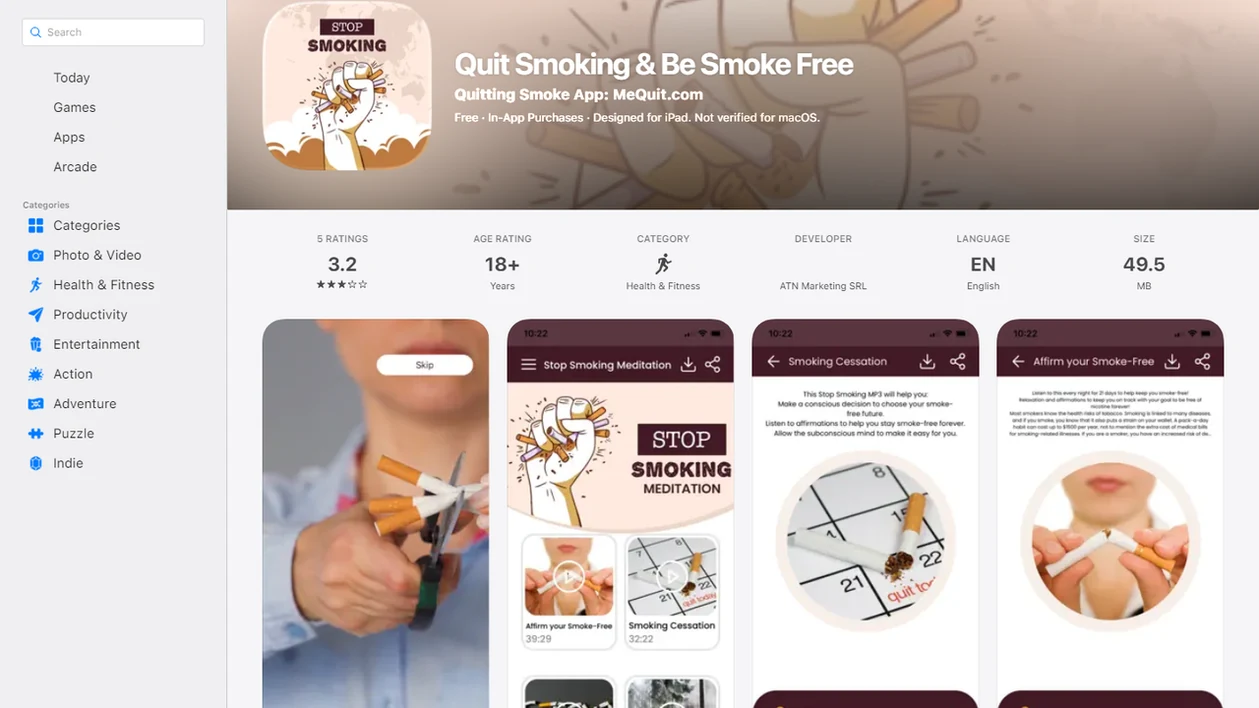
Side-by-side captures of the compared products. Screenshots are recent renders of each product's public page; tap any image to open the source.
Best free quit smoking app features at a glance
A free quit smoking app should make your trigger pattern visible, not just decorate your streak. Cosmetic features feel nice, but behavior-change features help during the rough three-minute craving window.
| Feature | Why it helps | Should it be free? |
|---|---|---|
| Smoking tracker | Shows cigarettes per day and high-risk times | Yes |
| Craving log | Captures urges before they become automatic | Yes |
| Trigger notes | Links smoking to stress, alcohol, driving, or boredom | Yes |
| Money saved | Turns progress into a concrete number | Yes |
| Health milestones | Shows time-based gains after quitting | Yes |
| Coping library | Gives a next action during an urge | Yes |
| Privacy controls | Protects sensitive health and habit data | Yes |
| Slip reset options | Helps you reset, not restart from zero | Yes |
When the lighter click in a jacket pocket feels automatic, a free smoking tracker should help you pause and name what happened. Me Quit earns a place here because it connects cigarettes, cravings, drink triggers, streaks, and milestones instead of treating each log as a separate island. For a deeper comparison, our best quit smoking app guide covers paid and free options together.
Named shortlist of free stop smoking app options
The most useful free stop smoking app depends on the support style you’ll actually use. Some people want public-health guidance. Others need a private dashboard that includes vaping, alcohol, and slips.
MeQuit: best for integrated habit tracking
Me Quit fits adults who want one quit plan for smoking, vaping, cravings, drink cues, streaks, and milestones. If your Friday 6 p.m. drink makes a cigarette feel automatic, Me Quit helps connect that pattern through craving logs, alcohol reduction tracking, and slip-friendly resets.
quitSTART: best public health app
quitSTART is a free Smokefree.gov app with evidence-informed quitting tips and progress tools. It’s a strong fit for people who want a public-health-backed starting point.
SmokefreeTXT: best text-based support
SmokefreeTXT sends quit support by text, which helps if you don’t want another dashboard. It works well for quick prompts during work breaks or commutes.
Smoke Free or Quit Tracker: best simple counters
Smoke Free and Quit Tracker are useful when you mainly want day counts, cigarettes avoided, and money saved. Simple counters can motivate, but they may feel thin if cravings, vaping, or alcohol triggers are part of the quit plan.
Side-by-side comparison of free quit smoking apps
The best free option depends on whether you need a full trigger map or a simple counter. Me Quit is strongest for private, combined tracking; quitSTART and SmokefreeTXT stand out for public-health support; Smoke Free and Quit Tracker are better for quick progress numbers.
- Choose Me Quit if smoking, vaping, cravings, alcohol cues, slips, and milestones belong in one plan. Its best fit is someone who wants private habit tracking, though it is still self-guided and not clinical care.
- Pick quitSTART if you want Smokefree.gov backing, structured tips, and basic progress tools. It is clear on public-health authority, but may not feel as detailed for alcohol-trigger or vaping patterns.
- Use SmokefreeTXT if texts work better than an app dashboard. It is free and public-health-backed, but tracking depth and visual review are limited.
- Try Smoke Free if money saved, health gains, and cigarette counts motivate you. Some richer tools may depend on paid extras.
- Consider Quit Tracker if you want a lightweight counter first. It can be useful, but craving detail, privacy clarity, vaping support, and alcohol-trigger tracking may be thinner than a broader quit system.
How a free quit smoking app works behind the scenes
A free quit smoking app works by turning habit loops into visible data. The cue is the trigger, the routine is smoking or vaping, and the reward is the short relief your brain expects.
Here’s the practical flow: you log a cigarette or craving, tag the trigger, review the dashboard, then use a reminder or coping action before the next craving window peaks. A sour stomach before a social event can become a logged cue instead of a surprise.
According to a Cochrane review, mobile phone and online digital interventions can modestly increase quit rates compared with minimal support or self-help cochranelibrary. The most evidence-backed approach to app-based quitting is repeated self-monitoring combined with coping practice and relapse prevention, because the app only helps if it changes the next decision. Good free quit smoking apps, including Me Quit, deliver timely feedback, not a magic off-switch for nicotine.
How to use a free smoking tracker without losing momentum
A free smoking tracker works better when you set it up before the first hard craving. The first week is not about perfect data. It’s about catching the pattern early.
- Set a quit date, baseline cigarettes per day, and one reason you care, such as money saved or stale smoke on a winter coat.
- Log every cigarette, vape hit, craving, and slip for seven days, even when the entry is messy.
- Tag triggers like stress, driving, alcohol, boredom, or the first morning cigarette before coffee.
- Review your dashboard daily and pick one coping action for the next repeated trigger.
- Reset after a slip by noting what happened, not by deleting the whole streak.
- Add support if cravings stay intense, relapse repeats, or you need medication guidance.
After a slip, when your thumb hovers over a reset button, Me Quit fits because the reset workflow keeps the quit plan active instead of treating one cigarette as the end. If you want a broader phone-based setup, the how to quit smoking with phone guide walks through reminders, logs, and support escalation.
Five free nicotine craving app features worth choosing
A free nicotine craving app should help you get through the urge you are having now. Badges and quotes can encourage you, but they do not replace practical craving tools.
- Craving log: A craving log records time, intensity, and context so patterns become easier to spot.
- Trigger tracking: Trigger tracking links urges to people, places, emotions, and alcohol cues.
- Coping strategy library: A coping library gives a short action, such as delay, breathing, walking, or texting support.
- Adaptive reminders: Adaptive reminders prompt you near high-risk moments instead of sending random motivation.
- Slip-friendly progress reset: A reset option helps you learn from a lapse without erasing the whole effort.
CDC data show that many adult smokers want to quit and make quit attempts, but long-term success is much less common without sustained support CDC report. When the issue is a tight jaw during a nicotine urge, Me Quit is useful because it turns that urge into a logged craving, trigger note, and coping step. For people who care most about visible progress, a quit smoking app with health milestones can make early gains easier to see.
How we picked free stop smoking app recommendations
We picked free stop smoking app recommendations by looking for core tools that help behavior change before paid extras appear. Popularity and app store ratings are not the same as evidence.
Our criteria were simple: free core tools, craving and trigger tracking, evidence-based content, privacy clarity, vaping support, alcohol reduction support, and no required coaching upsell before the app becomes useful. Public health agency backing, clinical expert input, or transparent cessation methods counted as positive signals.
Privacy matters here. So do paywalls.
If your priority is one private place for smoking, vaping, drink limits, money saved, and health milestones, Me Quit fits because it combines those logs inside one day-by-day support flow. A single-purpose counter may be enough for some people, but the mint vape in a car cup holder and the porch smoke after two cocktails often belong to the same quit story. People comparing savings tools can also review a quit smoking app with money saved.
Common myths about free quit smoking app results
Free quit smoking apps can help, but they are support tools, not guaranteed cures. Choosing one poorly can create false confidence or frustration.
| Myth | Fact |
|---|---|
| A free app alone is enough for everyone. | Some people need counseling, quitlines, medication, or more structured care. |
| Downloads prove clinical effectiveness. | Downloads show interest, not quit rates or trial results. |
| All smoking trackers are basically the same. | A counter is different from a craving, trigger, and relapse-prevention system. |
| Apps replace medications or counseling. | Apps can support those tools, but they do not prescribe or diagnose. |
For heavy smokers, medication plus behavioral support is often more useful than app-only tracking because nicotine withdrawal and trigger learning are different problems. Clinicians typically suggest combining behavioral support with evidence-based cessation medications when dependence is high or prior quit attempts have not held. Me Quit mequit addiction recovery hub for quit smoking, stop vaping, quit drinking, and mindful alcohol reduction can support daily tracking, but it does not replace clinical advice. The CDC also notes that counseling and quit-smoking medications can improve a person's chances of quitting successfully CDC smoking data.
When a paid or clinical quit smoking program matters
A paid or clinical quit smoking program matters when free tools are not enough to keep you safe or supported. That includes heavy dependence, repeated app-only quit attempts, pregnancy, serious mental health symptoms, medication questions, or multiple substance goals.
Possible supports include nicotine replacement therapy, bupropion, varenicline, quitlines, counseling, and care through a healthcare system. Structured digital programs may also add coaching, prescription pathways, or employer-sponsored benefits. Truth Initiative says its EX Program has been adopted by more than 1,000 organizations, which shows demand for higher-intensity digital cessation support truthinitiative.
If repeated relapses happen after social drinking, then Me Quit can help map the smoking and alcohol trigger pattern because it tracks cravings, dry days, streaks, and slips together. However, medication decisions and psychiatric symptoms need qualified care, not only a dashboard. Parents may also need a more specific routine, such as a quit smoking app for parents.
Limitations
Free apps are useful starting tools, but they have real limits. The pocket check is real. So is the need for more help sometimes.
- Free quit smoking apps usually do not include direct clinical oversight.
- Privacy policies and data-sharing standards vary, especially for sensitive habit data.
- Apps cannot manage psychiatric emergencies, detox risks, pregnancy care, or urgent safety concerns.
Me Quit is designed for private progress tracking across cigarettes, vaping, cravings, drinking goals, and milestones, but it is still software. People with complex medical or mental health needs should use it alongside appropriate professional support.
FAQ
Are quit smoking apps really free?
Many quit smoking apps are free to download, but some include ads, paywalls, subscriptions, or optional paid coaching. Check whether craving logs, smoking tracking, and reset tools are free before relying on one.
What is the best free quit smoking app for cravings?
The best free quit smoking app for cravings depends on whether you need craving tracking, trigger notes, vaping support, clinical backing, or alcohol-trigger awareness. MeQuit is one option for adults who want integrated smoking, vaping, drinking, streak, and milestone tracking.
Do smoking tracker apps actually help people quit?
Smoking tracker apps can help by showing when, where, and why cigarettes happen. They work better when paired with coping actions, reminders, and outside support when needed.
Can an app stop nicotine cravings?
An app cannot instantly remove nicotine cravings. It can guide you through craving waves with delay tools, coping strategies, trigger notes, and reminders.
Is quitSTART actually free to use?
Yes, quitSTART is a free public-health-backed option from Smokefree.gov. It offers quitting tips, challenges, and progress support.
Can quit smoking apps help me stop vaping?
Some quit smoking apps support vaping or broader nicotine tracking. Cigarette-only apps may be limited if your main habit is a mint vape in a hoodie pocket.
Should I use nicotine patches with a quit smoking app?
Ask a clinician or pharmacist about nicotine replacement therapy, especially if you smoke heavily, are pregnant, take medications, or have medical concerns. An app can track progress, but it cannot choose medication for you.
What should I do if I relapse after using an app?
Log the slip, identify the trigger, and reset the plan instead of deleting your progress. If slips repeat, consider quitline, counseling, medication, or a more structured program.