Why Your Brain Swaps Alcohol for Sugar, Snacks, and Other Rewards
Quick answer: dopamine reward substitution alcohol describes the pattern where the brain learns to use drinking as a fast relief-and-reward shortcut, then seeks a similar hit from sugar, salty snacks, nicotine, scrolling, or connection when alcohol is reduced. The craving is not just about pleasure; it is a learned “wanting” loop tied to cues, stress, boredom, and loneliness.
> Definition: Dopamine reward substitution is the shift from one fast reward source, such as alcohol, to another reward source, such as sugar, snacks, nicotine, or social reassurance, when the brain is still seeking relief and stimulation.
This guide is educational and cannot diagnose Alcohol Use Disorder, withdrawal risk, depression, or another medical condition. If you drink heavily, have withdrawal symptoms, or feel unsafe, seek medical care before stopping alcohol abruptly.
TL;DR
- Alcohol trains mesolimbic reward pathways to connect drinking with relief, pleasure, and anticipation.
- After cutting back, cravings can shift toward sugar, salty snacks, vaping, smoking, scrolling, or social contact because those rewards can activate overlapping motivation circuits.
- The practical goal is not to remove all rewards, but to plan slower, healthier rewards that retrain the brain without creating a new compulsive loop.
Dopamine Reward Substitution and Alcohol at a Glance
Quick answer: Dopamine reward substitution with alcohol means the brain may look for another fast reward when drinking is reduced, such as sugar, nicotine, salty food, scrolling, or social reassurance. For many people, the goal is not to remove reward, but to replace fast, cue-driven rewards with safer, planned rewards that still meet needs for relief, pleasure, or connection.
Key takeaways
- Alcohol cravings often reflect learned wanting, not just willpower or pleasure.
- Replacement cravings may spike during stress, boredom, fatigue, or social isolation.
- Eating enough protein, fiber, and regular meals may reduce rebound sugar urges.
- Planned rewards work better when they are specific, immediate, and realistic.
- Nicotine, vaping, and alcohol can reinforce each other, so tracking both may reveal patterns.
- Severe withdrawal symptoms, prior seizures, or heavy daily drinking warrant medical advice before cutting down.
Dopamine reward substitution with alcohol means the brain has learned, “drinking helps me feel better,” then looks for another quick reward when alcohol is reduced. That substitute might be sugar, salty snacks, nicotine, vaping, scrolling, or reassurance from another person.
Alcohol reward pathways make this feel automatic. Dopamine is less a simple “pleasure chemical” and more a signal for motivation, learning, and wanting. That is why sugar cravings after quitting alcohol can show up even when someone feels committed to drinking less.
The social piece matters too. Loneliness and alcohol cravings can become linked when drinking has been used for comfort, confidence, or relief after isolation.
Alcohol is also deeply normalized. In a 2022 U.S. national survey, about 60% of adults reported drinking in the past month, according to NIAAA NIAAA alcohol data. Cravings are learned brain responses, not moral failures.
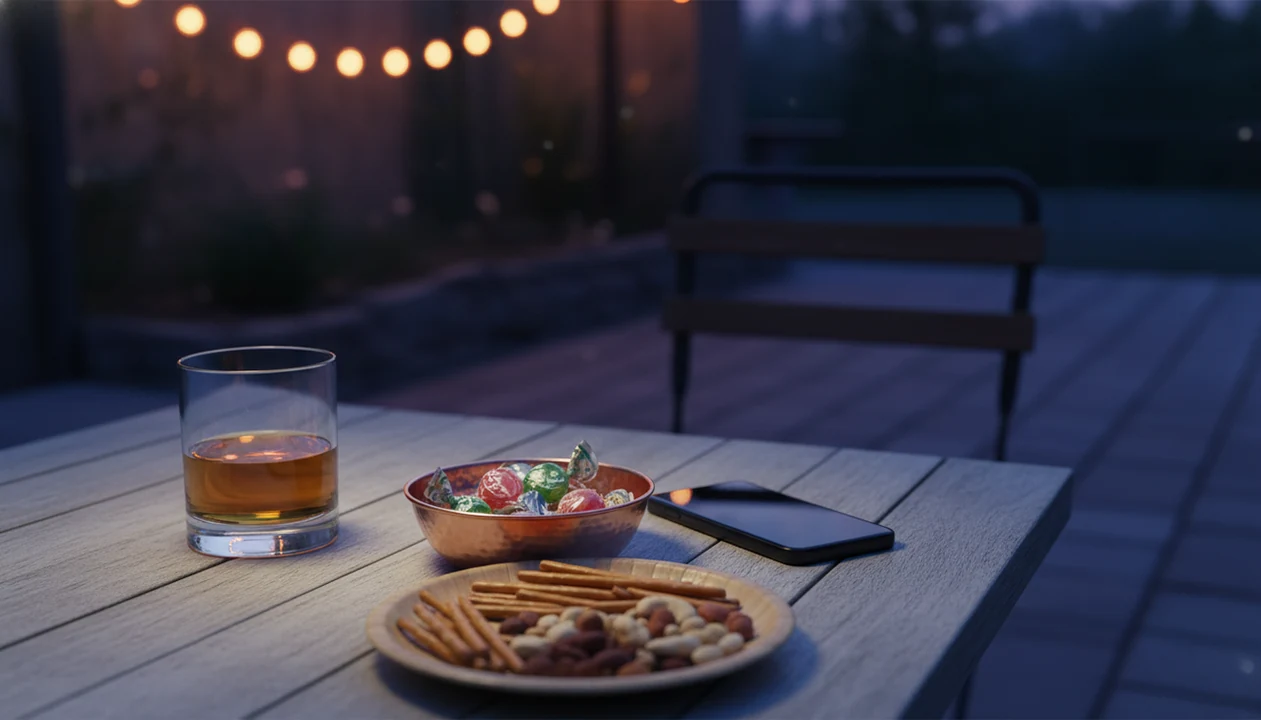
The patio table remembers the ashtray and pint.
How Alcohol Reward Pathways Train the Brain
Alcohol reward pathways are learned brain circuits that connect drinking with relief, anticipation, and repeated behavior, especially through the mesolimbic dopamine system.
The mesolimbic system includes the ventral striatum, a reward area involved in motivation and habit learning. Neuroimaging research has found that alcohol increases dopamine specifically in the ventral striatum, not evenly throughout the whole brain (the NIH). In plain terms, alcohol does not simply “light up the brain.” It targets a reward-learning hub.
Cues can matter before the first sip. Evening time, a bar stool, payday, a certain restaurant, or the laptop closing after work can all predict alcohol. Dopamine may rise with that expectation, which helps explain why craving can arrive before a drink is poured.
Wanting is not the same as liking. A person can strongly want alcohol while also disliking the hangover, anxiety, or next-day brain fog. Alcohol also affects stress, endorphin, sleep, and mood systems, so dopamine is important, but incomplete.
Five Facts About Dopamine, Alcohol Cravings, and Reward Substitution
- Alcohol teaches reward associations. Alcohol stimulates reward circuits that help the brain connect drinking with relief, reward, and repeated routines.
- Dopamine is about wanting. Dopamine supports motivation, learning, and habit formation, not just pleasure or enjoyment.
- Cues can trigger craving early. Evening time, payday, restaurants, work stress, boredom, rejection, or loneliness can trigger alcohol cravings before any alcohol is consumed.
- Sugar cravings after quitting alcohol are common. Sweets and alcohol can activate overlapping reward pathways, and alcohol also brings calories, ritual, and emotional relief.
- Reward substitution can change. The pattern is not inevitable or permanent; planned sober rewards can help retrain the system over time.
For many people, planned sober rewards are easier than pure willpower because they give the brain a replacement action when an old cue fires.
A useful craving note is specific: 7:40 p.m., alone after dinner, intensity 8 out of 10, texted my sister, urge fell to 5.
Sugar Cravings After Quitting Alcohol: The Brain’s Backup Reward
Sugar cravings after quitting alcohol often happen because the brain is searching for a fast reward after losing alcohol. Sweets are accessible, quick, and strongly tied to comfort for many people.
Alcohol contains calories. It can also be paired with blood sugar swings, evening rituals, stress relief, and the feeling that the day is finally over. When the drink disappears, the brain may still expect a rapid shift in state. Ice cream, candy, chips, and highly processed foods can become the nearest substitute.
That does not mean someone has failed. A bag of salty snacks after a hard evening is often a risk-reduction step compared with drinking. But relying only on sweets can keep the same fast-reward loop active.
Planned treats can help when they are paired with protein, hydration, sleep, movement, and non-food rewards. A more detailed brain timeline is covered in dopamine after quitting alcohol.
Dry mouth after skipping drinks can masquerade as hunger.
Loneliness and Alcohol Cravings in Social Reward Pathways
Loneliness and alcohol cravings are linked because alcohol can become a learned substitute for connection, relief, or social ease. The brain may treat drinking as a shortcut when social needs feel unmet.
Social settings can become cues. So can rejection, boredom, isolation, or the quiet room after plans fall through. For some people, alcohol is tied to being included. For others, it is tied to tolerating being alone.
Research on social context and dopamine is still evolving. It does not predict every person’s experience, and small studies do not always translate neatly into daily life. Still, mood overlap is clinically important. Meta-analytic data indicate that 20–30% of individuals in alcohol treatment also meet criteria for a current depressive disorder the NIH.
Practical substitutes should match the need. Text a friend, attend a meeting, walk somewhere with people nearby, or log the craving before deciding. The full trigger pattern is closely related to cue induced alcohol craving.
Alcohol Reward Substitution Versus Healthy Sober Rewards
Alcohol reward substitution becomes risky when the new reward is automatic, escalating, secretive, or hard to stop. Healthy sober rewards are chosen in advance, time-limited, and connected to values.
| Pattern | Short-term effect | Long-term risk | Better adjustment |
|---|---|---|---|
| Alcohol | Fast relief and disinhibition | Reinforced craving, tolerance, harm | Delay, support, planned non-alcohol reward |
| Sugar binges | Quick comfort and energy | Same fast-reward loop may persist | Planned dessert with a meal |
| Salty snacks | Sensory comfort and distraction | Mindless eating pattern | Portion, hydration, protein |
| Nicotine or vaping | Rapid stimulation | Cross-addiction risk | Craving log, NRT discussion with clinician if relevant |
| Doomscrolling | Numbs boredom | Sleep loss and avoidance | Timed scroll window |
| Exercise | Mood shift and agency | Overuse if rigid | Moderate, sustainable movement |
| Creative hobbies | Absorption and novelty | Low risk for most users | Keep materials easy to access |
| Social connection | Belonging and regulation | Depends on relationship quality | Text, meeting, walk, call |
Recovery needs rewards. It is not a punishment plan.
Craving trackers can help adults see whether a substitute is helping or turning into another loop. The safest resources show patterns and next actions; they do not promise instant cures, detox guidance, or medical care.
5-Step Dopamine Reward Planning to Drink Less
A dopamine reward plan works by matching the old alcohol cue with a safer, planned reward before the craving becomes automatic. The aim is not to erase wanting in one night; it is to practice a different response repeatedly.
- Map the cue by naming the time, place, emotion, person, or ritual. Write “9:15 p.m., couch, lonely, wine thought” rather than “bad mood.”
- Name wanting separately from liking. Say, “My brain wants alcohol,” even if you do not want the consequences.
- Choose one planned sober reward from connection, movement, taste, novelty, rest, or progress tracking. Keep it realistic enough for a tired weeknight.
- Delay the decision for 10 to 20 minutes. Craving waves often change when food, water, movement, or contact arrives first.
- Log craving intensity, reward used, and what happened afterward in an app or journal. Me Quit is one app-based way to track cravings, streaks, milestones, and drink-less goals.
The most common practical way to weaken a cue-based alcohol craving is repeated delay plus a planned replacement reward.
Common Dopamine Reward Substitution Mistakes After Alcohol
Common reward substitution mistakes come from treating cravings as character problems or treating every replacement reward as harmless. A more useful approach is to watch patterns without panic.
- The “unlimited sugar is always fine” mistake. Sweets may reduce drinking risk short term, but repeated binges can become another automatic comfort loop.
- The “loneliness means weak willpower” mistake. Craving alcohol when lonely usually reflects learned cue wiring, not a personal defect.
- The “dopamine resets in days” mistake. Some people feel better quickly, but reward balance may take weeks, months, or longer after heavy use.
- The “dopamine equals pleasure” mistake. Dopamine is also about pursuit, salience, and habit learning.
- The “anything but alcohol is safe” mistake. Sugar, nicotine, vaping, binge-watching, shopping, and scrolling can all escalate for some people.
Watch for loss of control, secrecy, using the substitute despite harm, or needing more to get the same relief. That is the pocket check, just with a different object.
When to Seek Medical Help for Alcohol Withdrawal or Cravings
Seek medical help if alcohol withdrawal symptoms are strong, frightening, or getting worse, or if cravings come with a risk of harming yourself or someone else. Heavy drinkers should not stop abruptly without medical advice because withdrawal can become dangerous and may need supervised detox care.
Red flags include shaking, seizures, confusion, hallucinations, severe agitation, chest pain, repeated vomiting, or feeling unable to stay safe. Severe depression, suicidal thoughts, or unsafe impulses are urgent-care situations, even if the craving itself feels familiar.
- Call emergency services now if there is a seizure, confusion, hallucinations, suicidal intent, violence risk, or any immediate danger.
- Contact a doctor, urgent care, detox service, or local medical clinic before quitting suddenly if you drink heavily, drink daily, or have had withdrawal before.
- Tell the clinician honestly how much you drink, when you last drank, what symptoms you have, and whether you use other substances or medications.
- Use apps, coaching, craving logs, and self-help as support only after safety is addressed. They are not detox treatment, medical monitoring, or emergency care.
- Stay with another person or in a safe place while arranging care if you feel unstable.
MeQuit Tracking for Alcohol Reward Pathways and Craving Patterns
MeQuit is a quit smoking app that helps adults stop smoking, stop vaping, drink less, and track cravings, streaks, and milestones. It is relevant here because reward substitution often crosses categories, especially alcohol, nicotine, vaping, snacks, and loneliness-driven urges.
Tracking can make the shift visible. A person might notice that cravings move from a weeknight pour to a USB charger tangled beside the bed, then to late-night sweets. The pattern matters more than any single entry.
Useful fields include craving intensity, trigger, substitute reward, drink-free streak, money saved, time of day, and emotional state. Me Quit can support private behavior change for adults, but it is not a clinical diagnosis tool, alcohol detox program, or replacement for therapy, medication, or medical supervision.
Readers comparing phone-based support can place this approach alongside a best drink less app review.
Limitations
Dopamine explains part of alcohol craving, not all of it. Stress hormones, endorphins, trauma history, sleep, mental health, genetics, relationships, medication, and environment also shape craving risk.
Important limits:
- A mild hangover after two extra drinks is not the same as alcohol withdrawal that needs medical attention.
- Self-help and apps cannot replace individualized care for withdrawal risk, moderate to severe Alcohol Use Disorder, seizures, severe depression, or suicidal thoughts.
- In 2022, 29.5 million people aged 12 or older in the U.S. had Alcohol Use Disorder, representing 10.5% of that age group, according to NIAAA (NIAAA alcohol data).
Clinicians typically recommend medical assessment before stopping alcohol suddenly when a person has heavy use, past withdrawal, seizures, or serious mental health symptoms. Some readers may also benefit from coaching to drink less, but coaching is not detox care.
FAQ
Does alcohol increase dopamine in the brain?
Yes. Alcohol can increase dopamine in reward areas such as the ventral striatum, but it also affects stress, endorphin, sleep, and mood systems.
Why do I crave sugar after quitting alcohol?
Sugar cravings after quitting alcohol can reflect reward substitution, calories, blood sugar changes, habit, and emotional comfort. Sweets may feel especially compelling when the brain expects a fast reward.
How long does dopamine take to recover after quitting alcohol?
Reward balance may improve over weeks to months, but the timeline varies by drinking history, health, sleep, stress, and co-occurring conditions. Heavy or long-term use may take longer.
Can loneliness trigger alcohol cravings?
Yes. Loneliness can become a cue for alcohol when drinking has been learned as relief, comfort, or a substitute for connection.
Can alcohol cravings happen before I start drinking?
Yes. Anticipation cues such as time of day, location, stress, or social setting can trigger craving before alcohol is consumed.
Is reward substitution after quitting alcohol always bad?
No. Reward substitution can be helpful when the new reward is intentional, balanced, time-limited, and not compulsive.
Does heavy alcohol use damage dopamine receptors?
Heavy alcohol use can alter reward signaling, but dopamine receptor changes are complex and should not be reduced to one simple damage-and-repair story. A clinician can interpret symptoms in context.
What helps alcohol cravings pass in the moment?
Delay, hydration, food, movement, connection, trigger tracking, and a planned sober reward may help many cravings pass. Medical support is important when withdrawal, severe dependence, depression, or suicidal thoughts are present.