
What Happens to Your Body When You Quit Smoking
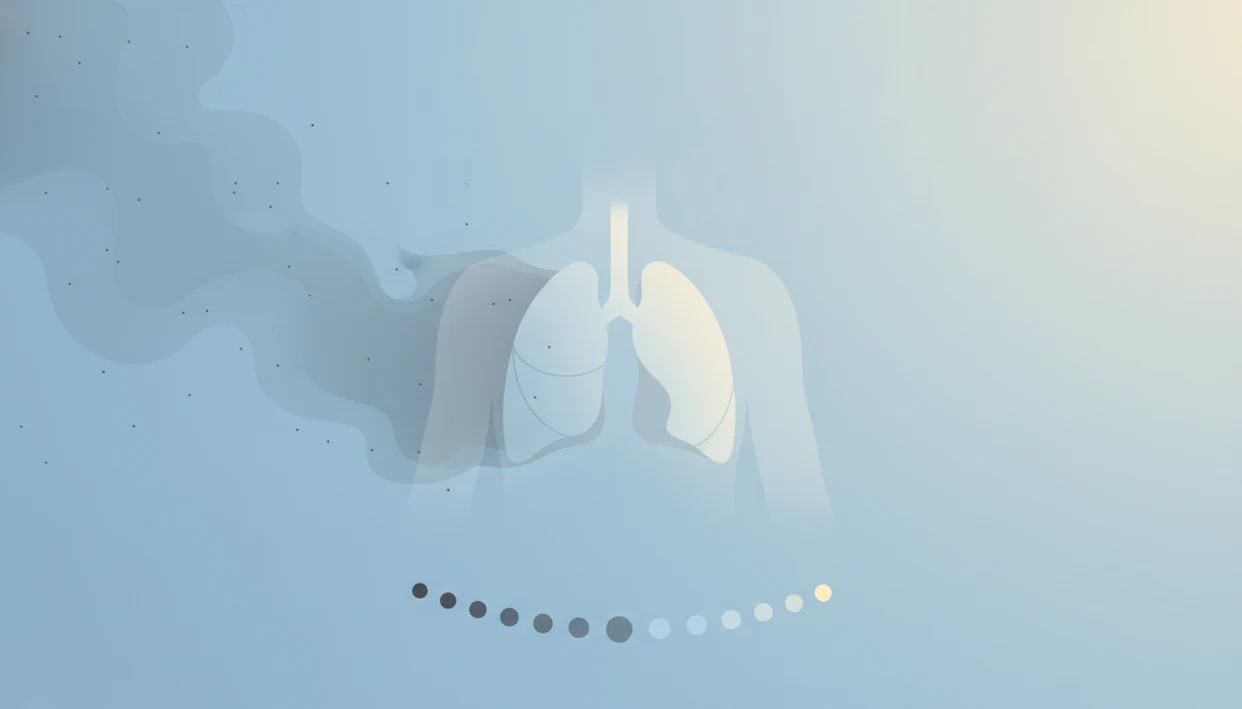
The first smoke-free morning can feel worse before it feels better. Your body has stopped taking in carbon monoxide and cigarette smoke, but your brain is also expecting nicotine at familiar times, such as with coffee, while driving, or after a meal.
Those two processes, physical recovery and nicotine withdrawal, happen together. The timeline below separates them so you can see why a difficult craving can occur while your heart, lungs, and blood vessels are already beginning to recover.
The quick version
When you quit smoking, heart rate, blood pressure, oxygen transport, and carbon monoxide levels start improving within hours. Withdrawal often feels strongest during the first few days, with cravings, irritability, poor sleep, and appetite changes. Over the following weeks, months, and years, breathing and circulation may improve while risks for heart disease, stroke, and several cancers decline.
Five changes that begin after your last cigarette
- Withdrawal is expected: Cravings, irritability, anxiety, poor sleep, low focus, and increased appetite can happen after you stop smoking.
- The first days can feel rough: Nicotine withdrawal is often strongest early, which is why the first morning cigarette before coffee becomes such a loud trigger.
- Body repair starts quickly: Heart rate, blood pressure, oxygen, and carbon monoxide begin shifting in a healthier direction within hours to days.
- Daily senses may improve: Breathing, stamina, taste, smell, and circulation often improve over weeks to months, though the pace varies.
- Long-term risk keeps falling: The longer a person stays smoke-free, the more their risk drops for heart disease, stroke, and several cancers.
Early discomfort is not proof that quitting is going badly. It is often the body recalibrating after repeated nicotine exposure.
Plan support before the first strong craving
Before you quit smoking, make a simple safety plan and choose support you can use before cravings peak. Most adults can quit safely, but some people should check in with a clinician first.
People who are pregnant, have heart disease, lung disease, seizures, uncontrolled blood pressure, severe anxiety or depression, a history of psychosis, or take psychiatric medication should ask for medical guidance before quitting or using nicotine replacement. The same applies if you have had a recent heart attack, serious chest pain, or are unsure whether patches, gum, lozenges, inhalers, or medicines fit your health history.
- Call a clinician, pharmacist, or quitline if you have medical risks, take daily medication, or expect severe withdrawal.
- Choose support that matches your routine: quitlines, counseling, nicotine replacement, prescription stop-smoking medication, text programs, or private tracking tools.
- Plan for same-day help if withdrawal includes severe depression, panic that feels unmanageable, confusion, chest pain, breathing trouble, or thoughts of self-harm.
- Treat slips as data, not failure. One cigarette should prompt faster support, not a delay until you feel “ready” again.
Support is not a last resort. It is part of the quit plan.
The first 72 hours: recovery and withdrawal overlap
What should you expect quitting smoking in the first 72 hours? You can expect early body changes, stronger withdrawal symptoms, and craving waves that may feel intense but usually pass.
First hours after your last cigarette
About 20 minutes after the last cigarette, heart rate and blood pressure begin moving toward normal, according to NHS Better Health stop-smoking guidance (the NHS cessation data). Around 8 hours, oxygen levels recover and carbon monoxide is reduced by about half. That is body repair, even if your mood has not caught up yet.
Days two and three after you stop smoking
By about 48 hours, carbon monoxide can drop to non-smoker levels, and taste and smell may start improving. Cravings, restlessness, irritability, sleep trouble, and poor concentration may also show up hard. A rain-specked windshield during a smoke break can suddenly feel like a cue, not just weather.
For a more detailed early symptom pattern, the nicotine withdrawal timeline can help separate expected discomfort from unusual symptoms.
Get urgent medical care for chest pain, severe trouble breathing, fainting, or other alarming symptoms. Contact a clinician promptly if depression or anxiety becomes severe, you feel unsafe, or you are pregnant and need help choosing a quit medication.
What happens during the first 30 days after quitting smoking
What happens during the first 30 days after quitting smoking varies, but the month commonly moves from physical withdrawal toward managing learned routines. Day 30 is not a finish line. It is a useful point for checking which situations have become easier and which still need a plan.
- Day 1: Carbon monoxide starts falling, helping blood carry oxygen more normally. Restlessness, hunger, low mood, or cravings may begin.
- Days 2 and 3: Withdrawal often feels strongest. Sleep, concentration, and patience may be poor even as breathing begins to feel easier.
- Days 4 to 7: Symptoms may remain uneven. Coffee, driving, work breaks, and meals can trigger urges because the routine is still familiar.
- Weeks 2 and 3: Physical withdrawal often eases. Circulation and lung function may begin improving, although not everyone notices an obvious difference.
- Week 4: Cravings may be shorter or less frequent, but stress, alcohol, social events, or an old smoking location can still bring one back.
At day 30, compare triggers rather than expecting perfection. Count how often you faced a usual smoking cue and got through it without lighting up.
Money saved depends on the price paid and the number of packs previously smoked. Multiply your daily cigarette spending by 30 for a personal estimate.
Why cravings, mood, sleep, and appetite change
Nicotine withdrawal can temporarily affect mood, attention, sleep, hunger, and stress tolerance because the brain is adjusting to life without frequent nicotine stimulation.
Cravings often arrive in waves. They may be linked to routines, emotions, alcohol, coffee, boredom, or social settings. The Friday 6 p.m. drink is a common one; for many people, it makes a cigarette feel automatic before they have even decided. If alcohol and cigarettes usually happen together, plan for the drinking cue as part of your smoking quit attempt.
Appetite can increase because nicotine no longer suppresses hunger and food may taste better. Temporary anxiety, low mood, or irritability can also happen, so don’t expect instant calm just because you quit. Contact a clinician if anxiety or low mood becomes severe, feels unsafe, or does not begin easing.
A craving shows that your brain recognized an old nicotine cue, not that the quit attempt has failed.

Nicotine withdrawal vs smoke-related body repair
Smoking affects the body through nicotine exposure, carbon monoxide, airway irritation, and blood vessel strain. When smoking stops, withdrawal and repair happen at the same time.
Nicotine acts on reward pathways and receptor adaptation. Regular nicotine doses changed how your brain responded to reward and routine, so removing those doses requires a period of readjustment. That mismatch can cause cravings, flat mood, and trouble focusing. Meanwhile, carbon monoxide falls, which allows oxygen transport to improve. Blood vessels and circulation also begin recovering as smoke exposure decreases.
Airways may start clearing mucus and irritation over time. Some people cough more for a while, which can be confusing, but it may reflect clearing rather than new harm. Disease-risk reduction is gradual, not an instant reversal of all smoking-related damage.
For many people, approved stop-smoking medication or nicotine replacement works best when paired with counseling or other behavioral support.
What happens to the body over time after quitting smoking?
What happens to the body over time after quitting smoking follows two overlapping tracks. Smoke-related recovery starts quickly, while the nervous system adjusts to losing regular nicotine doses. That is why your oxygen transport can improve on the same day that you feel irritable, distracted, or intensely tempted to smoke.
Prepare for the difficult second and third days
- Delay acting on the craving for 10 minutes.
- Leave the car, doorway, balcony, or break area connected with smoking.
- Walk briskly for five minutes or give your hands a simple task.
- Breathe slowly, making the exhale longer than the inhale.
- Contact a support person instead of trying to hide the craving.
- Use nicotine replacement or prescribed medication as directed if it is part of your plan.
By 2 to 4 weeks, many physical withdrawal symptoms have eased. From 2 to 12 weeks, circulation and lung function may improve. Between 3 and 9 months, coughing and shortness of breath often continue improving. Cue-based cravings can still appear later because places, people, stress, and alcohol can revive the learned association with smoking.
Feeling worse on day two than on day one usually reflects nicotine withdrawal, not a reversal of the health benefits already underway.
Your quit smoking timeline from 20 minutes onward
The quit smoking timeline moves from fast physical changes to slower risk reduction. Early milestones are encouraging, but the longer-term gains come from staying smoke-free through ordinary trigger patterns.
| Time after last cigarette | What may happen |
|---|---|
| 20 minutes | Heart rate and blood pressure begin moving toward normal. |
| 8 hours | Oxygen recovers and carbon monoxide is reduced by about half. |
| 48 hours | Carbon monoxide reaches non-smoker levels; taste and smell may improve. |
| Weeks to months | Circulation, coughing, shortness of breath, and stamina may improve. |
| 1 year | Heart attack risk is about halved compared with someone who keeps smoking. |
| Longer term | Risks continue falling for heart disease, stroke, and some cancers. |
These milestones are based on NHS Better Health guidance for early oxygen and carbon monoxide changes (the NHS cessation data) and American Cancer Society guidance on longer-term risk reduction after quitting smoking (cancer smoking data).
Quitting before age 40 reduces the risk of dying from smoking-related disease by about 90%, according to the American Cancer Society. The full quit smoking benefits timeline gives more context for later milestones.
Timeline of health benefits and body changes after quitting smoking
The timeline of health benefits and body changes after quitting smoking begins on the first day, but not every improvement is something you can feel. Public-health timelines, including the WHO regional tobacco recovery timeline, describe changes that continue for years.
| Time | Possible change |
|---|---|
| 20 minutes | Heart rate and blood pressure begin falling toward normal. |
| 8 hours | Blood oxygen begins recovering as carbon monoxide falls. |
| 24 to 48 hours | Carbon monoxide clears, nicotine leaves the body, and taste and smell may improve. |
| 2 to 12 weeks | Circulation and lung function may improve. |
| 3 to 9 months | Coughing, wheezing, and shortness of breath often improve. |
| 1 year | Coronary heart disease risk is about half that of someone who continues smoking. |
| 10 years | Lung cancer risk is about half that of someone who continues smoking. |
| 15 years | Coronary heart disease risk approaches that of a person who does not smoke. |
These are population averages, not deadlines. Age, smoking history, medical conditions, and continued exposure through occasional cigarettes affect the timing. Lower risk also does not mean zero risk, so keep up with recommended screening and discuss persistent symptoms with a clinician.
Track the triggers that could cause a return to smoking
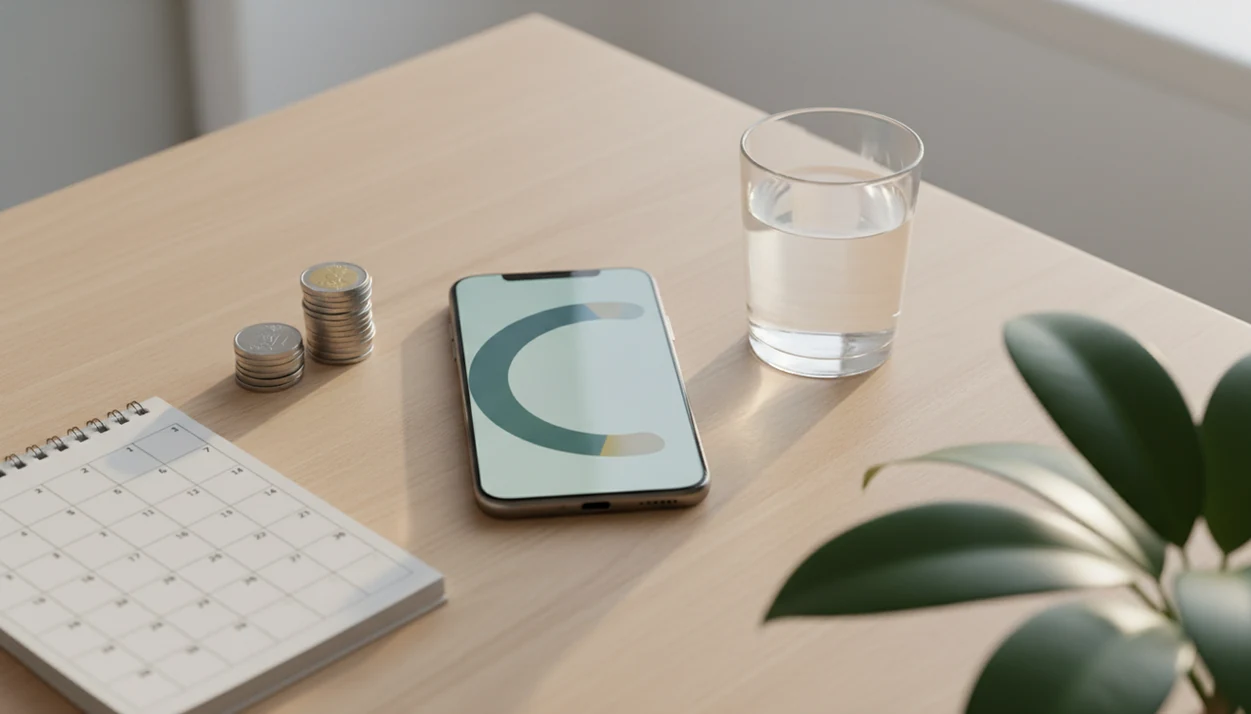
A simple tracking system turns quitting into observable data: time smoke-free, craving triggers, responses, slips, streaks, money saved, and health milestones.
Good quit smoking and drinking app tools deliver day-by-day support for cigarettes, vaping, alcohol cues, cravings, and resets, not a diagnosis or a guaranteed cure.
1. Set your quit starting point
- Choose a quit date or start counting from your last cigarette.
- Mark early milestones such as 24 hours, 48 hours, one week, and one month.
- Record money saved so progress shows up at the checkout, not only in your lungs.
2. Log cravings and triggers
- Record the pattern: note the time, trigger, craving intensity, response, and outcome.
3. Review patterns weekly
- Review your week for patterns around stress, meals, commuting, alcohol, and social cues.
4. Reset after slips
- Reset after a slip by naming what happened and choosing the next smoke-free block.
Private progress tracking works best when it captures the craving window before the story in your head gets too loud.
How to use a quit smoking health tracker app
A quit smoking health tracker app matches the time since your last cigarette with public-health recovery milestones. It may also count cigarettes avoided, estimate money saved, and record cravings. These displays describe expected population-level changes. They do not measure your oxygen level, lung function, heart health, or cancer risk.
Track risk patterns, not only the streak
- Record the trigger, such as coffee, stress, alcohol, driving, or seeing someone smoke.
- Rate how strong the craving felt.
- Note what you tried and whether you smoked.
- Review entries weekly for repeated times, places, and situations.
A lapse does not make every previous health gain disappear, but smoking again restores exposure to nicotine, carbon monoxide, and airway irritants. Reset the smoking counter honestly, identify the cue, and resume the quit attempt right away. A tracker cannot remove nicotine faster or repair the lungs. Medication, counseling, and quitline support address parts of quitting that a progress display cannot.
What an app can and cannot tell you
Physiological milestones come from public-health timelines, but an app cannot confirm that your individual lungs, circulation, or heart have reached a listed milestone. Its useful role is recording behavior, displaying elapsed time, and helping you notice repeated triggers.
Evidence for app-only quitting support remains uncertain. A Cochrane review of mobile smoking-cessation programs found no clear evidence that smartphone apps alone improved quitting outcomes. Marketplace research also found uneven treatment content and privacy information across smoking apps, as summarized in a systematic assessment of smoking-cessation apps.
Use a tracker as one part of the plan. Counseling and approved stop-smoking medication can provide support that a timer or progress bar cannot.
Five myths that can make quitting harder
Myth 1: Withdrawal lasts forever. The strongest symptoms are usually temporary, though cravings can return when an old trigger shows up.
Myth 2: Weight gain is inevitable and uncontrollable. Appetite and taste changes vary. Planning meals and movement helps, but there is no single pattern.
Myth 3: Cravings mean quitting is not working. Cravings can continue while circulation, oxygen levels, and airway recovery are already improving.
Myth 4: Benefits only start months later. Some benefits begin within hours, even when sleep and mood still feel unsettled.
Myth 5: Quitting suddenly is always dangerous. Many people quit abruptly, but medical guidance is wise for pregnancy, major medical conditions, heavy dependence, or severe mental health symptoms.
For many smokers, planning for a craving wave is easier than relying on motivation because the plan is available when motivation drops.
Avoid these six mistakes after you stop smoking
- Relying only on willpower. A quit plan should name the trigger pattern before the craving hits.
- Keeping cigarettes nearby “just in case.” Backup cigarettes often become permission during a hard hour.
- Ignoring sleep, stress, meals, and alcohol. A porch smoke after two cocktails can feel automatic if the cue is not planned for.
- Treating one slip as the end. A slip is information. Reset, not restart from zero.
- Expecting motivation every day. Motivation moves around; reminders, routines, and support tools fill the gaps.
- Avoiding help that might fit. Nicotine replacement, counseling, quitlines, tracking, and app-based tools can all support different quit styles.
For people managing both cigarettes and alcohol cues, a quit smoking and drinking app may fit better than a smoking-only tracker.
Questions about the smoke-free timeline
Why do I feel worse after quitting smoking?
Withdrawal and physical recovery happen at the same time. As carbon monoxide falls and oxygen transport improves, the brain is also adjusting to the loss of regular nicotine. That adjustment can cause irritability, anxiety, poor concentration, sleep trouble, hunger, headaches, and cravings, especially during the first few days.
What happens after 24 hours without smoking?
By about 24 hours, carbon monoxide has been eliminated from the body, and the lungs begin clearing mucus and smoking residue. Withdrawal may also become more noticeable. Cravings, restlessness, appetite changes, and mood swings can feel strong even though physical recovery has already started.
When do nicotine withdrawal symptoms peak?
Withdrawal often feels strongest around the second and third days, when nicotine has largely left the body. Symptoms usually begin easing over the following weeks, but the timing varies. A cue such as alcohol, coffee, driving, or seeing someone smoke can cause a later craving after physical withdrawal has improved.
What happens after seven days without smoking?
After one week, carbon monoxide and nicotine are no longer driving the early physical changes, but sleep, mood, appetite, and concentration may still be unsettled. You may also have faced several routine triggers for the first time. Cravings commonly continue, although they may become easier to recognize and interrupt.
Will I gain weight after quitting smoking?
Weight gain is possible, but it is not identical or inevitable for everyone. Nicotine no longer suppresses appetite, food may taste better, and snacking can replace the hand-to-mouth smoking routine. Regular meals, filling snacks, movement, and separating hunger from a cigarette craving can help without making weight loss the main goal.
Does one cigarette erase the benefits of quitting?
One cigarette does not instantly erase every improvement, but it does expose you again to nicotine, carbon monoxide, and smoke irritants. It can also reactivate dependence. Treat the lapse as a warning: discard remaining cigarettes, record the trigger, resume the quit attempt immediately, and adjust the plan for that situation.
When does heart disease risk fall after quitting smoking?
Cardiovascular changes begin soon after the last cigarette as heart rate, blood pressure, oxygen transport, and carbon monoxide levels improve. After about one year, coronary heart disease risk is roughly half that of someone who continues smoking. By 15 years, it approaches the risk of a person who does not smoke.