How to Stop Evening Alcohol Cravings Before They Peak
The best way to learn how to stop evening alcohol cravings is to act before the urge peaks: spot the early 3pm cue, make a 6pm plan, and use a short pause script instead of relying on end-of-day willpower. Evening cravings usually rise and fall like a wave, so the goal is to delay, move, refocus, and let the urge pass without turning it into a drink.
> Definition: Evening alcohol cravings are time-linked brain and body urges, often triggered by stress, fatigue, routines, or reward cues before dinner or after work.
TL;DR
- Treat 3pm alcohol cravings as an early warning signal, not a failure.
- Use an if-then 6pm alcohol cravings plan before you enter the kitchen, couch, commute, or store.
- A 5- to 10-minute pause before alcohol craving behavior gives the urge time to peak, fade, and lose control.
At a glance: the 3pm-to-6pm alcohol cravings plan
Quick answer: To reduce evening alcohol cravings, start earlier than the craving itself: eat, hydrate, plan the first hour after work, and decide what you will do if an urge shows up. For many people, a craving becomes easier to ride out when it is treated as temporary body-and-brain noise rather than a command to drink.
Key takeaways
- Do not wait until the urge is intense; prepare before the usual drinking window.
- A simple dinner, water, and a planned activity may reduce vulnerability to cravings.
- Cravings often peak and fade if you delay acting on them.
- Changing the first 10 minutes after work can weaken an automatic drinking routine.
- If you drink heavily or daily, ask a clinician before stopping suddenly.
- Tracking urge time, mood, and setting can reveal patterns you can change.
The fastest evening craving plan is: notice the first cue, delay action, move your body, drink something non-alcoholic, change location, and use an if-then script. Treat 3pm alcohol cravings as the start of the loop, not the moment you “should have been stronger.”
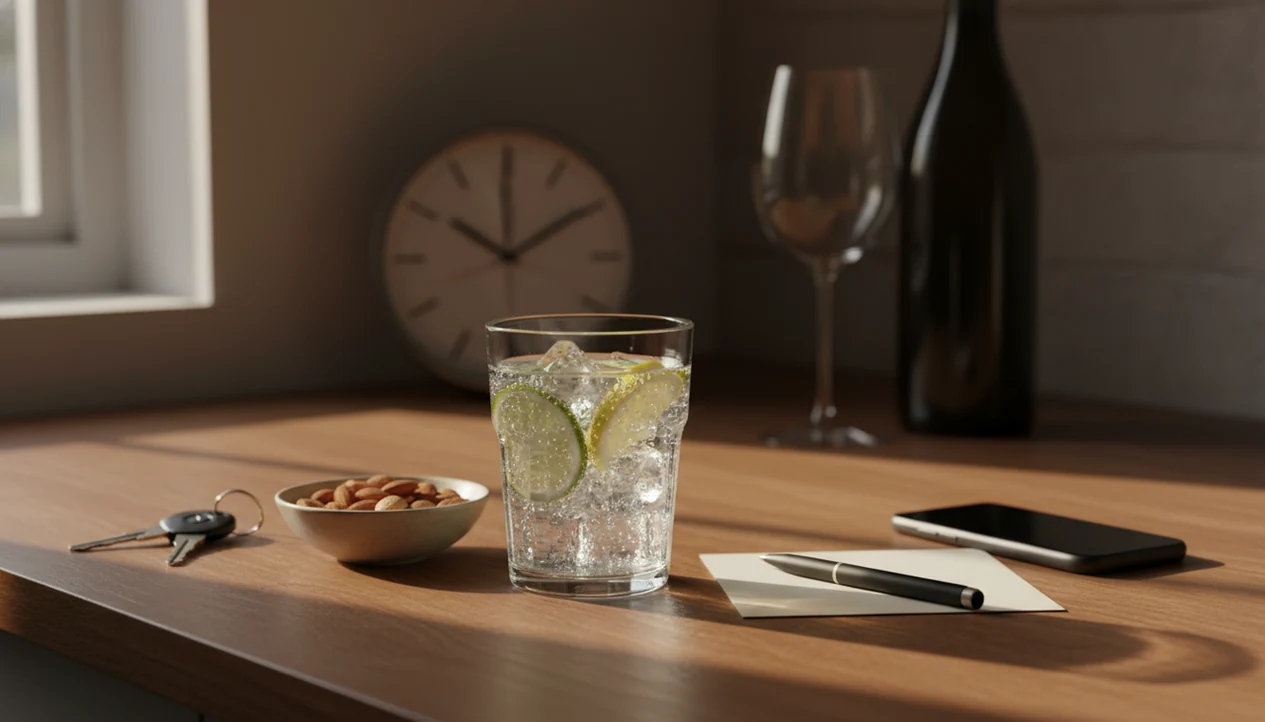
At 3pm, write one line: “If I want a drink at 6pm, then I will pour sparkling water, eat dinner first, and walk around the block.” Put the glass, tea, gum, or phone timer where the bottle usually sits.
Make the next choice easier.
NIAAA reports that about 21.7% of U.S. adults reported binge drinking in the past month in 2022, according to its alcohol facts and statistics NIAAA alcohol data. That does not make heavy evening drinking harmless. It does mean many people are dealing with patterned, cue-driven drinking, especially after work.
Craving management is skill practice. It is not a personality test.
How evening alcohol cravings work in the brain and body
Evening alcohol cravings work through cue-triggered habit loops: a time, place, feeling, reward memory, and routine link together until the urge feels automatic. In plain language, your brain learns, “When the workday ends, this is what we do.”
A 6pm craving may start hours earlier. Fatigue builds. Hunger gets sharper. Decisions pile up. Cortisol follows a daily rhythm, and many people feel a late-day dip in energy and alertness. That is when the brain starts scanning for relief, reward, or shutdown.
The urge can feel like tight chest, restless legs, and a vague “I need something” feeling. Not dramatic. Just insistent.
Common cues include cooking dinner, the commute home, loneliness, boredom, a partner drinking, TV, payday, and work stress. The rain-specked windshield during a smoke break can also become part of the pattern if cigarettes and alcohol have been paired for years.
For many adults, a 6pm alcohol craving is easier to prevent at 3pm than to overpower at 6pm because the habit loop is still forming.
How to use the 3pm-to-6pm alcohol craving plan
Use the 3pm-to-6pm alcohol craving plan by treating the first cue as your planning window, not as proof that the night is already lost. The aim is to make one prepared move before the urge becomes automatic.
- Notice the first cue. At 3pm or whenever the thought appears, name it plainly: “This is the early craving loop starting.” Catching it early gives you more room than waiting until you are tired, hungry, and near alcohol.
- Write one 6pm script. Choose the highest-risk moment, such as entering the kitchen, passing the store, or sitting on the couch. Use one if-then line: “If I hit that moment, then I will do this first.”
- Prepare one substitute. Set out a zero-alcohol drink, protein snack, gum, tea, or a different route home before the evening decision point arrives.
- Move before you pause. Step away from the fridge, aisle, bar cart, or couch before starting the five-minute pause. Distance makes the delay easier.
- Log and adjust. Write the trigger, what helped, and one change for tomorrow. No blame. Just better data.
Five facts about 6pm alcohol cravings before you fight them
- Cravings rise and fall. If you do not feed the urge with pouring, buying, or bargaining, the wave often loses force within minutes.
- Triggers are trackable. Time of day, place, emotion, people, and routine can be logged like a trigger map, not guessed from memory.
- If-then plans protect tired brains. Implementation intentions reduce the number of decisions you must make when willpower is already low.
- Mindfulness changes your reaction. Urge surfing, cognitive reframing, and naming the craving can reduce the automatic jump from urge to drink.
- Some cravings need more than self-coaching. Daily intense urges, withdrawal symptoms, blackouts, morning drinking, or loss of control are signs to involve a doctor, therapist, addiction counselor, or helpline.
A craving is data, not a verdict. The line “I already messed up, so why not keep going?” is a cue for streak repair, not a reason to abandon the plan.
How to use implementation intentions for alcohol cravings
Implementation intentions are specific if-then plans: “If this cue happens, then I will do this action.” They work because the decision is made before the craving arrives, when your brain has more room to choose. A meta-analysis of implementation-intention studies found that if-then planning produced reliable behavior-change effects across health and self-regulation goals; see the Gollwitzer and Sheeran review.
Use them like a small script, not a motivational speech.
- Pick one cue. Choose a real trigger, such as “If it is 3pm and I start thinking about wine.”
- Choose one replacement action. Write, “Then I will eat yogurt, refill my water, and walk for five minutes.”
- Plan the 6pm moment. Use, “If I enter the kitchen at 6pm, then I will pour seltzer before opening the fridge.”
- Change the location. Add, “Then I will stand outside, shower, or sit in a different room for 10 minutes.”
- Add support. Include, “Then I will text one person, log the craving, or open my tracker.”
- Rehearse before the urge. Read the script at lunch or mid-afternoon, not while holding a bottle.
Implementation intentions for alcohol cravings usually work best when they name the exact cue, the replacement action, and the first physical move away from alcohol.
The 5-minute pause before alcohol craving action
“Pause before alcohol craving” means delaying the drinking action long enough for the urge to crest, shift, or weaken. Do not pause while staring into the fridge or standing in a store aisle. Move first.
Minute-by-minute pause script
Minute 1: breathe slowly and say, “This is a craving, not a command.”
Minute 2: name the body signal. Tight chest. Dry mouth. Restless legs.
Minute 3: drink water, tea, or a zero-alcohol drink. Dry mouth after skipping drinks can trick the brain into asking for the old routine.
Minute 4: move rooms, step outside, or walk to the end of the block.
Minute 5: text someone or write one line: “I am delaying the decision for five more minutes.”
If the craving is still loud, extend the pause to 10 minutes. Urge surfing is simply staying with the wave without obeying it. You are not arguing with the craving. You are watching it change shape.
For close-call moments, a pause plan works better outside the alcohol cue because distance adds friction.
Trigger swaps for cooking, commuting, and couch alcohol cravings
Evening trigger swaps work when they are easy, repeatable, and ready before willpower drops. The goal is not to create a beautiful routine. The goal is to interrupt the old cue, routine, reward chain.
| Trigger | Old loop | New swap | Backup plan |
|---|---|---|---|
| Cooking dinner | Pour a drink before chopping food | Open a flavored seltzer and eat a small protein snack | Start with a frozen meal or simple sandwich |
| Arriving home | Drop bag, open alcohol | Change clothes and walk for 10 minutes | Sit in a different room with tea |
| Finishing work | “I earned this” thought | Mark the last drink plan on your phone | Read an if-then script aloud |
| Sitting on the couch | TV plus drink | Hold a warm mug or gum | Move the remote to another room |
| Social pressure | Accept the first offer | Say, “Not tonight, soda water for me” | Use a prewritten exit text |
| Loneliness | Drink to fill silence | Call support or voice-note a friend | Use a guided craving timer |
| Passing a store | Stop on autopilot | Take a different route | Track the urge before parking |
If social settings are a major cue, practice scripts before you need them; the same skill shows up in how to socialize without alcohol.
Mindfulness tools that reduce evening drinking urges
Mindfulness for alcohol cravings means noticing the urge without immediately obeying it. It is not relaxing on command. Some nights, the win is simply naming the thought before you act.
- Urge surfing. Picture the craving as a wave with a beginning, peak, and decline. Your job is to stay on the board, not debate the ocean.
- Body labeling. Say where the craving lives: throat, chest, jaw, stomach, legs. This turns a vague emergency into a specific sensation.
- Cognitive restructuring. Challenge thoughts like “I deserve one” or “just one will help” with a replacement line: “I deserve a calmer morning.”
- Sensory grounding. Hold ice, sip tea, step into cooler air, or notice five objects in the room.
A randomized trial of mindfulness-based relapse prevention found a 54% reduction in heavy drinking days compared with standard relapse prevention, according to the published jamanetwork. Mindfulness takes practice, however, and may not work instantly during a high-stress evening.
If anxiety drives the urge, the related skill set is covered in social anxiety without alcohol.
Me Quit tracking for alcohol cravings, smoking, and vaping loops
Me Quit is a craving and streak tracker for adults working on quit smoking, stop vaping, quit drinking, or mindful alcohol reduction goals. Tools like Me Quit can be useful when your evening drink urge is tied to another habit, such as the hand-to-mouth reflex after lunch or a vape reach during scrolling in bed.
Many people do not have one clean trigger. Game-night cans sit beside cigarette packs. A cigarette urge appears after the first beer. A vape craving shows up during the same tired hour that alcohol starts sounding reasonable.
Tracking multiple urges can show the shared cue. Maybe it is 5:45pm, not alcohol itself. Maybe it is the couch. Maybe it is the first ten minutes after walking through the door.
Good mequit addiction recovery hub for quit smoking, stop vaping, quit drinking, and mindful alcohol reduction should deliver private trigger tracking and restart support, not diagnosis, detox supervision, or a promise that an app can replace care.
If you want a broader phone-based setup, the best drink less app guide compares planning and tracking features.
When evening alcohol cravings need medical support
Evening craving tools are not enough when alcohol use is medically risky or feels out of control. Red flags include withdrawal symptoms, morning drinking, blackouts, repeated inability to cut down, daily intense cravings, unsafe behavior, or mixing alcohol with medications.
Clinicians typically recommend professional assessment when cravings come with withdrawal, loss of control, or harm, because cutting down suddenly can be risky for some people. Support may include a primary care doctor, therapist, addiction counselor, helpline, structured program, or medication option.
NIAAA reports that only 7.6% of U.S. adults with past-year alcohol use disorder received treatment in 2022, according to its alcohol facts and statistics NIAAA alcohol data. That gap matters. Most people who could benefit from help are not getting it.
A JAMA systematic review and meta-analysis found that oral naltrexone reduced return to heavy drinking for some adults with alcohol use disorder; see the published review. That does not mean it is right for everyone. It does mean medication is a real conversation to have with a clinician, not a last resort.
Limitations
Self-guided craving tools can help, but they have clear limits. Use them honestly.
- Behavioral tools may not be enough for moderate to severe alcohol use disorder.
- Supplements, detox teas, and special foods have limited evidence for stopping alcohol cravings.
- Phone tracking can reveal patterns, but it cannot diagnose alcohol use disorder.
No shame in needing backup.
Me Quit may help with tracking cravings, dry days, sober streaks, and linked nicotine triggers, but it is not medical care. For broader habit education, the alcohol reduction guides can help you build a steadier plan.
FAQ
Why do I crave alcohol at night?
Night cravings often come from stress, fatigue, hunger, boredom, routine cues, and reward memories after work. The brain learns to expect alcohol in certain places, such as the kitchen, couch, commute, or bar patio.
Why do cravings start at 3pm?
3pm alcohol cravings can be an early warning cue tied to energy dips, stress buildup, and anticipation of evening drinking. A short movement break, snack, and if-then plan can make the 6pm urge easier to handle.
How long do alcohol cravings last?
Alcohol cravings often rise and fall within minutes if you do not act on them. Repeated cues, such as seeing alcohol or arguing with the urge, can restart the craving.
What is an alcohol pause plan?
An alcohol pause plan is a prewritten 5- to 10-minute delay routine used before pouring, buying, or accepting a drink. It usually includes breathing, naming the urge, drinking water, moving location, and contacting support.
Do if-then plans help cravings?
Yes, if-then plans can help because they reduce decision-making during predictable craving moments. A strong plan names the time, trigger, replacement action, location change, and support step.
Can walking reduce alcohol cravings?
Walking can reduce alcohol cravings by changing your physical state, lowering stress arousal, and moving you away from the drinking cue. Even five to ten minutes can interrupt the automatic routine.
When are alcohol cravings dangerous?
Alcohol cravings may be dangerous when they come with withdrawal symptoms, blackouts, morning drinking, unsafe behavior, or repeated inability to cut down. In those cases, seek professional or urgent support.
Can medication reduce alcohol cravings?
Evidence-based medications such as naltrexone can reduce heavy drinking risk for some people. Discuss medication options with a clinician who can review your health history, alcohol pattern, and safety needs.