
Free Sobriety Calculator and Sober Day Counter
Your sober time
Enter the date, time, and time zone of your last drink. The sobriety calculator shows completed 24-hour periods, extra hours, your current sober day, and the next milestone. It measures elapsed time, not alcohol clearance or withdrawal safety. Never use the result to decide if you can drive or safely stop heavy daily drinking.
This free sober calculator runs in your browser. Use the time you finished your last alcoholic drink, not bedtime or the next morning. The result updates each time you calculate. A count can make progress visible, but it cannot diagnose alcohol dependence, predict withdrawal, or confirm that alcohol has left your body.
How the sobriety calculator counts your time
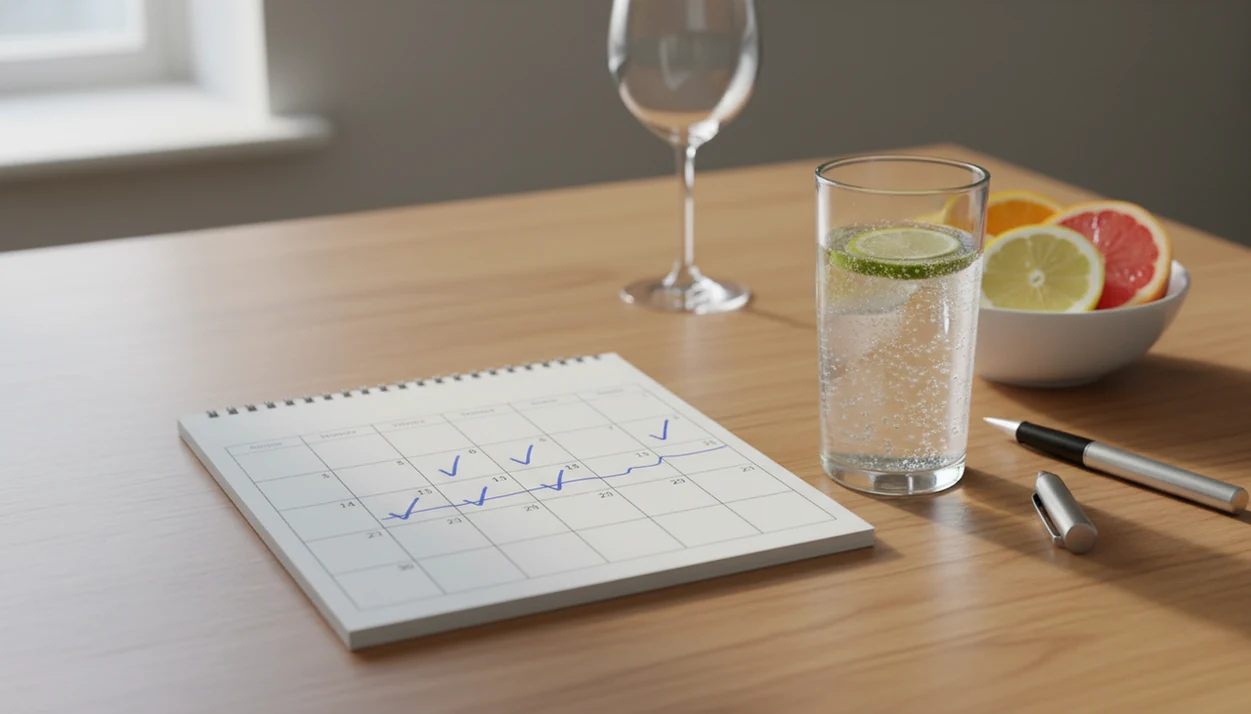
The calculator subtracts your time-zone-aware last-drink timestamp from the current timestamp. Each full 24-hour period becomes one complete sober day, while leftover time appears as remaining hours.
- Enter the calendar date when you finished your last drink.
- Enter the closest accurate time. If you only know an estimate, remember that the result is also an estimate.
- Confirm the time zone where that local date and time occurred.
- Select Calculate sober time. Recalculate later for an updated count.
For example, an elapsed time of 46 days and 7 hours produces 46 complete days, 7 remaining hours, current sober day 47, and a countdown to the 60-day milestone. Day 47 has started, but it is not complete.
How to read your sober day counter result
Read complete days as finished 24-hour periods and current sober day as the day now in progress. The milestone result shows the next marker in the calculator's preset sequence.
| Result | Meaning | Example |
|---|---|---|
| Complete days | Full 24-hour periods since the entered time | 46 |
| Remaining hours | Whole hours beyond the complete-day count | 7 |
| Current sober day | The numbered day now underway | Day 47 |
| Next milestone | Time remaining until the next preset marker | 60 days in 13 days 17 hours |
People sometimes define day one as the calendar date after their final drink. This tool instead uses elapsed time, which gives a consistent answer to “how many days sober am I?” Your group, clinician, or personal tradition may mark the anniversary differently.
Daylight saving time can change the hour count
The calculator uses time-zone-aware timestamps, so daylight saving changes affect elapsed hours correctly. The same local clock time on consecutive dates can be 23 or 25 hours apart rather than 24.
When clocks spring forward, one local hour does not occur. The calculator asks you to choose another time if your entry falls inside that missing hour. When clocks fall back, an hour occurs twice, so a time within that repeated hour can be ambiguous and may shift the result by one hour. Verify the exact time if that hour matters to your count.
A move or trip does not change elapsed sober time. Enter the time zone where the last drink occurred, not your current location.
Sober streaks count consecutive time, dry days do not
A sober streak measures uninterrupted time since the last drink. Dry days are individual alcohol-free calendar days, so they can still add up when someone is cutting back and has drinking days between them.
This distinction helps you understand and track dry days from alcohol and consecutive sober streaks. A dry day tracker may show three alcohol-free days this week, while a sober streak calculator returns to zero after another drink. Neither number cancels the other. One shows continuity, while the other shows repeated alcohol-free choices.
If your goal is full abstinence, use the consecutive count. If your plan is reduction, record total dry days, drinks on drinking days, and your longest streak. The CDC recommends tracking intake and making a specific reduction plan, and explains why drinking less can reduce health risks.
Get medical advice before stopping suddenly if you drink heavily or daily, have morning withdrawal symptoms, or have a history of seizures, hallucinations, or delirium. Call 911 for severe withdrawal symptoms or immediate danger.
Track more than the streak number
Using a sober day counter to track alcohol-free progress and stay motivated works best when the count is paired with cravings, triggers, slips, spending, and milestones. That turns visual progress from quitting drinking into information you can use.
| Feature | What to record | Why it helps |
|---|---|---|
| Sober day tracker | Time since the last drink | Shows immediate progress |
| Craving log | Time, strength, trigger, and response | Reveals repeat patterns |
| Dry day count | Alcohol-free calendar days | Supports reduction goals |
| Milestones | 3, 7, 30, 60, and 90 days | Creates planned check-in points |
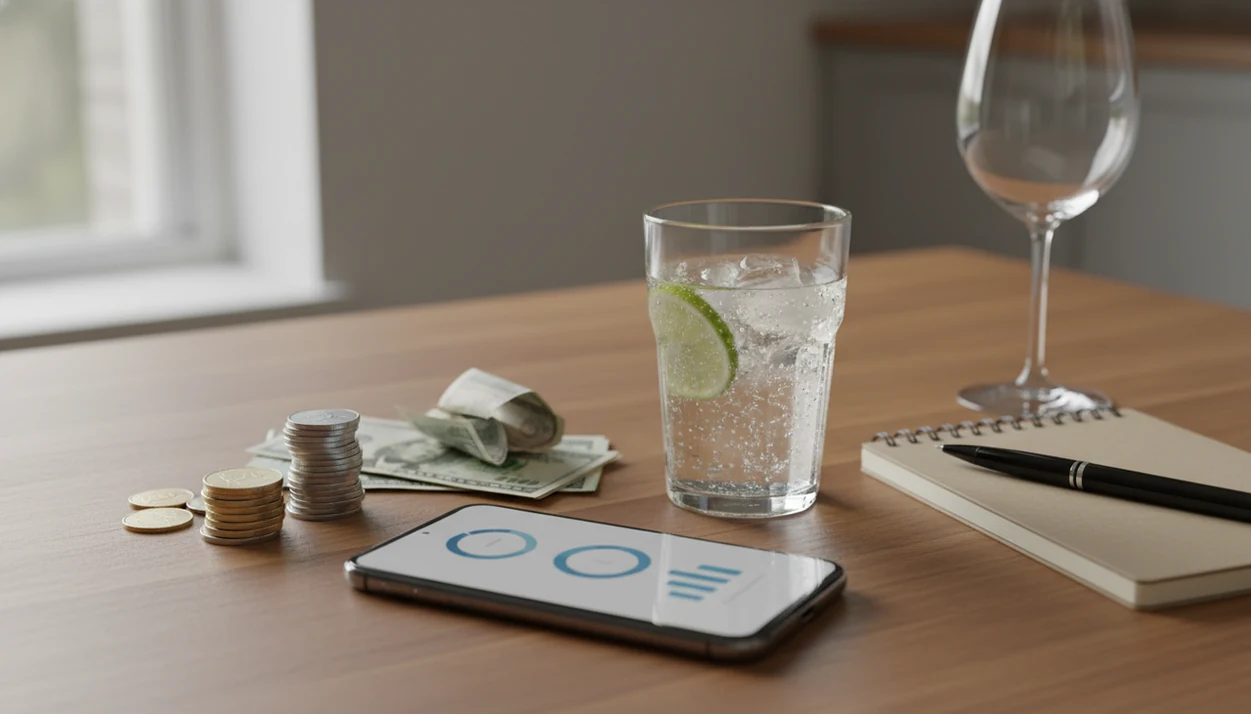
| Money estimate | Usual alcohol spending avoided | Makes savings visible |
For sobriety motivation, review the record once a week rather than watching the clock every hour. Plan sober milestone rewards that support rest, connection, or a hobby. Our guide to the first sober weekend covers Friday work drinks and other early pressure points.
A slip changes the count, not everything you learned
If your goal is uninterrupted sobriety and you drink, enter the time that drink ended as the new starting point. The streak changes, but earlier alcohol-free days and the skills you practiced still happened.
Record the situation before resetting: where you were, what you felt, who was present, how strong the urge was, and what could make the next decision easier. This is more useful than treating one drink as proof that the full effort failed. See our plan for how to restart after a drinking slip.
For alcohol-free streak motivation, focus on the next concrete action. Remove leftover alcohol, text support, eat, rest, or change tomorrow's route home. Learning how to handle alcohol cravings often starts with preparing before the usual craving window.
Check withdrawal risk before starting a streak
A calculator cannot tell you if stopping alcohol suddenly is medically safe. Get medical advice first if you drink heavily or daily, drink in the morning, have had withdrawal before, or use sedatives or opioids.
Morning anxiety, sweating, shaking, nausea, or vomiting can indicate dependence. Withdrawal may progress to hallucinations, severe tremors, seizures, or delirium. The NHS alcohol support guidance describes warning signs, and our guide explains alcohol withdrawal symptoms in more detail.
Call 911 for a seizure, confusion, hallucinations, severe shaking, double vision, trouble breathing, or another immediate danger. Do not stay alone and try to manage severe withdrawal with a counter.
What this sobriety calculator cannot tell you
This tool measures time since the last drink, not blood alcohol concentration, detox completion, health recovery, or fitness to drive. Coffee, sleep, exercise, vomiting, and cold showers do not make alcohol leave the body reliably faster.
Drink size also matters. In the United States, one standard drink is about 12 fluid ounces of 5% beer, 5 fluid ounces of 12% wine, or 1.5 fluid ounces of 40% spirits. Strong beer, large wine pours, and cocktails may contain multiple drinks. Use the CDC's standard drink guidance or our standard drink calculator to estimate intake.
The CDC defines binge drinking as 4 or more drinks on an occasion for women or 5 or more for men. Heavy drinking is 8 or more per week for women or 15 or more for men. These are risk thresholds, not guaranteed safe limits. See the CDC overview of alcohol use.
Sobriety calculator FAQ
How many days sober am I?
Enter the date and approximate time you finished your last drink. The calculator divides the elapsed time into complete 24-hour periods and leftover hours. If it shows 29 complete days and current sober day 30, your 30th full day is underway but has not finished.
Does the day I quit count as day one?
Many people call the calendar date they stopped drinking day one. This calculator begins day one at the exact last-drink time, then marks one complete day after 24 hours. Recovery groups and personal traditions may use a calendar-based count, so anniversary labels can differ by one day.
How do I calculate my sober anniversary?
Your yearly anniversary usually falls on the same calendar date as your sobriety start date. For an exact elapsed-year calculation, time zones and leap years can affect the total number of days. Many people celebrate the date itself rather than requiring an exact multiple of 365 days.
What counts as sober?
For a continuous alcohol sobriety streak, sober usually means no alcoholic drinks from the selected start time onward. Personal goals differ, especially for nonalcoholic drinks, cooking ingredients, or prescribed medicines. Read more about what sober means and discuss medical questions with a clinician.
How should I track sober days?
Use the same starting rule every time, then record the streak, total alcohol-free days, cravings, mood, sleep, and high-risk situations. A sober day tracker is most helpful when it supports a daily decision, not when the number becomes a source of fear or shame.
What are good sober milestone rewards?
Choose affordable rewards that support the change, such as a book after one week, a meal with a supportive friend after 30 days, or a hobby purchase after 90 days. Plan the reward early so the milestone has a positive action attached to it.
Can a sobriety calculator tell when alcohol is out of my system?
No. Alcohol processing varies with the amount consumed, drinking pattern, body composition, food, liver function, medications, and other factors. Feeling alert does not prove a safe blood alcohol concentration. Do not use a sober day counter to decide when to drive, operate equipment, or supervise someone in danger.